Headshots
Best Modeling Headshot Poses for Agency Submissions
Chris McCarthy breaks down the specific poses that make modeling headshots work for Boston agency submissions — shot at our Rockland MA studio from $395.
Chris McCarthy
Professional Photographer, Photography Shark · August 14, 2025 · Updated May 28, 2026
Use this guide if you're looking for specific posing technique for modeling headshots. It covers the foundational posing principles, head position, chin angle, shoulder placement, hand and arm positioning, expression range, and how to translate posing direction during a session. For the comprehensive guide that covers everything beyond posing (lighting, retouching, commercial-vs-fashion register, refresh cadence), see Mastering the Art of Modeling Headshots. For Boston market context specifically (agencies, drive time, pricing), see Modeling Headshots Boston.
A modeling headshot is a very specific type of photograph with a very specific job to do. It is not a lifestyle photo, not a test shoot concept, not a creative editorial. It is a direct communication from you to an agent, casting director, or client that answers a narrow set of questions in the first two seconds: Can this person photograph well? Do they have presence? Can I see them fitting the type I am casting for right now?
Every element of a modeling headshot — the pose, the expression, the framing, the lighting, the clothing — either helps answer those questions clearly or introduces noise that makes them harder to answer. This guide covers the poses and techniques that work best in modeling headshots, with practical direction you can bring into your next session.
Photography Shark, based in Rockland, MA, works with models, actors, and professionals across Boston and the South Shore on professional headshots and studio photo shoots. The advice in this guide comes from experience on both sides of the camera — understanding what casting professionals look for and how to create the conditions in which the best poses can actually happen.
> Updated May 2026 — refreshed with current agency-submission norms (Boston Casting, Maggie Inc, MP Management, Model Club Inc) and modeling headshot examples categorized by use case.
Quick Answer: The Most Effective Model Headshots Poses
Strong model headshots poses share five characteristics across every session: deliberate body angle (15–30 degrees off-square), weight shifted onto the back foot to drop the front shoulder, jaw pushed slightly forward and down to define the jawline, eyes engaged with intentional focal direction (camera, off-camera, or middle-distance), and breath synchronized with the shutter to keep expressions alive. Beyond these fundamentals, the strongest agency-submission frames typically capture a range across one session — at least one warm commercial smile, one composed neutral with engaged eyes, one playful or off-camera variant, and one editorial-leaning frame with stronger body angle. Agencies want to see range, not perfection. The poses below — built around these principles — are the recurring patterns that produce strong submission frames for first-time and experienced models alike. See model portfolio Boston for the full session structure.
Modeling Headshot Examples by Submission Type (2026)
Different submissions reward different poses. Here are the modeling headshot examples that recur in successful Boston-area portfolios as of 2026, grouped by what they are actually for:
- Commercial agency submission (Maggie Inc, Model Club Inc style). Body angled 20° off-square, shoulders dropped, light warm smile with engaged eyes, hands out of frame, clean medium-grey or off-white seamless backdrop. The single pose every commercial book needs.
- Theatrical / actor crossover. Three-quarter angle, weight back, neutral mouth with active eyes (no smile but no scowl), Rembrandt or split lighting, slightly tighter crop to chest. Casting directors read this as "available for character work."
- Editorial fashion (high-fashion mother-agency submission). Body fully square to camera, chin slightly down, eyes direct and unblinking, no smile, hard top-down or beauty-dish lighting that sculpts the face. Highest-stakes pose; the one most likely to be over-edited.
- Fitness / lifestyle. Three-quarter angle with visible shoulders/upper chest, broad genuine smile, eyes off-camera middle-distance, soft beauty-dish or large-octa lighting for that "summer skin" feel.
- Plus / curve. Same fundamentals as commercial — but with a deliberate hand-on-hip or hand-in-hair frame included in the submission to demonstrate body confidence and composure on camera.
- Senior / character / mature. Slight head tilt, soft three-quarter angle, warm clamshell lighting, genuine smile or composed neutral. Avoid hard editorial lighting — it ages skin texture in a way that works against the submission.
A complete submission package typically combines one commercial smile, one composed neutral, and one editorial frame. Three frames covers what agencies actually evaluate; more than five is rarely necessary at the submission stage. The full Boston model portfolio packages — Bronze through Platinum — are sized to match these submission tiers.
Modeling Headshot Examples, Look by Look
Here is what each of those submission looks actually looks like in the frame:
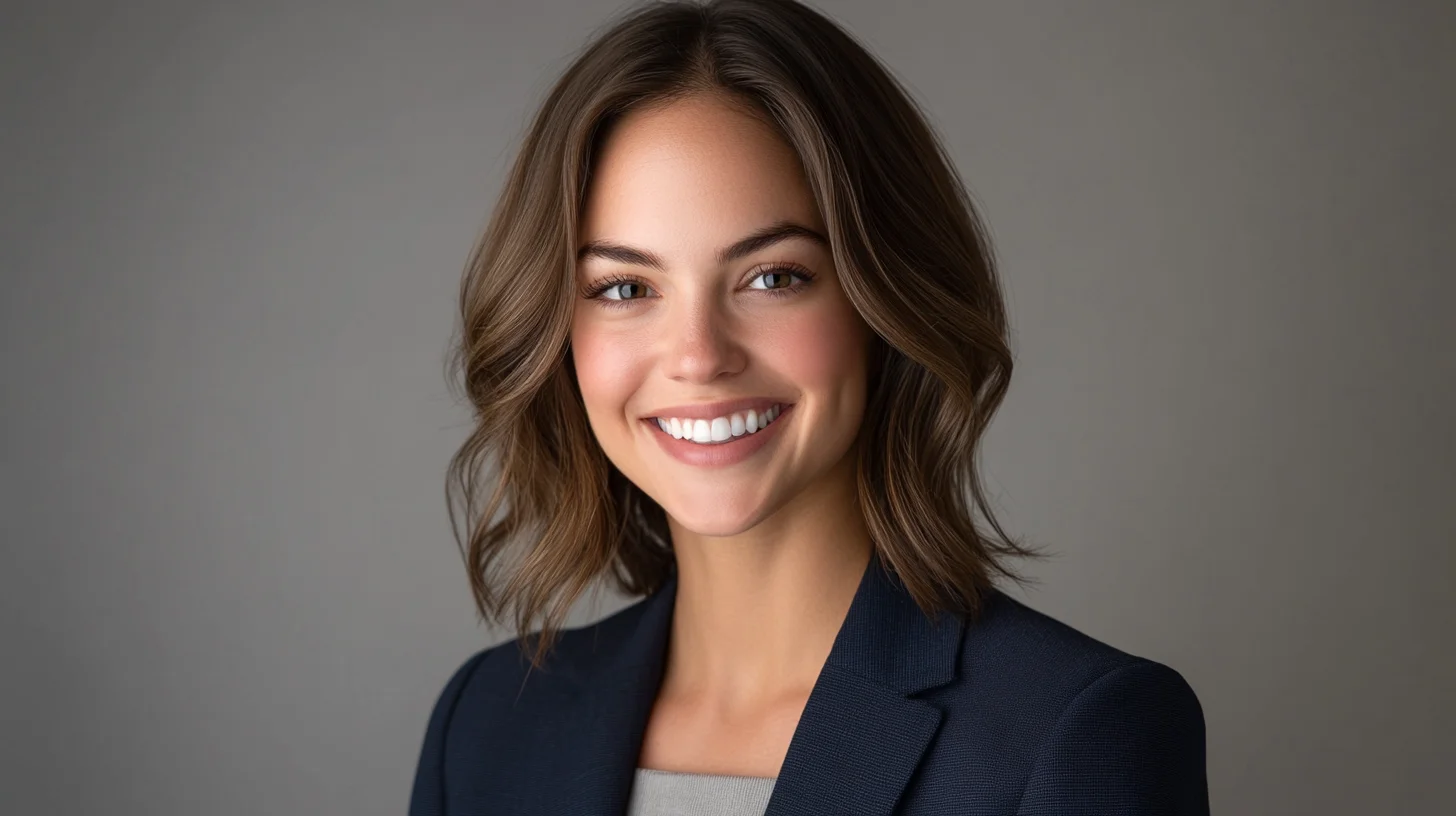
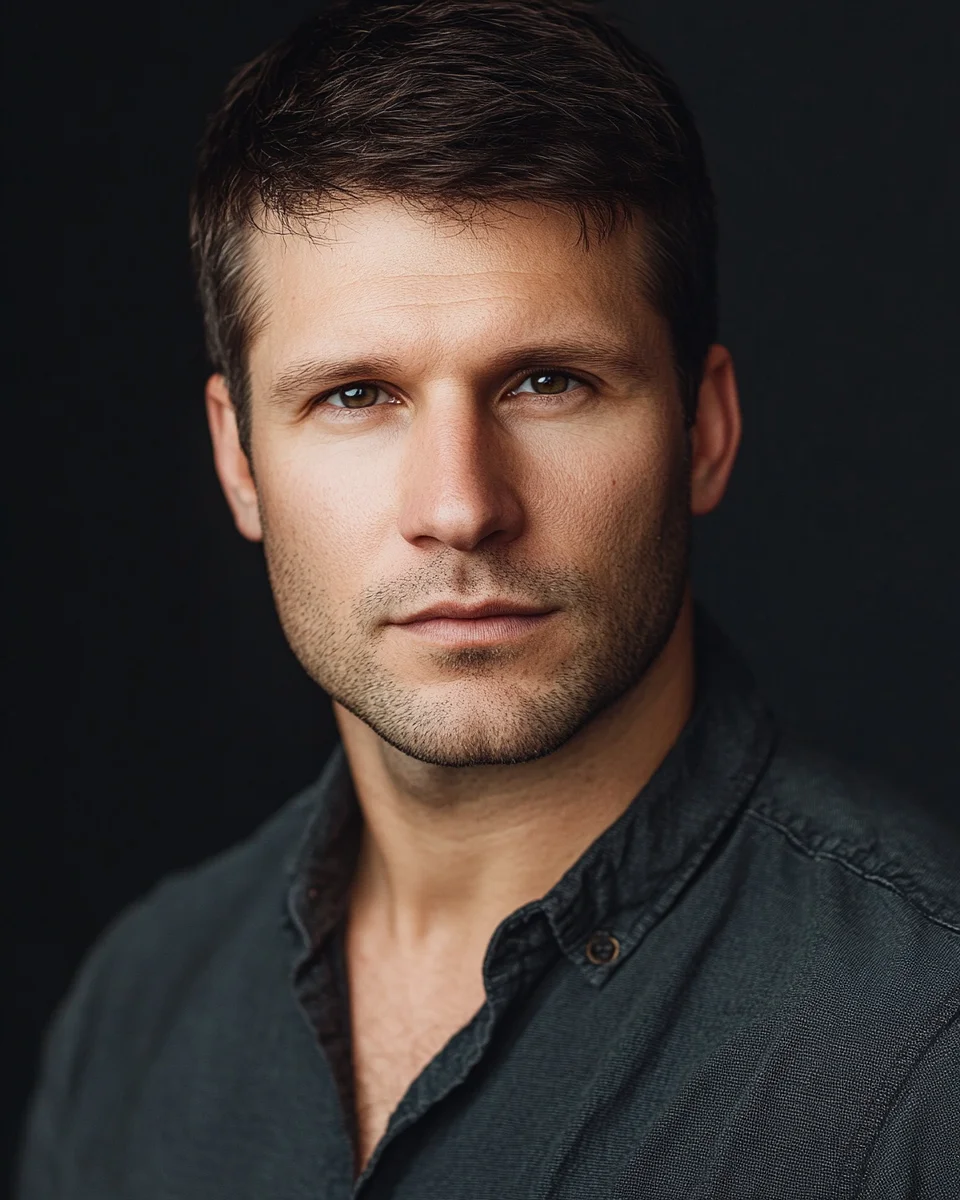
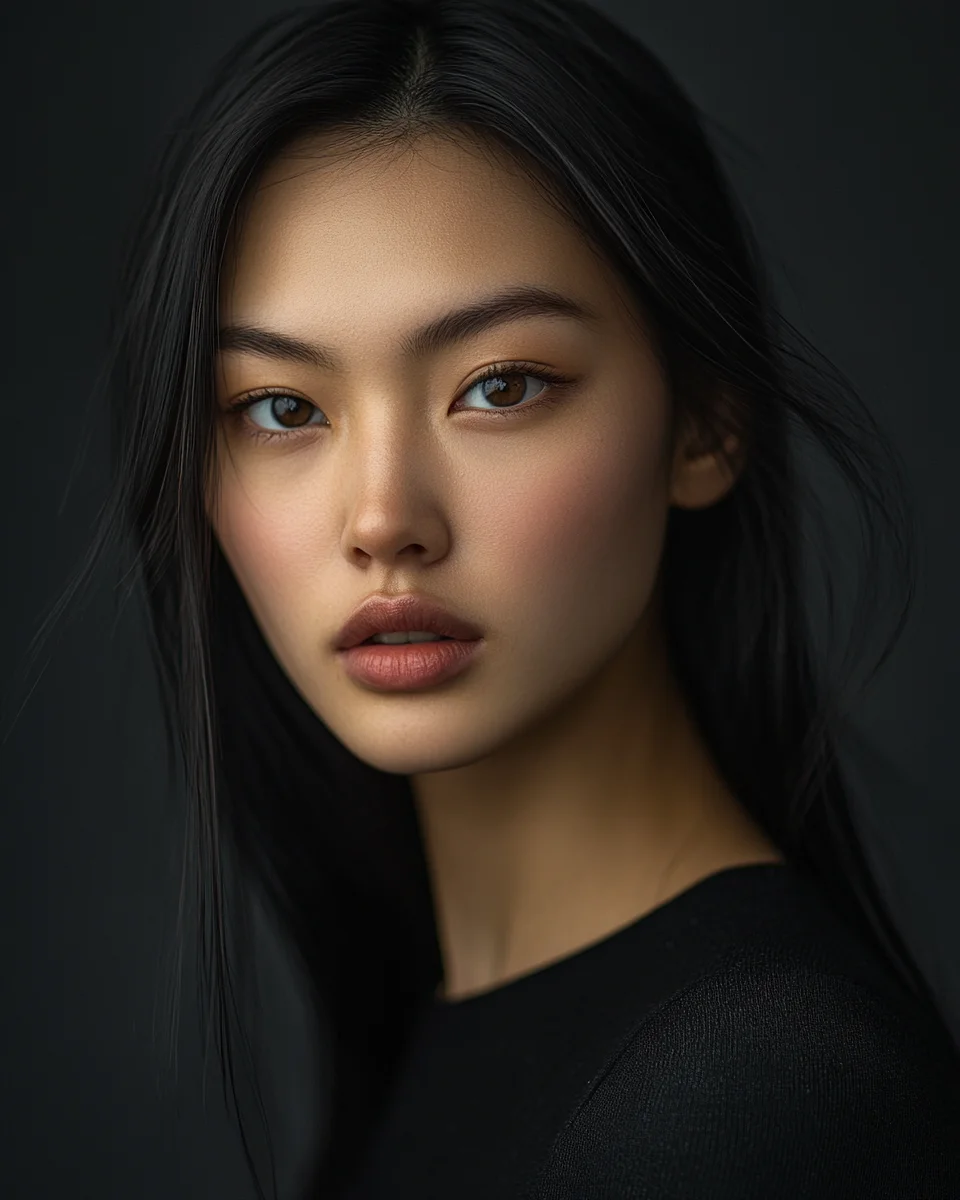
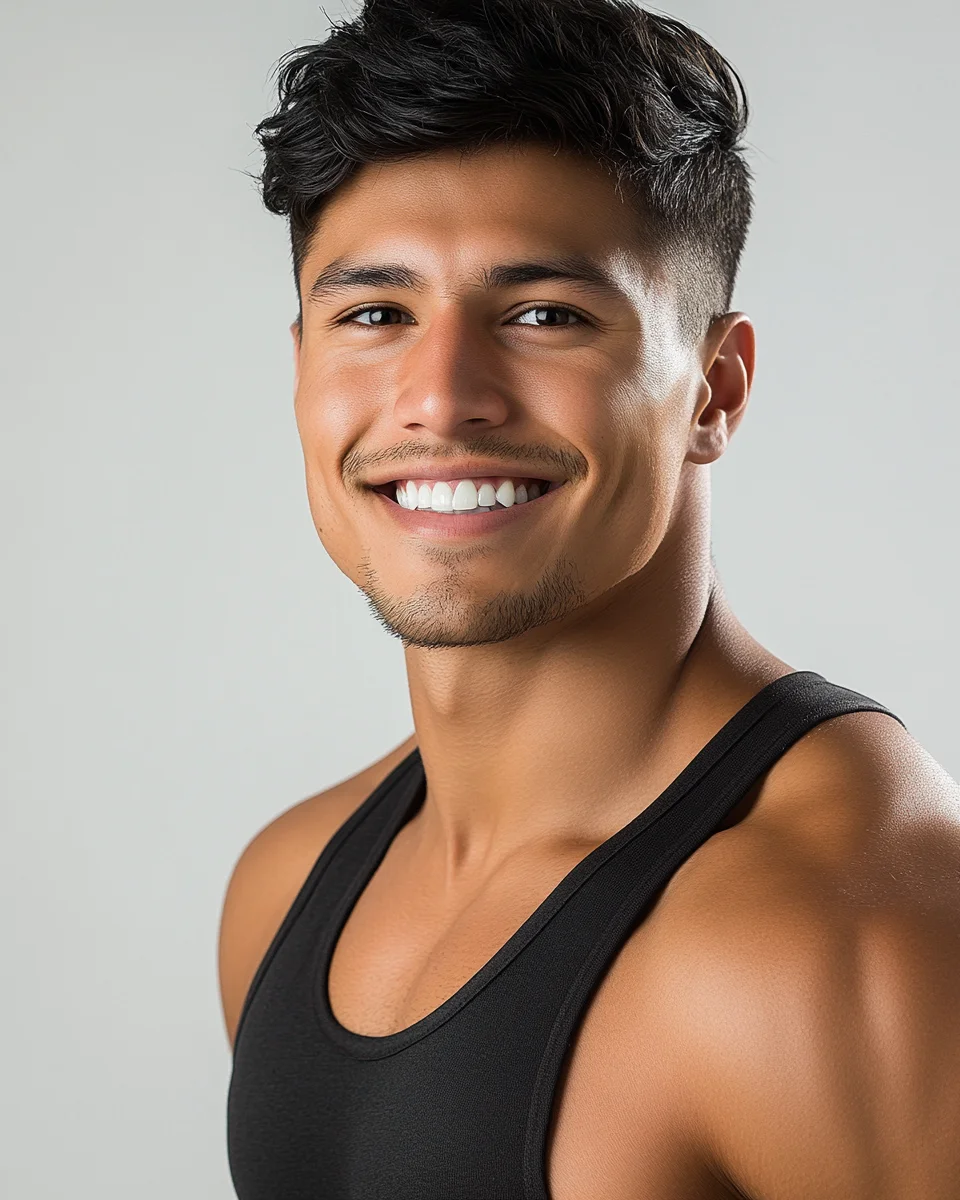
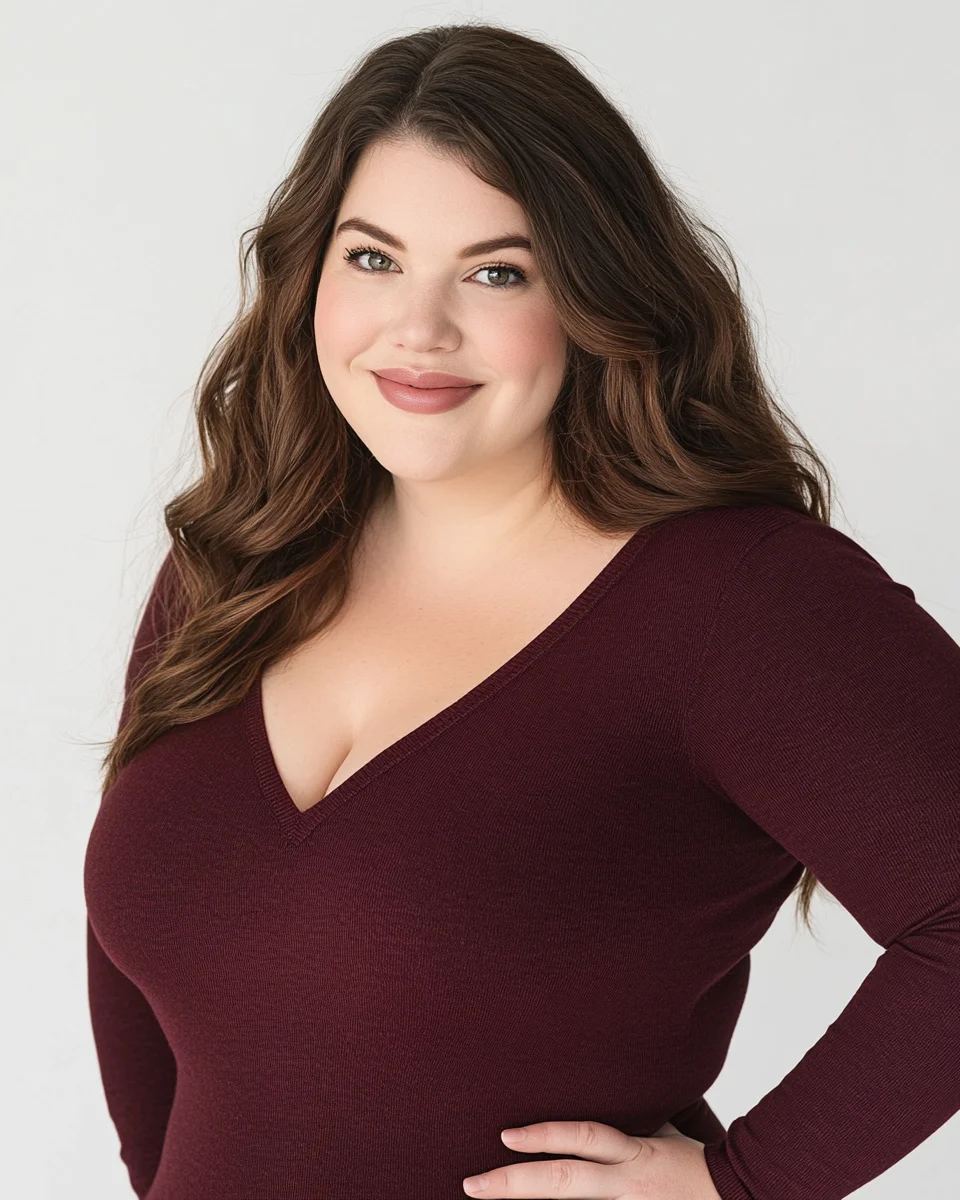
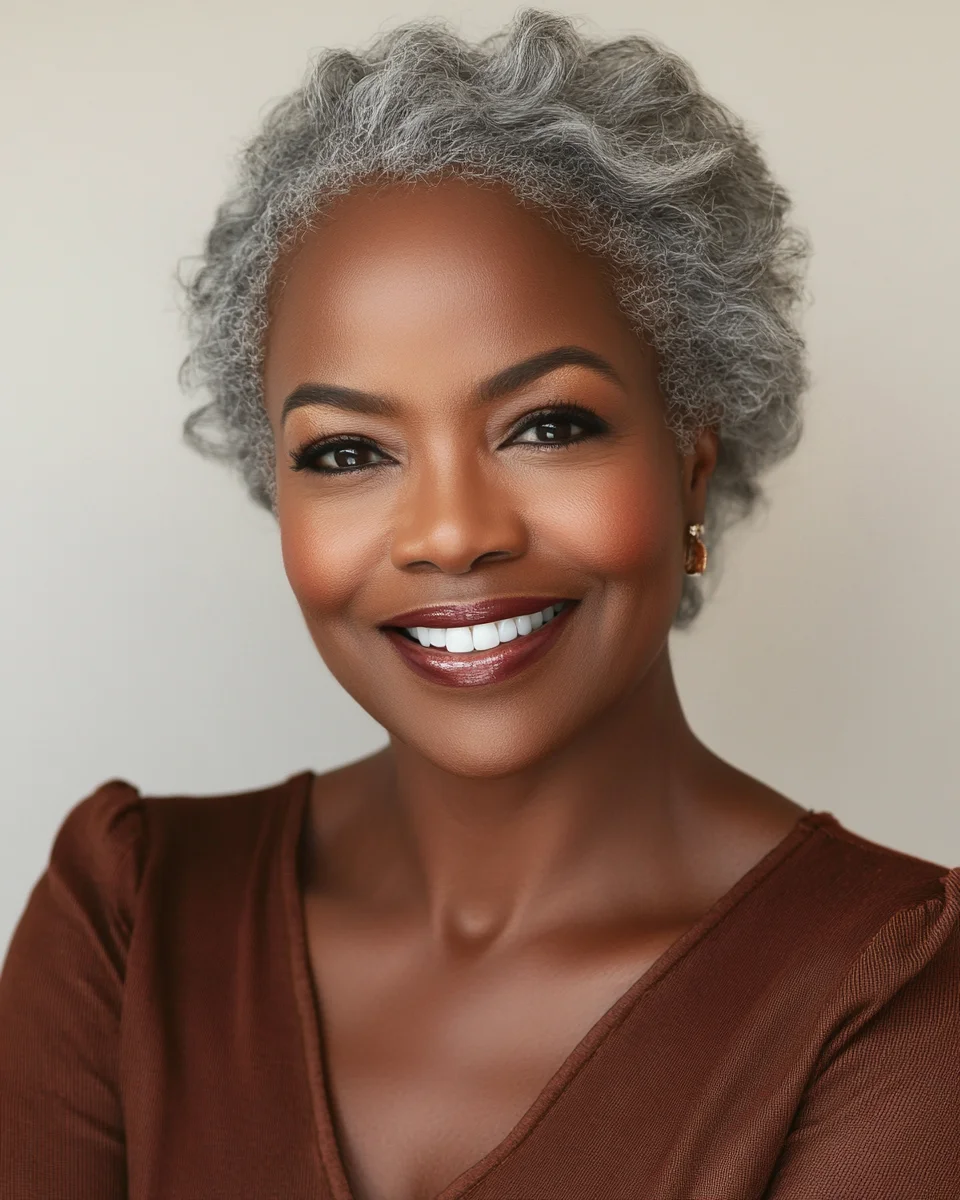
Illustrative examples of each submission look.
What Modeling Headshots Are Actually For
Before getting into specific poses, it is worth being clear about the purpose. Modeling headshots are used for:
- Agency submissions — the first thing an agent sees when you submit to be represented. If the headshot does not immediately communicate that you can photograph, the submission ends there.
- Direct client submissions — casting directors at brands, agencies, and production companies reviewing potential talent for specific jobs.
- Your comp card or digital portfolio — the reference document that represents you in your absence during the casting process.
- Social media profiles for models who are building an audience independently.
In most of these contexts, the person looking at your headshot is looking at dozens or hundreds of other headshots at the same time. The decision about whether to keep looking or move on happens very quickly. The pose and expression in your headshot need to create an immediate, clear impression in that compressed time window.
The Foundational Principles of Modeling Headshot Posing
The Body Creates the Posture, the Face Tells the Story
A common mistake in modeling headshots — particularly among less experienced subjects — is to focus entirely on the facial expression while neglecting the body. But the body communicates information even when it is not fully visible in the frame. Slouched shoulders read as low energy. A stiff, rigid posture reads as anxious. Relaxed, upright carriage reads as confident and at ease.
Before thinking about what your face is doing, establish the body: stand or sit with upright posture, shoulders relaxed down and back, weight slightly forward. This creates the physical foundation that makes confident facial expressions possible. Trying to project confidence with a collapsed posture is fighting against your own body language.
Angles and Dimension
Straight-on to the camera is the simplest framing, but it is rarely the most flattering or interesting. Turning the body slightly — 15 to 30 degrees off the lens axis — creates a three-dimensional quality in the portrait that straight-on framing lacks. The slight angle elongates the neck, creates a more flattering presentation of the shoulders, and adds visual interest.
From this angled body position, the face can turn back toward the camera — creating the classic three-quarter view that is the workhorse of portrait photography — or continue to look in the direction the body is pointed, for a more profile-oriented composition.
The chin position matters independently of the head angle. Bringing the chin forward and slightly down extends the jaw, reduces the appearance of a double chin, and creates a more defined, clear face shape in the photograph. The opposite — tucking the chin back — shortens the neck and creates visual softness that most modeling headshots want to avoid.
Eye Contact and Gaze Direction
The eyes are where the viewer goes first in any portrait. In a modeling headshot, they need to hold attention and communicate something clearly.
Direct eye contact with the lens is the most powerful choice. It creates a sense of engagement and presence that draws the viewer in. When used with a confident, open expression, direct eye contact communicates that the subject is comfortable being looked at — which is, at a basic level, exactly what a model needs to communicate.
Gaze slightly off-lens — looking just past the camera, or toward a point in the middle distance — creates a more introspective quality. This can work well for certain types of casting and certain expressions, but it should be a deliberate choice, not the default result of looking at something other than the lens.
Looking directly down or away breaks the connection with the viewer and is rarely useful in a primary headshot, though it may have a place in secondary or supporting shots in a broader portfolio.
The Classic Smile: Warmth and Approachability
The smile is the most requested expression in commercial and lifestyle modeling headshots, and it is harder to do well than it looks. A genuine, comfortable smile — one that reaches the eyes and creates natural crinkle lines at the outer corners — reads as warm, approachable, and at ease. A held, performed smile reads as stiff, uncomfortable, and slightly off.
Getting a genuine smile in a headshot session is primarily the photographer's job, not the model's. The photographer needs to create an atmosphere in which the model is genuinely relaxed and amused rather than self-consciously trying to look relaxed and amused. At Photography Shark, this means keeping sessions conversational, creating moments of genuine humor, and shooting continuously rather than in stop-start bursts that break the natural flow of expression.
The technique for the model is to let the smile build rather than to manufacture it from a neutral expression. Starting from a relaxed face, thinking about something actually funny or pleasant, and letting the expression develop naturally produces a more genuine result than switching on a smile on cue.
The Smile with Teeth versus the Closed Smile
Both open (showing teeth) and closed smiles have their place in modeling headshots, and the right choice depends on the type of work you are submitting for.
Commercial and lifestyle casting generally favors an open smile with visible teeth — it reads as accessible, upbeat, and consumer-friendly. High-fashion or editorial casting may favor a more controlled, closed or slight smile that communicates sophistication rather than approachability. Most models benefit from having both options represented in their portfolio.
If you have concerns about your teeth or smile, discuss this with your photographer before the session. Retouching can address minor issues, and good direction can help you find a smile angle and degree of opening that you are comfortable with.
The Confident Stare: Presence and Authority
For editorial, high-fashion, or talent agency submissions, a direct-gaze expression without a smile — what most photographers call the "confident stare" — communicates presence, authority, and the ability to command attention without relying on warmth or approachability.
This is not a blank expression. The eyes need to be actively engaged — bright, focused, present. The difference between a compelling confident stare and a flat, disengaged expression is subtle but immediately visible in photographs. The engaged version communicates "I am here, I am paying attention, I am present." The flat version communicates nothing.
The body position for this expression matters. Upright posture is essential. Any collapse in the posture undermines the authority that the expression is trying to project. A slight forward lean — shoulder toward the camera, chin at a slight downward angle — can add intensity without creating a confrontational quality.
Lighting for this type of expression generally has more contrast and directionality than commercial lighting. A single key light with less fill creates harder shadows that add drama and visual weight to the image. This is part of what distinguishes editorial headshots from commercial ones photographically.
The Playful Angle: Personality and Charm
Not all modeling headshots need to project seriousness or authority. For commercial castings, lifestyle brands, and social media content, a more relaxed, personality-forward expression can be equally or more effective.
The "playful angle" involves a combination of slight head tilt, relaxed body language, and an expression that suggests genuine personality — a contained laugh, a knowing half-smile, or an open and curious gaze. This type of expression is harder to manufacture than a direct smile or a controlled neutral expression precisely because it requires the model to be genuinely relaxed and present.
The head tilt creates an asymmetry that makes the portrait more visually interesting than a perfectly level head. A slight tilt — 10 to 15 degrees — is sufficient to create visual interest without creating a sense of instability or awkwardness.
For this type of shot, a somewhat wider frame — showing more of the shoulders and a bit of environment — can reinforce the relaxed quality of the expression. A very tight crop can feel at odds with the looseness of the pose.
The Soft Gaze: Depth and Emotional Resonance
The soft gaze is a more subtle technique that communicates introspection, emotional depth, and a certain understated quality that works well for editorial contexts or for talent who want to project sensitivity and thoughtfulness rather than high energy.
It involves a slightly lowered gaze intensity — the eyes are open and present but not intensely focused on the lens. The expression is neutral or slightly contemplative. The overall quality is quieter and more inward than a direct stare.
This is a technically tricky expression to photograph because the line between "thoughtful and introspective" and "unfocused and disengaged" is thin and easily crossed. In practice, it requires the model to be actually thinking about something — a memory, an emotion, a concept — rather than simply looking soft. The authentic internal state creates the authentic external expression.
Lighting for this type of expression typically uses softer, more even illumination that does not create dramatic shadows — which would pull in a different emotional direction than the contemplative quality the soft gaze is meant to convey.
Natural Poses and Authentic Movement
One of the most consistent observations from working photographers is that the best headshot expressions are almost never the ones that happen during the posed setup. They happen between the setups, when the model is adjusting, talking, laughing, or just resting.
The reason is simple: during a posed setup, the model is thinking about the pose, which means the expression is secondary and often slightly effortful. Between setups, the model is just being a person, which means the expression is primary and genuinely theirs.
This is why good photographers keep the camera up and running between setups and treat those transitions as part of the session rather than dead time. The frames captured during a natural moment — reaching up to fix hair, reacting to something the photographer says, stretching between setups — often include the most genuine expressions of the entire session.
For models who are less experienced in front of the camera, the best advice is to let the photographer direct the formal poses and to simply be present and responsive the rest of the time. The more you try to manage your own expression consciously, the more effortful the expression looks. The more you trust the photographer and just exist naturally in the environment, the more naturally the good expressions emerge.
Practical Preparation for a Modeling Headshot Session
Clothing
Modeling headshots are typically shot in simple, clean clothing that does not compete with the face. A well-fitting solid-colored shirt or top is the default. The color should complement your skin tone — neutrals and muted colors are safest, but a single piece of color can add visual interest if chosen deliberately. Avoid patterns, large logos, and anything with heavy texture that will draw the eye away from the face.
Bring multiple options. What looks good in the mirror at home may interact differently with the studio lighting and background. Having two or three choices allows for in-session adjustments.
Grooming and Skin
Simple, clean grooming is the goal. For those who wear makeup: a natural, enhancing approach that evens skin tone and adds definition without looking heavy in photographs. Avoid heavy contouring, which can look artificial under studio lights. For those who do not wear makeup: well-moisturized, clean skin. A small amount of powder to reduce shine can be helpful in studio lighting.
Hair should be clean, styled in a way you are comfortable with, and managed well enough to stay consistent through the session. Wind in outdoor sessions and the heat from studio lights can both affect hair styling.
Mental Preparation
The most useful thing you can do before a modeling headshot session is to decide that the session is an experiment rather than a performance. You are exploring what works and what does not, not proving something or executing a predetermined result. This mental frame reduces self-consciousness and makes it much easier to be genuinely present.
Look at headshots that you respond to — not to copy them, but to get a sense of what quality or combination of qualities you want your headshots to project. Bring those references to the session and discuss them with the photographer. Clear communication about the goal at the beginning of the session is much more efficient than trying to find it through trial and error.
Why South Shore Models Choose Photography Shark
Photography Shark has worked with models, actors, and professionals across Boston and the South Shore for more than a decade. The studio in Rockland is equipped with professional strobe lighting, multiple backdrop options, and the Sony Alpha camera system used by working photographers who require the highest image quality.
Sessions are efficient and goal-oriented. The pre-session consultation identifies what the headshots need to accomplish and how they will be used. The session itself is designed around getting the best possible expressions — not just technically correct photographs — and the editing process produces clean, polished final images that hold up in professional contexts.
Headshot Studio sessions start at $395 and include multiple looks with comprehensive editing. Sessions are available for individual models, actors seeking agency submissions, and corporate clients who need professional headshots.
Ready to Book Your Session?
Whether you are submitting to agencies, building your commercial portfolio, or updating your professional presence, a well-executed headshot is the foundation that everything else builds on.
Contact Photography Shark today to book your session. The studio is at 83 E Water Street, Rockland, MA 02370, and serves clients across the South Shore and greater Boston area.
Boston headshot cost breakdown · Studio headshots near Rockland, MA · Audition headshots for dancers
Further reading: musician headshot and press photo guide.
Frequently Asked Questions
How much does a modeling headshot session cost at Photography Shark?
Photography Shark's model portfolio packages: Bronze $200 (45 min, 5 images), Silver $350 (1 hour, 10 images), Gold $595 (1.5 hour, 20 images), Platinum $795 (2 hour, 30 images). Gold ($595) or Platinum ($795) are the right choices when you need multiple poses and expressions for agency submissions — both cover multiple outfit changes and deliver the range agencies expect.
What poses work best for agency submission headshots?
Clean three-quarter angles with relaxed, upright posture and a genuine expression are the standard for agency submissions. Chris McCarthy directs every pose during the session — you don't need to know what to do when you arrive.
Do you give posing direction during the session?
Yes. Chris McCarthy actively directs posing, expression, and body positioning throughout every session at the Rockland studio. Clients don't need prior modeling experience — the direction is part of what the session includes.
Where is the Photography Shark studio?
83 E Water Street, Rockland, MA 02370 — accessible from Quincy, Braintree, Hingham, Scituate, Norwell, Marshfield, and Plymouth without driving into Boston.
How many looks can I get in one modeling headshot session?
The Gold package (1.5 hour, 20 retouched images, 3 outfits) at $595 is designed for two to three distinct looks — different outfits, lighting setups, and expressions to give agencies variety within a single submission package. Platinum ($795, 2 hour, 30 images, 4 outfits, 2 backdrops) extends this for serious multi-agency builds.
How long until I get my finished modeling headshots?
Edited images are delivered within 3–5 business days of your session.
What should model headshots look like?
Clean, simple, and face-forward. A strong model headshot is shot against a plain seamless backdrop (grey, white, or black), with the body angled 15–30° off-square, the chin slightly forward and down, and the eyes engaged with the lens. Wardrobe is a well-fitting solid-color top with no logos or busy patterns, makeup is natural, and the expression is genuine — a warm commercial smile or a composed neutral with active eyes. The image should communicate "this person photographs well and has presence" within two seconds.
What is a modeling headshot?
A modeling headshot is a clean, tightly framed photograph of a model's face and shoulders used for agency submissions, casting, and comp cards. Unlike a creative or editorial portrait, its only job is to show an agent or casting director — quickly and honestly — what the model actually looks like and how they photograph. It is typically shot in a studio on a plain backdrop with minimal styling so nothing distracts from the face.
How do you take professional headshots for modeling?
Use a plain seamless backdrop and soft, even studio lighting (a large softbox or beauty dish), shoot at a flattering focal length (85–135mm equivalent) at the model's eye level, and frame from mid-chest up. Direct the model into a body angle 15–30° off-square with the chin forward and down, keep the eyes engaged, and shoot continuously to catch genuine expressions between posed setups. Keep wardrobe and makeup simple, capture a range (commercial smile, composed neutral, editorial), and retouch lightly so the result still looks like the person.
What should you wear for a modeling headshot?
A well-fitting, solid-color top with a simple neckline — fitted but not baggy or tight, in a color that contrasts your skin tone. Black, white, grey, and muted jewel tones photograph best. Avoid logos, busy patterns, heavy textures, and large jewelry, all of which pull the eye away from your face. Bring two or three options so you can adjust to the backdrop and lighting, and for agency submissions include at least one fitted top that shows your natural shape.
Related Posts
Headshots
Headshot Poses for Women: A Practical Guide
Headshots
Headshot Poses for Men: A Practical Guide
Headshots
Professional Headshot Poses: A Guide for Business Professionals
Headshots
How to Prepare for Pageant Headshots: A Complete Prep Guide
Headshots
ERAS Photo Guide: The Residency Application Headshot, Explained
Headshots
Average Professional Headshot Cost by City: 2026 Data Study
You Might Also Like
About the Author
Chris McCarthy
Chris McCarthy has run Photography Shark Studios in Rockland, MA for over 10 years and 500+ sessions, with executive headshot work for Rockland Trust, Clean Harbors, M&T Bank, and McCarthy Planning; founder portraits for AI startups including Lowtouch.ai; product photography for South Shore brands like Lauren's Swim; and headshots across South Shore legal, medical, financial, and academic practices. Every session is personally shot and edited by Chris on Sony mirrorless and Godox strobe systems — no assistants, no outsourcing, no batch retouching. Galleries deliver in 3–5 business days. About Photography Shark →
Photography Shark · Boston & South Shore MA
Ready to Book a Session?
Professional headshots, senior portraits, boudoir, and model portfolios. Studio in Rockland, MA — 25 miles south of Boston. Sessions from $395.