Trainers · Athletes · Fitness Models · Gyms
Fitness Photography for Boston & the South Shore
Studio fitness and physique photoshoots in Rockland, 35 minutes south of Boston. Hard, directional strobe light that shows the conditioning you trained for, posing direction for people who aren't professional models, and images licensed for your marketing. Sessions from $395.


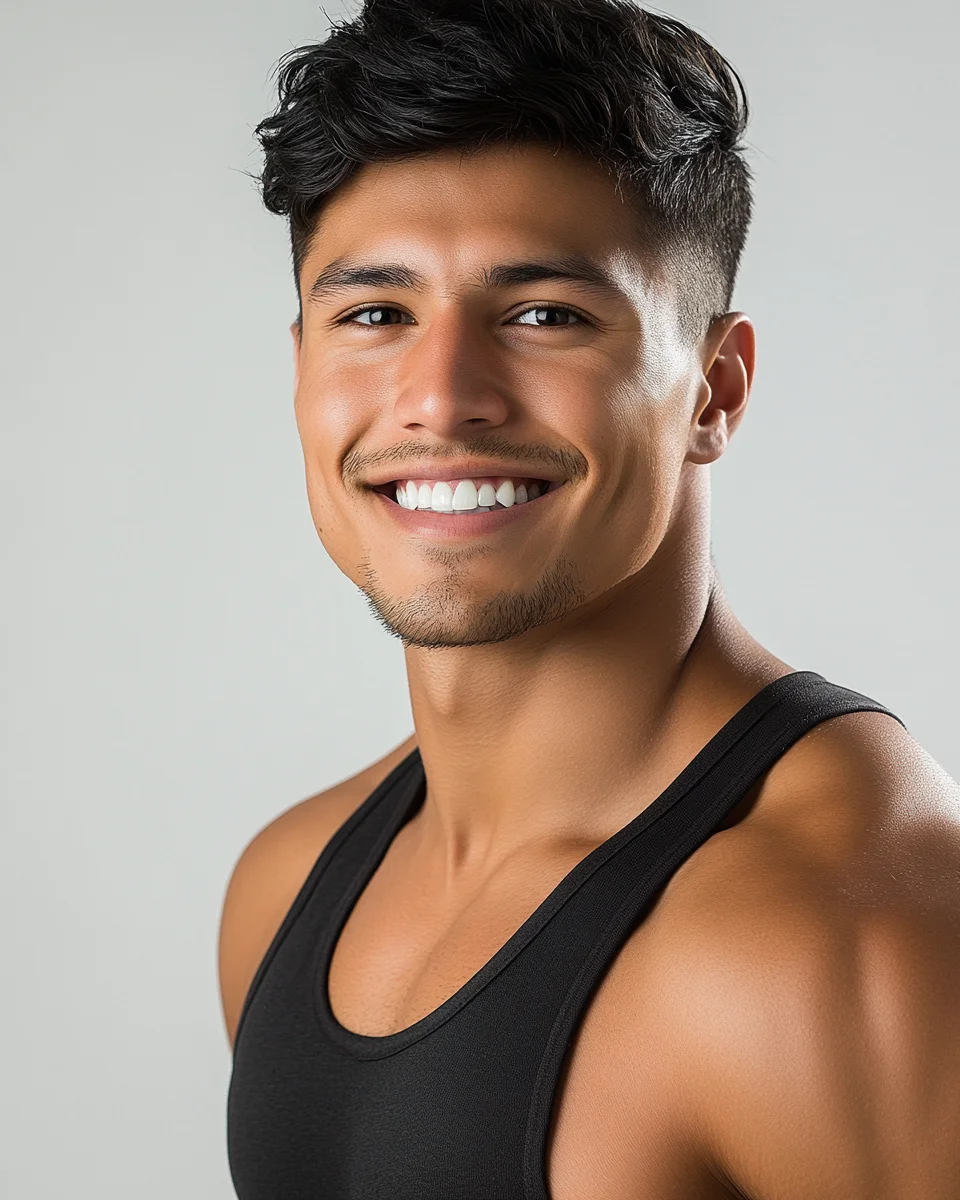
Who Books Fitness Sessions
Four Clients, Four Different Shoots
The most common confusion at booking is between a trainer building a brand and an athlete documenting condition. They need different light, different posing and a different number of frames, so we scope them separately.
Personal Trainers & Coaches
Website, social and program-launch imagery. Approachable, brand-consistent frames across several outfits: coaching shots, instructional setups and personality-forward portraits.
Physique & Competition Athletes
Technical physique work — hard directional light that separates muscle groups, front and back poses, and a repeatable setup for documenting prep or a show peak.
Fitness Models
Portfolio images built for the Boston market: a commercial headshot, an athletic full-length, a lifestyle fitness frame, a studio athletic image and one editorial range shot.
Gyms & Fitness Brands
Membership campaigns, coach rosters, apparel and supplement imagery. Shot in the studio or at your facility, quoted by scope and usage.
Why Studio Light Matters
Shadows Do the Work in Fitness Photography
Muscle definition only reads on camera when the light creates shadow across the contours of the body. Soft, even light — the kind that flatters a wedding portrait — fills those contours in and makes a lean physique look softer than it is. The same person under a hard side light looks dramatically more defined, not because anything about them changed, but because the light is sculpting the form instead of flattening it.
The Rockland studio runs Godox strobes with grids, snoots and small softboxes, so the falloff can be controlled precisely. Three setups cover most fitness work:
Hard side light with black negative fill. The classic physique-magazine setup. A strong key at roughly 45 degrees, with a black V-flat on the opposite side absorbing bounce so the shadow side stays dark. This is what makes shoulders, lats, abs and quad separation read.
Top light. Steep overhead light for competition-style work where the cuts in the shoulders and chest should dominate. Striking, but too theatrical for most trainer marketing or wellness brands.
Soft directional with a rim kicker. The commercial version: a large soft key from one side and a small accent light on the far shoulder. Reads healthy and athletic without looking hard — the default for trainer websites and healthcare or wellness submissions.
Most sessions move between two of these as we change looks, so you leave with images that work for both your marketing and your physique record.
For Coaches
Transformation Photos You Can Actually Trust
A before-and-after pair is only convincing if the photograph is the one thing that didn't change. Phone pictures in different rooms, at different times of day, with different angles invite the obvious question about what was really improved. A studio series removes it: identical lighting positions, backdrop, pose, lens and crop at every session, so the viewer compares only the body.
Trainers running transformation programs book a recurring slot every 90 days for their clients, and the setup is recorded so it can be rebuilt exactly months later. The resulting pairs are among the most persuasive marketing a coach can publish, because they are verifiably real.
Before Your Session
Prep, Conditioning and Wardrobe
Match your conditioning to the look. Over-peaking is a more common mistake than under-peaking. For trainer marketing and commercial fitness, show up looking like a healthy person who trains: normal hydration, normal meals, no water manipulation. For physique work, a lower-sodium day before and no late heavy carbohydrates help, but full peak-week protocols are too extreme for a photoshoot — save them for the stage.
Time your training.Train normally until 48 hours out, then back off. A heavy chest and shoulder day the day before leaves you flat. A light pump 30 minutes before arrival — bands, push-ups, light dumbbells — brings fullness and vascularity, but only if you've tried it before. Don't experiment on session day.
Wardrobe. Bring three to four options in different tones: neutral black and grey, branded if you have it, and one colour that suits your skin. Compression fabrics keep the body line; loose gym wear hides it. Skip large logos. For physique work, plain solids are the standard. Bring clean shoes.
Grooming. A fresh haircut a few days before, not the morning of. Hair styled for an athletic context rather than an evening out.
Studio or Your Gym
When On-Location Is the Better Call
Most fitness work is better in the studio: full lighting control, wall-to-wall seamless backdrops for full-length frames without compromise, and free parking for anyone hauling gear or several outfits. But coaches who teach in a particular gym often want imagery that places them in it, and athletes sometimes want their actual rack, platform or turf in the frame. Those sessions run on location across the South Shore and Boston and are quoted by scope.
Many clients combine a fitness session with a headshot or portfolio look in the same booking. If you also need a clean modeling headshot or a broader model portfolio, say so when you book and we'll plan the session length around both.
Packages
Fitness Session Pricing
Every package includes individually retouched images, a commercial use license and a private online gallery delivered in 3–5 business days. Additional images are $20 each. If you're not happy with your photos for any reason, I'll reshoot once at no charge.
Bronze
$395
45 minutes · 1 outfit · 10 images
One focused physique look or a single-purpose marketing pull.
Silver
$495
1 hour · 2 outfits · 15 images
Physique plus one commercial look, or a trainer profile refresh.
Gold
$595
1.5 hours · 3 outfits · 20 images
Trainer website and social launch, or a fitness model portfolio build.
Platinum
$795
2 hours · 4 outfits · 2 backdrops · 30 images
Full commercial-to-physique range for models and coaches with a brand.
Gym campaigns, coach rosters and brand projects are quoted individually based on scope, usage and crew. Full package details are on the portfolio packages page.
Free Cheat Sheet
Fitness Posing Cheat Sheet
Physique and action poses, the three lighting setups, prep and wardrobe, what to avoid and the coaching cues used in the studio, on one page. Save it to Pinterest for your next shoot, or bring it to your session.
Save to Pinterest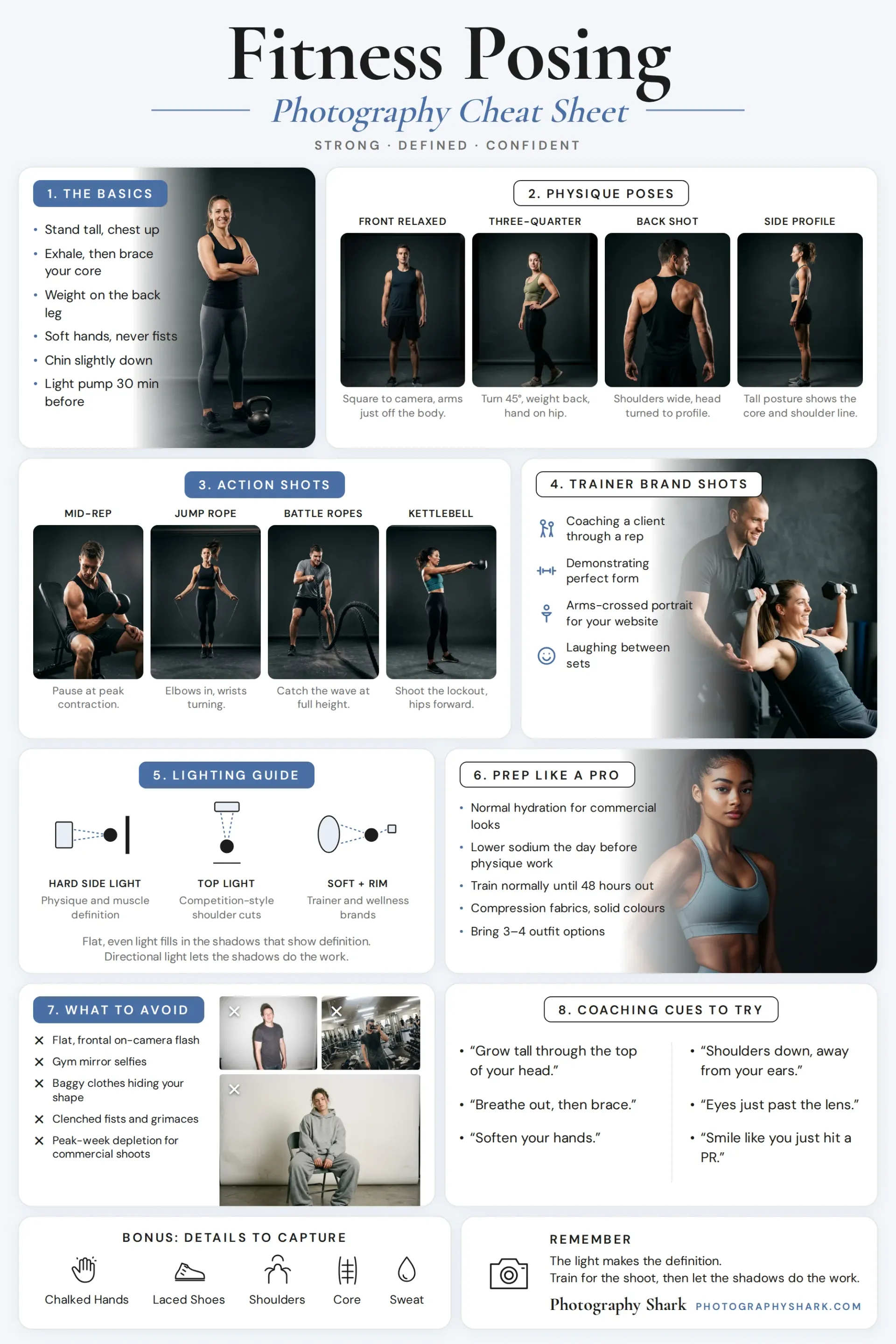
FAQ
Fitness Photoshoot Questions
How much does a fitness photoshoot cost?
Studio fitness sessions use the Photography Shark portfolio packages: Bronze $395 (45 minutes, 10 retouched images), Silver $495 (1 hour, 15 images), Gold $595 (1.5 hours, 20 images) and Platinum $795 (2 hours, 30 images). Physique documentation usually fits Bronze or Silver; trainer marketing and full fitness portfolios usually need Gold or Platinum. Commercial gym and brand projects are quoted individually.
How should I prepare for a fitness photoshoot?
It depends on the look. For trainer marketing and commercial fitness work, stay normally hydrated, eat normally and do not manipulate water — depleted skin reads gaunt under soft commercial light. For physique work, a lower-sodium day before and a light pump session 30 minutes before arrival help definition. Either way, train normally until 48 hours out, then back off. Chris gives specific prep guidance at booking.
What should I wear to a fitness photoshoot?
Bring three to four options in different tones: a neutral black-and-grey set, a branded set if you have one, and one colour that suits your skin tone. Compression fabrics photograph better than loose athletic wear because they keep the body line. Avoid large logos. Bring clean athletic shoes that match the looks.
Can you shoot at my gym instead of the studio?
Yes. Coaches who want imagery in their own training space, and athletes who want their actual rack or platform in frame, are often better served on location. On-location fitness sessions across the South Shore and Boston are quoted by scope. Most physique work is still better in the studio because the lighting can be fully controlled.
Can I use the photos for marketing and social media?
Yes. Every package includes a commercial use license covering your website, social media, ads, print marketing, agency submissions and sponsorship pitches, with no additional licensing fees. Brand campaigns where a company licenses the images are quoted separately.
Do you shoot before-and-after transformation photos?
Yes. Transformation series are shot with identical lighting, backdrop, pose and crop at every session so the only thing that changes is the body. Trainers running transformation programs often book a recurring slot every 90 days for their clients.
Where is the studio?
Photography Shark is at 83 E Water Street, Rockland MA 02370 — about 35 minutes south of Boston via Route 3, with free on-site parking. Clients come from Quincy, Braintree, Weymouth, Hingham, Plymouth and Boston.
Book Your Session
Ready to Book Your Fitness Shoot?
Tell me whether you're a trainer, a competitor, a model or a gym, and what the photos are for. Sessions from $395 at 83 E Water Street, Rockland MA — free parking, 35 minutes south of Boston.