Photography Tips
Capturing Elegance: Unveiling the Art of Glamour Photography
How clamshell, Rembrandt, and split lighting define glamour portrait photography — and what to expect at Photography Shark's Rockland, MA studio.
Chris McCarthy
Professional Photographer, Photography Shark · February 21, 2024 · Updated April 2, 2026
Glamour photography occupies a particular space in the portrait world — one where technical lighting craft, thoughtful styling, and a genuine rapport between photographer and subject all converge. Done well, it produces images that feel elevated, confident, and lasting. Done poorly, it produces images that look overworked, artificial, and uncomfortable. Understanding what separates the two is the starting point for anyone considering a glamour-style session.
At Photography Shark in Rockland, MA, glamour-influenced work shows up across several of our services: in boudoir photography, in studio photo shoots, and in certain headshot sessions where clients want an image that reads as polished and confident rather than strictly corporate. This post breaks down what glamour photography actually involves, how it's executed in practice, and how to get the most from a session built around this aesthetic.
What Glamour Photography Actually Is
The term "glamour" gets used loosely, but in photography it has a specific meaning that traces back to Hollywood portrait work of the 1930s and 1940s. Photographers like George Hurrell and Clarence Sinclair Bull developed a style built on controlled studio lighting, careful posing, and retouching that enhanced natural beauty without obscuring it. The goal was a portrait that made the subject look like the best, most confident version of themselves — aspirational but believable.
Contemporary glamour photography draws on those roots while incorporating modern lighting equipment, digital editing tools, and a wider range of styling approaches. The through-line is the same: image-making that prioritizes flattery, sophistication, and a certain deliberate quality in every frame.
Glamour photography is distinct from fashion photography, though they overlap. Fashion photography serves the clothing. Glamour photography serves the person wearing the clothing. That's a meaningful difference in how sessions are structured, directed, and edited.
It's also distinct from boudoir photography, though the two are often conflated. Boudoir is intimate, often private, and frequently involves lingerie or partial undress. Glamour photography can be entirely clothed and is generally oriented toward images that a client might display publicly — in a home, in a professional context, or as a personal portrait.
The Technical Foundation: Lighting
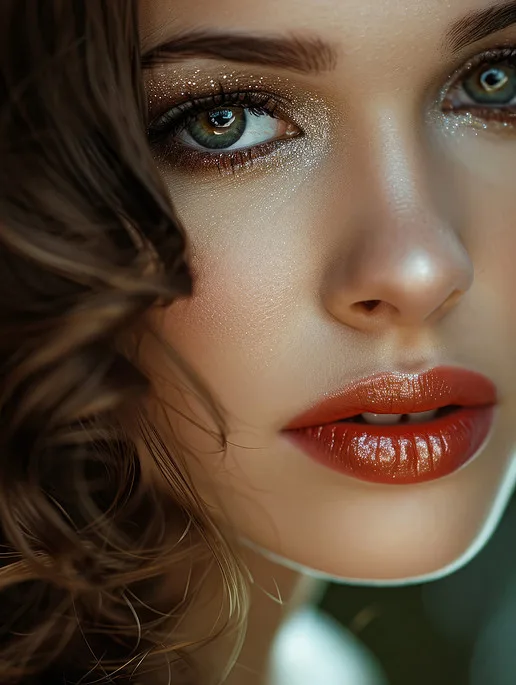
Lighting is where glamour photography lives or dies. The characteristics that define the aesthetic — smooth, even skin tones; bright, defined eyes; reduced shadows in unflattering areas; a sense of luminosity — are all lighting decisions first, editing decisions second.
Clamshell Lighting
The most widely used glamour lighting setup is clamshell lighting: a large softbox positioned above and slightly in front of the subject, paired with a reflector or second light source below the lens axis. The upper light does the primary work of illuminating the face; the lower light fills the shadows that the upper light creates under the chin, nose, and cheekbones.
The result is light that wraps around the face rather than cutting across it. Shadows are soft-edged and minimal. The catchlights — the small reflections of light sources visible in the eyes — appear as bright, full ovals that give the eyes depth and life.
In our Rockland studio, clamshell setups work particularly well for clients who want clean, polished results without heavy post-processing. The light does most of the work in-camera.
Rembrandt and Split Lighting for Drama
Not all glamour work is soft and even. Rembrandt lighting — where the main light is positioned at a 45-degree angle to the subject and elevated, creating a small triangle of light on the shadow-side cheek — produces a more dramatic, sculptural result. It suits clients with strong facial bone structure and those who want an image with more visual tension.
Split lighting, where the light hits exactly one half of the face while the other falls into shadow, is even more dramatic. It's used selectively in glamour work — it reads as high-fashion editorial rather than traditional portrait glamour — but when it's right for a client and their goals, it produces striking results.
Continuous vs. Strobe
In our studio, strobe lighting is the primary tool for glamour work. Strobes freeze movement cleanly, allow precise power control, and produce consistent results across a long session. Continuous LED panels are useful for adjustment and for clients who want to see the lighting effect in real time before the session begins.
For outdoor glamour-influenced sessions — which we occasionally do at South Shore locations like World's End in Hingham or Cohasset Harbor — the approach shifts to working with the existing light, modified with reflectors and, where appropriate, a small strobe or portable LED as fill.
Posing and Direction
Posing in glamour photography is intentional and specific, but the best glamour images don't look posed. They look natural, confident, and slightly effortless — the result of a photographer who knows what they're looking for and a subject who has been guided into position without feeling constrained.
The Core Principles
Angle the body. Full-face, square-to-camera positions can flatten features. Turning the body 30 to 45 degrees from the lens and then turning the face back toward the camera creates depth and natural slimming.
Lower the shoulders. Tension in the shoulders reads immediately in portraits. Conscious relaxation of the shoulder muscles changes the entire quality of an image. A useful cue: ask the subject to take a breath in and then exhale completely before the frame.
Use the chin strategically. Bringing the chin slightly forward and down reduces the appearance of a double chin, opens the eyes wider, and creates a more defined jawline. It's a counterintuitive move — most people want to pull back slightly when a camera is close — but it's consistently flattering.
Hands with intention. In glamour portraits, hands that hang or dangle read as unfinished. Hands placed with intention — lightly touching the jaw, resting on a shoulder, framing the face without pressing — add structure and elegance to the frame.
Building Confidence During the Session
The most technically perfect lighting setup produces mediocre images if the subject is uncomfortable. Part of the work of glamour photography is creating conditions where subjects feel seen, confident, and capable of genuine expression.
In practice, this means starting slow. The first frames of any session are rarely the best — they're warm-up frames, diagnostic frames that tell the photographer how the subject moves, how they respond to direction, what their natural resting expression looks like. The session builds from there.
Showing clients frames on the back of the camera during the session, when they're genuinely good frames, builds momentum and trust. When subjects see that they look the way they hoped to look, they relax in a way that nothing else produces.
Styling and Wardrobe for Glamour Sessions
Styling is as much a part of glamour photography as lighting. The wardrobe, hair, and makeup in a glamour portrait are not incidental — they're compositional elements that shape the entire image.
Wardrobe Principles
Solid colors and simple patterns are more flexible than busy prints in glamour work. The goal is to keep visual weight in the face and upper body. A deep, rich solid — burgundy, navy, emerald, black — photographs with a presence that light pastels or white often don't.
Neckline is important. V-necks and off-shoulder cuts elongate the neck and create a natural eye path toward the face. Turtlenecks and high necklines can compress the visual space between chin and collar in unflattering ways, depending on the subject's proportions.
Fit matters enormously. A well-fitted garment reads as intentional and polished. Anything that pulls, bunches, or sags at the wrong place will show up in the final images and is difficult to correct in post.
Hair and Makeup
For glamour-influenced sessions, I recommend professional hair and makeup if it's within a client's budget. The difference in the final images is real and significant — not because clients don't know how to style themselves, but because professional makeup is formulated and applied differently for photographic work, and a professional hair stylist understands how volume and movement translate under studio lighting.
For clients who prefer to do their own hair and makeup, the key adjustment is going slightly heavier than everyday makeup. Studio lighting, even soft light, flattens the appearance of makeup that reads naturally in ambient light. Slightly more defined brows, slightly deeper lip color, and more deliberate contouring than usual will read correctly in the final images.
Editing in Glamour Photography: Enhancing Without Erasing
Post-processing in glamour photography has a specific mandate: enhance what's there without removing the person. Over-retouched glamour portraits have a plastic, artificial quality that undermines the confidence and authenticity the style is supposed to convey.
In practice, glamour retouching typically involves frequency separation to smooth skin texture while preserving pores and fine details, dodging and burning to refine the lighting that was established in-camera, eye enhancement through selective brightening and sharpening, and color grading to establish a consistent tonal quality across the set.
What it doesn't involve is removing structural features of the face, dramatically altering body proportions, or applying smoothing so heavy that the subject looks like a composite rather than a person.
The best glamour retouching is invisible. The image looks natural and flattering; it's impossible to identify exactly what was done.
Who Benefits from Glamour-Style Photography
The honest answer is: most people, for the right purpose. The glamour aesthetic isn't exclusively for models or performers. The principles of flattering light, intentional posing, and careful styling improve almost any portrait session.
For headshot clients who want an image that conveys confidence and polish — actors, executives, entrepreneurs — glamour lighting techniques produce results that straight natural-light headshots often don't.
For boudoir sessions, the glamour foundation is central to the work. These sessions are about celebrating the subject, and the lighting and posing principles that define glamour photography are directly applicable.
For studio photo shoots — whether for personal portraits, milestone celebrations, or creative projects — glamour influences produce images with a finished, professional quality that clients can display with confidence.
South Shore Clients: What to Know
Photography Shark serves Boston and the full South Shore — from Quincy and Braintree south through Hingham, Cohasset, Norwell, Scituate, Marshfield, Duxbury, and Plymouth. Our studio is in Rockland, which puts us roughly equidistant from most South Shore towns and well within reach for clients coming from the Boston side.
For glamour and glamour-influenced sessions, the studio environment is typically the right setting. Controlled lighting, comfortable temperature, privacy, and the ability to direct the session without environmental variables all contribute to better images. That said, some clients want an outdoor component — the South Shore has no shortage of compelling natural settings — and we're experienced at adapting glamour lighting principles to outdoor locations.
If you're considering a studio session with a glamour or elevated portrait approach, the process starts with a brief pre-session conversation about your goals, intended use for the images, and styling preferences. That conversation shapes the session and the final results significantly.
Ready to Book Your Session?
Whether you're interested in a classic glamour studio session, an elevated headshot, or a boudoir experience, Photography Shark brings 10+ years of portrait experience and a genuine commitment to images that look like you — only polished, confident, and exactly right.
Contact us to start planning your session.
Rockland, MA headshot studio · Hingham, MA headshot studio Further reading: Boston pageant headshots.
Frequently Asked Questions
What is glamour photography and how is it different from boudoir?
Glamour photography uses controlled studio lighting and deliberate posing to produce polished, public-facing portraits. Boudoir is more intimate and typically involves lingerie. At Photography Shark in Rockland, MA, glamour work appears across studio shoots, certain headshot sessions, and boudoir-adjacent services.
What lighting setups does Photography Shark use for glamour sessions?
Chris McCarthy uses clamshell lighting for clean, flattering skin tones; Rembrandt lighting for more sculptural drama; and split lighting for high-fashion editorial results. The setup is chosen based on your facial structure and goals for the session.
How long does a glamour session at Photography Shark take?
Studio shoots start at 30 minutes for focused sessions and run up to 90 minutes for more comprehensive work. Chris will recommend a session length based on the look count and wardrobe changes you have planned.
Where is Photography Shark's studio located?
At 83 E Water Street, Rockland MA 02370 — about 25 minutes south of Boston, convenient for clients from Hingham, Scituate, Norwell, Quincy, and across the South Shore.
Do I need professional hair and makeup for a glamour session?
It's strongly recommended. Glamour photography is a production — styling choices directly affect how the images read. Photography Shark can advise on hair and makeup artists familiar with what reads well on camera.
How soon will I receive my images after a glamour session?
Edited galleries are typically delivered within one to two weeks. Chris McCarthy handles retouching in-house to maintain consistency across the final images.
Related Posts
You Might Also Like
About the Author
Chris McCarthy
Chris McCarthy has run Photography Shark Studios in Rockland, MA for over 10 years and 500+ sessions, with executive headshot work for Rockland Trust, Clean Harbors, M&T Bank, and McCarthy Planning; founder portraits for AI startups including Lowtouch.ai; product photography for South Shore brands like Lauren's Swim; and headshots across South Shore legal, medical, financial, and academic practices. Every session is personally shot and edited by Chris on Sony mirrorless and Godox strobe systems — no assistants, no outsourcing, no batch retouching. Galleries deliver in 3–5 business days. About Chris McCarthy →
Photography Shark · Boston & South Shore MA
Ready to Book a Session?
Professional headshots, senior portraits, boudoir, and model portfolios. Studio in Rockland, MA — 25 miles south of Boston. Sessions from $395.