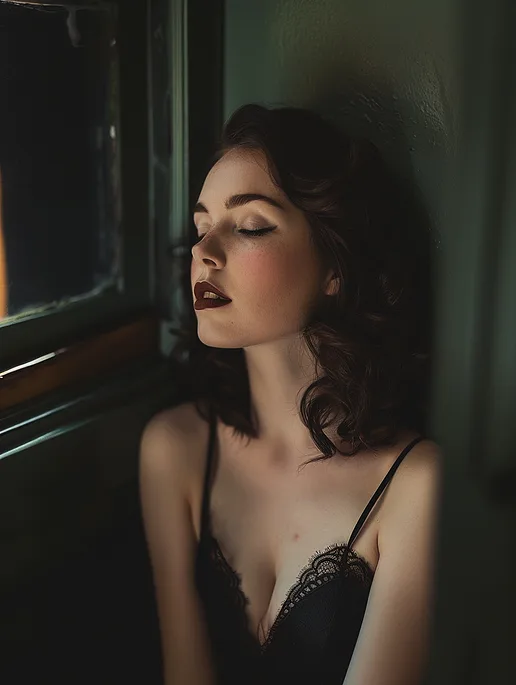
Boudoir Photography
Pre-Session Nerves: Boston Boudoir Guide
Almost every boudoir client arrives nervous. Practical strategies — wardrobe, visualization, breathing — that Chris McCarthy uses to ease anxiety.
Chris McCarthy
Professional Photographer, Photography Shark · January 28, 2025 · Updated May 24, 2026
Pre-session nerves are not a problem to solve before arriving at the studio. They are a standard part of the process — as universal and predictable as the nervousness before a job interview or a first date. Over a decade and hundreds of boudoir sessions at the Rockland studio, Chris McCarthy has observed that the correlation between pre-session anxiety and post-session satisfaction is consistently positive: the clients who arrive most nervous are often the ones who leave most surprised by what the camera captured. The nervousness is not a sign that you are wrong for this; it is a sign that you care about the outcome.
This guide covers the specific strategies — before, during, and after arrival — that reduce anxiety without eliminating the productive tension that actually makes for better photographs.
Before the session: what you can control
The pre-session consultation is the single most important anxiety reducer
The consultation is not a formality. It is the conversation where the session stops being an abstract concept ("I'm doing a boudoir session") and becomes a specific plan ("I'm shooting three looks at 2:00 PM on Saturday, starting with the silk robe, moving to the black lingerie set, finishing with the boyfriend shirt, and Chris will show me images on the monitor after the first ten frames"). The more specific the plan, the less room anxiety has to fill with invented worst-case scenarios.
During the consultation, Chris covers goals, boundaries, wardrobe selection, timeline, and what the session will actually look and feel like. Ask every question you have — there are no unusual or inappropriate questions in this context. The clients who arrive most prepared for the session are the ones who used the consultation to eliminate unknowns.
Wardrobe decisions made at home, not at the studio
Do not bring your wardrobe to the studio hoping to decide on the day. Decision fatigue under anxiety amplifies self-consciousness. The fix: try every option at home, in your bedroom, with the door closed. Stand in front of a full-length mirror in each piece and notice your first reaction. If a piece makes you feel powerful, confident, or quietly pleased — bring it. If it makes you adjust, tug, or evaluate — leave it home. The studio is not the place to discover that a piece does not work.
Bring more options than you think you need (4–6 is the recommendation) so you have backup if something that looked good at home interacts differently with the studio lighting.
Visualization works because the brain responds to imagined scenarios
The neuroscience on visualization is robust: the brain processes vividly imagined experiences through many of the same pathways as real experiences, which reduces the novelty response when the real experience occurs. Spend ten minutes the night before your session imagining it in detail: arriving at the studio, meeting Chris, changing into your first look, hearing the first direction ("arch your lower back, drop your chin"), seeing the first frame on the review monitor. The more specific and sensory the visualization, the less the real experience registers as unfamiliar.
Physical preparation is not cosmetic — it is psychological
Sleep, hydration, and food matter not because they change how you look (the lighting handles that) but because they change how you feel. Sleep deprivation amplifies anxiety. Dehydration makes skin feel tight and increases self-consciousness. An empty stomach produces shakiness that the body interprets as nervousness. The practical protocol: solid sleep the night before, water throughout the morning, a real meal two to three hours before the session. Arrive physically comfortable so your emotional energy goes to being present, not managing discomfort.
During the session: what happens when nerves are highest
The first twenty minutes are the hardest — and that is built into the plan
Chris structures every boudoir session with the expectation that the first 20 minutes will be the least comfortable. The session does not start with the most revealing look or the most challenging pose. It starts with the wardrobe option you feel most confident in — typically a robe, a casual piece, or the lingerie set you have worn the most — and the simplest poses: seated, reclining, hands resting naturally.
The direction is continuous and specific from the first frame: "Drop your chin. Push your hip toward the window. Relax your shoulders. Now look down at your hands — slowly bring your eyes to me." Each instruction changes the image, and each change is visible on the review monitor. The warm-up phase serves a specific psychological function: it builds the feedback loop between what you do and what the camera sees, replacing the internal narrative ("I don't know what I'm doing") with evidence ("I can follow direction and the results look good").
Seeing the monitor changes everything
The single most effective anxiety-reduction tool in a boudoir session is the review monitor. Chris shows clients their first strong frame within the first ten minutes of shooting — deliberately, not accidentally. The gap between the anxious self-image ("I'm going to look awkward and exposed") and the actual photograph (a well-lit, well-posed portrait that looks genuinely good) is where the anxiety breaks.
This is not flattery or reassurance. It is evidence. The photograph does not lie — it shows the person as they look when a skilled photographer puts them in the right light and the right position. Most clients experience a visible shift in their body language and expression within minutes of seeing the first monitor image. The shoulders drop, the jaw relaxes, the eyes engage differently. From that point forward, the session is collaborative rather than endured.
Breathing between setups
Between wardrobe changes and lighting adjustments, Chris builds in deliberate pauses — 60 to 90 seconds where the client is not being photographed. These pauses are not wasted time. They are where the nervous system resets: a few slow breaths, a sip of water, a glance at the most recent frames. The cumulative effect of structured breathing pauses through a 90-minute session is significant — each pause reduces baseline tension, and each subsequent setup begins from a calmer starting point than the last.
After: what to expect emotionally
The post-session high is real
Most boudoir clients experience an emotional lift in the hours and days following the session — a combination of relief (it is done), surprise (the images are better than expected), and a recalibrated sense of how they look. This is not marketing language; it is a consistent observation from over a decade of client feedback.
The gallery amplifies the effect
The full edited gallery, delivered within 3–5 business days via password-protected link, extends the emotional impact of the session. Each time the client opens the gallery and sees the images, the evidence reinforces: "I look like that. The camera saw me that way. That is real." Over time, the gap between anxious self-image and photographic reality narrows. The session does not cure insecurity, but it provides a concrete, visual counter-narrative that the client owns and can return to.
Booking with nerves is normal
If you are reading this and feeling nervous about booking — that is the expected state. Contact Photography Shark at 83 E Water Street, Rockland MA, or call (781) 312-8824. The consultation is the first step and carries no commitment. Boudoir pricing is on the investment page. The nerves are part of the process, not a reason to delay it.
Frequently Asked Questions
Is it normal to feel nervous before a boudoir session?
Completely normal — it's the standard experience, not the exception. Over 10+ years and hundreds of sessions, Chris McCarthy has found that clients who arrive most nervous often leave most transformed. The Photography Shark studio session is structured specifically to move you through nervousness rather than require you to have already conquered it.
What can I do before my boudoir session to reduce anxiety?
Have a real pre-session consultation so the studio and photographer feel familiar before session day. Finalize your wardrobe in advance and do a mirror check at home so you're not making decisions under pressure. Get solid sleep, stay hydrated, eat a real meal before you come. Spend 10 minutes visualizing the session going smoothly — the brain responds to vivid imagined scenarios in ways that reduce novelty on the day.
Can I bring a friend to my boudoir session at Photography Shark?
Yes, with some guidelines. A support person can help certain clients settle, but they should be someone who builds you up without body commentary, willing to be quiet when the session is flowing, and prepared to step out if their presence is affecting the work. For many clients, coming alone actually reduces self-consciousness — the studio at Photography Shark is designed to feel private and contained.
What wardrobe should I bring to a boudoir session if I'm nervous about how I'll look?
Bring two to four looks, each of which makes you feel something positive when you try it at home. The key rule: if something makes you self-conscious standing alone in your bedroom, it will amplify under studio lights. If something makes you feel quietly powerful, it will show up on camera. Bring more options than you think you need so you're never locked into something that isn't working.
What happens in the first part of a boudoir session when nerves are highest?
The first 20–30 minutes are almost always the least comfortable, and that's expected. Photography Shark starts with the look that makes you feel most confident, uses warm-up poses designed to get you comfortable with movement and direction, and shows you images on a monitor periodically — seeing that the photos actually look good is one of the most effective tools for reducing anxiety mid-session.
How long is a typical boudoir session at Photography Shark?
Sessions run two to three hours depending on the package, which allows time to move through nervousness in the first portion and into more natural, confident images in the second half. By the middle of the session, most clients have shifted from narrating their anxiety to responding to the creative process — and that shift is when the best images tend to happen.
Related Posts


You Might Also Like
About the Author
Chris McCarthy
Chris McCarthy has run Photography Shark Studios in Rockland, MA for over 10 years and 500+ sessions, with executive headshot work for Rockland Trust, Clean Harbors, M&T Bank, and McCarthy Planning; founder portraits for AI startups including Lowtouch.ai; product photography for South Shore brands like Lauren's Swim; and headshots across South Shore legal, medical, financial, and academic practices. Every session is personally shot and edited by Chris on Sony mirrorless and Godox strobe systems — no assistants, no outsourcing, no batch retouching. Galleries deliver in 3–5 business days. About Photography Shark →
Photography Shark · Boston & South Shore MA
Ready to Book a Session?
Professional headshots, senior portraits, boudoir, and model portfolios. Studio in Rockland, MA — 25 miles south of Boston. Sessions from $395.