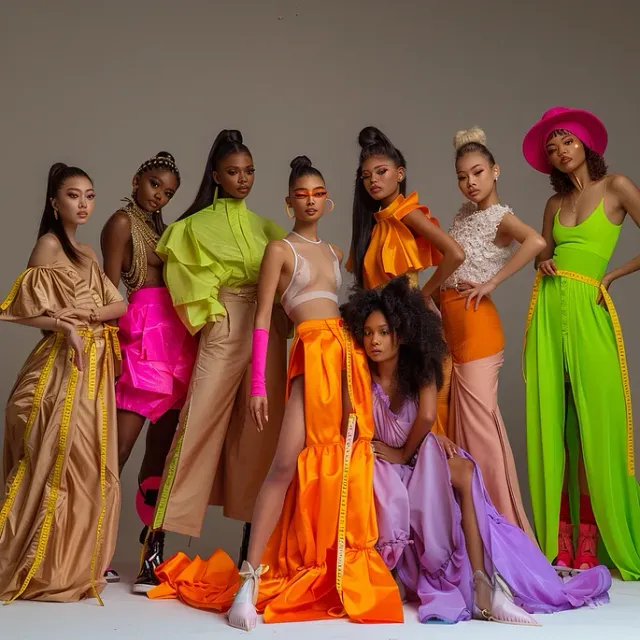
Photography Tips
Top 10 Things Modeling Agencies Are Looking for
What Boston modeling agencies evaluate in submissions — portfolio quality, range, professionalism — and how Photography Shark builds books from $395.
Chris McCarthy
Professional Photographer, Photography Shark · September 20, 2025 · Updated May 18, 2026
Boston modeling agencies — Maggie Inc., Model Club, LDM, Dynasty — evaluate hundreds of submission packages every month. The ones that earn a callback share a consistent set of visual signals, and the ones that get passed almost always fail on the same set of issues. After ten years photographing models for the Boston commercial and lifestyle markets, the patterns are clear. Here's what agencies are actually looking for when they open a submission, in priority order.
I have worked through this question with clients at my Rockland studio more times than I can count, and the answer is more straightforward than most people expect.
1. A clean, type-clear lead headshot
The first image the agency sees is the lead headshot — usually a tight, well-lit, expression-forward shot against a clean background. This image does the heaviest work in the submission. Agencies scan it for three things at once: is the model's type immediately readable (commercial lifestyle, fitness, parts, fashion-commercial), does the face have presence (eyes alive, expression grounded), and is the photograph technically professional (lit well, focused on the eye, properly retouched). A weak lead headshot is the most common reason submissions get sorted to "no" within the first 30 seconds.
2. Range across 5–8 images
Beyond the lead, agencies want to see the model in different contexts — different wardrobe registers, different expressions, different framings (headshot, three-quarter, full-body). The Boston commercial market is particularly range-driven because the bookings span healthcare communications, lifestyle brands, financial services, retail, and family-friendly TV. An agency wants to see that the model can read warm and approachable in one frame and clean professional in the next, without either look feeling forced. 8 images covering distinct looks beats 25 images of subtle variations on the same look.
3. Professional photography that signals book quality
Agencies can tell within seconds whether the photographer who shot the submission understood the market. Selfies, photos taken by a friend with a phone, or photos from a generic non-modeling studio all read as "not yet ready" — not because they couldn't theoretically work but because they signal the model hasn't been guided by industry-aware direction. Photography Shark sessions are calibrated specifically for agency submission: clean backdrops, professional Godox strobe lighting, active direction from a photographer who has 10+ years of Boston-market experience.
4. Honest, undistorted representation
The fastest way to lose an agency is to submit images that don't match the model when they walk in for the meeting. Heavy retouching (smoothed skin, reshaped face, color-shifted eyes), aggressive filters, or images from years ago all create the same problem: the agency invests time evaluating a model who turns out to be a different person in the room. Submission images should represent the model accurately, captured recently, with restrained professional retouching that removes temporary issues but keeps the actual face.
5. Wardrobe that signals the target market
Solid colors photograph reliably. Patterns, busy textures, and trendy fast-fashion pieces compete with the face for attention. For a commercial-market submission, wardrobe should land in the clean-and-versatile register: well-fitted solid tops (navy, charcoal, sage, warm neutrals), minimal statement jewelry, simple silhouettes. For a fashion-commercial submission, slightly more directional pieces are appropriate but the underlying principle stays the same — wardrobe is supporting the model, not competing with them.
6. Hair styled for the model's actual marketability
Agencies want to see the model the way they would actually book the model. If the natural hair is the model's commercial asset, the hair should be styled cleanly but recognizably. If the model has trained for fashion editorial work, more directional styling is appropriate. Heavy hair pieces, dramatic color changes for the shoot, or styling that doesn't match the model's typical presentation create the same mismatch problem as heavy retouching.
7. Makeup calibrated for the camera, not the room
Professional photo makeup is different from going-out makeup. It's slightly more matte (studio strobes flatten subtle finishes), slightly more defined around the eyes, slightly more careful with the lip register. For a first portfolio or comp-card build, hiring a professional MUA for $100–$200 is almost always worth it; the images come back noticeably more agency-ready. For refresh sessions or models with strong personal makeup skills, going without MUA is acceptable if the model knows how to compensate for camera flattening.
8. Posing direction that reads as taught
Models who have worked with experienced photographers move differently in front of the camera. The shoulders sit at the right angle, the hands don't drift to weird positions, the weight distribution gives the body shape rather than flatness. For first-portfolio models, this is what active session direction provides — Chris McCarthy directs posing throughout every session at Photography Shark, including for clients with zero prior modeling experience. The result is images that read as professionally produced, not as a new model figuring it out in real time.
9. Comp card or sub-card readiness
Many Boston agencies still use comp cards or sub-cards for casting submissions. A comp card layout requires a hero headshot, two to three additional looks at varying framings, and the model's stats. Building a portfolio with comp-card layout in mind — making sure the captured images include the four frames a comp card needs — saves the model from having to reshoot to fill gaps. The Gold ($595) and Platinum ($795) packages at Photography Shark are sized specifically to deliver the range a comp card requires.
10. Professionalism in the submission itself
Beyond the photographs, agencies notice the submission email — whether the model included their stats (height, measurements, hair color, eye color), whether the model attached the right files (high-resolution images, not low-res JPGs pulled from Instagram), whether the model is targeting the right agency for their type. None of this is photography work, but it determines whether the photography gets evaluated at all.
How the agent actually evaluates a submission
A Boston modeling agency receives 50–200 cold submissions per month plus the warm submissions coming in via referrals. The internal workflow at most agencies looks roughly like this:
- First pass (5–8 seconds per submission). A booker or scout opens the submission email, glances at the lead headshot, scrolls through the next 2–3 images, glances at the stats line. Most submissions are sorted into "no" at this point — typically 80–90% of the cold pile.
- Second pass (1–2 minutes for "maybe" submissions). A more senior booker looks more carefully. Range, technical quality of the photography, type-clarity, current market gap for that type at the agency. About half of the "maybe" submissions drop out at this stage.
- Third pass (in-person or video meeting). The 10–20% that survive get scheduled for a meeting. The agency wants to verify the model in person matches the submission images, evaluate height/measurements accurately, and assess presence, professionalism, and coachability.
- Decision (within 1–2 weeks of meeting). Sign / sub-agency referral / no.
The implication for the model: the photos do the entire job of getting past pass one and pass two. The meeting verifies what the photos suggested. Photos that overpromise lead to meetings that underdeliver — the worst possible signal for a long-term agency relationship.
What bookers actually say "yes" to in the Boston market
From conversations with bookers at Maggie Inc., Model Club, BMG, Cameo, and several smaller Boston/New England agencies, the YES patterns share several traits:
- Clear market gap. The agency is currently short on the type the model fits. Type matters more than the model's individual quality — an excellent submission for a type the agency is already saturated in (e.g., 5'9" brunette commercial) often loses to a competent submission for a type the agency is missing (e.g., 6'1" mature character, mid-50s warm-dad type, plus-size lifestyle).
- Coachability signal in the photos. When a model's expression range across the portfolio suggests they were following direction (not just hitting one comfortable look), bookers read it as "trainable." When every image is the same expression, bookers read it as "limited."
- A single hero frame. Bookers describe one image that grabs them — usually a frame where presence and clarity coincide. Submissions with a clear hero frame win over submissions with 20 equally-decent images and no standout.
- Submission package coherence. The model has thought about the submission — the right files in the right resolution, the right wardrobe choices, the agency-targeted intro. Bookers read this as professionalism.
- No red flags in adjacent materials. Social media presence matches the submission tone, model is genuinely the age they claim, location matches the agency's geographic focus.
What changes after a model is signed
Once an agency signs a model, the visual standard often shifts. Agencies routinely ask new models to reshoot specific looks within the first 3–6 months — usually filling in gaps the original submission revealed (e.g., the submission was strong on commercial but light on lifestyle, or strong on headshots but missing full-body). Photography Shark's Bronze and Silver packages exist partly to support this post-signing refresh cycle: $200–$350 to fill in one or two gaps without rebuilding the entire portfolio.
The other shift: the agency now has opinions about styling, wardrobe, and direction. Future sessions should be planned in conversation with the agent, not independently. A model who signs and then immediately books a session without checking in with the agency loses some of the agency's investment in customizing the book to current market needs.
The session that supports an agency submission
Photography Shark's model portfolio packages are sized for the agency-submission decision points:
- Bronze $395 (45 min, 10 images): targeted refresh, single look
- Silver $495 (1 hour, 15 images): focused submission or quick book refresh
- Gold $595 (1.5 hour, 20 images): standard first agency submission, covers range
- Platinum $795 (2 hour, 30 images): multi-agency targeting or comp-card build with full range
The studio is at 83 E Water Street in Rockland, 35 minutes south of downtown Boston via Route 3, with free on-site parking. Sessions cover both Boston modeling headshots and the full portfolio range, with active direction throughout from Chris McCarthy.
Frequently Asked Questions
What portfolio does Photography Shark recommend for a first agency submission?
For the Boston commercial market: two to three clean headshots, two to three three-quarter or full-body shots, and one to two lifestyle images. Photography Shark's Gold package (1.5 hour, 20 retouched images, 3 outfits) at $595 gives you enough variety to build this full submission package.
How much does an agency-ready portfolio session cost?
Photography Shark's model portfolio packages: Bronze $395 (45 min, 10 images), Silver $495 (1 hour, 15 images), Gold $595 (1.5 hour, 20 images), Platinum $795 (2 hour, 30 images). Gold is the standard choice for a complete agency-ready submission package across multiple looks; Platinum is for serious multi-agency targeting.
Where is the Photography Shark studio for modeling portfolios?
83 E Water Street, Rockland, MA 02370 — accessible from Quincy, Weymouth, Hingham, Scituate, Norwell, Duxbury, Marshfield, and Plymouth without driving into the city.
Does Photography Shark know what Boston modeling agencies want to see?
Yes. Chris McCarthy has spent over 10 years photographing models and professionals in the Boston and South Shore market and understands what commercial and lifestyle agencies in this region actually respond to in submissions.
Do I need professional experience before booking a modeling portfolio session?
No. Chris McCarthy provides active posing and expression direction throughout every session. Many clients who book their first agency portfolio at Photography Shark have no prior professional modeling experience.
How long until I receive my modeling portfolio images?
Edited images are delivered within 3–5 business days for headshots and studio sessions.
Related Posts

You Might Also Like
About the Author
Chris McCarthy
Chris McCarthy has run Photography Shark Studios in Rockland, MA for over 10 years and 500+ sessions, with executive headshot work for Rockland Trust, Clean Harbors, M&T Bank, and McCarthy Planning; founder portraits for AI startups including Lowtouch.ai; product photography for South Shore brands like Lauren's Swim; and headshots across South Shore legal, medical, financial, and academic practices. Every session is personally shot and edited by Chris on Sony mirrorless and Godox strobe systems — no assistants, no outsourcing, no batch retouching. Galleries deliver in 3–5 business days. About Chris McCarthy →
Photography Shark · Boston & South Shore MA
Ready to Book a Session?
Professional headshots, senior portraits, boudoir, and model portfolios. Studio in Rockland, MA — 25 miles south of Boston. Sessions from $395.