
Headshots
What Hiring Managers Notice About Your Photo
Hiring managers form impressions of candidates from photographs faster than they can articulate.
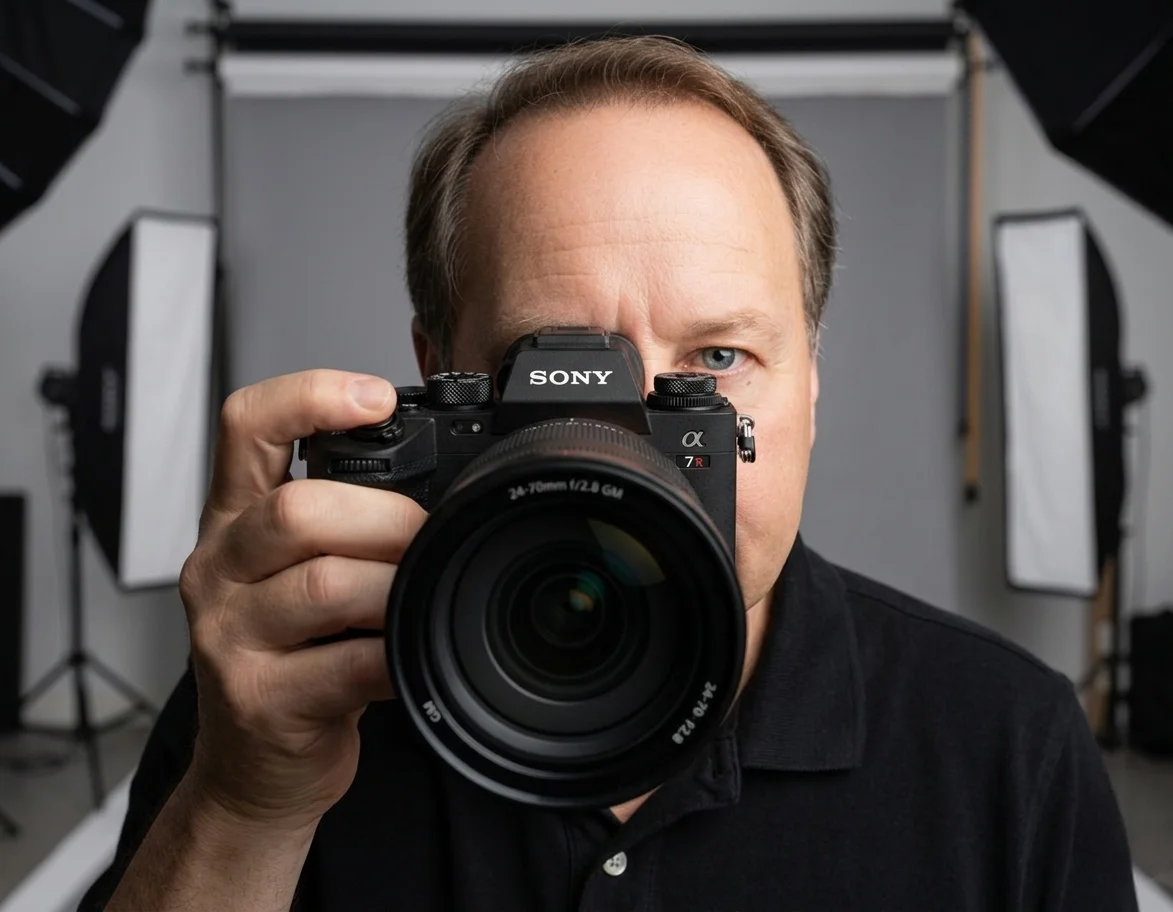
Chris McCarthy
Professional Photographer, Photography Shark · April 30, 2026
The honest answer to "what do hiring managers notice about your photograph" is: more than candidates think, faster than candidates expect, and largely below the threshold of what the hiring manager could explain afterward. The evaluation happens fast, it's heavily visual, and it shapes how the rest of the profile and resume read.
I'm Chris McCarthy. My studio is at 83 E Water Street in Rockland, about 30 minutes south of Boston. I shoot LinkedIn and professional headshots for candidates throughout greater Boston and the South Shore — across industry, role level, and career stage. Talking to hiring managers and senior leaders in different fields about how they actually evaluate candidates has been part of how I calibrate sessions over the years. The patterns are remarkably consistent.
Here's what's happening on the hiring manager side.
The 100-Millisecond Decision
Eye-tracking research on resume and LinkedIn profile reviews consistently shows that the photograph is the first thing the eye lands on, and the dwell time is brief — typically 100 to 300 milliseconds before the eye moves to the headline, then to the most recent role, then deeper into the profile. The photograph is processed in that initial visual scan, and the impression formed influences how the rest of the content reads.
This is not a hiring manager superficiality problem; it's how visual cognition works. The brain processes images faster than text, and the impression of a photograph is registered before conscious evaluation begins. The hiring manager doesn't think "I'm now going to evaluate this photograph" — they just see it, and their working impression of the candidate adjusts.
The adjustment can be subtle. A photograph that reads as polished and aligned with the role creates a slight tailwind: the rest of the profile reads more favorably, qualifications register more strongly, the candidate feels like a fit before any real evaluation has happened. A photograph that reads as casual, outdated, or off-genre creates a slight headwind: the candidate feels less aligned, qualifications have to work harder to register, the bar for a phone screen ratchets up slightly.
Across the volume of candidates a hiring manager reviews — for an active search, often 50 to 200 profiles per round — the cumulative effect of these slight tailwinds and headwinds is meaningful. The candidates whose photographs work for them get the benefit of the tailwind on every profile review. The candidates whose photographs work against them are climbing the headwind on every review.
What the Photograph Is Actually Signaling
Hiring managers evaluating photographs are processing a small set of signals very quickly. The signals are not "is this person attractive" or "does this person look like me." They're more specific:
"Has this person prepared for this stage of their career?" A current, well-produced photograph signals that the candidate has invested in their professional presence — which correlates with broader signals of preparation and seriousness. An outdated or casual photograph signals that the candidate has not invested in their professional presence, which raises questions about how seriously they're approaching their career generally.
"Does this person fit the role's visual register?" Roles have visual conventions. Senior roles read more formal; creative roles read more contemporary; technical roles read more accessible; finance roles read more conservative. A photograph that aligns with the role's visual register reads as a fit. A photograph that diverges reads as a possible misfit, even when the candidate's qualifications are strong.
"Does this person look like someone our team will work well with?" Hiring managers are reading photographs for collegiality signals — whether the candidate's photograph suggests someone who will integrate with the existing team. Calm, present expression, eye contact, and a small genuine smile all support this read. Stiffness, off-putting expression, or photograph that reads as overly self-serious can quietly undermine the read.
"Is this person at the level the role requires?" This is the executive-presence question. Senior candidates need photographs that read as senior — composed, settled, weighty. Photographs that read as too junior or too casual for the seniority of the role can quietly remove the candidate from consideration for senior tracks.
Specific Patterns by Industry
Technology and software. Hiring managers in tech tend toward more relaxed visual conventions than corporate finance — less formal wardrobe, less directional lighting, slightly warmer treatment. But "more relaxed" doesn't mean "casual." The photograph still has to read as professionally produced and intentional. The strongest tech headshots tend to look like contemporary corporate photography with some of the formality dialed back.
Finance, consulting, and banking. Hiring managers in these fields are highly attuned to signals of conventionality and stability. Conservative wardrobe, formal lighting, controlled background, composed expression. Photographs that diverge from these conventions can read as off-genre even when technically excellent. The candidate's visual presentation needs to align with the field's expectations.
Creative industries (design, advertising, media). Hiring managers in these fields read photographs differently — they're attuned to taste and intentionality more than conformity. The photograph can be more contemporary, slightly more stylized, sometimes more environmental. But it still has to look professionally produced; a casual snapshot doesn't work, even in fields where the visual conventions are looser.
Healthcare and clinical roles. Hiring managers are reading photographs for credibility and trust signals. White coats or scrubs are common but optional; the underlying signal is professional, controlled, and aligned with the institution's brand. Mental health and primary care lean approachable; specialty and surgical lean authoritative.
Education and academia. Hiring managers and search committees are looking for signals of credibility and stability. Conservative wardrobe, formal lighting, composed expression. The visual register is closer to the finance or legal end than the tech end of the spectrum, especially for senior academic roles.
Startup and entrepreneurial roles. Calibration depends heavily on the specific company and role. Early-stage founders evaluating new hires often value contemporary, slightly more casual visual conventions; later-stage operators often value photographs that read as more polished and professional. When in doubt, err toward polished — startups frequently mature their visual language as they scale, and a more polished photograph is more durable across the company's evolution.
The Senior-Role Calibration Problem
One of the most common headshot failures I see is candidates targeting senior roles with photographs that read as a junior version of themselves. The candidate has been working at the senior level for several years, but their photograph is from earlier in their career — when they were a more junior version of themselves with a less developed professional presence.
Hiring managers evaluating senior candidates read these photographs as misaligned. The resume says "VP of Operations, 8 years"; the photograph says "manager early in career." The mismatch creates uncertainty about whether the candidate has actually grown into the senior role or is overstating their level.
The fix is straightforward but rarely done: refresh the photograph at the same time as taking on a more senior role, or as part of preparation for the next senior search. The new photograph should read as a settled senior-level professional — composed, present, weighty. Lighting that creates dimension and authority. Wardrobe and framing that align with senior roles in the target industry.
For executive candidates: Executive Headshots Boston and Executive Headshots South Shore cover the senior-leader calibration in detail.
The Misalignment Patterns I See Most Often
After shooting hundreds of professional headshots, certain patterns of misalignment recur:
The vacation photo cropped down. Casual setting, soft natural light, relaxed expression. Reads as personal, not professional. Costs profile views and recruiter outreach.
The wedding photograph. Formal wardrobe but in a wedding context. Often visible signs of the wedding (flowers, decor, slight tilt of celebration). Reads as personal life rather than professional life.
The photograph from a dramatically different career stage. A candidate at the VP level using a photograph from when they were a junior analyst. The mismatch undermines current credibility.
The actor headshot for corporate roles. Theatrical lighting, dramatic expression, tight crop. Works for casting submissions, doesn't work for corporate evaluations. Creates impression of off-genre or unfocused candidate.
The professional photograph that's now 8+ years old. Even well-produced professional photographs become liabilities once they're significantly older than the person walking into the room. The discrepancy creates a credibility gap.
The DIY phone selfie. Often well-intentioned but technically weak. Poor lighting, awkward framing, low-resolution rendering at LinkedIn thumbnail sizes. Reads as casual and unconsidered.
Where the Hiring-Manager Lens Is Sharpest
Hiring-manager evaluation of candidate photographs is most consequential at the senior end of the market — and the South Shore is heavily concentrated in roles where this matters. Senior candidates moving in or out of Milton, Sharon, and Hingham are usually being evaluated by other senior leaders for whom the photograph is part of a broader executive-presence read. Mid-career candidates from Norwell, Cohasset, and Marshfield face the same scrutiny once their searches reach VP and director levels. Quincy covers a wider band of seniority. Plan the photograph for the hiring level you want, not the one you're at.
Book Your Session
Contact me with your role, target opportunities, and timeline. Sessions start at $395 for 30 minutes with 10 retouched images — full Boston headshot pricing on the investment page. Free parking at the Rockland studio. Rush turnaround is available for active job searches.
For specific calibration: LinkedIn Headshots Boston and LinkedIn Headshots South Shore cover the LinkedIn-specific session structure. Executive Headshots Boston and Executive Headshots South Shore cover senior-leader calibration. Boston Headshots covers the standard corporate session in detail, and the Boston Headshot Pricing guide breaks down what's included in each tier.
Frequently Asked Questions
How long does a hiring manager actually look at a photo?
Less than a second on first impression. Eye-tracking research on resume and profile reviews consistently shows that hiring managers and recruiters process photographs in roughly 100 to 300 milliseconds — long before any conscious evaluation of qualifications happens. The rapid scan creates an initial impression that influences how the rest of the profile or resume reads. A strong first impression makes the remaining content read more favorably; a weak or off-genre first impression creates a slight headwind that has to be overcome by the substance.
What's the most common thing that creates a bad first impression?
Misalignment with the role's visual conventions. A photograph that's too casual for a senior role, too formal for a creative role, too theatrical for a corporate role, or too stiff for a startup role creates a moment of mental friction that hiring managers often interpret as 'this candidate doesn't quite fit the role.' The photograph itself might be technically well-produced; the problem is genre mismatch. A finance candidate with a creative-industry photograph reads as someone who hasn't aligned with the role they're targeting.
Do hiring managers really evaluate based on appearance?
They evaluate based on the signals the photograph carries about preparation, professionalism, and fit — which is different from evaluating based on superficial appearance. A current, well-produced, role-aligned photograph signals 'this candidate has done the work to present seriously.' A casual or outdated photograph signals 'this candidate has not put effort into their professional presentation.' Both of those are legitimate signals about the candidate's broader approach to their career.
What about hiring managers in fields where appearance matters less?
Even in fields where the role doesn't depend on appearance — software engineering, data science, research — the photograph still influences hiring manager evaluation. The signal isn't 'do you look good' but 'do you present yourself professionally.' Software hiring managers are reading photographs for the same general impression as any other hiring manager: is this candidate serious, prepared, current, and professional. The calibration is different (less formal wardrobe, more accessible expression) but the underlying read is the same.
Is the photo more or less important than the headline and summary?
It's processed first. Hiring managers and recruiters scanning profiles see the photograph and headline together at the top of the profile, and the photograph registers fastest because visual processing is faster than text reading. The photograph creates the initial frame; the headline and summary fill in the substance. Both matter; they work together. A strong photograph with a weak headline still gets the profile opened. A weak photograph with a strong headline often doesn't get to the headline at all.
How do I know if my photograph is creating a good first impression?
Test it against the visual conventions of your target field. Look at LinkedIn profiles of senior people in the role you're applying for. Look at their photographs as a group. Does your photograph look like it belongs in that group, or does it look stylistically different? If it looks different, it's probably creating friction in hiring manager evaluation. The photograph that fits the visual genre of the target role is doing the right work.
Related Posts
Headshots
Dance Headshot Examples: Four Frames Broken Down

Headshots
How to Prepare for Pageant Headshots: A Complete Prep Guide

Headshots
ERAS Photo Guide: The Residency Application Headshot, Explained

Headshots
Headshot Poses for Women: A Practical Guide

Headshots
Average Professional Headshot Cost by City: 2026 Data Study
Headshots
Headshot Mini Sessions vs. Full Sessions: Why I Don't Cut It Short
You Might Also Like
About the Author
Chris McCarthy
Chris McCarthy has run Photography Shark Studios in Rockland, MA for over 10 years and 500+ sessions, with executive headshot work for Rockland Trust, Clean Harbors, M&T Bank, and McCarthy Planning; founder portraits for AI startups including Lowtouch.ai; product photography for South Shore brands like Lauren's Swim; and headshots across South Shore legal, medical, financial, and academic practices. Every session is personally shot and edited by Chris on Sony mirrorless and Godox strobe systems — no assistants, no outsourcing, no batch retouching. Galleries deliver in 3–5 business days. About the photographer →
Photography Shark · Boston & South Shore MA
Ready to Book a Session?
Professional headshots, senior portraits, boudoir, and model portfolios. Studio in Rockland, MA — 25 miles south of Boston. Sessions from $395.