
Headshots
Headshots for Career Changers
Career change is an information problem on top of a job search. The role of the headshot in repositioning, and how to calibrate it for the new field.
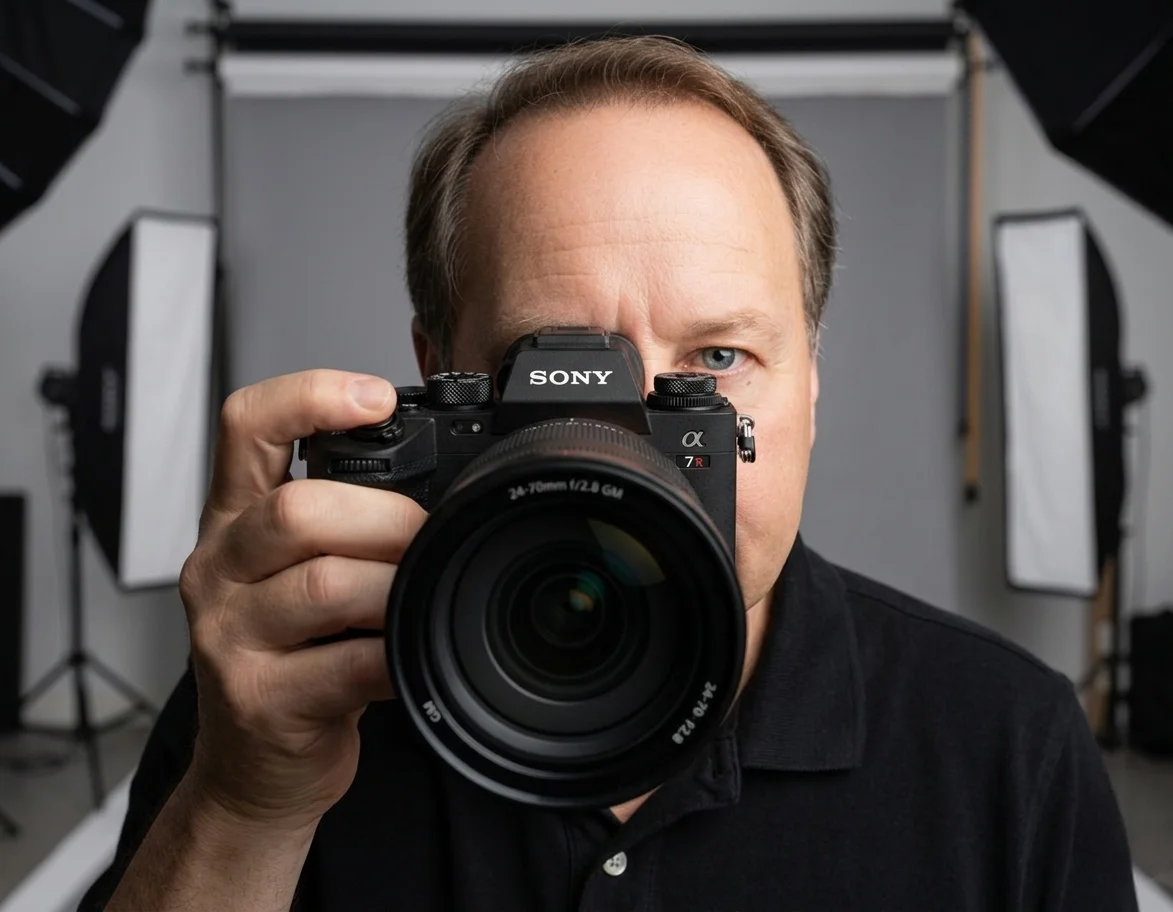
Chris McCarthy
Professional Photographer, Photography Shark · April 29, 2026 · Updated May 24, 2026
A career change is a repositioning problem, and the headshot is one of the most visible — and most frequently overlooked — elements of that repositioning. The photograph on your LinkedIn profile, your website, and any networking presence you maintain is doing a specific job: it tells the viewer, in less than two seconds, what kind of professional you are. When you are changing fields, the photograph is either supporting the new narrative or contradicting it. Most career changers spend significant effort updating their resume, rewriting their LinkedIn summary, building new credentials, and developing a new network — then present all of it behind a photograph that still reads as their old field.
I have photographed headshots for every industry represented on the South Shore, and the preparation questions are remarkably similar.
Photography Shark works with career changers at the Rockland studio specifically to produce headshots calibrated to the target industry, not the one being left behind.
Why the headshot matters more during a pivot than at any other time
When a recruiter or hiring manager in your target field encounters your profile, they are processing two things simultaneously: your qualifications (can this person do the job?) and your fit (does this person belong in this context?). The qualifications are evaluated through experience, skills, and credentials. The fit is evaluated through softer signals — and the headshot is the strongest single soft signal on any professional profile.
A finance professional pivoting to tech whose headshot shows them in a formal suit, tie, and conservative corporate backdrop is sending a fit signal that says "finance" regardless of what the headline and summary say. The viewer's brain processes the photograph before reading the text, and the visual impression frames how the text is interpreted. The same resume and summary, backed by a headshot that reads as contemporary, approachable, and tech-adjacent, lands differently because the fit signal supports the qualification narrative rather than working against it.
This is not about deception — it is about calibration. The photograph should show the person as they will present in the new field, at the register the new field expects.
How visual conventions differ across industries
Every industry has a visual standard for professional headshots, and most people internalize their current field's standard so thoroughly that they do not realize how field-specific it is until they try to cross into another field.
Finance and law. Conservative formal: suit or blazer, controlled expression (confident neutral or closed-mouth half-smile), traditional studio lighting, muted background. The visual standard communicates discipline, reliability, and institutional credibility.
Tech and startups. Smart-casual to casual: button-down or crew neck, no tie, genuine smile with direct eye contact, slightly warmer lighting, sometimes environmental backgrounds. The standard communicates approachability, energy, and contemporary relevance.
Healthcare. Clinical-professional: clean, well-lit, warm expression. Some roles (administrators, executives) photograph in business attire; clinical roles often include a white coat or professional scrubs. The standard communicates competence and empathy simultaneously.
Creative and media. Broader range: the headshot may include environmental context, creative lighting, or wardrobe that signals the specific creative discipline. The standard is less rigid but still expects professional execution.
Education and nonprofit. Warm, approachable, mission-aligned. The expression leans more toward genuine warmth than corporate authority. Wardrobe varies by role level.
When you move from finance to tech, the headshot needs to shift from the first standard to the second. When you move from tech to healthcare administration, it shifts again. Chris discusses the target field's conventions during the pre-session consultation and directs the session to match — wardrobe, expression, lighting, and crop are all calibrated to the destination, not the departure point.
The two-look session for active changers
Most career changers are not making an overnight switch. They are in transition — actively working in the current field while building toward the new one. During this period, they need two headshots: one that maintains credibility in the current field (for ongoing professional relationships, current employer, and active opportunities) and one that positions them for the target field (for networking, applications, and outreach in the new direction).
Photography Shark's 60-minute session at $545 covers two distinct looks. The first 30 minutes produce the current-field version: familiar wardrobe, established visual register, lighting and expression matched to the field the client is currently operating in. The second 30 minutes produce the target-field version: adjusted wardrobe, recalibrated expression, and lighting that matches the visual conventions of the destination industry.
The two-look approach has a practical advantage beyond hedging: it lets the client see the visual difference between the two registers side by side. That comparison often clarifies the repositioning in a way that abstract career-planning conversations do not — the client can see what "I look like a tech professional" actually means in photographic terms, measured against what "I look like a finance professional" looks like in the same session.
Timing the refresh relative to the career change
The headshot should be in place before the active outreach begins — not updated partway through the search. The reasoning is practical: the first impression a recruiter or hiring manager forms from the profile is the one that sticks. If the photograph reads as the old field, the viewer's frame is set before they read the repositioned headline and experience. Updating the photograph mid-search improves future impressions but does not retroactively fix the initial ones.
The recommended timeline: schedule the headshot session four to six weeks before beginning active outreach in the new field. This allows time for the session, editing (3–5 business days at Photography Shark), and updating the photograph across all professional surfaces — LinkedIn, company website, email signature, networking profiles, speaker bios, and any job-board or platform profiles.
What to wear to a career-change headshot session
Match the destination, not the departure, but err toward the more polished end of the new field's range. The goal is to look like you already belong in the target field while still reading as substantive and experienced. Specific guidance varies by target:
- To tech: Blazer over a button-down or high-quality crew neck. No tie. Color palette shifts from finance-grey to warmer tones — navy still works, but add options in blue, soft green, or warm grey.
- To healthcare admin: Clean professional — blazer or structured top, warmer expression than the corporate standard. No clinical wear unless you are also clinical.
- To education or nonprofit: Approachable professional — slightly less structured than corporate, warmer colors, expression that reads as engaged and mission-driven rather than authoritative.
- To creative or media: More latitude — the wardrobe can include personality elements that corporate headshots suppress. Discuss with Chris during the consultation.
Bring the destination wardrobe AND the current-field wardrobe if booking the two-look session. Let Chris see both and advise on fit for the planned lighting.
Booking
Career-change headshot sessions at Photography Shark: $395 for a single-look 30-minute session, $545 for the dual-look 60-minute format that produces images for both fields. The studio is at 83 E Water Street, Rockland MA — call (781) 312-8824 or use the session inquiry form. The pre-session consultation covers target-field analysis, wardrobe guidance, and session planning. Related: career-pivot announcement headshot.
Frequently Asked Questions
How does a career changer's headshot differ from a regular professional headshot?
The calibration shifts to match the target field rather than the field you're leaving. A finance professional moving into tech needs a photograph that reads more like the visual conventions of tech leadership — slightly less formal, more contemporary lighting, sometimes a less rigid wardrobe — than the conservative finance look they've maintained. The photograph becomes part of the repositioning narrative rather than a record of who you've been.
Should I update my headshot before or during the career change?
Before, ideally at least 4 to 6 weeks before you start active outreach in the new field. The photograph needs to be in place when recruiters and hiring managers in the new field encounter your profile, not added partway through the search. Refreshing the photograph as part of the broader repositioning — updated headline, updated summary, repositioned experience descriptions — is more effective than treating it as an afterthought.
What if I'm not sure exactly what field I'm moving to?
Pitch the photograph slightly toward the broader 'professional in the next stage of career' direction without locking too specifically to one industry. A clean, contemporary, well-lit professional photograph that reads as polished and current works in most directions. We can also produce two looks in a single session if you have two specific target fields with different visual conventions.
What should I wear if my new field is much less formal than my old one?
Match the new field, but err slightly toward the more formal end of the new field's range. A finance professional moving to tech might shoot in a blazer over a button-down without a tie — more casual than their finance look, but still polished. The photograph should look like you fit in the new field, not like you've over-corrected casual.
Will the photograph alone make a career change easier?
No, but it removes one specific friction. The photograph contributes to whether recruiters and hiring managers in the new field take the candidate seriously enough to read deeper into the profile and resume. With other repositioning elements (headline, summary, experience descriptions, network development, skill credentials) all aligned, the photograph supports the broader repositioning. A strong photograph alone can't compensate for a profile that still reads as the old field, but a weak photograph creates real friction even when everything else is aligned.
Are career changers priced differently?
No — standard $395 session pricing applies. A 60-minute session covering two distinct looks (e.g., one calibrated to the old field for active interim opportunities, one to the new field for the change) is $545. Most career changers find the second-look option useful because the active job search often has parallel tracks until the new positioning lands.
Related Posts

Headshots
Modeling Headshots vs Actor Headshots — What is Actually Different
![AI Headshot Generators vs Professional Headshots: Complete Guide [2026]](/blog/ai-headshots-vs-professional-headshots-w640.webp)
Headshots
AI Headshot Generators vs Professional Headshots: Complete Guide [2026]
Headshots
Cheer and Gymnastics Headshots: Tryouts, Recruiting, and Team Rosters

Headshots
Ballet Headshots: What Classical Companies and Schools Expect

Headshots
Commercial Dance Headshots: What Agents and Casting Want

Headshots
Dance Audition Headshots: What to Submit and What Panels Actually Do With It
You Might Also Like
About the Author
Chris McCarthy
Chris McCarthy has run Photography Shark Studios in Rockland, MA for over 10 years and 500+ sessions, with executive headshot work for Rockland Trust, Clean Harbors, M&T Bank, and McCarthy Planning; founder portraits for AI startups including Lowtouch.ai; product photography for South Shore brands like Lauren's Swim; and headshots across South Shore legal, medical, financial, and academic practices. Every session is personally shot and edited by Chris on Sony mirrorless and Godox strobe systems — no assistants, no outsourcing, no batch retouching. Galleries deliver in 3–5 business days. More about the photographer →
Photography Shark · Boston & South Shore MA
Ready to Book a Session?
Professional headshots, senior portraits, boudoir, and model portfolios. Studio in Rockland, MA — 25 miles south of Boston. Sessions from $395.