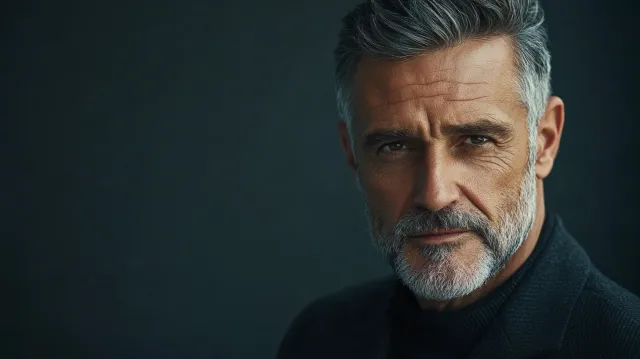
Actor Headshots
Headshots for Older Actors: How to Look Your Best at Any Age
Lighting, retouching, wardrobe, and expression choices that make older actor headshots look distinguished and current — without trying to look younger.
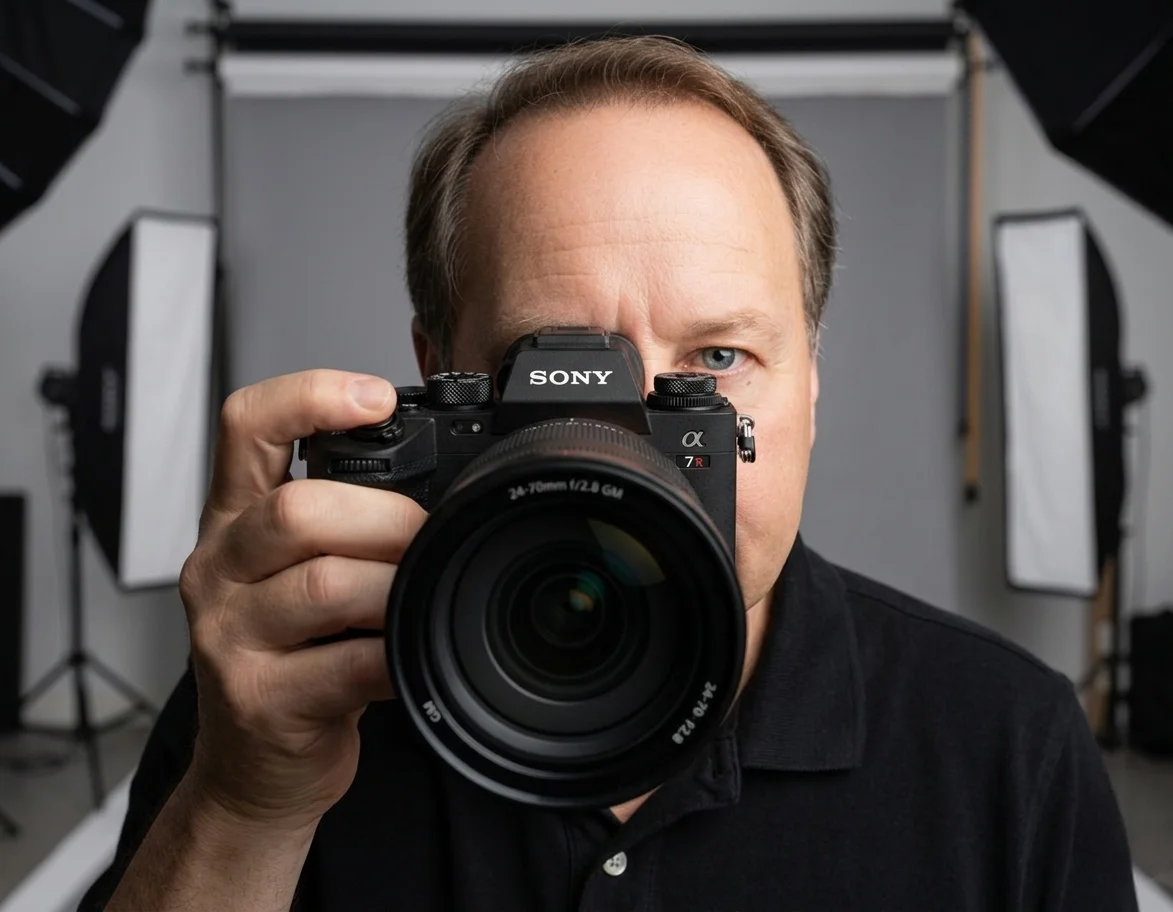
Chris McCarthy
Professional Photographer, Photography Shark · April 20, 2026
The market for older actors has expanded substantially over the past decade. Prestige television, character-rich films, theater that doesn't shy from age — all of these have created demand for actors who look their age and bring the authority, depth, or specific character that age provides. The actors who are working most consistently in this space have headshots that lean into their actual age rather than trying to disguise it.
I'm Chris McCarthy. My studio is at 83 E Water Street in Rockland, about 30 minutes south of Boston. I shoot actor headshots for performers across all age ranges, including the substantial mature-actor market in Boston and on the South Shore. The session calibration shifts subtly for older actors, but the underlying principles are the same: produce a photograph that looks like the actor's most distinguished and present self.
Why Trying to Look Younger Backfires
The most common mistake older actors make in headshots is asking for retouching that softens, smooths, or otherwise reduces the appearance of age. The instinct is understandable — youth-emphasis content has dominated commercial photography for decades, and many older actors have absorbed the message that looking younger equals more castable.
The actual market reality is different. Casting directors are filling specific age ranges, and the actor whose headshot doesn't match their actual age creates problems for the casting director. Submissions that look 10 years younger than the actor's actual age get filtered into wrong casting calls; the actor wastes auditions on roles they can't play, and casting directors who feel deceived by an inaccurate headshot are slower to book the actor for any role.
The actors who are working most consistently in mature-actor markets have headshots that:
- Look like their actual age (or within 2-3 years)
- Show the lines, texture, and character of their face
- Read as distinguished and present rather than aggressive about age
- Suggest the kinds of roles they're actually being cast for
Trying to look 10 years younger doesn't get the actor cast for younger roles; it gets them filtered out of the older-role markets where they actually belong.
What Lighting Does for Older Actor Headshots
The studio lighting for older actor sessions is calibrated slightly differently from younger actor sessions. The differences are subtle but meaningful:
Softer key light. A slightly larger or more diffused key light source. Not flat — there's still dimension — but the transition between light and shadow is gentler, which respects natural skin texture without harsh definition.
More careful fill management. The fill light is positioned to soften under-eye shadows, jowl shadows, and any areas where harsh shadow would emphasize age unfairly. This isn't elimination of shadow — depth is still important — it's more attention to where shadow falls.
Slight warmth in color temperature. Photographs lit slightly warm (2-3 degrees of color shift) read as more flattering for mature skin without becoming obviously orange or warm. Cool-toned photography emphasizes age character; subtle warm tones soften it appropriately.
Position adjustments. The camera angle and head positioning are slightly tuned to flatter the specific actor's face. This can mean a small lift of the chin, a shift of the head angle to the actor's stronger side, or framing that uses the actor's strong features rather than emphasizing weaker ones.
These calibrations are integrated into the session direction. The actor doesn't need to know the technical details — they just need to trust that the photographer is shooting them well for their age range.
Wardrobe That Works at Any Age
Wardrobe principles for older actors are similar to younger actor conventions with a few specific adjustments:
Quality over fashion. Well-cut, well-maintained clothing reads better than trendy clothing on older actors. A classic blazer, a well-pressed shirt, a quality knit — these read as distinguished. Trendy choices can read as overly youthful and create age-inappropriate signals.
Color choices. Conservative colors generally work — charcoal, navy, deep red, jewel tones. Avoid pastels and very bright colors that can read as costumey on older actors. Black is acceptable but can read heavy; charcoal or deep navy often photographs better.
Pattern and texture. Subtle patterns are fine; loud patterns compete with the face and read as theatrical. Quality fabric texture (a tweed, a cashmere knit, a structured cotton) photographs well and adds visual interest without distraction.
Avoid extremes. Neither overly formal (full suit and tie when the actor's market is character roles) nor overly casual (a t-shirt when the market is executive parts). The wardrobe should match the kinds of roles the actor is being submitted for.
For specialty looks beyond the standard theatrical/commercial pair, older actors often have additional ranges — distinguished executive, period drama, character types — that benefit from wardrobe specifically calibrated for that range.
Expression Direction for Older Actors
The expression direction during the session moves slightly differently for older actors:
Theatrical direction for older actors emphasizes presence, authority, and depth. The expression suggests someone who has lived through significant experience and brings that weight to the role. Eye engagement is steady and present; mouth is composed without being stiff.
Commercial direction for older actors emphasizes warmth, accessibility, and trustworthiness. The expression suggests someone you'd trust with an important conversation, decision, or recommendation. Smaller smile or warm composed neutral; eyes warm but not over-bright.
Specialty registers for older actors often include:
- Distinguished executive. Authoritative posture, controlled expression, slightly more directional lighting. Reads as senior leadership, board member, distinguished consultant.
- Mentor and teacher. Slightly warmer than authoritative, eye contact emphasizing engagement and patience. Reads as the wise older character, the mentor, the experienced guide.
- Character. Whatever the actor's specific character type calls for — quirky, eccentric, distinctive. The expression supports the character read.
- Parental. Warm and grounded. Reads as the parent, the family elder, the experienced stable presence.
The session can capture two or three of these registers in a 60-minute booking, building a package that supports the broader range of roles older actors are typically submitted for.
Hair and Makeup for Older Actors
The hair and makeup approach is conservative — even more so than for younger actors:
Hair. Whatever the actor's natural color and style is at the time of the session. Don't dye gray hair specifically for the session if the actor doesn't typically dye it; don't add highlights that don't match daily styling. The headshot should match how the actor will appear at auditions.
Makeup (women). Light foundation evened to natural skin tone; skip heavy contour and bold color. Subtle eye definition that opens the eyes without reading as makeup. Natural-toned lipstick or balm. The makeup is enhancement, not transformation.
Makeup (men). Translucent powder for shine management, light concealer for under-eye darkness or blemishes, beard grooming if the actor maintains facial hair. The presence of subtle makeup shouldn't be visible in the photograph.
For both: the goal is the actor's natural face slightly polished, not transformed into a younger or different version.
What the Mature Actor Market Looks Like in Boston
The Boston regional market has substantial demand for older actors:
- Prestige and dramatic television productions filming in the region
- Independent film and festival circuit work with strong character demands
- Theater across professional companies — Boston theater leans into casting older actors authentically
- Commercial work for industries serving older demographics (financial services, healthcare, real estate, retail)
- Industrial and corporate film for the strong New England business presence
- Voiceover with on-camera components for actors with the right combination of voice and presence
Actors over 50 working consistently in this market have headshots that:
- Are current (within 2-3 years)
- Match their actual age
- Read as distinguished, present, and skilled
- Cover the registers they're regularly submitted for
Refreshing headshots regularly is particularly important for older actors because appearance changes year-over-year are more visible than in younger actors. A 5-year-old headshot of a 65-year-old actor often shows significant divergence from current appearance.
Book Your Session
Contact me with what you need and your timeline. Standard 30-minute sessions are $395; 60-minute multi-look sessions are $545. Full Boston headshot pricing on the investment page. Free parking at the Rockland studio.
For more on actor sessions: Boston Actor Headshots, Actor Headshots South Shore, and the actor headshots package on the investment page cover the session structure.
Frequently Asked Questions
Should an older actor's headshot try to make them look younger?
No — and trying to is one of the most common mistakes. Casting directors are looking for actors at their actual age range. Headshots that retouch out the lines and texture of an older actor's face create immediate audition-room discrepancies that cost callbacks. The strong direction is to look like the most distinguished, well-rested, and present version of yourself at your actual age — not a younger version.
What's the right age range to play?
Generally your actual age plus or minus 5 years. Most working actors who try to play significantly younger than their actual age don't book those roles consistently because the audition shows the discrepancy. Older actors who lean into their actual age range — including character age, executive age, parental age — have more opportunities than those positioning themselves narrowly.
How does the lighting work for older actors?
Slightly softer than for younger actors. The studio lighting setup uses a softer key with more careful fill management, which keeps natural lines and texture intact while ensuring no harsh shadows that would emphasize age unfairly. The goal is the actor's actual face presented well, not an aggressive flattening or smoothing.
What about retouching for older actors?
Even more conservative than for younger actors. Permanent features stay — that includes lines around the eyes and mouth, established texture, age-related skin character. Temporary issues are managed (a single blemish, errant hairs, very subtle redness). The principle is identical: anything the actor will have at the audition should be in the photograph.
Are there specific roles older actors should target?
Many. Executive roles, parental roles, mentor and teacher roles, distinguished professional roles, character work spanning ages. The market for actors over 50 has expanded significantly with prestige TV demand for character-rich performances. Theatrical and commercial both have substantial older-actor markets — the casting calls just look different from younger-actor calls.
How does the session structure work for older actors?
Same 30-minute or 60-minute structure depending on whether you need one look or multiple. The lighting and direction are calibrated for older actors specifically — softer key, more attention to expression direction, retouching pass that preserves character. The session itself runs the same way as any other actor session at the studio.
Related Posts
Actor Headshots
How Many Headshots Do Actors Really Need — and Why It Matters
Actor Headshots
10 Tips for Actors Headshots
Actor Headshots
Actor Headshots for Beginners: What to Expect
Actor Headshots
Child Actor Headshots in Boston — A Parent's Guide
Actor Headshots
Best Actor Headshot Photographers on the South Shore
Actor Headshots
Actress Headshots Boston — Studio Portraits for Female Actors
You Might Also Like
About the Author
Chris McCarthy
Chris McCarthy has run Photography Shark Studios in Rockland, MA for over 10 years and 500+ sessions, with executive headshot work for Rockland Trust, Clean Harbors, M&T Bank, and McCarthy Planning; founder portraits for AI startups including Lowtouch.ai; product photography for South Shore brands like Lauren's Swim; and headshots across South Shore legal, medical, financial, and academic practices. Every session is personally shot and edited by Chris on Sony mirrorless and Godox strobe systems — no assistants, no outsourcing, no batch retouching. Galleries deliver in 3–5 business days. About Chris McCarthy →
Photography Shark · Boston & South Shore MA
Ready to Book a Session?
Professional headshots, senior portraits, boudoir, and model portfolios. Studio in Rockland, MA — 25 miles south of Boston. Sessions from $395.