
Actor Headshots
How Often Should Actors Update Their Headshots?
The key triggers — significant appearance changes, career pivots, aging out of a type — that signal it's time to book a new actor headshot session.
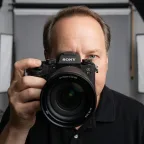
Chris McCarthy
Professional Photographer, Photography Shark · April 16, 2026 · Updated April 20, 2026
"How often should I update my headshot?" is one of the most common questions that comes up during consultations, and the honest answer depends on what industry you're in, how visible your role is, and how much you've actually changed since your last session. Here's a practical breakdown for Boston-area professionals from Chris McCarthy, owner of Photography Shark in Rockland — with the caveat that the right answer for you depends on your specific context.
The Default: 2–3 Years
For most corporate professionals in standard roles, refreshing your headshot every 2–3 years is the sensible default. This cadence handles three things at once:
Visible aging. Appearance changes happen gradually enough that we don't notice them in ourselves but accumulate in ways that show up in photographs. A 3-year gap is typically where the cumulative change starts becoming visible to anyone looking at both images side-by-side.
Visual style drift. Clothing trends, grooming norms, and even headshot aesthetic conventions shift over time. A headshot taken in 2020 has a different feel than one taken in 2026, even when the technical quality is identical — background styling, lighting preferences, and wardrobe norms all evolve.
Career stage changes. A headshot taken when you were a senior analyst often doesn't serve you when you're now a VP. The image needs to reflect where you currently are professionally, not where you were two promotions ago.
When to Update Sooner
Some situations justify updating before the 2–3 year mark:
Significant appearance change. Notable weight change, new glasses, different hair color, dramatic hair cut (especially going from long to short or vice versa), facial hair gain or loss, or any visible age progression that feels meaningful.
Career transitions. New job, new industry, new role level, or moving from IC to management. The headshot should match your current professional context, not the one you're leaving.
Personal brand launch or pivot. Starting a business, launching a speaking career, writing a book, or taking on any visible public-facing work. These contexts often demand headshots that are more deliberate than whatever you had for your corporate role.
Visible dissatisfaction. If you dislike your current headshot, don't use it where you have control, or find yourself apologizing for it, that's reason enough to refresh. Confidence in the image translates to confidence in the contexts where the image appears.
Industry-Specific Cadences
Different industries have different expectations:
Actors
Actor headshots age faster than any other category. The casting industry expects the headshot to accurately represent what walks into the audition room — if the image and the person don't match, it's a problem. Standard cadence for actors:
- Refresh every 12–18 months as a default
- Immediately after significant appearance change (weight, hair, glasses, facial hair)
- When transitioning types — from ingénue to leading lady, from young man to character actor
Corporate / Finance / Law
Conservative industries with higher formality standards. Cadence:
- Every 2–3 years for standard career progression
- Update with promotions to executive levels (VP, SVP, Partner, C-suite)
- When firm or company standardizes new headshot styles — many firms commission fresh headshots every 3–5 years as a marketing refresh
Tech / Creative / Startup
More visual latitude but also faster cultural change. Cadence:
- Every 2 years is reasonable given how quickly tech/startup aesthetics shift
- At funding rounds or major company milestones
- When your public profile grows — more press, speaking, podcast appearances
Real Estate / Sales
Your image is your marketing. Cadence:
- Every 2 years minimum, often annually for top producers
- At every market positioning change — different market segment, different brokerage, different specialty
- For marketing refresh when your branding is being redesigned
Medical / Academic
Professional contexts with less visible image requirements but high trust standards:
- Every 3–4 years is typical
- At institution changes (new hospital, new university affiliation)
- When publishing books or taking public roles that expose your image beyond your institution
Can You Just Use an Old Headshot?
Technically yes. Practically, it depends on how old and how much you've changed.
A headshot older than 3–5 years becomes increasingly likely to send the wrong signal. The mismatch between the image and the current you starts to erode trust — not dramatically, but measurably. Viewers often can't articulate what's wrong with the image but register the misalignment. This is especially true in contexts where the image is the first impression: LinkedIn connections, podcast bookers, client prospects, casting submissions.
There's also the "stuck in time" problem. A 6-year-old headshot suggests you haven't invested in your professional presence recently, which becomes part of the signal the image sends — whether or not that's accurate.
What to Shoot When You Update
Modern headshot sessions often include multiple looks in a single session. Rather than producing one image, many clients now leave with 2–3 distinct options:
- A clean, corporate look for LinkedIn and primary use
- A slightly more casual version for personal website and warm contexts
- An editorial or dramatic option for press, speaker bios, book jackets
This approach extends the useful life of a single session because you have images that fit more contexts. The 30-minute Boston headshot session accommodates two looks; longer sessions allow three.
The "I Haven't Changed Much" Defense
Some clients genuinely haven't changed much in appearance and resist updating for that reason. Fair enough — if the image still looks like you and the visual aesthetic isn't obviously dated, you can stretch past the 3-year mark.
But two honest checks:
- Show the headshot to someone who met you recently. Does it match? (You see yourself in the mirror every day; they see you fresh.)
- Put your current headshot next to one taken this year. Is the difference meaningful? (Photos reveal change that mirrors miss.)
If the answers are yes and no, you're probably fine. If not, it's time.
Specific Triggers That Should Force a Reshoot Sooner Than the Calendar Says
Beyond the general 2-3 year cadence, there is a set of concrete, measurable changes that should send you back to the studio regardless of how recently you sat for your last session. After enough years behind the camera I can usually spot the trigger before the client tells me what changed — and the photo on file rarely survives any of these.
Hairline change for men. A receding hairline progresses at roughly its own pace, but the change crosses a perception threshold around the 18-24 month mark for most men actively losing hair in their 30s and 40s. A shaved-head decision after years of attempting to manage thinning hair is an even sharper visual reset. Either change leaves the existing headshot reading as someone else.
Hair length and color change for everyone. A long-to-short haircut, a shoulder-length-to-pixie cut, a major color shift (going gray, going blonde, going from natural to dyed or vice versa), bangs added or removed — each of these is a reshoot trigger. The brain reads hair as identity; a mismatch confuses viewers more than aging does.
Glasses changes. New glasses in a different style — rounder frames replacing rectangular, larger frames replacing minimalist, tortoise replacing black — shift the read of the face significantly. So does going from glasses to contacts or to LASIK. Contact lens wearers who alternate often shoot both versions in one session, but the version on file should match what people actually see.
Weight change of more than 15-20 pounds in either direction. Visible enough in a headshot frame to read as a different person. Not a vanity trigger — a "the photo no longer matches" trigger.
Facial hair gain or loss. A clean-shaven-to-beard transition or vice versa is a reshoot. A trimmed-beard-to-full-beard change usually is not, unless the difference is dramatic. A mustache appearing or disappearing always is.
Aging milestones for men around 40-50. Most men cross a perception threshold somewhere in this range — graying temples become salt-and-pepper, then become silver. Skin texture around the eyes shifts. The face moves from "young professional" to "established" in a way that the existing headshot does not catch up to.
Aging milestones for women that the industry handles poorly. This is worth saying directly: the industry has historically pressured women to update headshots in response to perceived aging more aggressively than is necessary. The honest cadence is the same as for men — update when the photo materially does not match. Do not update because someone implied you should.
Major dental work. New veneers, orthodontic treatment, significant whitening, or implant work changes the smile in ways that show up immediately in any photo where the teeth are visible.
Visible scar, surgery, or injury that becomes part of how you look. A noticeable scar, a change from a medical procedure, a permanent cosmetic procedure (rhinoplasty, blepharoplasty, eyebrow micropigmentation) — any change that becomes part of your daily appearance for the long term.
Role and Title Changes That Demand a New Image
Beyond physical changes, role transitions trigger their own reshoot logic that the calendar-based default does not capture.
IC to manager. The first promotion to a people-leadership role often coincides with a need for a more authoritative photo. The expression brief shifts; sometimes the wardrobe does too.
Manager to director. The director-level photo usually needs to read with more weight than the manager-level photo. Many companies refresh team page photos at this transition.
Director to VP or SVP. The first executive-tier photo carries different responsibility. It appears on investor decks, on board materials, on press releases. The shoot brief shifts toward what the C-suite headshot needs to do.
Associate to partner at a firm. Law firms, accounting firms, and consulting firms almost always require a new headshot at partner promotion. The bio page treats partners visually distinctly, and the firm marketing department initiates the reshoot.
Faculty rank change in academia. Promotion from assistant to associate professor, associate to full, or any move into a named chair or endowed position warrants a refreshed image. Conference programs and journal byline photos all carry the photo on file.
Founder to CEO of a funded company. The founding-team photo from year one rarely serves the same person two years and a Series A later. Investor-facing materials need the updated image.
Career pivot or industry change. Moving from finance to tech, from law to consulting, from clinical practice to executive medicine — the photo brief is genuinely different in each industry, and the photo from the prior career rarely translates.
Speaking, podcasting, or publishing. The first significant external visibility — a TEDx talk, a published book, a regular podcast appearance, a media commentator role — should trigger a deliberate photo session calibrated for that visibility.
Board appointments. Joining a corporate or nonprofit board often comes with a request for a current headshot for board materials and the organization's annual report.
Ready to Update?
Get in touch to schedule your session. Photography Shark is based in Rockland, MA, serving Boston and the full South Shore.
Related reading: How to prepare for your headshot session · Boston acting industry insights — when to update your headshot · Headshot services & pricing
Frequently Asked Questions
How often should professionals update their LinkedIn headshot?
Every 2–3 years is the general rule for most corporate professionals. Update sooner if your appearance has changed significantly, if you've changed industries or levels, or if the current headshot is over 3 years old regardless of how you feel about it.
How often do actors need to update their headshots?
Actors update headshots more frequently than corporate professionals — typically every 12–18 months, and immediately after any significant appearance change (major weight change, haircut, hair color change, significant age progression). Casting directors expect the headshot to accurately represent what walks into the audition room.
Is it obvious when a headshot is outdated?
Usually yes, especially past the 4–5 year mark. Dated images reveal themselves through clothing trends, hair style, and a certain indefinable 'that was the 2010s' quality. Viewers often can't articulate why an image feels off but register the mismatch.
Can I use the same headshot on every platform?
You can, but you don't have to. Many professionals now shoot 2–3 looks in a single session — different backgrounds or wardrobe — to produce images that fit different platforms (LinkedIn vs. personal website vs. speaker bio) without requiring a separate session each time.
What's the longest you should wait between headshot updates?
Three years is the outer limit for most professionals. Past that point, the current image probably isn't serving you well regardless of how much you like it. The exception is people whose appearance truly hasn't changed — but most of us notice change in others before we notice it in ourselves.
Related Posts


You Might Also Like
About the Author
Chris McCarthy
Chris McCarthy has run Photography Shark Studios in Rockland, MA for over 10 years and 500+ sessions, with executive headshot work for Rockland Trust, Clean Harbors, M&T Bank, and McCarthy Planning; founder portraits for AI startups including Lowtouch.ai; product photography for South Shore brands like Lauren's Swim; and headshots across South Shore legal, medical, financial, and academic practices. Every session is personally shot and edited by Chris on Sony mirrorless and Godox strobe systems — no assistants, no outsourcing, no batch retouching. Galleries deliver in 3–5 business days. About photographer Chris McCarthy →
Photography Shark · Boston & South Shore MA
Ready to Book a Session?
Professional headshots, senior portraits, boudoir, and model portfolios. Studio in Rockland, MA — 25 miles south of Boston. Sessions from $395.