Headshots
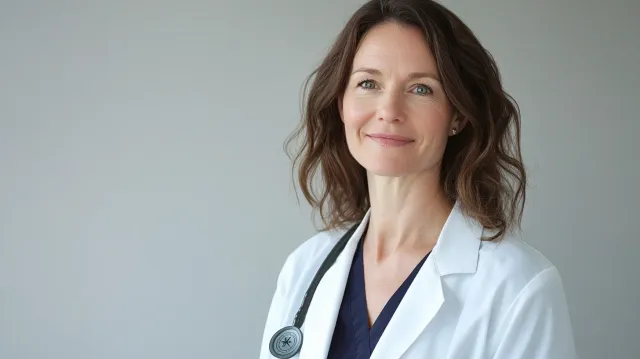
Healthcare Professional Headshots: Approachable vs. Authoritative
Healthcare headshots have to do something most professional portraits don't — communicate medical authority and human approachability simultaneously.
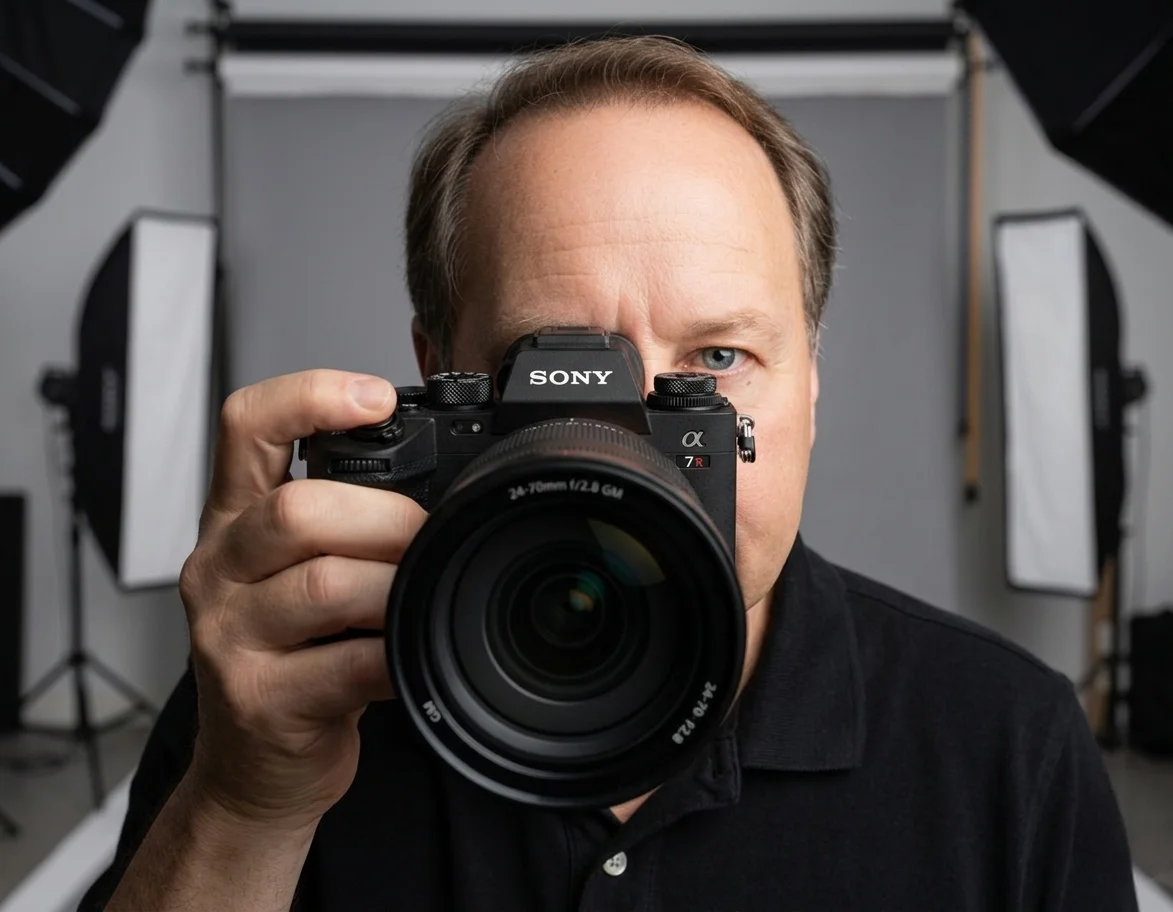
Chris McCarthy
Professional Photographer, Photography Shark · April 22, 2026
A photograph of a healthcare professional has to do something most other professional portraits don't have to do. It has to suggest both clinical competence and the kind of presence a patient can trust with their actual problems. Authority and approachability — and the calibration between them, which shifts by specialty, practice context, and patient population.
I'm Chris McCarthy. My studio is at 83 E Water Street in Rockland, about 30 minutes south of Boston, and I photograph healthcare professionals across greater Boston and the South Shore — physicians, dentists, nurse practitioners, PAs, mental-health clinicians, and the practice teams they work with.
Most healthcare practices, when they update their headshots, default to one of two extremes. The full-clinical-authority direction (white coats, formal lighting, formal expression) reads as serious but can feel cold. The full-approachable direction (no coat, casual lighting, big warm smile) reads as friendly but can feel underweight for a medical setting. The strongest healthcare headshots are calibrated between those poles, and the right point depends on the specialty.
What Patients Are Actually Reading From the Photograph
When a prospective patient looks at a practice directory page or a physician's bio, they are doing one specific cognitive task: deciding whether to book the appointment. The photograph is a major input to that decision, especially in markets where the patient has options.
The signals that influence this decision break into three categories:
Competence signals. Posture, lighting, framing, wardrobe — does this person look like a credentialed professional? White coats, scrubs, formal background, controlled lighting all reinforce competence. So does eye contact that holds steady; so does a relaxed, composed expression. Anything that looks rushed, off-balance, or visually noisy reduces competence signal.
Trust signals. Eye contact and expression. Does the person in the photograph look like someone you can tell the truth to? Patients are particularly sensitive to this in primary care, mental health, and chronic-care specialties where the relationship is long-term and disclosure is part of the work. A photograph where the eyes look genuinely engaged — not just present — supports the trust evaluation.
Accessibility signals. A small genuine smile, a slightly warmer color treatment, a less rigid pose. These are the signals that say "this person will be patient with my questions" — important for patient populations that already feel underserved or rushed by medical systems.
The right balance depends on the specialty. A surgeon does not need to dial accessibility to maximum; the patient pre-selecting that surgeon already cares more about competence than warmth. A pediatrician at a family-practice setting absolutely does need maximum accessibility, because the parent making the choice is reading the photograph for "would I trust this person with my child."
How the Calibration Shifts by Specialty
I work the calibration during the session. It helps if you've thought about it ahead of time:
Primary care, family medicine, internal medicine — Lean approachable. Eye-level camera, slightly warm lighting, relaxed shoulders, small genuine smile. White coat optional and often better without it for practice websites that brand around accessibility. The reference is "someone I can call about a real problem."
Specialists (cardiology, gastroenterology, endocrinology) — Balanced. Camera at eye level, controlled directional lighting, composed expression with an option of a small smile. White coat usually appropriate. The reference is "someone who knows their field deeply and is paying attention."
Surgeons (general, orthopedic, neurosurgical) — Lean authoritative. Camera marginally below eye level, more directional lighting, composed serious expression. White coat or scrubs work; both can be shot in the same session. The reference is "someone who can hold focus under pressure."
Pediatrics — Lean approachable to maximum approachable. Eye-level camera, soft warm lighting, genuine smile, often a less formal wardrobe choice. The reference is "someone who likes children and parents will trust with their kids."
Mental health (psychiatry, therapy, psychology) — Calibrated for trust above everything else. Eye contact dominant, expression neutral-to-warm without overstatement, lighting that minimizes harsh shadows. The reference is "someone I can be honest with."
Dental — Slightly approachable lean, but with a clean, polished aesthetic. Patients evaluating a dental practice are sensitive to detail — a clinical, well-produced photograph signals a clinical, well-produced practice. Smile is fine and often preferred.
Nurse practitioners, PAs, physician assistants — Generally pitched warmer than the supervising MD's photograph. NPs and PAs often anchor the patient relationship in primary-care and specialty settings; the headshot supports that.
Wardrobe and the White Coat Question
The white coat is the most loaded wardrobe choice in healthcare headshots. It immediately establishes medical context and authority — and that's exactly why it can feel formal in some practice contexts.
The simplest answer is to shoot both. In a 30-minute session we can capture a primary look with a white coat (or scrubs, depending on specialty) and a secondary look without. The practice marketing team or the individual practitioner can then pick what fits each context: directory page, marketing material, conference bio, hospital intranet, press releases.
If you're shooting just one look:
- Coat over business attire is the safe default for most physician contexts, particularly directory and bio photographs.
- Business attire alone works for practices that brand around accessibility, for mental-health clinicians, and for healthcare-adjacent roles (administration, research).
- Scrubs work for surgical and procedural specialties, particularly when the photograph is for marketing material about the procedures themselves.
Patterns and colors:
- White coats should be clean, well-pressed, freshly laundered. The fabric will be a significant portion of the frame; small stains or wrinkles read.
- Underneath: solid colors, simple patterns, no logos. Navy, charcoal, deep red, white, pale blue all work. Bright or pastel scrubs photograph well; loud prints do not.
- Avoid stethoscopes draped on shoulders unless that's specifically the look you want. They read as a stylistic choice rather than a candid moment.
The Background Question for Healthcare
Most healthcare directory photographs default to a clean white or light-gray background. There's a good reason for that: it reads as clinical, controlled, and matches the visual language of medical content generally. It's the right answer for most directory and bio uses.
Environmental backgrounds — shot in the practice, in a treatment room, in a hospital corridor — can be powerful for marketing material and feature pieces. They have to be planned for; the environment competes with the face if it isn't intentional. For a 30-minute session, we usually focus on the clean studio-style headshot first and add an environmental option as a secondary if there's time and a clear use case.
For practices doing a full directory update, consistency is the most important factor. The page reads as cohesive when every clinician is shot against the same background with the same lighting, and reads as patchwork when each photograph was sourced individually over a span of years. This is the strongest argument for a single coordinated session.
Team Sessions for Healthcare Practices
Most of the strongest healthcare directory pages I've shot for are produced as a single coordinated session — either at the studio over the course of a half-day with team members coming in slot-by-slot, or on-location at the practice with a portable studio setup. Same lighting, same background, same crop, same color treatment for every clinician. The result is a directory page that reads as a single cohesive practice rather than ten separate professionals who happen to share a building.
For practices in greater Boston or on the South Shore, on-location sessions work well. I bring portable strobes and a seamless backdrop, set up in a conference room or unused exam room, and run team members through 5–10 minute slots. Pricing is structured for groups, and turnaround is faster than studio sessions because the entire batch is processed together.
Healthcare Cluster Across the Region
The South Shore's healthcare ecosystem is shaped by three main hospital orbits: South Shore Hospital draws clinicians from Marshfield, Norwell, and surrounding specialty practices. Good Samaritan and Signature Healthcare anchor Brockton, with affiliated staff coming in from Abington and Avon. Beth Israel Deaconess Plymouth anchors the southern tier. Quincy and Boston cover everything urban and academic. Most directory updates I shoot pull clinicians from two or three of these orbits in the same session.
The teaching hospitals in those orbits also generate a seasonal run of application photos each summer, where the calibration question does not apply at all — accuracy is the entire brief. That format has its own page: headshots for the ERAS application.
Book Your Session
Contact me with your specialty, practice context, and timeline. Individual sessions start at $395 for 30 minutes with 10 retouched images — full Boston headshot pricing on the investment page. Free parking at the Rockland studio. On-location sessions for practices are $495 plus team-rate pricing.
For specific specialties: Medical Headshots Boston, Dentist Headshots Boston, Nurse Practitioner Headshots Boston, and Therapist Headshots Boston cover the specialty-specific session details. The Medical Headshots South Shore page is the local option for practices outside Boston. Further reading: Quincy medical and clinical headshots.
Also relevant: Plymouth medical provider headshots.
Frequently Asked Questions
What's the right register for a primary-care physician's headshot?
Lean approachable. Patients in primary care are choosing someone they'll see for years and have honest conversations with about their health. The photograph should suggest someone you can talk to without feeling rushed or judged. Slightly warmer lighting, eye-level camera, a relaxed expression with a small genuine smile. The medical credibility is implied by context — the practice website, the white coat or scrubs, the directory format — so the photograph itself can dial up the human side.
What's the right register for a specialist or surgeon?
Lean authoritative. Patients seeing a specialist have already made a decision that they need expertise — they want to see it. Slightly more directional lighting, camera at or marginally below eye level, a composed expression that suggests competence under pressure. Surgeons in particular benefit from a photograph that reads as someone who can hold focus through complexity. The warmth comes through in the eyes; the authority comes through in the framing.
Should physicians wear a white coat in the photograph?
It depends on the practice context and the photograph's primary use. White coats reinforce medical authority and read well in directories where viewers are quickly scanning for credibility. They can feel formal or distancing in some contexts — particularly mental-health practices, integrative medicine, and primary-care offices that brand themselves around accessibility. The session is structured so we can shoot a coat option and a non-coat option in the same booking.
What about scrubs versus business attire?
Scrubs read as 'in the work,' which can be useful for surgical and procedural specialties where the photograph appears in marketing material about the procedures themselves. For directory headshots, business attire under a white coat (or just business attire) tends to read more polished. We typically shoot multiple options and let the practice marketing team pick what aligns with their visual brand.
Do you photograph nurse practitioners and PAs differently from MDs?
Same calibration approach but typically pitched a touch warmer. NPs and PAs often work in roles where the relationship with the patient is even more central than with the supervising physician — the headshot has to support that. The session is identical; the expression direction and lighting are subtly tuned.
Can you do team headshots for an entire practice in one session?
Yes. For practices doing a coordinated update — primary care groups, specialty groups, dental practices, mental health collectives — I run group sessions either at the studio or on-location at the practice. The goal is identical lighting and framing across the entire team so the directory page reads as cohesive rather than as ten different photographs assembled together. Pricing is structured for groups of five or more.
Related Posts
Headshots
Modeling Headshots vs Actor Headshots — What is Actually Different
![AI Headshot Generators vs Professional Headshots: Complete Guide [2026]](/blog/ai-headshots-vs-professional-headshots-w640.webp)
Headshots
AI Headshot Generators vs Professional Headshots: Complete Guide [2026]
Headshots
Cheer and Gymnastics Headshots: Tryouts, Recruiting, and Team Rosters

Headshots
Ballet Headshots: What Classical Companies and Schools Expect
Headshots
Commercial Dance Headshots: What Agents and Casting Want

Headshots
Dance Audition Headshots: What to Submit and What Panels Actually Do With It
You Might Also Like
About the Author
Chris McCarthy
Chris McCarthy has run Photography Shark Studios in Rockland, MA for over 10 years and 500+ sessions, with executive headshot work for Rockland Trust, Clean Harbors, M&T Bank, and McCarthy Planning; founder portraits for AI startups including Lowtouch.ai; product photography for South Shore brands like Lauren's Swim; and headshots across South Shore legal, medical, financial, and academic practices. Every session is personally shot and edited by Chris on Sony mirrorless and Godox strobe systems — no assistants, no outsourcing, no batch retouching. Galleries deliver in 3–5 business days. About Photography Shark →
Photography Shark · Boston & South Shore MA
Ready to Book a Session?
Professional headshots, senior portraits, boudoir, and model portfolios. Studio in Rockland, MA — 25 miles south of Boston. Sessions from $395.