Headshots
Financial Advisor Headshots: What Your Photo Says
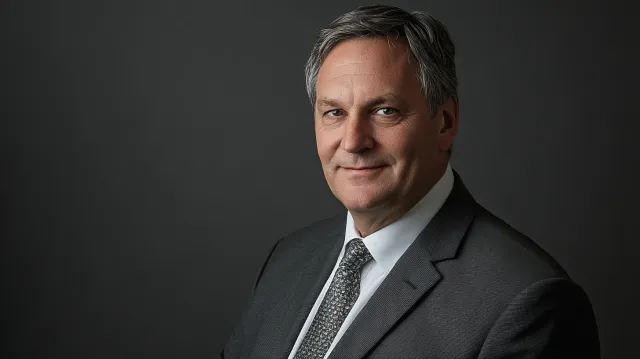
Financial advisor headshots have to signal stability, discretion, and competence in roughly one second.
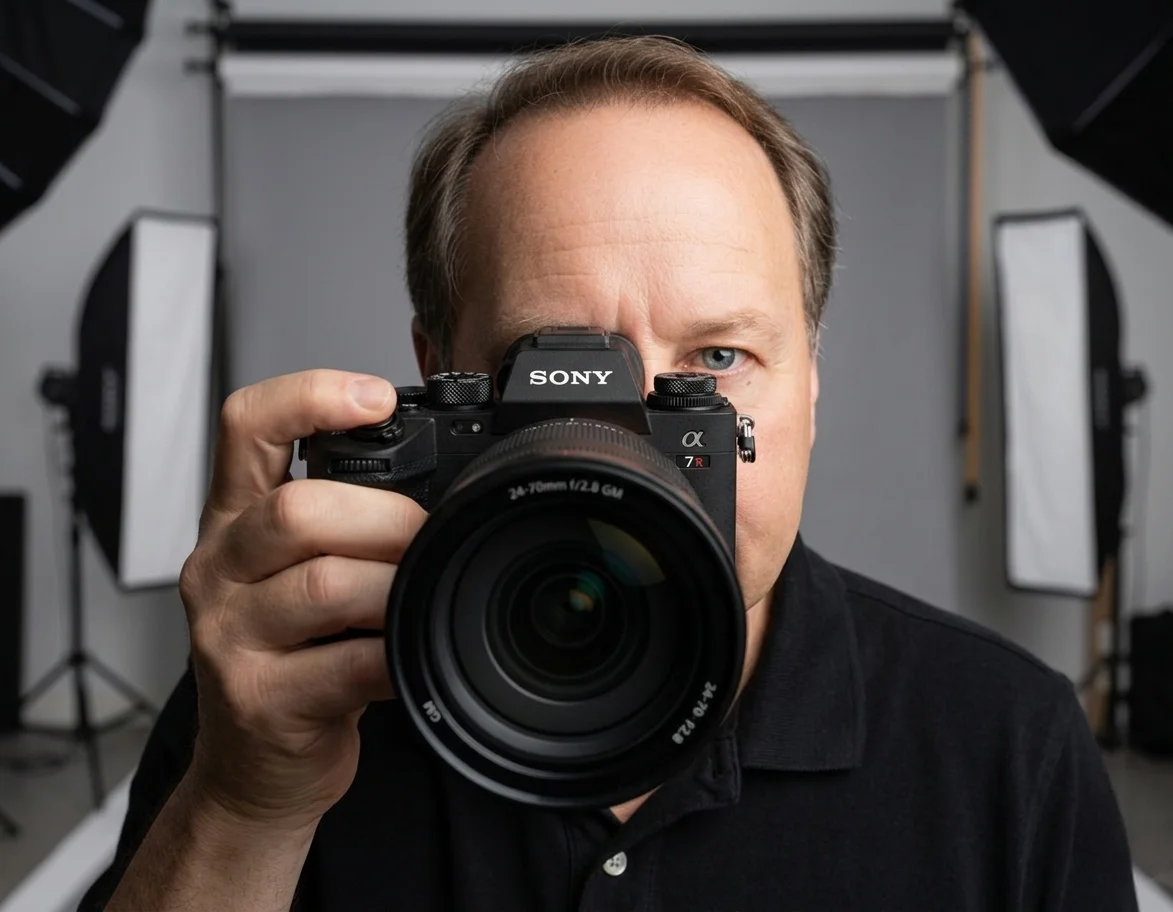
Chris McCarthy
Professional Photographer, Photography Shark · April 23, 2026
The financial services industry is one of the few professional contexts where the photograph carries unusual weight. Clients hiring an advisor are not buying a service in the casual-decision sense — they're transferring control over money they need or have spent decades accumulating, often with implications for their retirement, their family, or their estate. The trust threshold is higher than for almost any other professional engagement that doesn't involve a courtroom or an operating room.
I'm Chris McCarthy. My studio is at 83 E Water Street in Rockland, about 30 minutes from downtown Boston. I photograph financial advisors, wealth managers, CFPs, CPAs, and the firm and practice teams they work with throughout greater Boston and the South Shore. Most of the practices I work with — small RIAs, established firms, family offices, fee-only fiduciary practices — share the same fundamental challenge: the photograph has to do real work in the client decision process.
Here's what your photograph is actually saying, and how to make sure it's saying the right things.
What Clients Are Reading From the Photograph
When a prospective client sees an advisor's photograph — on a firm bio page, on LinkedIn, in a referral introduction email — they are doing a rapid evaluation of three qualities at once.
Stability. Does this person look like someone who has been doing this for a while and is going to be doing it for a while longer? Stability signals come from posture, controlled lighting, conservative wardrobe, and a composed expression. A photograph that looks recent, well-produced, and aligned with the visual conventions of established financial services reads as stable. A photograph that looks dated, casually shot, or stylistically off-genre reads as less established, regardless of the advisor's actual track record.
Discretion. Does this person look like someone who handles other people's money and personal information without putting it in the wrong place? This signal is harder to articulate but very real. It comes from the calibration of the expression — neither overly cheerful nor stern — and the framing, which should feel composed rather than candid. Clients with significant assets are particularly sensitive to discretion signals because they're choosing someone whose judgment they're going to trust about disclosure, recommendations, and the handling of confidential information.
Competence. Does this person look like they know what they're doing? Competence signals come from the eyes (calm, alert, present) and the structure of the photograph (clean lighting, appropriate crop, professional background). Wardrobe choices reinforce competence when they match the conventions of the industry.
The photograph that hits all three lands. The photograph that misses any of them creates friction in the client's decision process — even if they can't articulate why.
The Visual Language of Established Financial Services
If you study the partner pages of the leading wealth-management firms, RIAs, and fiduciary practices, a consistent visual language emerges. The headshots are:
- Cleanly produced over a neutral background (white, off-white, light gray, charcoal)
- Cropped from chest to slightly above the head, with intentional negative space
- Lit with controlled directional light that defines bone structure without harshness
- Wardrobed in conservative business attire (suit and tie for most male advisors, suit or tailored separates for most female advisors)
- Color-treated with a slightly cool or neutral palette that reads as polished rather than warm
This is not arbitrary. It's the visual language clients with significant assets are accustomed to seeing, and it functions as professional shorthand: "this is an established practice that knows what it's doing."
A headshot that diverges significantly from this language — overly casual, environmental rather than studio, color-treated warmly, cropped unconventionally — can read as unprofessional in this context, even when it would be appropriate for other industries. A management consultant or tech executive can use a slightly more relaxed visual language. A wealth manager generally cannot, especially when working with fiduciary clients who already evaluate firms on signals of stability and conservatism.
Wardrobe Conventions That Reinforce the Signal
The wardrobe rules for financial advisors are conservative for the same reason the broader visual language is — these are the choices that read as stable, discreet, and competent.
Suit color. Charcoal gray, navy, deep blue. Black is acceptable but reads heavier and can feel formal in a way some clients perceive as distancing. Tan, light gray, and bright blue are too informal for most fiduciary contexts.
Shirt or blouse. White is the universal default. Pale blue is the second-best option, often more flattering in close-cropped headshots where pure white can wash out skin tone. Solid colors only; patterns introduce visual noise that competes with the face.
Tie or scarf. Generally yes for male advisors, particularly for senior or partner-level photographs. Conservative colors (navy, deep red, charcoal) and conservative patterns (solid, micro-patterns, very subtle stripes). Bow ties are a stylistic choice that reads as personality and can work for advisors whose practice has a distinct identity, but it's a deliberate signal rather than a default.
Female advisor wardrobe. Tailored blazer over a simple blouse or shell, or a structured dress in a conservative cut. The same color principles apply: charcoal, navy, deep colors. Avoid statement jewelry, large patterns, or anything that pulls attention from the face. A simple necklace or stud earrings are fine.
Accessories. Keep them minimal. Pocket squares, tie bars, large watches — most of these introduce visual elements that compete with the face. A simple watch is fine; jewelry should be minimal and conservative.
Background and Environment Choices
Most established firms shoot partner pages on a clean studio background — solid color, neutral, no environmental detail. There's a reason for this: the photograph reads as a portrait of the advisor, not a portrait of the office. For directory pages, the studio background is almost always the right call.
Environmental headshots — shot in the firm's office, in a conference room, against a backdrop of bookshelves or branded interior — can work for marketing material and earned media, but they require careful production. The risk is that the environment becomes the subject. If you want an environmental option, plan for it as a secondary photograph in the session, with the primary still being a clean studio-style headshot.
For solo practitioners and small RIAs, the studio-style headshot is generally the better choice for everything — it reads as more established than a casual environmental shot, even when the practice is genuinely smaller.
How the Photograph Functions in the Client Pipeline
The advisor's headshot is doing work at multiple points in the client acquisition process:
Initial discovery. Clients searching for advisors in their area encounter the photograph on the firm directory, on advisor-matching platforms, on LinkedIn, in earned media. The photograph is part of the first impression that determines whether the prospective client clicks deeper into the bio or moves on.
Referral evaluation. When a CPA, attorney, or existing client refers a prospective client to an advisor, the prospective client looks up the advisor before the introduction call. The photograph confirms or undermines the referrer's recommendation.
Decision-stage evaluation. Prospects often look at multiple advisors before booking discovery calls. The photograph contributes to which advisors get the call and which don't.
Ongoing relationship reinforcement. Existing clients see the photograph on quarterly statements, in firm communications, in event materials. A current, well-produced photograph reinforces the relationship; a dated or off-genre photograph quietly undercuts it.
Industry visibility. For advisors active in industry contexts — speaking at conferences, contributing to publications, serving on boards — the photograph travels into media coverage, panel programs, and association directories. It's a brand asset that needs to hold up across all of those uses.
Team Sessions for Firms and Partner Groups
For firms doing a coordinated update — or new firms establishing an initial brand asset library — a single coordinated session is the practical call. Same lighting, same background, same crop conventions across every advisor and every team member. The result is a partner page that reads as a single cohesive firm rather than as a directory of unrelated photographs.
For groups of five or more, on-location sessions at the firm office often work well. I bring portable studio lighting and a seamless backdrop, set up in a conference room, and run advisors through individual slots. Galleries are processed together so the color and tone match across the full team. If you want the practical end-to-end walkthrough — session structure, wardrobe checklist, and compliance notes for wealth managers — the complete financial advisor headshot guide lays out the whole process step by step.
The Advisory Geography
Most South Shore wealth-management practices cluster along Route 53 from Norwell (the densest concentration) south through Hanover at Merchants Row. Hingham carries the upper end of the local advisory market — high-net-worth client work, often Boston-anchored. Cohasset overlaps with Hingham but skews more boutique and family-office. Marshfield and Quincy round out the regional footprint. Boston covers the downtown firms; advisors with Boston offices and South Shore homes typically shoot here for the convenience.
Book Your Session
Contact me with your role, firm context, and timeline. Sessions start at $395 for 30 minutes with 10 retouched images — full Boston headshot pricing on the investment page. Free parking at the Rockland studio. On-location sessions for firms are $495 plus team-rate structures.
For specific roles: Financial Advisor Headshots Boston and Financial Advisor Headshots South Shore cover the standard advisor session in detail. CPA Headshots Quincy and CPA Headshots Boston are the dedicated CPA pages. The Boston Headshot Pricing guide breaks down what's included in each tier. Related: new business card photo.
See also: Hingham wealth-manager headshot session.
Frequently Asked Questions
Why are financial advisor headshots different from other professional headshots?
Because the role is different. Clients are choosing someone to handle their money — often money tied to retirement, college savings, or generational wealth — and the trust threshold is higher than in most professional services. The photograph has to communicate stability, discretion, and competence in a way that other industries can leave to copy or credentials. Visual signals carry more weight.
Should an advisor's headshot match the firm's existing partner page?
If you're a partner or senior advisor at an established firm, yes — strongly. Consistency across a partner page reinforces firm credibility. If you're a solo practitioner or running a small RIA, you have more latitude, but the visual language should still feel established rather than experimental. Bring reference images from the firm site to the session if you want consistency.
Do CFPs and CPAs have different headshot calibrations?
Subtly. CFPs working with retail wealth-management clients often benefit from a slightly warmer expression — clients are choosing someone they'll have ongoing relationship-management conversations with. CPAs and tax-focused advisors, especially those working with business owners and complex returns, tend to do better with a touch more formal register. Both fall into the same general visual family; the calibration moves a few degrees in either direction.
What about robo-advisor or fintech roles where clients never meet you?
Photograph still matters. Profile photographs appear on LinkedIn, in firm marketing material, in earned media, in industry conference programs. The advisor or PM whose photograph is in front of investors or analysts is being read for the same trust signals as a wealth manager meeting clients in person. The context is different but the calibration is similar.
How often should an advisor refresh their photograph?
Every 3 to 4 years at minimum, sooner if there's been a significant change in role, firm, or appearance. Advisors who've moved firms or taken on more senior roles in particular benefit from a fresh photograph — the prior photo often doesn't match the current professional standing. For partners and named-practice advisors, the photograph is part of the brand asset library and should be maintained accordingly.
What does a typical session for a financial advisor look like?
30 minutes, two or three wardrobe options, two background options if relevant. We start with the primary look — typically charcoal or navy suit, white or pale shirt, simple tie — over a clean neutral background. The session includes coverage for both LinkedIn and the firm-bio page, which often want different crops and slightly different expressions. You receive 10 fully retouched images delivered within 3 to 5 business days.
Related Posts
![Financial Advisor Headshots: Complete Professional Guide [2026]](/blog/financial-advisor-headshots-boston-w640.webp)
Headshots
Financial Advisor Headshots: Complete Professional Guide [2026]

Headshots
Modeling Headshots vs Actor Headshots — What is Actually Different
![AI Headshot Generators vs Professional Headshots: Complete Guide [2026]](/blog/ai-headshots-vs-professional-headshots-w640.webp)
Headshots
AI Headshot Generators vs Professional Headshots: Complete Guide [2026]
Headshots
Cheer and Gymnastics Headshots: Tryouts, Recruiting, and Team Rosters

Headshots
Ballet Headshots: What Classical Companies and Schools Expect

Headshots
Commercial Dance Headshots: What Agents and Casting Want
You Might Also Like
About the Author
Chris McCarthy
Chris McCarthy has run Photography Shark Studios in Rockland, MA for over 10 years and 500+ sessions, with executive headshot work for Rockland Trust, Clean Harbors, M&T Bank, and McCarthy Planning; founder portraits for AI startups including Lowtouch.ai; product photography for South Shore brands like Lauren's Swim; and headshots across South Shore legal, medical, financial, and academic practices. Every session is personally shot and edited by Chris on Sony mirrorless and Godox strobe systems — no assistants, no outsourcing, no batch retouching. Galleries deliver in 3–5 business days. About Photography Shark →
Photography Shark · Boston & South Shore MA
Ready to Book a Session?
Professional headshots, senior portraits, boudoir, and model portfolios. Studio in Rockland, MA — 25 miles south of Boston. Sessions from $395.