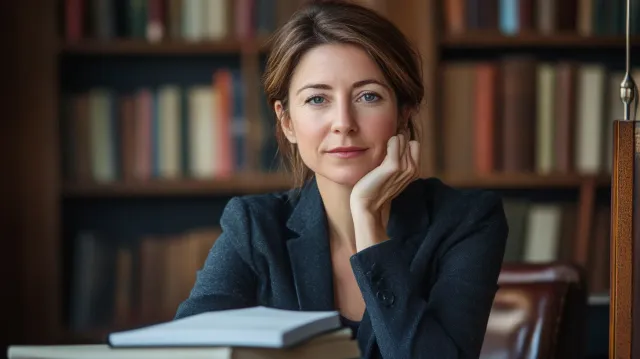
Headshots
Author Headshots: Book Jacket vs Speaker vs Media Kit
Why one author headshot rarely covers every use — the back-flap photo wants something different from the speaker-bureau thumbnail and the media-kit pull.
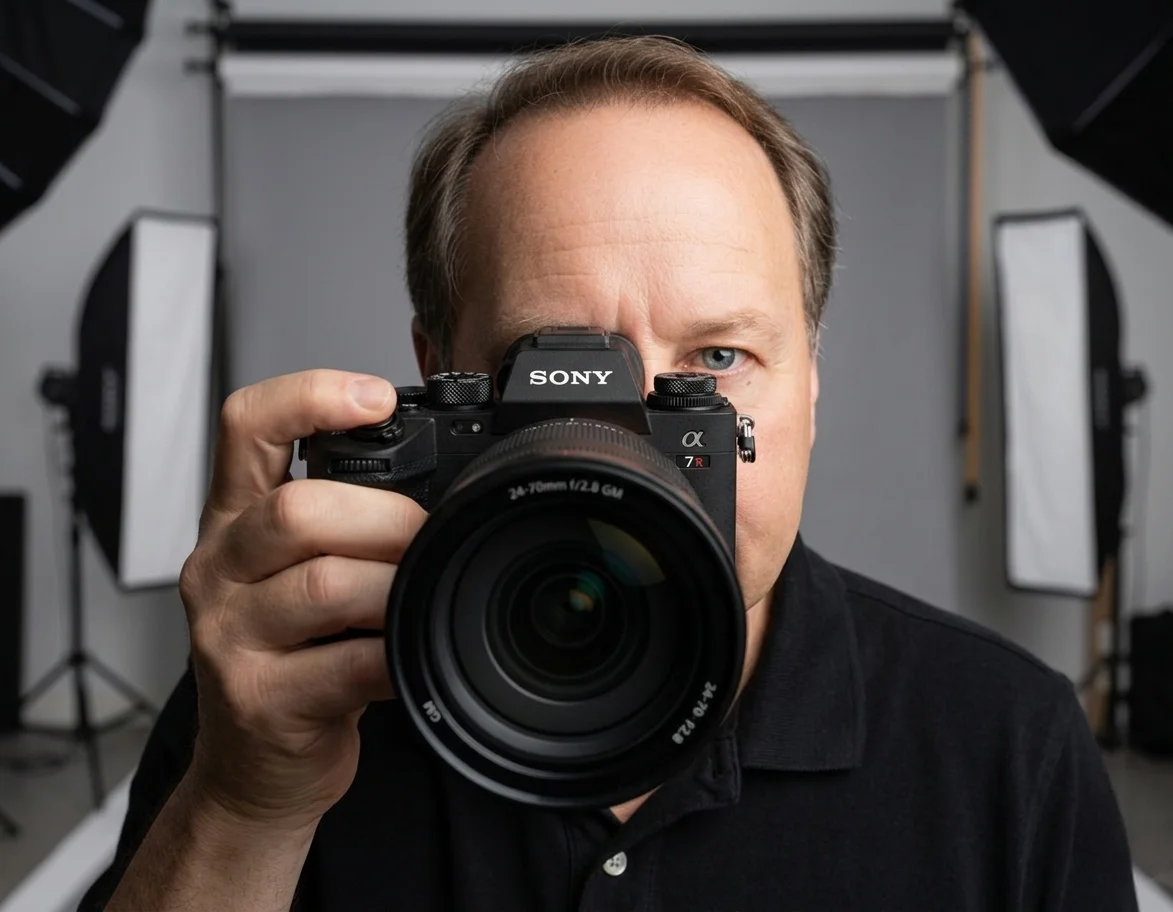
Chris McCarthy
Professional Photographer, Photography Shark · April 7, 2026 · Updated May 7, 2026
Most authors arrive at a headshot session thinking about one image — the photo. By the end of the conversation it is usually clear that the same photo will not actually do every job the author needs done. The back-flap shot that works on a hardcover lives a different life from the speaker-bureau thumbnail and the high-resolution publicity pull, and treating all three as one deliverable is how authors end up with a photo that performs unevenly across platforms.
This post is about how to think about an author session as a multi-deliverable project rather than a single photograph, and how a single sitting can produce the three distinct versions cleanly without scheduling separate engagements.
I'm Chris McCarthy. The studio is at 83 E Water Street in Rockland, Massachusetts — about 30 minutes south of Boston, free parking. For pricing and session-package information, see the Boston author headshot service page. This post is about how the deliverables differ.
The Three Distinct Uses
The author photo lives in three primary contexts, and each context has different visual constraints.
The book-jacket portrait. The author photo on a back flap, inside-back cover, or hardcover sleeve. Lives at relatively small printed size — sometimes a postage-stamp version inside the book, sometimes a 3×4-inch portrait on the back of a trade paperback. Read from inches away, often in indirect light. The expression and composition need to invite the reader to spend a moment with the photo as part of finishing the book.
The speaker-bureau thumbnail. The 400-pixel square photo next to your name on a speaker-bureau roster, conference program, festival lineup page, university lecture series, or industry-event website. Read at small sizes, often alongside dozens of other speaker photos. The composition needs to project clearly at thumbnail scale, with the eyes and expression doing most of the work.
The media kit pull. The high-resolution version your publicist sends to reviewers, podcast hosts, feature editors, and book bloggers. Often the only photograph the publication has to work with. Needs to allow flexible cropping (square for Instagram, vertical for print sidebars, horizontal for podcast cover-art templates), color correction (for publications with specific brand palettes), and conversion to grayscale (for some print contexts). The technical baseline is the highest of the three uses.
Same author, same shoot, three different rendered frames.
What the Book-Jacket Version Wants
The back-jacket photo has a complicated relationship to the book itself. The reader who picks up your book in a store does not see your photo first — they see the cover, the title, the back-cover blurbs. By the time they look at the author photo, they are deciding whether to spend time with you for the next several hours.
The composition that works:
- A relatively tight portrait crop. Chest-up or slightly tighter. The photo lives at small size on the printed jacket; a wider frame loses the face entirely.
- A grounded expression. Not the formal corporate-headshot register; not the actor-headshot performance. The expression that reads as "I wrote this, and I am at home in it." Slightly closed-mouth pleasantness for most genres; a fuller, warmer smile for memoir and YA; a more inward, considered look for literary fiction and serious nonfiction.
- Natural light register or soft studio light. Hard, dimensional studio lighting can read as overproduced for a book jacket. The light should look like a person, not a brand.
- Wardrobe that suggests the work. Suit-and-tie for a business book, knit-and-jeans for a memoir, structured-and-considered for literary fiction.
Most major trade publishers (Penguin Random House, HarperCollins, Hachette, Macmillan, Simon & Schuster) request 300 dpi color photography at 5×7 inches minimum — about 1500×2100 pixels — for the book-jacket version. The publisher will credit the photographer in the printed book.
What the Speaker-Bureau Version Wants
The speaker-bureau thumbnail lives next to dozens of other thumbnails on a roster page. Your photo has roughly two seconds to make a clear impression before the visitor scrolls past, and the constraints follow from that.
The composition that works:
- A tighter square crop. Tighter than the book-jacket frame. The eyes need to be in the upper third of the rendered thumbnail, with about 15% headroom above. Too loose and the face becomes too small to read at thumbnail scale.
- A slightly more direct expression. The bureau visitor is evaluating whether to book you as a speaker. The expression should signal presence and engagement — eye contact with the camera, a faint pleasantness, an energy that translates to "this person owns the room."
- A simpler background. Busy backgrounds compete for attention at thumbnail scale. A clean studio gray or off-white reproduces best.
- Same wardrobe as the book-jacket version. Consistency across platforms reinforces the author's brand. The reader who saw your photo on the jacket and finds you on a speaker-bureau roster a year later should recognize you instantly.
Speaker bureaus and conference programs typically display the thumbnail at 400×400 to 600×600 pixels. A 1000×1000 square export from the shoot is the practical upload — sharp on retina displays, light enough to load fast.
What the Media-Kit Version Wants
The media-kit pull is the workhorse of an author's public image. Your publicist sends it to feature editors at the New York Times Book Review, to podcast hosts requesting cover art, to book bloggers writing reviews, to local-press features, and to whatever international rights syndication picks up the book.
The constraints are different from the previous two:
- Maximum resolution and format flexibility. A 24-megapixel RAW exported to a 5000-pixel JPG covers every downstream use. Print publications request 300 dpi at 4×5 inches or larger; podcast cover-art templates work at 1500×1500; web features compress down to 600 pixels wide.
- Multiple framings from the same sitting. A tight portrait crop for thumbnails, a chest-up frame for editorial sidebars, a three-quarter-length variant for feature interviews. Some media outlets prefer one over another based on layout.
- Both color and grayscale-friendly framing. Some print contexts (interior author photos, certain trade reviews) still convert to grayscale. The lighting and wardrobe choices that hold up in both color and grayscale are slightly more conservative than the choices that work for color-only display.
- Color profile flexibility. Default delivery is sRGB. Some print publications request CMYK; the studio can re-export on request.
The media-kit pull is also the version that often gets used for the author's website hero image, the bio block on the publisher's website, the Amazon and Audible product pages, and the social-media profile photos across Twitter/X, Instagram, Facebook, and TikTok. One file, many destinations.
How One Session Produces All Three
A 60-to-90-minute session covers all three deliverables with one wardrobe and one expression-direction conversation.
The session structure that works:
- The book-jacket frame. Begin here. The lighting setup is most precise at the start of the session, the wardrobe is fresh, and the formal portrait register is easier to lock in before the session loosens up.
- The speaker-bureau crop. Tighter framing from the same sitting. Same expression as the book-jacket version with a slightly more direct gaze. The bureau-thumbnail crop is shot in-camera, not produced by cropping the book-jacket frame in post — the framing changes the composition meaningfully.
- The media-kit set. A wider three-quarter-length frame, plus an additional environmental or context variant if relevant to the book. This is the part of the session where the author can explore slightly different expressions, wardrobe variants, or background options.
Two wardrobe changes layered in — for example, a more formal jacket for the book-jacket version and a softer top for the speaker bureau and media kit — multiply the deliverables without extending the session past 90 minutes.
Genre Affects All Three Versions
The genre shapes which version of each deliverable lands well, but the underlying three-version structure is constant.
- Literary fiction allows a more considered, slightly inward book-jacket portrait; a slightly less direct speaker-bureau expression; and environmental media-kit options.
- Commercial fiction (thriller, mystery, romance) wants a more polished, conventionally professional register across all three versions.
- Memoir allows the warmest expression range across all three; environmental portraits often work well for the media-kit set.
- Business and professional nonfiction sits closest to executive-headshot territory; suits or polished professional wardrobe across all three.
- Self-help and how-to wants approachability and warmth — the reader is buying the author as much as the book.
- Poetry is surprisingly conventional — most poets use straightforward professional headshots; the book does the genre-signaling work.
- YA and middle grade lean toward warmer, more accessible expressions — particularly for the speaker-bureau version, where school-visit programs are a meaningful piece of the speaker work.
- Children's picture book sometimes warrants a more environmental media-kit option that evokes storytelling.
When the Environmental Portrait Joins the Set
The studio headshot is the primary submission for the publisher, the bureau, and the media kit. Environmental portraits — taken at a bookshelf, in a writing space, in a café, outdoors — are supplementary.
The case for adding an environmental shoot:
- The book has a strong setting. A memoir tied to a specific place, a regional novel, a nonfiction book where the author's location or workspace is part of the narrative.
- The author's website wants a hero image. An environmental portrait at a bookshelf or in a writing room reads warmer and more personal than a studio headshot in the hero slot.
- A specific media outlet wants something distinctive. Some feature editors prefer environmental portraits for long-form interviews because they visually distinguish the piece from a routine review.
For South Shore-based authors, locations like the Duxbury beach and Powder Point area, Hingham Harbor and the historic district, and the various historic libraries along the coast offer genuinely strong backdrops that hold up alongside studio work. For Boston-based authors, the Public Library, Beacon Hill, the Common, Faneuil Hall, and waterfront contexts cover most environmental needs.
The session structure: studio first (book jacket, speaker bureau, media kit), then a short environmental segment if relevant. One sitting day, one fee, multiple deliverables.
Booking the Session
For pricing, packages, and turnaround information, see the Boston author headshot service page. For sessions that include both studio and environmental components, mention the book genre, your publisher or publicist if you have one, and the deliverable timeline (book launch date, speaker-bureau roster cutoff, media-kit refresh) when booking — the session can be sequenced to deliver the most time-sensitive crop first. Further reading: headshot for hiring interviews.
Frequently Asked Questions
Why can't a single author photo serve the book jacket, speaker bureau, and media kit all at once?
They do different jobs. The back-jacket photo lives at low resolution next to a 200-word bio and reads from inches away on a bookstore shelf. The speaker-bureau thumbnail is a 400-pixel square next to a session title and needs to project clearly at small sizes. The media-kit pull is high-resolution and is what publicists send to reviewers, podcasters, and feature editors — it needs the most flexibility for cropping, color correction, and print conversion.
Can one session produce all three versions in a single wardrobe?
Yes — and it should. A 60-to-90-minute session shoots the formal book-jacket frame, a tighter square crop for speaker bureaus and social profiles, and a slightly broader three-quarter-length frame for press kits, with one or two wardrobe changes layered in. The same expression coaching produces all three from one sitting, with each frame retouched and exported at the right resolution and aspect ratio for its target.
What's the actual file spec a trade publisher will request for the book jacket?
Most major trade publishers (Penguin Random House, HarperCollins, Hachette, Macmillan, Simon & Schuster) request 300 dpi color photography at 5×7 inches minimum — about 1500×2100 pixels. The publisher will credit the photographer in the printed book. Independent literary presses often want the same technical spec but allow more stylistic latitude. Audiobook publishers sometimes ask for a square crop for streaming-platform display.
When does an author actually need an environmental portrait alongside the studio headshot?
When the book has a strong setting that benefits from visual reference — a memoir tied to a specific place, a regional novel, a nonfiction book where the author's location or workspace is part of the narrative. Environmental portraits also work for personal-website hero images and certain feature-press contexts. The studio headshot remains the primary submission for the publisher, the bureau, and the media kit; the environmental shot is supplementary.
Related Posts
You Might Also Like
About the Author
Chris McCarthy
Chris McCarthy has run Photography Shark Studios in Rockland, MA for over 10 years and 500+ sessions, with executive headshot work for Rockland Trust, Clean Harbors, M&T Bank, and McCarthy Planning; founder portraits for AI startups including Lowtouch.ai; product photography for South Shore brands like Lauren's Swim; and headshots across South Shore legal, medical, financial, and academic practices. Every session is personally shot and edited by Chris on Sony mirrorless and Godox strobe systems — no assistants, no outsourcing, no batch retouching. Galleries deliver in 3–5 business days. About Photography Shark →
Photography Shark · Boston & South Shore MA
Ready to Book a Session?
Professional headshots, senior portraits, boudoir, and model portfolios. Studio in Rockland, MA — 25 miles south of Boston. Sessions from $395.