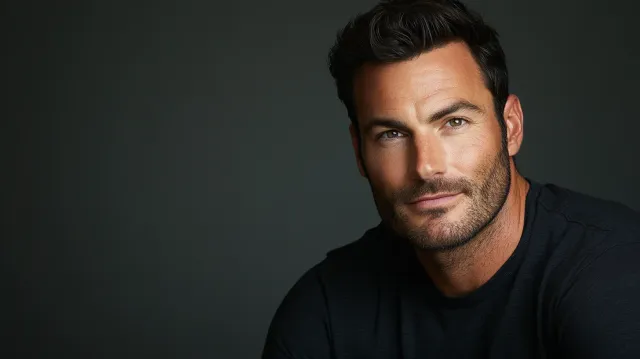
Actor Headshots
How Many Headshots Do Actors Really Need — and Why It Matters
Most actors submit too few looks or too many. The right number, the right variety, and how casting directors actually use a headshot package.
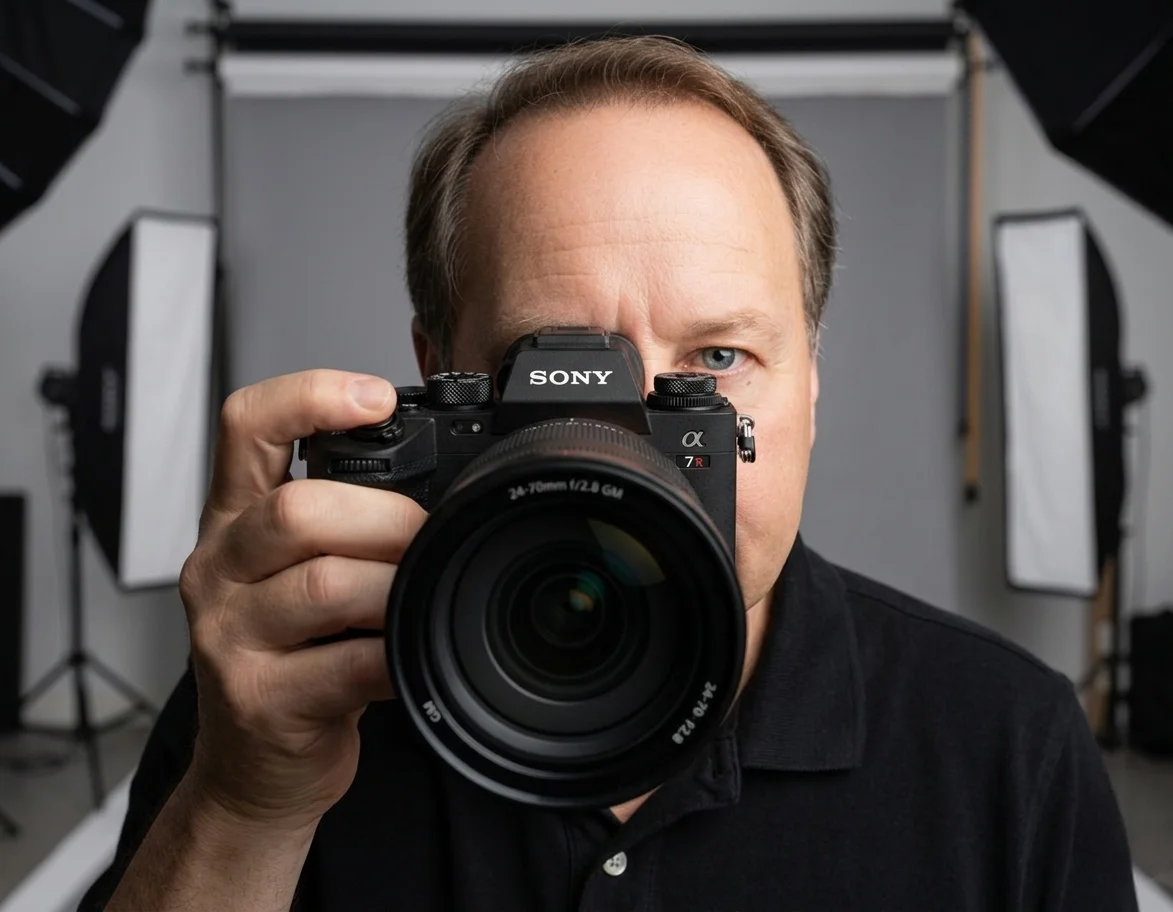
Chris McCarthy
Professional Photographer, Photography Shark · April 3, 2026 · Updated May 18, 2026
The volume of headshots an actor maintains is one of those decisions that doesn't have an obvious right answer until you understand what casting directors are actually doing on the receiving end. Too few looks and the actor is competing for a smaller share of submissions. Too many and the submission reads as unfocused. The actual range — narrower than most actors think — is between three and five distinct looks, and the calibration of those looks matters more than the count.
I'm Chris McCarthy. My studio is at 83 E Water Street in Rockland, about 30 minutes south of Boston. I shoot actor headshots for performers throughout greater Boston and the South Shore — from emerging actors building their first professional package to working actors refreshing as their type evolves. The patterns of what actually works on submission platforms are remarkably consistent.
What Casting Directors Actually See
A casting director reviewing submissions for a specific role is doing a rapid filtering operation. The submission platform shows the actor's name, headshot package, and resume metadata. The casting director scans:
- Primary headshot — usually the actor's strongest theatrical or commercial, depending on the role.
- Range across the package — does this actor have other looks that suggest they could play in adjacent registers?
- Type clarity — is it obvious what kinds of roles this actor reads for?
- Resume cross-check — does the experience align with what the headshots suggest?
This is happening fast — sometimes 20-30 seconds per actor for a busy submission round. The headshot package is the visual anchor of the entire decision. Too few looks means the casting director can't see range; too many looks means they can't quickly identify type.
The Two Looks Every Actor Needs
The minimum viable package is two looks: theatrical and commercial.
Theatrical is calibrated for dramatic, serious, and emotionally demanding roles. The expression typically suggests interior life and emotional range — slightly more subdued, with intensity in the eyes. Wardrobe leans darker (dark shirt, dark sweater, jewel tones). Lighting tends toward more directional, creating dimension and shadow.
Commercial is calibrated for friendly, accessible, and brand-aligned roles. The expression suggests warmth and approachability — small genuine smile, eyes engaged but lighter. Wardrobe leans lighter or more textured (light shirt, casual top, friendly colors). Lighting is generally softer and more even.
These two cover the bulk of what most working actors are submitted for. A theatrical look gets the actor into consideration for dramatic film, TV, and theater submissions. A commercial look opens commercial submissions, lighter TV, family-friendly content, and warmer character work. With only one or the other, the actor is voluntarily limiting their submission pool to roughly half of available opportunities.
When to Add a Third (or Fourth) Look
Beyond the theatrical/commercial baseline, additional looks make sense when they reflect a genuinely distinct aspect of the actor's range or type. Some scenarios where adding looks pays off:
Specialty register. An actor whose type is naturally suited to specific genres — period, character, comedic, action — benefits from a look calibrated for that register. A rugged contemporary look for action or military submissions, a softer period-leaning look for prestige drama, a sharper comedic-character look for sitcom and commercial comedy.
Significant type evolution. An actor whose appearance has changed (new hair, weight change, aging into a different age range) needs the package to reflect the current version. Sometimes this means adding a new theatrical and commercial pair while keeping the existing package available for transitional submissions.
Distinct contemporary and classical/period range. Stage actors who work both contemporary and classical productions sometimes maintain a contemporary headshot pair and a slightly different period-leaning option that supports Shakespeare, period drama, and classical theater submissions.
Voiceover or commercial print parallel work. Actors who do significant commercial print, voiceover with on-camera component, or branded social media work sometimes maintain a third look calibrated specifically for those uses.
The threshold for adding a look is "this represents a genuinely distinct register I'm submitted for." Adding a look just because the photographer offered an extra wardrobe slot doesn't strengthen the submission package.
Why Five Is Usually the Ceiling
Five distinct looks is the practical ceiling for most working actors, and even five is on the higher end. Beyond that, the package starts working against the actor.
Casting directors evaluating submissions are running pattern-matching: what kind of actor is this, and would they fit the role? A package of seven or eight looks fragments the pattern. The casting director's mental image of the actor becomes diffuse rather than focused. Submissions read as "actor unclear on type, hoping something lands" instead of "actor with clear type and supporting range."
This is particularly true for emerging actors. The pressure to demonstrate range often leads new actors to submit four, five, six different looks — when a strong theatrical and a strong commercial would convert better. A focused two-look package from a clear submission strategy outperforms a sprawling six-look package from "let me throw everything at this."
For working actors with established type, the limit relaxes slightly. An actor who has been booked across a wide range of roles for a decade can credibly maintain four or five looks because the casting community already knows how to read them. New actors don't have that reputational scaffolding and benefit from tighter packages.
The Cost of Maintaining Looks
Each look in a package has a maintenance cost. Headshots age — appearance changes, industry visual conventions evolve, hair and weight shift. A look that's three years old often needs refreshing or retiring. The more looks the actor maintains, the more frequently they're refreshing.
A practical maintenance cycle:
- Two-look package (theatrical + commercial): Refresh every 2-3 years, or sooner if appearance changes significantly.
- Three-look package: Same cycle; refresh all looks in a single session for visual consistency.
- Four to five-look package: Significantly more maintenance burden. Sessions need to be coordinated to refresh looks together rather than letting them age individually.
For most working actors, two to three looks at any time is the practical sweet spot. Maintenance is manageable, the package reads as focused, and the actor isn't constantly behind on refreshing assets.
What a Multi-Look Session Looks Like
A 60-minute session at the studio is structured to capture two to three distinct looks comfortably. The session typically runs:
- First look — theatrical. Set up dark wardrobe, directional lighting (Rembrandt or loop), expression direction toward emotional availability. 15-20 minutes of shooting.
- Wardrobe and lighting reset. 5 minutes to change wardrobe, adjust lighting setup for the next look.
- Second look — commercial. Set up lighter wardrobe, softer clamshell-style lighting, expression direction toward warmth and accessibility. 15-20 minutes.
- Optional third look. If we're capturing a specialty register, another wardrobe change and lighting adjustment, then 10-15 minutes of shooting.
- Review and selection at the back of the camera between sets to refine the most promising frames.
Galleries are processed and delivered within 3-5 business days. The deliverable is 10 fully retouched, high-resolution images split across the looks — typically 4-5 from theatrical, 4-5 from commercial, and any specialty look gets a smaller share.
Career-stage matrix — how many looks at each phase
Look-count requirements scale with career stage. A practical matrix:
- Community theater / college senior transitioning to professional: ONE look — a clean, castable starter headshot. Two is fine if the actor knows their type clearly. Don't over-invest before the type is established.
- Emerging working actor (first 1-2 years on Actors Access/Casting Networks): TWO looks — one theatrical, one commercial. The minimum viable professional package. Refresh annually as type clarifies.
- Working unrepresented actor with a building resume (2-5 years in): TWO to THREE looks. Add a third look only if a clear character/specialty type has emerged from booking patterns.
- Working represented actor (year 1 with agent): TWO to THREE looks per the agent's direction. The agent often has specific opinions about which third look to add based on the gaps they see in the submission package.
- Working represented actor (years 2-5): THREE to FOUR looks. Established type with secondary range. Refresh every 18-24 months.
- Established working actor with bookable name: FOUR to FIVE looks if range is genuinely wide. The package reflects an established brand the casting community recognizes.
- Name actor with public profile: Variable. At this level, headshots are tools for specific casting submissions — count depends on the projects in pipeline rather than market positioning.
Industry-specific look counts
Different actor specializations have different working-package conventions:
- Theater-focused (regional rep, classical, Equity): THREE looks is common — contemporary theatrical, classical/period-leaning, and a contemporary commercial. The classical look is the variable.
- TV/Film actor without theater specialty: TWO to THREE looks — theatrical and commercial baseline plus an optional character look for episodic genre work.
- Commercial-print and lifestyle model + actor crossover: THREE to FOUR looks — commercial, lifestyle, fitness/active, and one theatrical for the occasional theater submission.
- Voice actor with occasional on-camera work: ONE to TWO looks — minimal investment because the bookings are voice-driven. A single clean commercial headshot covers most needs.
- Child or teen actor: TWO looks maximum. Type evolves fast at this age; aggressive packages get outdated within months.
- Senior actor (60+) breaking into commercial market: TWO to THREE looks — warm commercial, dignified character, and optional specialty (grandparent-type, professional-coded).
- Background and stand-in work: ONE look — utilitarian, type-clear. Background submissions don't reward extensive packages.
What to do with retired looks
When an old look ages out of the active submission package, the standard options:
- Archive — don't delete. The retired files still represent that point in the actor's career and may have value for retrospective use (Behind-the-Scenes content, social media throwbacks, "10 years ago" posts).
- Replace gradually, not all at once. When refreshing, shoot the new look(s) before retiring the old ones. Carrying both versions briefly allows a transition period where submissions can use whichever serves the role.
- Update Actors Access, Casting Networks, agent submissions, and personal website simultaneously. Mismatched packages across platforms create confusion. The day a new look goes live should be the day old looks come down. (Refreshing the package is also the moment to confirm how your headshot pairs with your acting resume — the back-of-print stapling and formatting conventions matter when you submit in person.)
- Notify the agent. A working actor's headshot refresh affects how the agent presents them. Coordinate the timing so the agent isn't surprised by changes mid-submission cycle.
- Save the file structure consistently. `actorname-theatrical-2024.jpg`, `actorname-commercial-2024.jpg`, then `actorname-theatrical-2026.jpg`. Year-suffixed files make organization across multiple sessions sustainable.
When to add a niche specialty look vs when not to
A common question: should an actor add a niche look (military, period, character, fitness) speculatively, in case it serves a future submission?
The answer is almost always NO. Niche specialty looks should be added when:
- The actor has booked at least one project in that niche.
- The agent has specifically requested the niche look.
- The actor is targeting a specific casting director or production that has explicitly stated they want to see that range.
- The actor's resume already demonstrates work in the niche.
Adding niche looks speculatively typically produces images that go unused on submissions and clutter the package. Money is better spent refreshing the existing theatrical and commercial.
Book Your Session
Contact me and let me know what looks you need and your timeline. Standard 30-minute sessions for a single look are $395; 60-minute multi-look sessions are $545. Full Boston headshot pricing on the investment page. Free parking at the Rockland studio.
For more on actor session structure: Boston Actor Headshots covers the dedicated actor service in detail. The actor headshots package on the investment page breaks down the multi-look structure. For South Shore-based actors, Actor Headshots South Shore covers the local service.
Frequently Asked Questions
What's the minimum number of headshots an actor needs?
Two. One theatrical look (calibrated for dramatic and serious roles) and one commercial look (calibrated for friendly, approachable roles). Submitting with only one of these limits the actor to half the audition pool. Most working actors maintain three to five distinct looks at any given time, and refresh them as their type evolves or career stage changes.
Is there such a thing as too many headshots?
Yes — submitting six or seven different looks signals indecisiveness about type. Casting directors looking at a long submission list want to see clearly defined options, not a buffet. Three to five strong looks across theatrical and commercial are typically the right range. The exception is actors with deliberately wide range (e.g., character actors playing across age and tone) where additional looks support specific niche submissions.
Should the looks be from the same session or different sessions?
Same session is usually preferable for consistency. A single 60-minute session can produce a complete theatrical and commercial look set, including 1-2 wardrobe changes. Sessions across years often look stylistically inconsistent — different lighting eras, different processing styles — which can read as a patchwork rather than a unified package. The exception is when an actor's type has genuinely shifted and they need to refresh the entire package.
Do I need separate headshots for film, TV, and theater?
Not separate — but the same theatrical or commercial look generally serves multiple media. The differentiation is theatrical vs. commercial vs. specialty (period, character, etc.), not film vs. TV vs. stage. A strong theatrical headshot works for film auditions, dramatic TV, and serious stage roles. A strong commercial headshot works for commercial casting, lighter TV, and family-friendly stage.
What if I'm submitting for a specific role — should I add more looks?
Generally no. Adding a niche look just for a specific submission can read as desperate or off-strategy. Stick to your strongest theatrical and commercial — let the casting director's imagination work. The exception is genuinely period or specialty submissions (Civil War drama, Victorian, contemporary military, etc.) where the casting team has specifically asked for looks aligned with the period.
How does this work in a session at Photography Shark?
A 60-minute session is structured to capture two to three distinct looks — typically a theatrical and a commercial, with optional space for a third specialty look. Two to three wardrobe options come into the session and we shoot each look in series. The 60-minute session is $545 and produces a complete actor-ready package; additional looks beyond three usually require a longer session.
Related Posts
Actor Headshots
Headshots for Older Actors: How to Look Your Best at Any Age
Actor Headshots
10 Tips for Actors Headshots
Actor Headshots
Actor Headshots for Beginners: What to Expect

Actor Headshots
Child Actor Headshots in Boston — A Parent's Guide
Actor Headshots
Best Actor Headshot Photographers on the South Shore
Actor Headshots
Actress Headshots Boston — Studio Portraits for Female Actors
You Might Also Like
About the Author
Chris McCarthy
Chris McCarthy has run Photography Shark Studios in Rockland, MA for over 10 years and 500+ sessions, with executive headshot work for Rockland Trust, Clean Harbors, M&T Bank, and McCarthy Planning; founder portraits for AI startups including Lowtouch.ai; product photography for South Shore brands like Lauren's Swim; and headshots across South Shore legal, medical, financial, and academic practices. Every session is personally shot and edited by Chris on Sony mirrorless and Godox strobe systems — no assistants, no outsourcing, no batch retouching. Galleries deliver in 3–5 business days. About Photography Shark →
Photography Shark · Boston & South Shore MA
Ready to Book a Session?
Professional headshots, senior portraits, boudoir, and model portfolios. Studio in Rockland, MA — 25 miles south of Boston. Sessions from $395.