Headshots
Actor vs. Corporate Headshots: Why One Size Does Not Fit All
Actor vs. corporate headshots: lighting, expression, framing, and wardrobe diverge for specific reasons. Why one size does not fit all.
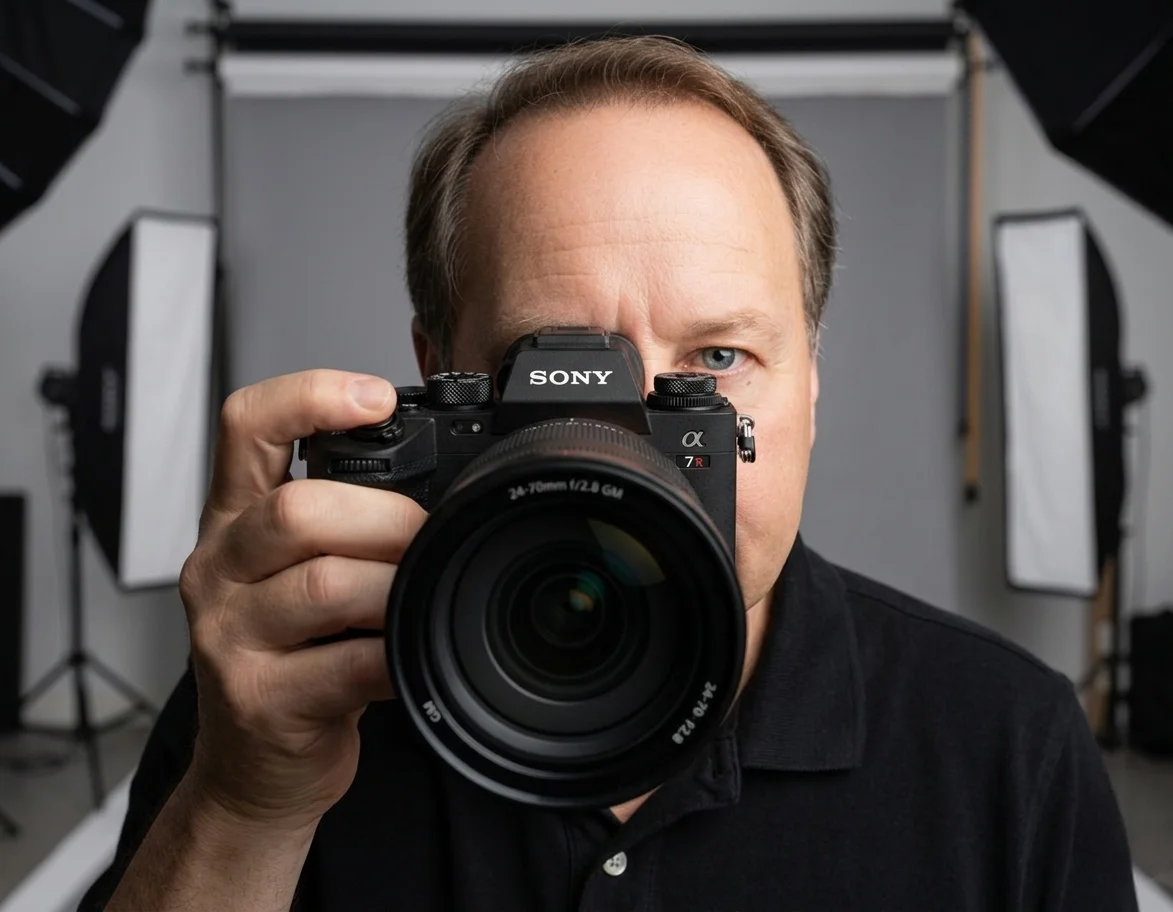
Chris McCarthy
Professional Photographer, Photography Shark · April 24, 2026 · Updated May 24, 2026
The question comes up at nearly every dual-career headshot session: "Can I just use one photograph for both?" The answer is almost always no, and the reasons are not about quality — both genres demand professional-grade execution — but about visual language. Actor headshots and corporate headshots serve different audiences, operate under different evaluation criteria, and communicate different things about the person in the frame. Using one for both is like wearing a costume to a board meeting: technically clothing, but sending entirely the wrong signal.
Photography Shark produces both at the Rockland studio and regularly books sessions that cover both in a single sitting. Understanding why they differ — and specifically how they differ — helps clients plan the right session and leave with images that perform in both worlds.
The expression standard
The deepest difference between actor and corporate headshots lives in the expression, and it is subtle enough that clients who have not been directed through both often do not realize how much the face changes between them.
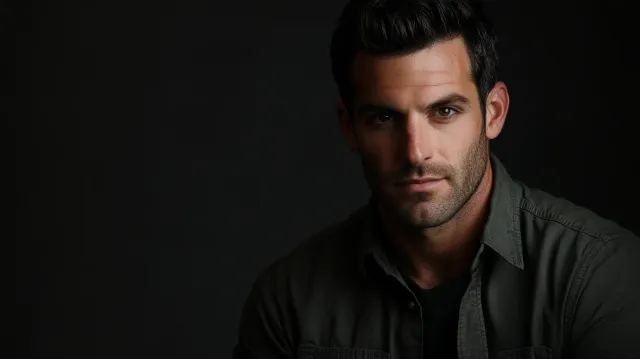
An actor headshot is calibrated to suggest range. A casting director scanning a submission stack is asking one question: "What roles can I see this person in?" The expression needs to be open enough that the viewer's imagination can project different characters onto it. The eyes are active — engaged, present, slightly searching. The mouth is typically neutral or carrying a contained micro-expression (a hint of amusement, a suggestion of intensity, a flicker of warmth) that communicates emotional availability without locking into a single mood. The result is a photograph that reads differently depending on what role the casting director is trying to fill — which is exactly the point.
A corporate headshot is calibrated to suggest reliability. A hiring manager, client, or colleague looking at a directory page or LinkedIn profile is asking a different question: "Is this person competent, approachable, and professional?" The expression is warmer, more settled, and more definitive than an actor headshot. The smile — whether full, closed-mouth, or a confident neutral — communicates stability rather than range. The eyes engage the camera with directness rather than openness. The overall impression should be "I know what I'm doing and I'm easy to work with" — a single, clear signal rather than the multi-signal ambiguity that acting headshots require.
Chris McCarthy directs both expression registers at the Rockland studio. The direction is specific: "For the theatrical look, soften your eyes — think about the last time someone told you something surprising. Now hold that. For the corporate look, narrow the focus — look directly through the lens like you're making a decision and you've already made it." The physical difference is small — a slight change in the brow, a shift in the jaw, a fraction of a degree in the gaze angle — but the photographic difference is immediately visible.
Lighting: dimension versus polish
Actor headshots typically use more directional lighting than corporate headshots. The reasoning is functional: directional light creates shadow, and shadow creates dimension and visual interest. A casting director's eye is drawn to photographs that have sculptural quality — the light carving the face from the background, the shadow side adding depth that flat lighting cannot produce. Rembrandt lighting and modified loop patterns are common in theatrical headshots for this reason — it's the same dramatic, dimensional style behind the editorial look of celebrity headshots on theatrical posters and press kits.
Corporate headshots lean toward broader, more even illumination. The goal is a clean, polished, professional look rather than an artistically dimensional one. Clamshell lighting — where the face is illuminated from above and below with minimal shadow — is the standard corporate setup because it produces consistent, flattering results that work at small sizes (LinkedIn thumbnails, directory thumbnails, email signatures) without the contrast that makes dramatic lighting hard to read at reduced scale.
At Photography Shark, the transition between these two setups takes roughly five minutes. The Godox strobe system allows Chris to shift from a gridded single-key Rembrandt setup to a broad dual-softbox clamshell without repositioning the subject. This is one of the practical advantages of shooting both in a single session — the lighting change is mechanical, not logistical.
Framing and crop
Actor headshots are traditionally tighter — face and upper shoulders, filling the frame. The reasoning: casting platforms (Actors Access, Casting Networks, Backstage) display headshots at small sizes in gallery grids. The face needs to fill the available space to register at thumbnail scale. A wider frame with more shoulder and chest area means a smaller face at the same display size, which means the casting director's eye passes over it.
Corporate headshots are typically framed slightly wider — head, shoulders, and upper chest visible. The extra real estate accommodates the suit jacket, blazer, or professional wardrobe that contributes to the corporate signal. The face is still the primary focus, but the wardrobe earns some frame share because it communicates industry and seniority in ways that actor headshots do not need to.
The difference is roughly two to three inches of chest visible in the frame. It sounds minor but it changes the photograph's feel significantly — the tight actor crop reads as intimate and intense, the wider corporate crop reads as composed and institutional.
Wardrobe divergence
Actor wardrobe for headshots is deliberately understated — solid, fitted, simple. The reasoning: the wardrobe should not compete with the face or suggest a specific character (that is the costume designer's job; the headshot shows the actor, not a role). V-necks and crew necks in muted tones are the standard. No logos, no patterns, no jewelry that draws the eye.
Corporate wardrobe is part of the signal. A suit jacket communicates "senior professional." A blazer over a button-down communicates "mid-career, accessible." A clinical coat or stethoscope communicates "medical." The wardrobe tells the viewer something about the person's role and industry before the expression is processed — which is why it gets frame space and why it matters more in corporate headshots than in acting headshots.
For sessions that cover both, bring separate wardrobe sets. The actor set (2–3 solid V-necks or crew necks in different tones) and the corporate set (1–2 blazer/shirt combinations or professional wardrobe appropriate to your field). A 60-minute session with wardrobe changes covers both at Photography Shark for $545.
Processing and retouching
Actor headshot retouching is conservative — casting directors want to see the person who will walk into the audition room. Significant retouching that smooths skin, removes permanent features, or alters facial structure creates a mismatch between the photograph and the person, which is a negative signal. Minor blemish removal and tonal consistency are standard; anything beyond that is counterproductive.
Corporate headshot retouching is slightly more permissive. The standard for a firm website or LinkedIn profile includes skin smoothing, color correction, and minor refinement that produces a polished result consistent with the institutional context. The retouching should not make the person unrecognizable, but it operates at a slightly higher level of cosmetic refinement than the acting standard.
Chris calibrates retouching per intended use when processing the final gallery. Both versions come from the same raw files; the processing paths diverge.
When you need both
The client who needs both actor and corporate headshots is more common in the Boston market than most people realize. Working actors who freelance professionally — as consultants, trainers, real estate agents, or in corporate roles — maintain parallel identities that each need a calibrated visual presence. The agent half of that dual identity has its own playbook; what realtors need from a headshot covers the MLS, yard-sign, and brokerage-brand requirements that differ sharply from a casting submission. Students and recent graduates entering both the performing arts and the professional job market need submission images and LinkedIn images simultaneously.
A single 60-minute session at Photography Shark covers both. Chris structures the session in two halves — the first 30 minutes in actor wardrobe with directional lighting and open-expression direction, the second 30 minutes in corporate wardrobe with broader lighting and settled-expression direction. The deliverable is two distinct image sets from one studio visit. Book a session at 83 E Water Street, Rockland MA — $545 for the dual-look format, $395 for a single-look 30-minute session. Related: headshot for a promotion post.
Frequently Asked Questions
Can I use one headshot for both my acting career and my corporate job?
Generally, no. The visual languages are different enough that a strong actor headshot will read as theatrical or unprofessional in a corporate context, and a strong corporate headshot will read as flat or generic in an acting submission. If you genuinely need both — and many working actors who freelance professionally do — the right answer is to shoot two distinct sessions or a single session with two different setups, wardrobes, and processing approaches.
What's the single biggest difference between the two?
The expression. Actor headshots are calibrated to suggest range — a casting director should look at the photograph and immediately understand what kinds of roles you can play. Corporate headshots are calibrated to suggest reliability — a hiring manager or prospective client should look at the photograph and feel that you're competent and accessible. Range and reliability require different expressions, often subtle differences in the eyes and mouth that make the photograph read differently.
Do I need separate theatrical and commercial headshots in addition to a corporate one?
If you're submitting professionally, yes — most working actors maintain at least theatrical and commercial looks, often shot in the same session. A corporate headshot is then a third distinct image. The session structure is built to handle this; a 60-minute booking can produce theatrical, commercial, and corporate options together.
What does the lighting actually look different between the two?
Actor headshots typically use slightly more directional lighting that creates dimension and shadow — the photograph reads as a portrait with weight and intention. Corporate headshots typically use softer, more even lighting that minimizes shadow and creates a clean, polished look. Both are strong photography; the calibration is intentional for the role each image is doing.
Which is more expensive?
The same. A 30-minute session at the studio in Rockland is $395 whether the deliverable is a theatrical actor look, a corporate headshot, or a hybrid set. The complexity of an actor session — multiple looks, more expression direction, more processing — is offset by the simpler wardrobe and lighting setup of a corporate session. Sessions covering both, with multiple wardrobe changes, run 60 minutes for $545.
Is a corporate headshot ever appropriate for an actor's professional submissions?
Almost never. Casting directors, agents, and submission platforms expect a specific visual language — clear expression, minimal background, generally tighter crops, processing that emphasizes the face. A corporate headshot fails this evaluation by being too composed and too even. The actor reading the wrong-genre headshot to a casting director is the equivalent of a financial advisor showing up to an institutional pitch in casual clothes.
Related Posts
Headshots
Modeling Headshots vs Actor Headshots — What is Actually Different
![AI Headshot Generators vs Professional Headshots: Complete Guide [2026]](/blog/ai-headshots-vs-professional-headshots-w640.webp)
Headshots
AI Headshot Generators vs Professional Headshots: Complete Guide [2026]
Headshots
Corporate Headshots for Teams: How to Organize a Group Session
Headshots
Corporate Headshots South Shore
Headshots
Cheer and Gymnastics Headshots: Tryouts, Recruiting, and Team Rosters
Headshots
Ballet Headshots: What Classical Companies and Schools Expect
You Might Also Like
About the Author
Chris McCarthy
Chris McCarthy has run Photography Shark Studios in Rockland, MA for over 10 years and 500+ sessions, with executive headshot work for Rockland Trust, Clean Harbors, M&T Bank, and McCarthy Planning; founder portraits for AI startups including Lowtouch.ai; product photography for South Shore brands like Lauren's Swim; and headshots across South Shore legal, medical, financial, and academic practices. Every session is personally shot and edited by Chris on Sony mirrorless and Godox strobe systems — no assistants, no outsourcing, no batch retouching. Galleries deliver in 3–5 business days. About the photographer →
Photography Shark · Boston & South Shore MA
Ready to Book a Session?
Professional headshots, senior portraits, boudoir, and model portfolios. Studio in Rockland, MA — 25 miles south of Boston. Sessions from $395.