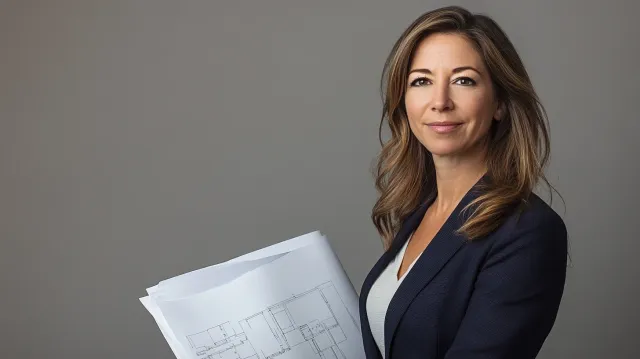
Headshots
AIA Boston Directory Headshot Requirements
What AIA, BSA design awards, Architectural Record, and Dezeen want from a principal headshot — file specs, framing, and one-shoot coordination.
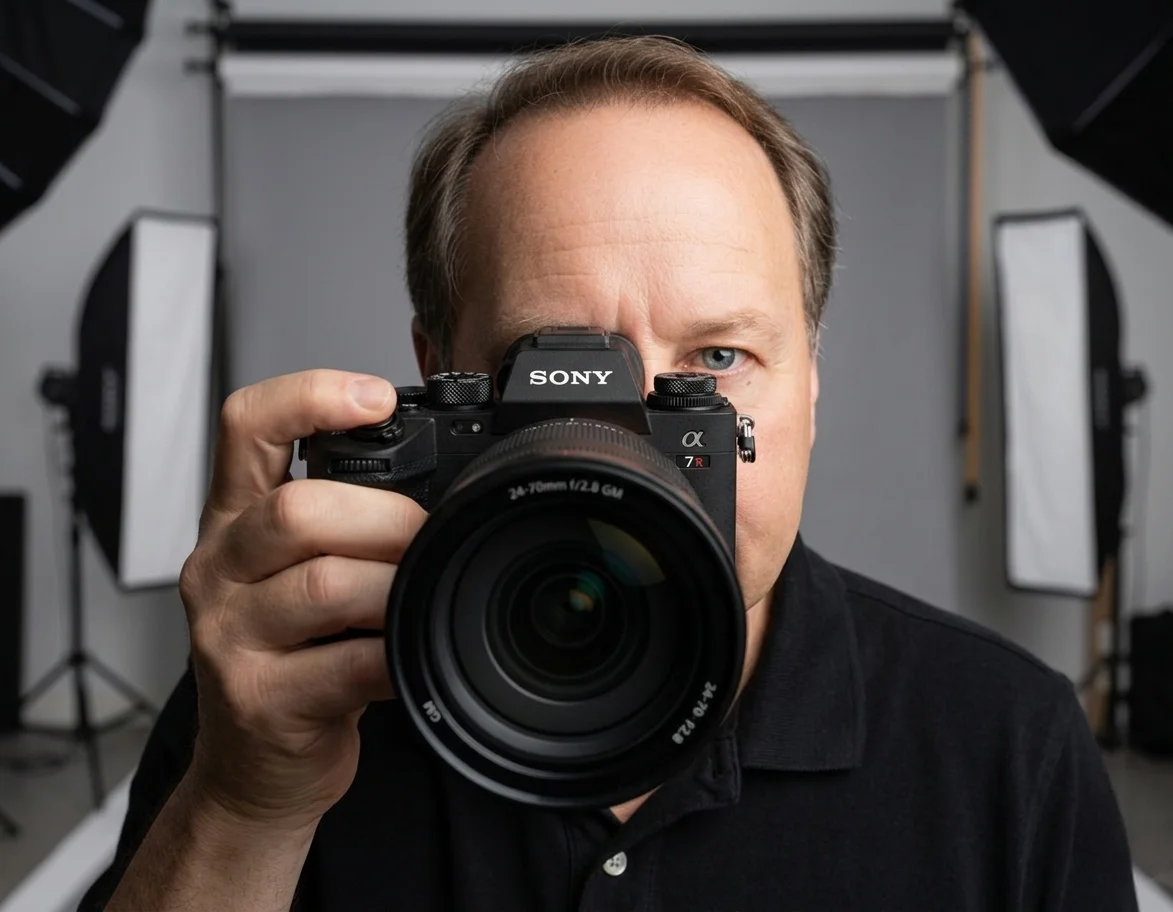
Chris McCarthy
Professional Photographer, Photography Shark · April 8, 2026 · Updated May 7, 2026
The principal headshot for a Boston architecture firm is rarely used in a single place. The same image appears on the AIA member directory, the firm's About page, an Architectural Record project feature, an AIA national convention speaker program, a Boston Society for Architecture award submission, and the firm's LinkedIn presence. Each of those contexts has different file specifications and different framing conventions, and getting them all from a single shoot requires planning the submission targets in advance.
This guide is about the submission spec — what the AIA national and AIA Boston directories actually accept, what the major design publications want from a principal photo, and how to structure one session so the resulting files satisfy every downstream upload.
I'm Chris McCarthy. The studio is at 83 E Water Street in Rockland — about 25 minutes south of downtown Boston, free parking. For pricing and session-package information, see the architect headshot service page. This post is about the specs themselves.
AIA National Directory
The American Institute of Architects member directory accepts JPG up to 5 MB at 200×200 pixels minimum. The display crop is square at most viewing sizes — the directory listing thumbnail, the chapter-page member callout, the conference attendee list.
The practical upload: a 1000×1000 square crop from a tight chest-up frame. The 1000-pixel size keeps the listing sharp on retina displays without bloating the file beyond what the platform compresses well.
A few specifications that aren't formally documented but matter in practice:
- Background tone. A mid-light gray or off-white reproduces best after AIA's display compression. Pure white tends to clip in the rendering; dark backgrounds turn muddy.
- Crop tightness. The eyes should sit in the upper third of the square crop, with about 15% headroom above. Too tight and the rendered thumbnail feels cramped; too loose and the face becomes too small to read at small sizes.
- File format. JPG is universal. PNG is accepted but adds file size without visible quality benefit at the directory's display sizes.
AIA Boston's local chapter listings inherit the same specs as the national directory, so a single upload covers both.
Boston Society for Architecture and BSA Design Awards
The Boston Society for Architecture (BSA) maintains a member directory that displays photos at slightly larger thumbnail sizes than the AIA national directory — typically 300 to 400 pixels wide. The same square 1000×1000 crop works well; the BSA rendering is less aggressive than AIA's, so the photo retains more detail.
For BSA design award submissions specifically:
- Project juries typically receive principal photos alongside the project narrative. The standard request is a high-resolution headshot at 300 dpi minimum, sized at 4×5 inches or larger. A 1500×1875 export from the shoot covers this.
- Award announcement materials — when a project wins, the BSA's press release and the announcement page on the BSA website typically pull a principal headshot. Having a current photo on file means the announcement happens without a scramble.
- The Architecture Boston magazine (BSA's quarterly publication) occasionally features principals in editorial pieces. Print specs are typically 300 dpi CMYK at the size requested by the editor — usually 5×7 or 8×10 for a feature interview.
Architectural Record, Dezeen, Architect Magazine, and the Design Press
Major design publications each have slightly different requirements for a principal photo accompanying a project feature.
Architectural Record typically requests 300 dpi at 4×5 inches minimum — about 1200×1500 pixels. Photos are usually run alongside the project narrative as a sidebar or end-of-piece byline image. The publication's editorial team will sometimes specify a particular crop direction (left-leaning, right-leaning) to match the layout.
Dezeen accepts smaller files than print publications and prefers TIFF or high-quality JPG. Photos appear inline with the project feature and at thumbnail sizes in related-content rails. Dezeen's image rendering favors clean, high-contrast portraits.
Architect Magazine (AIA's national publication) requests CMYK-ready files for print issues. The studio delivers in sRGB by default, but a CMYK re-export takes a few minutes if the publication specifically requests it.
The Architect's Newspaper publishes both online and in regional print editions. Online specs are similar to Dezeen; print specs are similar to Architectural Record.
The practical workflow: retain the highest-resolution original from the shoot — typically a 24-megapixel RAW exported to a 5000-pixel JPG — and resize down for each submission. The same photograph, rendered at the right resolution and color space for each publication.
Speaking Bios and Conference Programs
AIA conventions, BSA panels, university design lectures, TEDx talks, and product-launch keynotes all use principal headshots in speaker programs.
Typical specs:
- Square crop, 400×400 to 800×800 pixels. The conference website's speaker page uses one render; the printed program uses another at higher resolution.
- Tight framing. Conference programs view at small sizes, so the photo needs to read clearly when the rendered thumbnail is 200 pixels wide.
- A version with a slightly broader expression than the formal firm-bio version. Speaking-bio photos sit alongside the speaker's session description; a softer expression reads as more approachable than the formal directory portrait.
A coordinated session shoots both the directory-tight crop and a slightly broader speaking-bio variant in the same wardrobe, allowing the architect to use either depending on the platform.
Coordinating One Shoot for Every Submission
The efficient approach is to walk into the session with the full submission target list in mind.
A 45-to-60-minute session covers:
- The firm-bio frame. Wider chest-up crop with 15-20% headroom, matched to the firm's website style. Used on the team page and any related corporate materials.
- The AIA / BSA directory crop. Tighter square crop from the same sitting, optimized for thumbnail display at small sizes.
- The press-kit frame. Slightly wider, often three-quarter length, for use alongside project features in Architectural Record, Dezeen, Architect Magazine, and similar publications. An optional environmental variant — a clean architectural background or studio context — adds press-kit flexibility.
- The speaking-bio variant. Same expression as the firm bio but with a slightly warmer micro-expression, square-cropped for conference programs.
One sitting. One wardrobe. Four deliverables, each at the right resolution and aspect ratio for its target platform.
Wardrobe Conventions Specific to Architects
Design professionals tend toward a cleaner aesthetic than most professional fields, and the conventions that hold up across submission contexts are narrow:
- All black or very dark neutrals photograph with strong contrast and graphic clarity at small sizes, which matters for AIA directory thumbnails.
- Structured silhouettes — a well-tailored blazer, a clean-lined dress — communicate professionalism without stuffiness and read consistently across both formal directory listings and editorial press features.
- Solid colors or subtle textures hold up better than bold patterns at small sizes and avoid the moiré artifacts that some publication PDFs introduce.
- Avoid anything with visual noise that competes with your face — the face should be the design element.
The wardrobe that works for the AIA directory upload is the same wardrobe that works for an Architectural Record byline photo. Submitting different photos in different wardrobes across these platforms creates a visible inconsistency that referral sources notice.
Principal vs. Associate vs. Junior Staff
Architecture firms have a clear internal hierarchy that shapes the submission target list:
Principals and partners are the public face of the firm. Their photos appear on the AIA directory, the BSA member listing, every project feature in the design press, every speaking program, and the firm's leadership page. The submission targets are extensive, and the photos warrant the most attention — slightly more considered framing, more time per person during the session, and updates every two to three years rather than waiting for a complete firm refresh.
Associates and senior staff typically appear on the firm's About page and may have AIA member directory listings of their own. The submission target list is narrower than for principals, but the photo still needs to clear the AIA spec and integrate with the firm's bio page visually.
Junior staff in some firms appear on the team page, in others don't. When they do, the AIA-spec photo is also the firm-bio photo — one upload, one shoot, no separate press-kit work.
Booking the Session
For pricing, packages, and turnaround information, see the Boston architect headshot service page. For coordinated firm-wide team sessions including principals, associates, and staff, mention the team count and any AIA / BSA submission deadlines when booking — the session can be sequenced to deliver directory-spec uploads first if the deadline pressure requires it. Related: interview headshot specs.
Frequently Asked Questions
What file specs does the AIA member directory accept for a headshot upload?
The AIA national directory accepts JPG up to 5 MB at 200×200 pixels minimum, displayed as a square thumbnail at most viewing sizes. The practical recommendation is to upload a 1000×1000 square crop from a tight chest-up frame so the directory rendering stays sharp on retina displays. AIA Boston's local listings inherit the same specs.
Do design-press publications like Architectural Record and Dezeen have different submission requirements?
Yes. Architectural Record typically requests 300 dpi at 4×5 inches minimum (about 1200×1500 pixels) for principal photos accompanying a project feature. Dezeen accepts smaller files but prefers TIFF or high-quality JPG. Architect Magazine requests CMYK-ready files for print issues. The practical move is to retain the highest-resolution original from the shoot — typically a 24-megapixel RAW exported to a 5000-pixel JPG — and resize down for each submission.
Should the AIA directory photo match the firm's website team page?
It should be a recognizable cropped variant of the same shoot — same lighting, same background, same expression register — but framed tighter for the square directory thumbnail. The AIA visitor and the firm-website visitor are evaluating the same person; visual consistency across both reinforces the firm's identity. A different shoot for each platform creates a subtle but visible mismatch.
How long does one shoot need to last to cover AIA, firm bio, press kit, and speaking-bio uploads?
A 45-to-60-minute session covers all four. The session shoots a wider firm-bio frame, a tighter directory crop, a square LinkedIn-ready frame, and an additional environmental or three-quarter-length variant for press kits and speaking bios. One sitting, one wardrobe, all four deliverables — versus four separate engagements at different price points over five years.
Related Posts
![What to Wear for a Professional Headshot: Complete Guide [2026]](/blog/what-to-wear-for-a-professional-headshot---boston--hero-w640.webp)
You Might Also Like
About the Author
Chris McCarthy
Chris McCarthy has run Photography Shark Studios in Rockland, MA for over 10 years and 500+ sessions, with executive headshot work for Rockland Trust, Clean Harbors, M&T Bank, and McCarthy Planning; founder portraits for AI startups including Lowtouch.ai; product photography for South Shore brands like Lauren's Swim; and headshots across South Shore legal, medical, financial, and academic practices. Every session is personally shot and edited by Chris on Sony mirrorless and Godox strobe systems — no assistants, no outsourcing, no batch retouching. Galleries deliver in 3–5 business days. About photographer Chris McCarthy →
Photography Shark · Boston & South Shore MA
Ready to Book a Session?
Professional headshots, senior portraits, boudoir, and model portfolios. Studio in Rockland, MA — 25 miles south of Boston. Sessions from $395.