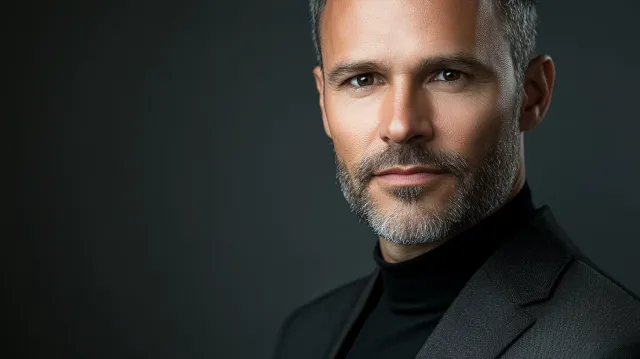
Headshots
Speaker Headshots in Boston and on the South Shore
Professional headshots for keynote speakers, workshop facilitators, and TEDx presenters in Boston.
Chris McCarthy
Professional Photographer, Photography Shark · January 4, 2026 · Updated May 18, 2026
A speaker headshot serves a specific function in the conference and events industry: it is the image that conference organizers, speakers bureaus, event programs, and podcast hosts use to represent you before you have said a single word. In a world where speaking opportunities are competitive, the headshot is part of the application.
I'm Chris McCarthy. My studio is at 83 E Water Street in Rockland, 35 minutes south of Boston. I work with keynote speakers, workshop facilitators, TEDx presenters, podcast guests, and panel participants who need professional speaker photos.
The Speaker Profile Economy
The speaking industry has a specific economy of visibility: the better your speaker profile looks, the more seriously event organizers take your submission. This is not cynical — it reflects the reality that a conference is also a visual product. The speaker grid on an event website, the program book, the stage backdrop — all of these use your photo. Organizers are evaluating your photo as part of assessing whether you fit the event's overall production level.
Speaker bureaus are even more selective. A speakers bureau is staking their reputation on every speaker they represent. Your headshot is part of their quality signal to clients.
What a Speaker Headshot Needs to Do
The speaker headshot has a specific requirements set that is slightly different from a standard professional headshot:
Authority — You are being presented as an expert. The photo should communicate that you are serious about what you teach.
Approachability — Speakers are hired to connect with an audience of strangers. The headshot that reads as warm and engaging performs better in speaker marketing than one that prioritizes pure authority.
Energy — The best speaker headshots have something alive in them. Not a big performed smile — genuine engagement. A hint of the speaker who comes alive on stage.
Getting all three simultaneously requires specific direction, which is different from standard professional headshot work.
Formats and Orientations
Speaker headshots are used in more formats than most professional photos:
- Square crop — Speaker bureau galleries, conference websites, podcast episode art
- Portrait crop — Conference program books, event landing pages
- Landscape/horizontal — Stage backdrops, banner advertising, website hero images
- Circle crop — Social media profiles, some speaker directory formats
A well-planned session can produce images that work in all of these. Tell us what formats you need when you book.
Wardrobe for Speaker Headshots
Speaker wardrobe is more varied than corporate wardrobe because speakers come from more varied contexts. Some guidance:
Match your speaking persona — If you speak in business formal contexts (finance, law, medicine), dress accordingly. If your talks are more casual or creative, you have more range. The photo should look like you on stage.
Solid colors over patterns — The standard wardrobe advice applies. Patterns create noise. Solid dark or jewel tones photograph cleanly.
Consider your brand — Some speakers have a consistent visual signature (always in a particular color, always in a blazer). If you have a visual brand, the headshot should reinforce it.
Speaker Bureau Submission Specs
A surprising number of speaker submissions get rejected at the photo stage — not because the speaker isn't qualified, but because the headshot they submitted doesn't meet bureau technical requirements. The major bureaus and platforms have specs you should know:
Resolution — Most bureaus want a minimum 300 dpi image at 5×7 inches or larger. Lower resolution photos pulled from LinkedIn or social media will not pass. The studio delivers 24-megapixel raw files plus retouched 5000-pixel JPEGs — well above any bureau's threshold.
Aspect ratios — Bureaus and event sites use square crops, 4:5 portrait, and 16:9 landscape interchangeably. A session that frames every shot tightly limits your options. I shoot wider than needed during speaker sessions specifically so a single image can be cropped square for a directory tile, vertical for a program book, or horizontal for a stage backdrop without losing the head and shoulders.
Color space — sRGB for web, with a CMYK conversion available on request for printed conference programs. Files are delivered in sRGB by default; if your event organizer asks for a print-ready file, I'll re-export.
File naming — Bureaus often require the speaker's name in the filename. I deliver files with the structure `LastName_FirstName_speaker_headshot.jpg` for anyone shooting specifically for bureau submissions. Mention this when you book.
TEDx, Keynote, and Panel — Different Requirements
The "speaker headshot" category covers a wide spectrum, and the right photo for one context isn't necessarily the right photo for another.
TEDx organizers are visual-design conscious. Most TEDx events publish a speaker grid on their event website, and the consistency and quality of that grid is part of how the event presents itself. TEDx submissions typically request a high-resolution image with a clean background that will sit cleanly next to other speaker photos in a grid layout. A photo with a busy environmental background looks out of place when the other speakers are all on neutral backgrounds.
Corporate keynote bookers want photos that look like the speaker would fit on stage at a Fortune 500 company event. Slightly more polished, slightly more formal. A clean studio image on a neutral background is what's expected.
Industry conference panels are the most flexible category. Industry conferences are usually less rigid about photo style and more interested in whether you've spoken at relevant events before. Your headshot here should match how you actually present.
Podcast guest invitations typically pull from your existing speaker page or LinkedIn. Episode artwork increasingly uses guest photos, and a high-resolution square crop is what podcast producers will request. Most authors and speakers find their podcast bookings increase noticeably after refreshing their headshot, simply because the new photo gets used in promotional graphics that look better than the old one.
What I Do Differently for Speaker Sessions
Standard professional headshot sessions run 30 minutes. Speaker sessions at this studio run 60–90 minutes for a reason: the expression range required for a speaker is wider than for a typical professional. We're not just trying to find one good photo — we're trying to find an authoritative version, an approachable version, and a version that captures the on-stage energy that gets people to book you.
The technical setup matters too. I shoot speaker sessions on Sony A7-series mirrorless bodies with Godox studio strobes, which gives the kind of clean, even lighting that bureau directories expect. The neutral gray and white seamless backgrounds in the studio match what major bureaus already use, so your photo sits comfortably alongside the speakers you're competing with for bookings.
For speakers who already have a brand color or visual signature, the studio can accommodate a custom backdrop within reason — a deep navy, a warm gray, a textured neutral. Bring a reference image and we'll match it.
When to Update a Speaker Headshot
Speaker bureaus and event organizers can spot a dated photo immediately. The most common tells: visible aging gap between the headshot and recent video footage, an out-of-fashion wardrobe or hairstyle, photo quality that doesn't match current bureau standards. If a meeting planner clicks through to your video reel and sees someone visibly different from the headshot, it creates friction in the booking decision.
Most working speakers update their headshot every two to three years. Speakers who have just published a book, launched a new keynote, or moved into a new positioning should update sooner. With 76 five-star Google reviews behind the studio and a 3–5 business day turnaround on retouched final files, scheduling a refresh ahead of a busy speaking quarter is straightforward — book a session in the morning, have new files in hand the following week, and update every speaker bio and bureau profile before the next event submission deadline arrives.
Speaker bureau requirements — what major bureaus actually ask for
Beyond the technical specs above, several major US and Boston-area speaker bureaus have specific photo submission requirements:
- Washington Speakers Bureau — High-resolution clean-background headshot, conservative wardrobe register. They represent former heads of state, CEOs, and elite-tier keynote speakers. The visual standard is corporate-formal.
- Harry Walker Agency — Similar register to WSB. Conservative, polished, neutral background.
- Leading Authorities — Slightly more contemporary in their visual standard but still neutral-background-default.
- All American Speakers Bureau — Broader speaker roster, slightly more visual flexibility. Still expects professional studio photography.
- APB Speakers — Sports, business, and political speakers. Both polished and slightly more dynamic photos work depending on the speaker's niche.
- Speaking.com — More entrepreneur and emerging-speaker focused. Strong photos still required but more visual diversity accepted.
- Big Speak — Diverse roster including business, sports, entertainment. Visual flexibility scales with speaker stature.
- Boston-based speakers bureaus (smaller regional bureaus) — Generally accept the same studio-headshot standard as the national bureaus. Some may have specific photo size or naming requirements; ask the bureau directly.
Submitting a photo that doesn't meet a bureau's standard is one of the most common reasons solid speakers get rejected. The investment in a proper speaker headshot session pays back the first time a bureau accepts your submission.
Book launches and keynote refreshes — when to re-shoot
Speakers with a published book or a new keynote should refresh their headshot within 3-6 months of the launch. The pattern:
- Book published: Author photo on the back of the book is often the headshot used in subsequent speaking engagements. If the book photo is from a few years back, the speaker headshot should be refreshed to match. Mismatched book-photo and bureau-photo signals dated material.
- New keynote launched: A repositioned speaker (new topic, new title, new positioning) benefits from a refreshed visual to match the new brand. Same speaker, new register.
- Major media appearance: A 60-Minutes appearance, a TED talk going viral, a podcast moment — all of these drive a spike in speaker bureau inquiries that should be supported by current visuals.
- Significant appearance shift: Weight change, hair color change, glasses change, growing or shaving facial hair. These warrant a same-quarter refresh, not a "wait until next refresh cycle" decision.
The "video reel matches headshot" rule
Most working speakers maintain a 2-5 minute video reel alongside their headshot for bureau and event submissions. The two should match:
- Same hair length and style (within reason — small variations are fine)
- Same approximate weight and appearance
- Same vibe/register (a polished headshot paired with a casual video reel reads as a mismatch)
- Same approximate time period (a 2020 headshot with a 2025 video reel signals neglect)
If the gap between current appearance and the existing headshot is more than 6-12 months of meaningful change, refresh.
Speaker session structure at Photography Shark
Standard speaker sessions run 60-90 minutes — longer than typical headshot sessions because of the expression range required. The session structure:
- First 15 minutes: Pre-session consultation reviewing target bureaus, event types, and brand identity. Wardrobe review against the planned register.
- Next 30 minutes: Authority register shooting (clean studio, slight directional lighting, slightly more controlled expression).
- Next 15 minutes: Wardrobe change or styling adjustment for the approachability register.
- Next 30 minutes: Approachability register shooting (softer light, warmer expression, slightly more dynamic posing).
- Last 15 minutes: Wide-shot capture in 2-3 horizontal orientations specifically for conference banners and stage backdrops.
Total deliverable: 15-20 retouched final images covering authority, approachability, and horizontal-banner registers, in 4-5 different aspect ratios.
Pricing for speaker sessions specifically
- Standard speaker session (60-90 min, 15-20 retouched, multiple aspect ratios): $495-$795
- Speaker session + brand color backdrop accommodation: same base price + $100 for custom backdrop setup
- Multi-look speaker session (full corporate-formal + business-casual + creative): $795-$995 for 90-120 minutes
- Annual speaker headshot refresh with locked-in lighting from previous session: $395 for the same-look refresh
Book Your Session
Contact the studio and mention that you need speaker photos. Tell me the events or contexts you are targeting and what formats you need.
Sessions start at $395 — full Boston headshot packages and pricing are on the investment page. Also see: Speaker Headshots Boston for the full service page.
Frequently Asked Questions
What background works best for a speaker headshot?
Neutral gray or white works universally for speaker bureaus and conference use. Some speakers use a branded color. For most speaker bureau submissions, a clean neutral background is expected.
Do you shoot horizontal photos for conference banners?
Yes. We can shoot horizontal orientations in the same session. Event organizers often need a wider image for website banners or stage backdrops. Tell us what formats you need when you book.
What makes a great speaker headshot expression?
Authority and approachability simultaneously — not a big performed smile, but genuine engagement. A hint of the speaker who comes alive on stage. Specific direction is required to get there, which is different from standard professional headshot work.
Related Posts
You Might Also Like
About the Author
Chris McCarthy
Chris McCarthy has run Photography Shark Studios in Rockland, MA for over 10 years and 500+ sessions, with executive headshot work for Rockland Trust, Clean Harbors, M&T Bank, and McCarthy Planning; founder portraits for AI startups including Lowtouch.ai; product photography for South Shore brands like Lauren's Swim; and headshots across South Shore legal, medical, financial, and academic practices. Every session is personally shot and edited by Chris on Sony mirrorless and Godox strobe systems — no assistants, no outsourcing, no batch retouching. Galleries deliver in 3–5 business days. About Chris McCarthy →
Photography Shark · Boston & South Shore MA
Ready to Book a Session?
Professional headshots, senior portraits, boudoir, and model portfolios. Studio in Rockland, MA — 25 miles south of Boston. Sessions from $395.