Headshots
Headshot Poses for Men: A Practical Guide
Posing guidance for men in professional headshot sessions — body angle, shoulder position, jaw and chin, hand placement, expression.
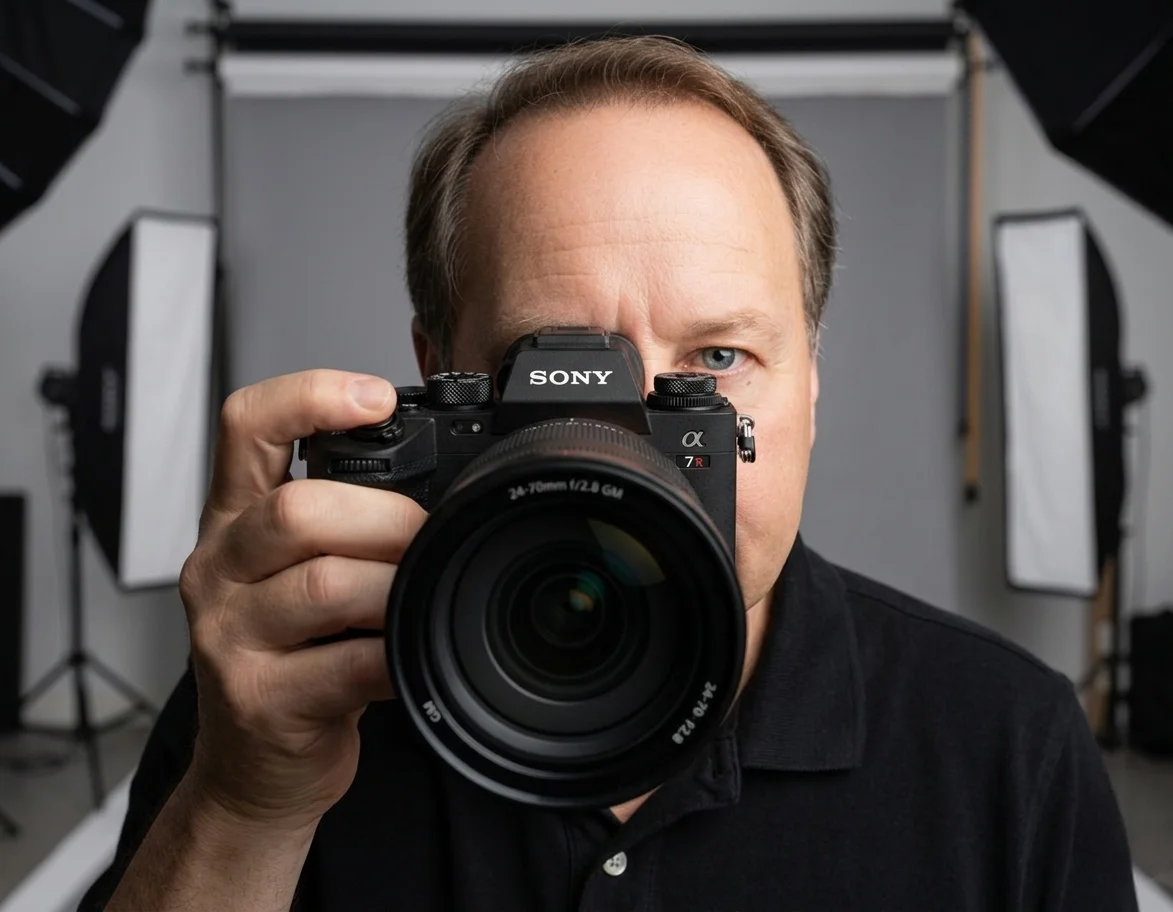
Chris McCarthy
Professional Photographer, Photography Shark · May 3, 2026
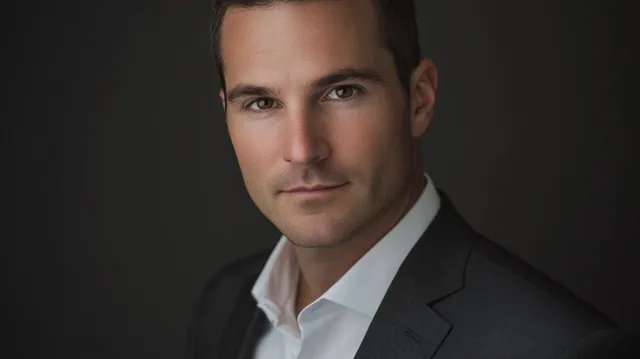
Men face a specific posing challenge in professional headshots: the cultural defaults for "looking masculine" in a photograph (squared shoulders, no smile, intense eye contact, jaw set hard) often produce frames that read as either stiff or hostile. A proper studio headshot session is built around continuously coaching subjects out of those defaults in real time. The technical reality is that strong male headshots use the same posing vocabulary as professional headshots generally — slight body angle, controlled expression, calibrated direction — with some male-specific adjustments to body position, shoulder strength, and jaw control. This guide covers what actually works for men in front of the camera.
I have photographed headshots for every industry represented on the South Shore, and the preparation questions are remarkably similar.
The Cultural-Default Trap
The most common posing failure for male subjects: trying to look strong/serious by adopting a tense posture. The signals that produce stiff frames:
- Squared shoulders pulled tight back
- Chin lifted (the "looking down at the camera" tilt)
- Hard jaw set
- No expression in the eyes
- Direct unblinking eye contact
- Locked weight evenly on both feet
Each of these comes from a place of "I should look serious," but the cumulative effect is a photograph that reads as defensive, not confident. The corrections are small — soften each of those signals slightly — but the result is dramatic.
The Reliable Default Pose
For male professional headshots, this is the reliable starting position:
- Body angled 15-25 degrees. One shoulder closer to the camera. Not square-on.
- Shoulders down and slightly back. Strong but not pulled. Drop them deliberately before each frame; they'll naturally creep up again.
- Weight on the back foot. Front foot supports balance, not weight.
- Front shoulder lower than back shoulder. Subtle — not exaggerated.
- Spine long, head straight on the spine. Don't lift the chin, don't drop it.
- Jaw forward and slightly down. This is the single most counterintuitive correction.
- Soft jaw, not clenched. Tension in the jaw shows in photographs.
- Eyes engaged, soft contact. Direct camera eye contact, but with the eyes "alive" rather than blank.
- Mouth relaxed. Lips touching but not pressed. From this neutral, a smile or composed expression cues from photographer direction.
This default works for ~70% of male professional headshot frames. The variations below adjust for specific use cases.
The Jaw Direction (Critical)
The single most important pose detail for men: jaw forward, slightly down.
The instinct is to lift the chin to look "strong." This produces:
- Visible nostrils (rarely flattering)
- A "looking down at people" tilt that reads as condescending
- Reduced jawline definition
- Tension visible in the throat
The fix:
- Push your jaw forward toward the camera (like you're trying to nudge an object with your chin)
- Then drop the chin slightly — about 1-2 inches
- Keep the eyes engaged with the camera
This feels weird the first time. It looks great. It's the difference between a male headshot that reads as competent and one that reads as hostile.
Shoulder Position
Three variables on shoulders:
Rotation
- Square (0°) — flattens the body, reads stiff. Avoid for headshots.
- Slight angle (15-20°) — subtle, professional. Default for executive, legal, finance.
- Open angle (25-30°) — modern, approachable. Default for LinkedIn, tech, healthcare.
- Strong angle (45°+) — editorial, leans personal-brand. Use occasionally.
Strength
Shoulders should be strong without being tense. The difference:
- Strong shoulders: lats engaged, shoulders rolled back and down deliberately, chest open
- Tense shoulders: trapezius engaged, shoulders pulled toward ears, neck shortened
Strong reads as confident. Tense reads as anxious.
Symmetry
Most people have one shoulder slightly higher than the other (often the dominant-arm side). Photograph the higher-shoulder side toward the camera if possible — it elevates the silhouette. Alternatively, drop the higher shoulder deliberately to even them out.
Body Stance Details
Weight Distribution
- Weight on back foot: front shoulder drops slightly, posture loosens. Default for most professional sessions.
- Even weight: stiffer, more formal. Use occasionally for legal/executive.
- Weight forward: suggests engagement, slight forward lean. Use for tech/founder contexts.
Foot Position
- Feet roughly hip-width apart
- Back foot at 45° angle, front foot pointing toward camera
- Don't lock knees — slight bend in the front knee allows natural posture
Spine
- "Lengthen through the crown of the head"
- Don't pull shoulders back excessively (creates tension)
- Allow natural slight forward lean (suggests engagement, not weakness)
Hand Placement
Most true headshots crop above the hands. When hands are visible:
Arms Crossed
- Corporate confident, slight defensive read
- Common for executive and legal
- Variation: cross arms with one hand visible holding a watch wrist or thumb in cuff
One Hand in Pocket
- Relaxed casual
- Common for tech, finance, modern professional
- Other hand can be at side or holding an object (laptop, glasses, coffee)
Hands Clasped at Waist
- Formal composed
- Common for legal, finance, formal executive
- Hands fold in front, visible at hip level
Hands Behind Back
- Formal authoritative, military-adjacent
- Reads as formal/traditional
- Common for executive, military, government, formal portrait
Holding a Prop
- Environmental headshot territory
- Coffee mug, laptop, book, glasses
- Crosses into environmental portrait — see environmental portrait for context
Avoid: hands hanging stiffly at sides (reads as awkward), hands clasped tightly (reads as nervous), hands flat against thighs (reads as standing-at-attention), thumbs hooked in belt (reads as posing).
Head Position Details
Tilt
- No tilt — straight, confident, strong. Default for executive, legal.
- Subtle tilt toward higher shoulder — slightly softer, approachable. Default for LinkedIn, healthcare.
- Strong tilt — never use for male professional headshots; reads as awkward.
Chin Height
- Chin too high — reads as arrogant, exposes nostrils
- Chin too low — minimizes neck definition, can produce a double-chin appearance
- Right chin position: jaw forward + slightly down (see Jaw Direction above)
Eye Direction
Direct camera contact for the dominant frame set. Variations:
- Direct contact, soft eyes — engaged confidence
- Direct contact, slight squint ("smize") — assured, sometimes more masculine read
- Off-camera at fixed point past lens — used for editorial variants
- Looking down + thinking — used for thoughtful press portrait alternates
For LinkedIn primary photos, direct eye contact with soft engaged eyes is almost always the strongest choice.
Expression by Use Case
Executive / Corporate / Legal
- Composed neutral with engaged eyes
- Mouth closed, lips relaxed
- Slight asymmetry in expression (real expressions are slightly asymmetric)
- Confidence without warmth
- Controlled warm smile
- Lips touching or slightly parted
- Smile reaches the eyes
- Confidence with warmth
Healthcare
- Open warm smile
- Approachability is the primary signal
- Trust-building expression
Tech / Startup
- Confident slight smile
- Often paired with slight forward body lean
- Energy + calm
Actor (Theatrical)
- Range across the session
- Composed neutral as one delivered look
- Warm smile as another
- "Character" expressions if applicable
- See actor headshots Boston for the casting-format breakdown
Wardrobe Considerations for Male Posing
A few wardrobe details that interact with posing:
- Suit jackets photograph stronger when buttoned (one button buttoned for a two-button jacket; bottom button always unbuttoned)
- Tie length matters — should hit just above the belt, no longer
- Collar should sit cleanly against the neck — wrinkled collars photograph badly
- Avoid pocket squares for headshots — distracting at thumbnail scale
- Beard trim within 24 hours of session — uneven beards photograph more visibly than they look in person
For broader wardrobe guidance, see headshot wardrobe guide.
Wardrobe and pose interact — a buttoned blazer changes how the shoulder line photographs, and a stiff collar constrains head-turn range. Sorting out fabric, color, and fit decisions before the session removes one variable from the shoot itself. The complete Boston headshot wardrobe guide walks through the specifics by industry.
Common Failure Modes for Male Subjects
Recurring patterns the photographer corrects in real time:
- Clenched jaw — visible tension. Soft the jaw between frames.
- Lifted chin — reads as arrogant. Pull jaw forward and down.
- Tense shoulders — pulled toward ears. Drop them deliberately.
- Held breath — produces stiffness. Breathe normally.
- Locked knees — feeds into hip and shoulder tension. Slight bend.
- Closed-off body — arms across body or square shoulders. Open the angle.
- Performative expression — over-smiling or over-stoic. Calibrate to authentic engagement.
- Bug-eyed — over-engaged. Soften the eyes.
The session corrects these as they appear. You don't need to monitor your own posing; the photographer does that.
What the Direction Sounds Like
To give a sense of how a session actually runs for a male subject:
- "Drop your shoulders. Now drop them more. There — hold."
- "Jaw out toward me, then a hair down. Yes, that."
- "Soften your eyes by 20%. You're not interrogating me."
- "Roll your weight onto the back foot. Let the front shoulder drop."
- "Big breath in, exhale, and look back to me as you exhale. Hold."
- "Keep that body angle, head straight, eyes back to me."
- "Half-smile — like you're remembering something funny."
- "Stop posing. Just stand there."
The last one is the most common. Most male over-posing comes from trying to look a specific way; the strongest frames come from settling into neutral and responding to direction.
Ready to Book?
Get in touch to schedule a session. Photography Shark is in Rockland, MA — 25 minutes south of Boston via Route 3. Sessions start at $395 with 10 fully retouched images and full commercial use included.
Related reading: Professional headshot poses · The women's posing guide · Headshot wardrobe guide for men · What is a headshot? · Tips for professional headshots · Boston male modeling portfolio sessions
Frequently Asked Questions
How should men pose for a professional headshot?
The reliable default for male professional headshots is a slight body angle (15-25 degrees), squared but slightly relaxed shoulders, jaw forward and slightly down, head straight or with a very subtle tilt, controlled smile or composed neutral expression depending on use case, and weight on the back foot. The photographer guides this in real time during the session.
Should men smile in headshots?
It depends on use case. LinkedIn, healthcare, real estate, hospitality, and most modern professional contexts favor a controlled warm smile. Legal, finance, and executive contexts often favor a composed neutral expression. A strong session captures both ranges so the subject can pick the one that matches each use context.
Where should men put their hands in a headshot?
Most true headshots crop above the hands. When hands are visible (broader portrait crop), common placements for men are arms crossed (corporate confident), one hand in pocket (relaxed casual), hands clasped at waist (formal composed), or hands behind back (formal authoritative). Avoid hands hanging stiffly at sides or clasped tightly together.
How do men avoid looking stiff in headshots?
Stiffness comes from holding tension — clenched jaw, locked shoulders, held breath. The corrections that work: breathe normally throughout the session, soften the jaw between expressions, drop shoulders deliberately before each frame, and allow your weight to shift. The photographer's direction handles the rest.
What expression works for men in business headshots?
For corporate, finance, legal, and executive contexts, a composed neutral with engagement in the eyes typically reads strongest. For LinkedIn, healthcare, sales, and modern professional contexts, a controlled warm smile works better. A confident smile that reaches the eyes (not just the mouth) is the most universally effective expression across professional use cases.
Related Posts
You Might Also Like
About the Author
Chris McCarthy
Chris McCarthy has run Photography Shark Studios in Rockland, MA for over 10 years and 500+ sessions, with executive headshot work for Rockland Trust, Clean Harbors, M&T Bank, and McCarthy Planning; founder portraits for AI startups including Lowtouch.ai; product photography for South Shore brands like Lauren's Swim; and headshots across South Shore legal, medical, financial, and academic practices. Every session is personally shot and edited by Chris on Sony mirrorless and Godox strobe systems — no assistants, no outsourcing, no batch retouching. Galleries deliver in 3–5 business days. About Photography Shark →
Photography Shark · Boston & South Shore MA
Ready to Book a Session?
Professional headshots, senior portraits, boudoir, and model portfolios. Studio in Rockland, MA — 25 miles south of Boston. Sessions from $395.