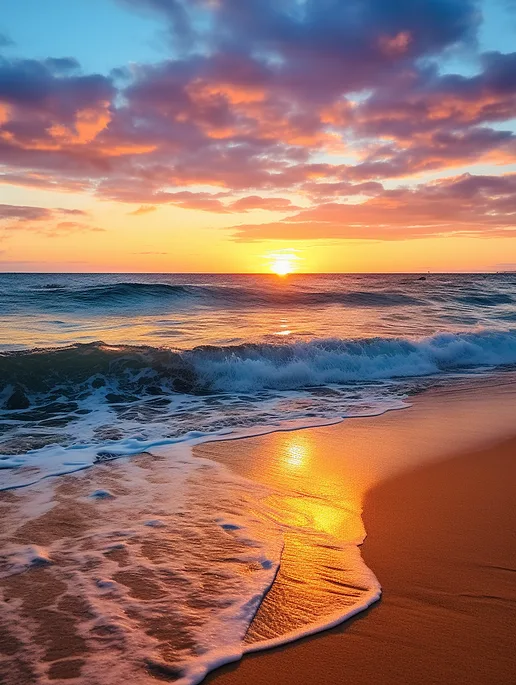
South Shore Locations
Sunrise Photography on the South Shore
South Shore sunrise photography guide — Minot Beach, Wollaston, Duxbury Bay, and more, with gear, timing, and light condition advice.

Chris McCarthy
Professional Photographer, Photography Shark · August 5, 2025 · Updated May 24, 2026
Sunrise on the South Shore is a different quality of light than anything available later in the day. The sun breaks over the Atlantic with nothing between it and the coastline, and for roughly forty minutes the world turns shades of copper, pink, and molten gold that cannot be replicated with studio equipment or editing software. For photographers — and for portrait clients willing to set an early alarm — this is the single most dramatic natural light available in the Boston area.
I have shot at locations across the South Shore and Greater Boston for over a decade, and the best spots are rarely the most obvious ones.
Photography Shark shoots sunrise sessions regularly at locations across the South Shore. The window is narrow and the timing is unforgiving, but the results are worth the effort.
The productive light window
Sunrise photography does not begin at sunrise. It begins 20 to 30 minutes before the sun breaks the horizon — the "blue hour" transition — when the sky shifts from deep blue-grey through violet and into the warm spectrum. The richest portrait light occurs in the 15 minutes immediately after the sun clears the horizon, when the angle is so low that the light wraps horizontally around the subject, filling eye sockets and illuminating skin from the side rather than above. This eliminates the harsh overhead shadows that make midday shooting difficult and produces the warm, dimensional quality that makes golden-hour portraits instantly recognizable.
The productive window closes faster than most people expect. Within 45 minutes of sunrise the angle rises enough that the quality shifts from warm, directional, and dramatic to flat, white, and conventional. Planning matters: arrive 45 minutes early, scout the positioning, and be ready to shoot the moment the color appears. Sessions are typically 45 to 60 minutes of active shooting compressed into that window.
South Shore sunrise locations by character
Not every east-facing beach produces the same kind of sunrise photograph. The character of the light depends on the horizon, the foreground, and the specific geography.
Minot Beach, Scituate. Also one of the top locations for senior picture weather plans later in the day. At sunrise, the defining feature is the unobstructed horizon with the Scituate Lighthouse visible in the background. The beach itself is compact — a mix of sand and smooth stone — and the rock formations at the south end create natural framing options that most South Shore beaches lack. The parking lot is small and fills on summer weekends, but at 4:45 AM it is empty. Minot is the go-to when the portrait needs an iconic, recognizably-New-England coastal backdrop.
Wollaston Beach, Quincy. The longest beach on the South Shore with a wide, flat sand profile and a seawall promenade behind it. Wollaston faces east-northeast with views toward the Harbor Islands. The wide horizon produces broad, even sunrise color rather than the concentrated intensity of narrower coves. For clients who want a calm, spacious feeling — engagement portraits, personal branding photography, family sessions — Wollaston's openness is an advantage. The public parking along Quincy Shore Drive is free and abundant.
Duxbury Bay at low tide. This is the specialty location. At low tide, the bay exposes thousands of acres of tidal flats that create a mirrored surface reflecting the entire sky. The effect is extraordinary — the subject stands on what appears to be an endless mirror of color. The catch: the timing has to align. Low tide must coincide with sunrise, which happens in roughly two-week cycles. Chris checks the NOAA tide predictions at booking and schedules Duxbury sessions only when the alignment works.
Nantasket Beach, Hull. Nantasket faces due east with a wide, gently sloping sand beach. The Paragon Boardwalk ruins at the south end provide industrial texture for a different kind of sunrise frame — less pastoral, more editorial. The light at Nantasket is slightly warmer than at other South Shore locations because the beach faces directly into the sunrise rather than at an angle.
Equipment and exposure for sunrise work
Sunrise light changes faster than any other natural-light condition. Exposure settings that are correct at the moment the sun clears the horizon will be two to three stops too dark five minutes later. Chris shoots in manual exposure with auto-ISO as a safety rail, adjusting aperture and shutter speed continuously through the session. The Sony A7V's dynamic range handles the extreme contrast between the bright sky and the shadowed face — a situation that would clip highlights or crush shadows on lesser sensors.
The lens choice for sunrise work is the 85mm f/1.4 for portraits and the 35mm for environmental context frames. The wide aperture is critical: at f/1.4, the background sun and sky dissolve into pure color behind the subject, eliminating distracting detail and emphasizing the warm color cast on the skin. A reflector — typically gold or silver — is positioned opposite the sun to fill the shadow side of the face. Without it, the extreme directionality of low-angle sunrise light creates deep shadows on the far side of the face that no amount of post-processing can recover cleanly.
Booking a sunrise session
Sunrise sessions are available year-round on the South Shore. Summer sunrises are earliest (4:45–5:15 AM) and winter sunrises are latest (6:30–7:15 AM). Fall and spring sessions are often the best compromise — later wake-up, longer blue-hour transitions, and more dramatic cloud color than summer typically produces.
On-location sessions start at $495 and include the same delivery format and licensing as South Shore portrait sessions: retouched images delivered in 3–5 business days with full commercial-use rights. Contact Photography Shark to check sunrise times at your preferred location and book a session. The studio is at 83 E Water Street, Rockland MA — central to every South Shore beach listed above.
Frequently Asked Questions
Does Photography Shark offer sunrise portrait sessions on the South Shore?
Yes. Chris McCarthy regularly shoots sunrise and early-morning sessions at South Shore locations including Minot Beach in Scituate, Wollaston Beach in Quincy, and Duxbury Beach. These sessions require early scheduling — typically arriving 45 minutes before sunrise.
Which South Shore beach has the best sunrise light for portrait sessions?
Minot Beach in Scituate is a top choice — it faces directly east with an unobstructed horizon and the Scituate Lighthouse visible in the background. Duxbury Bay's west-facing flats at low tide create exceptional reflected-light conditions for sunrise portraits.
What time should I arrive for a sunrise session on the South Shore?
Arrive at least 45 minutes before official sunrise. The most productive light window runs from about 20 minutes before sunrise through 45 minutes after. After that, the angle rises quickly and the dramatic color fades.
How much does a portrait session at sunrise cost with Photography Shark?
Studio sessions start at $395 for 30 minutes with 10 edited images, Studio headshot sessions are $395 for 30 minutes with 10 fully retouched images. On-location sessions are $495. Add-ons: additional session time $100 (extra 30 min), outfit change $100, additional person $200, group shot $100. Turnaround is 3-5 business days.. Early-morning sessions are scheduled at the same rates — contact Photography Shark in Rockland to discuss availability.
What South Shore towns does Photography Shark serve for outdoor portrait sessions?
Photography Shark is based in Rockland and serves clients from Quincy, Scituate, Hingham, Cohasset, Norwell, Marshfield, Duxbury, Plymouth, Hanover, Pembroke, and surrounding South Shore communities.
What conditions produce the best sunrise photos on the South Shore?
Clear to partly cloudy skies — with bands of high cloud at the horizon — produce the most dramatic color. Perfectly clear dry days often produce less spectacular sunrises than days with some moisture in the air. Low tide at Duxbury Bay is essential for the mirrored-flats effect.
Related Posts




You Might Also Like
About the Author
Chris McCarthy
Chris McCarthy has run Photography Shark Studios in Rockland, MA for over 10 years and 500+ sessions, with executive headshot work for Rockland Trust, Clean Harbors, M&T Bank, and McCarthy Planning; founder portraits for AI startups including Lowtouch.ai; product photography for South Shore brands like Lauren's Swim; and headshots across South Shore legal, medical, financial, and academic practices. Every session is personally shot and edited by Chris on Sony mirrorless and Godox strobe systems — no assistants, no outsourcing, no batch retouching. Galleries deliver in 3–5 business days. More about the photographer →
Photography Shark · Boston & South Shore MA
Ready to Book a Session?
Professional headshots, senior portraits, boudoir, and model portfolios. Studio in Rockland, MA — 25 miles south of Boston. Sessions from $395.