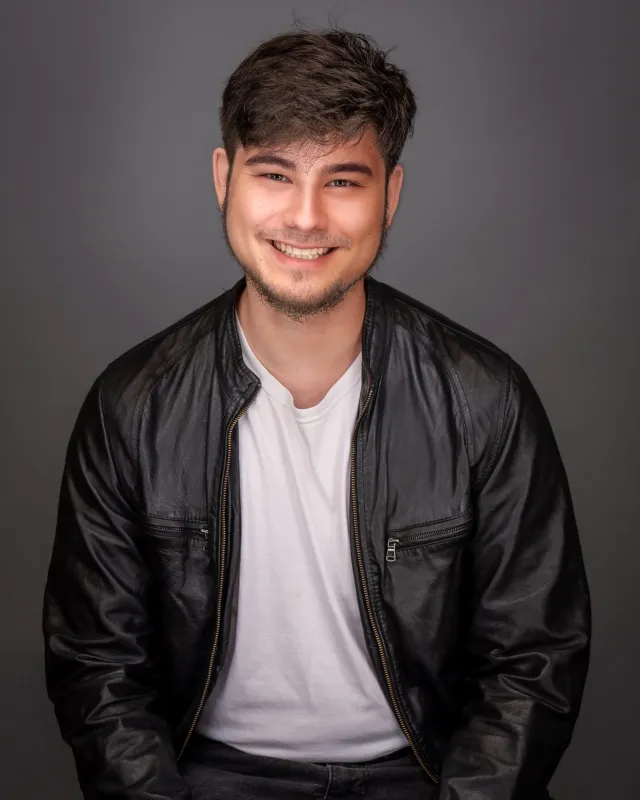
Actor Headshots
Child Actor Headshots in Boston — A Parent's Guide
Parent guide to children's acting headshots and headshots for teens in Boston and the South Shore — finding the right photographer, what agencies want for ages 4–17, keeping kids comfortable on set, and avoiding the common pitfalls.
Chris McCarthy
Professional Photographer, Photography Shark · April 15, 2026 · Updated May 23, 2026
If your child has caught the performance bug — community theater, school productions, regional auditions, talent showcases — the headshot conversation is coming. For many South Shore families, it arrives earlier than expected: a director suggests it, a casting call requires it, a theater program recommends getting one done.
I've photographed a lot of young actors over the years, and I've also worked with a lot of parents who came in with questions they didn't know how to ask. This is an attempt to answer the important ones before you have to ask them.
Why a Young Actor's Headshot Is Different
Children and teen actors are not small adult actors, and their headshots should not look like scaled-down versions of adult headshots. The industry — including regional casting directors, commercial clients, and theater programs that work with young performers — has specific expectations for what young actor headshots should look like. Those expectations differ from what works for adults.
For young children (approximately ages 4-10): Casting directors want to see genuine joy and authentic personality. The child's energy, their natural warmth, their specific charm — these qualities need to come through without a trace of performance or force. An over-posed, over-staged headshot of a young child reads as inauthentic and works against the child, not for them. The best children's headshots look like someone caught a wonderful moment rather than constructed one.
For tweens and pre-teens (approximately ages 10-13): The balance shifts slightly. Some intentionality in the image — a more considered expression, some awareness of the camera — starts to work at this age. But the cardinal rule still applies: authenticity over performance. The kid should look like themselves, not like an adult's idea of what a young performer should look like.
For teen actors (approximately ages 13-18): Headshots start to look more like adult actor headshots, but type awareness becomes particularly important. Teens who pursue acting often have strong ideas about the roles they want to play versus the roles they'd actually book. The honest conversation about type — which a good headshot photographer should be willing to have with a teen and their parent — is what separates useful headshots from flattering ones.
Choosing the Right Photographer
The question I'd ask any photographer before booking a session for a young actor: what's your experience working with children? And what does that look like specifically?
The technical skills required to shoot good actor headshots — controlled lighting, precise focus, clean composition — are necessary but not sufficient when working with young subjects. The relational skills are equally important: the ability to make a child feel comfortable and unselfconscious, to draw out genuine expression rather than performed expression, to read when a session needs to shift pace or direction, and to know when a child is done even if the scheduled time hasn't elapsed.
Look at a photographer's portfolio of young actor work specifically. Are the subjects engaged? Do they look like themselves? Is there genuine expression in the images, or do they look posed and stiff? The quality of a photographer's work with adults doesn't automatically translate to quality work with children.
At Photography Shark, our headshot sessions for young actors are structured differently from adult sessions. We build in more warmup time, we keep the shooting itself shorter and more dynamic, and we prioritize genuine moments over technically perfect ones. If a child is having fun, the images will show it.
What Makes a Young Actor's Headshot Work
A few principles that hold consistently across age groups for young performers:
The eyes must be sharp and engaged. This applies to all actor headshots, but it's especially critical for young actors because their expressiveness lives primarily in their eyes. If the eyes are soft, unfocused, or avoid the camera, the image doesn't work regardless of everything else.
The expression must be authentic. Casting directors have seen thousands of posed, forced smiles from young performers. A genuine expression — warm, present, and specific to this particular child — stands out. The session should be structured around creating the conditions for that genuine expression to emerge, not around asking the child to perform it.
The background should not compete. A simple, clean background — graduated grey or white for studio work, or a simple out-of-focus natural background for outdoor work — keeps the focus on the child. Complex backgrounds draw the eye away from where it should be.
The clothing should look like something the child actually wears. Not a costume, not an outfit they were put into for the occasion. Clothing the child is genuinely comfortable in. Kids who are dressed in something unfamiliar often look and move slightly off — slightly more stiff, slightly more self-conscious. The camera picks this up.
Wardrobe Guidance for Young Actor Headshots
The same general wardrobe principles that apply to adult headshots apply here — solid colors over patterns, nothing that competes with the face — but with additional considerations:
Comfort is paramount. If the child is physically uncomfortable in what they're wearing, it will show in the images. Avoid tight collars, stiff fabrics, or anything the child has expressed resistance to wearing. A relaxed, comfortable child produces better headshots than a stylish, uncomfortable one.
Let the child have input. Within reasonable parameters, letting a child choose between approved options gives them a sense of agency and investment in the session. A teen who helped choose their outfits comes into the session with more ownership of the process.
Avoid logos and graphics. Clothing with visible logos, sports team insignia, or bold graphic designs creates visual noise. Plain, solid pieces work better.
Layer simply. A simple sweater over a collared shirt, or a light jacket over a plain top, adds visual depth without creating chaos. Keep layers simple and the overall look unified.
For girls: keep hair natural and practical. Elaborate hairstyles can be difficult to maintain through a session and can look slightly performative. Natural or simply styled hair that the child is comfortable with works best.
For boys: clean, simple, and well-fitting. A button-down with the top button open, or a simple crewneck sweater, works well for most age groups. The key is that it should look like something the child would actually wear, not something they were put into for a special occasion.
Preparing Your Child for the Session
Preparation reduces anxiety, and anxiety produces stiff, unnatural photographs. Here's what I recommend to parents in advance of a session:
Talk to your child about what will happen. Not in a way that creates pressure or performance anxiety — just matter-of-fact information. There will be a camera. Chris will have you stand in a certain spot. He'll ask you to look in certain directions and try certain expressions. It won't take very long. It might be kind of fun.
Practice at home if the child is nervous. Not rehearsing poses — just getting comfortable making different expressions and looking at a camera without self-consciousness. A few minutes in front of a mirror or with a phone camera can take the edge off the unfamiliarity.
Schedule the session at the right time of day. Know your child's rhythms. A child who's hungry and tired at 5 PM should not have a session at 5 PM. Schedule when they're naturally energetic and engaged. For most children, mid-morning is excellent. After school on a full schedule day is usually not.
Bring snacks and a buffer. Have something the child likes available. Build some time around the session without an immediate next obligation. Rushed, hungry, or overscheduled children do not produce their best work in front of the camera.
Stay calm and positive. Children read parental energy with extraordinary accuracy. If you're anxious or pressured about the session, they will be too. Frame it as an adventure, something interesting and fun, rather than a performance they need to get right.
What to Expect During the Session
I'll start by getting to know your child before the camera comes out. For younger children, this might mean playing a simple game or talking about something they love. For teens, it's a real conversation about their acting experience and what they're hoping to do with it. This warmup period is not wasted time — it's essential for creating the conditions where natural expression is possible.
Once we start shooting, I keep things moving. For younger children, a session typically runs 30-45 minutes of actual shooting time — longer than that and you're fighting diminishing returns as energy and attention drop. For teens, we can sustain a 60-minute two-look session ($495) productively.
I'll shoot a lot of frames and keep the energy active. I'll direct, but I'll also leave space for the unexpected. The best images from any session with a young actor come from the moments of genuine engagement — the real laugh, the spontaneous expression, the moment when they forgot they were being photographed.
Parents are welcome in the studio during the session. For younger children, having a parent present is often essential. For teens, many prefer to have some space from their parents during the actual shooting — they're less self-conscious and more genuine when they're not performing for parental evaluation. I'll follow the teen's lead on this.
The Retouching Question
Retouching young actors' headshots requires particular restraint. Children and teens should look like children and teens. Smoothing skin beyond what would appear after a night of good sleep, whitening teeth significantly, or otherwise transforming a young person's appearance creates an image that misrepresents them — and in the acting industry, misrepresentation is counterproductive.
For younger children, I typically do minimal retouching beyond color correction and technical adjustments. For teens dealing with the normal skin challenges of adolescence, I'll remove active blemishes while preserving the overall texture and character of their face. I don't alter bone structure, facial shape, or permanent features.
Costs and Budgeting
Headshot photography for young actors typically costs between $200 and $500 in the Boston/South Shore market, depending on session length, number of looks, and whether retouched digital files are included. More expensive doesn't automatically mean better — look at the portfolio and evaluate the quality of the work.
For young children just starting to explore performance opportunities, a more modest session that produces two or three strong images is usually more than sufficient. As a teen's acting career becomes more serious and their type and goals become clearer, investing in a more comprehensive session makes increasing sense.
Factor in whether the session includes digital files and how many. Some photographers charge separately for retouched files, which can significantly affect the total cost.
Headshots for Teens vs Children's Acting Headshots: Different Calibration
The term "child actor headshot" covers everything from age 4 through 17, but the session calibration changes substantially across that age range. Treating a 16-year-old headshot session the same as a 7-year-old session produces images that don't serve either.
Children's acting headshots (ages 4–10). Sessions calibrated for very young actors emphasize comfort, short total session time (30–45 minutes is often the right cap), and a parent-present environment. Expression direction is light and play-based — getting a 6-year-old to deliver a genuine "thinking" expression on cue is not realistic; getting them to laugh at a story is. The images that work for this age group capture authentic personality moments rather than executed acting expressions. The submission portfolio for this age tends toward a single strong commercial headshot plus 1–2 environmental supporting frames.
Headshots for tweens (ages 11–13). A transitional band. Tweens are old enough to take direction and produce more deliberate expressions, but still benefit from a shorter session structure and a relaxed direction style. Wardrobe matters more in this band — age-appropriate fitted basics that don't try to age the subject up. The submission portfolio expands to include a commercial headshot, a more thoughtful expression frame, and one wardrobe variation.
Headshots for teens (ages 14–17). Teen headshots run closer to adult actor headshot sessions in structure and pacing. A 14-year-old can hold focus through a 60-minute session, take more nuanced direction, and produce a wider expression range than younger subjects. The submission portfolio for teen actors typically mirrors adult submissions: a strong commercial headshot, a contrasting theatrical or character-driven headshot, and 1–2 wardrobe variations across the session.
The cost structure also differs across these bands. Children's sessions are usually shorter and priced as a single deliverable; teen sessions are often priced and structured the same as entry-level adult actor headshot sessions, with the same image count and similar pricing.
Submission and agency expectations by age band:
- Ages 4–10: Agencies want recent (within 6 months), unretouched-looking, age-accurate images. Heavy retouching is a disqualifier in this band — agencies need to see what the kid actually looks like for casting fit.
- Ages 11–13: Recent images (within 9 months as height/face change quickly), light retouching only, one strong commercial-aesthetic headshot.
- Ages 14–17: 9–12 month refresh cadence, adult retouching standards (light skin work, hair/eyebrow tidying), expanded portfolio with commercial + theatrical/character split.
When to Update
Children grow and change quickly. A headshot that was current at age 8 is not current at age 10. As a general rule, young actors should update their headshots:
- Every year or two for children in the 4-12 age range, when physical changes can be significant over short periods
- After any major change in appearance: haircut, braces on or off, growth spurts that significantly change their height and build
- When they transition between acting age categories (the roles appropriate for a 10-year-old are different from the roles appropriate for a 13-year-old)
- When their current headshots no longer accurately represent their current look
Ready to Book Your Session?
If your child is pursuing acting opportunities on the South Shore or in the Boston area and needs current headshots, see kids and teen headshot sessions and pricing or reach out through the contact page and let's talk through what makes sense for their age, their experience level, and their specific goals. I'm happy to answer questions before you book.
Actor headshots in Boston · Actor headshots pricing
Further reading: dance headshots for young performers.
Frequently Asked Questions
How much does a child or teen actor headshot session cost at Photography Shark?
Studio sessions are $395 for 30 minutes with 10 retouched images. For teens needing multiple looks, add-ons extend coverage: additional session time $100 (extra 30 min), outfit change $100. Chris tailors pacing to the child's age and energy — younger kids often do better with shorter focused sessions, teens can handle longer multi-look setups.
Are parents allowed in the studio during their child's headshot session?
Yes. Parents are welcome for younger children and often essential. For teens, many prefer some space from parents during the actual shooting — Chris follows the teen's lead to get more authentic, relaxed expressions.
How does Chris McCarthy work with young children who are nervous or shy?
Chris spends the first part of every session just talking and playing — no camera — to help children feel comfortable. Sessions for younger children run 30–45 minutes of actual shooting time to avoid fatigue.
Where is Photography Shark's studio located?
The studio is at 83 E Water Street, Rockland, MA 02370, convenient to South Shore families in Hingham, Norwell, Scituate, Cohasset, Duxbury, Plymouth, Quincy, and Weymouth.
How often should young actors update their headshots?
Children ages 4–12 should update every one to two years, or after any major change in appearance — new haircut, braces on or off, or a significant growth spurt. Teens should update when their look changes materially.
How soon after the session will we receive the photos?
Finished, retouched images are delivered within 3–5 business days for headshots and studio sessions, 7–10 days for outdoor sessions.
Related Posts

You Might Also Like
About the Author
Chris McCarthy
Chris McCarthy has run Photography Shark Studios in Rockland, MA for over 10 years and 500+ sessions, with executive headshot work for Rockland Trust, Clean Harbors, M&T Bank, and McCarthy Planning; founder portraits for AI startups including Lowtouch.ai; product photography for South Shore brands like Lauren's Swim; and headshots across South Shore legal, medical, financial, and academic practices. Every session is personally shot and edited by Chris on Sony mirrorless and Godox strobe systems — no assistants, no outsourcing, no batch retouching. Galleries deliver in 3–5 business days. About photographer Chris McCarthy →
Photography Shark · Boston & South Shore MA
Ready to Book a Session?
Professional headshots, senior portraits, boudoir, and model portfolios. Studio in Rockland, MA — 25 miles south of Boston. Sessions from $395.