Photography Tips
Breaking Into the Modeling Business: A Practical Guide
What modeling agencies actually look for in submissions — Chris McCarthy at Photography Shark in Rockland MA on standards, categories, and first mistakes.
Chris McCarthy
Professional Photographer, Photography Shark · February 1, 2024 · Updated October 12, 2026
What Getting Signed by a Modeling Agency Actually Requires
The modeling industry is competitive at every level, and the most common mistake aspiring models make is underestimating how much the quality of their portfolio shapes their initial reception. Modeling agencies receive hundreds of submissions. The photographers they hire for their established talent are professionals. When an unknown aspiring model submits work shot on a phone, or with a photographer who lacks experience with commercial and editorial work, the agency sees immediately that the candidate either does not understand the industry standard or has not invested seriously in meeting it.
In my experience working with clients across Boston and the South Shore, the biggest gains come from the simplest adjustments.
Your portfolio is your first impression. It is the only thing an agency sees before deciding whether to take a meeting with you. It needs to be excellent.
At Photography Shark, we shoot portfolio work for aspiring models out of our studio at 83 E Water Street in Rockland, MA. Photographer Chris McCarthy has 10+ years of experience working with commercial and portrait subjects, and understands the specific requirements that modeling agencies — in Boston and nationally — look for in a submission portfolio. This guide covers what you need to know before investing in portfolio images.
Understanding the Modeling Industry Before You Start Shooting
The Major Categories of Modeling
Modeling is not a single industry. The different categories operate differently, require different physical types, and pay very differently. Before investing in a portfolio, you should have a realistic sense of which category fits your look and goals.
Commercial modeling is the largest and most accessible category. Commercial models appear in advertising — print ads, catalogs, web content, social media campaigns, television commercials. Commercial modeling has the widest range of acceptable physical types. You do not need runway measurements; you need a relatable, photogenic appearance and the ability to convey genuine expression and emotion in front of a camera.
Fashion and editorial modeling is the category most people picture when they think of modeling — runway work, high fashion editorial spreads, magazine covers. This category has strict physical requirements (particularly height) and is highly competitive. The Boston and New England market has some editorial work, but it is not a fashion capital. Most serious editorial aspirants eventually need to work in New York, LA, or internationally.
Fitness modeling focuses specifically on athletic appearance and is used in fitness product advertising, health and wellness content, and sports brand campaigns. This category is more accessible than high fashion but requires maintaining a specific physical condition. What a Boston fitness portfolio shoot needs is its own question: lighting, conditioning and wardrobe all differ from commercial work.
Acting and promotional modeling involves live event work, trade shows, brand activations, and increasingly content creation for brands. This is one of the most accessible entry points for new talent and often builds valuable experience quickly.
Plus-size and inclusive modeling has expanded significantly as brands have broadened their representation. The market for plus-size commercial work has grown substantially and continues to grow.
Knowing your category before you shoot shapes every decision about the portfolio — the types of images needed, the styling, the overall tone of the work.
What Boston and South Shore Agencies Look For
The Boston modeling market serves regional advertising needs — local brands, regional retail, New England-based editorial work, corporate and professional photography that uses models. The agencies here are professional organizations with real commercial relationships, not aspirational networking clubs.
Boston agencies submitting talent for commercial work want to see portfolios that demonstrate:
- Clean, professional headshots. Agency headshots are a specific product — they need to show the model's actual face clearly and professionally. This is distinct from a fashion headshot. Professional headshot photography for models should look like the model, not a stylized version of them.
- At least one full-body image. Casting directors need to see proportions and how the talent carries themselves.
- Range of expression. Commercial work requires conveying specific emotions on cue. A portfolio that only shows one expression does not demonstrate this ability.
- Clean, versatile styling. Aspirational but not so specific that it limits apparent castability. Strong single color clothing, clean and contemporary styling.
What a Modeling Portfolio Needs to Contain
A submission portfolio for an aspiring model typically contains six to twelve images. More than twelve is unusual for an early submission and can actually work against you — it suggests you do not know how to edit your work. The images should demonstrate range without being repetitive.
The Essential Components
The Agency Headshot: This is a close crop — face to mid-chest — shot on a clean background (typically white or very light gray). Hair and makeup are natural and professional. The lighting is clean and even. The expression is engaged and direct. This image exists to show the model's face with absolute clarity. Everything else in the frame is secondary.
The Personality Shot: This is a slightly looser crop (often from the waist up) with more personality in the expression — a genuine laugh, an engaged look, something that conveys the model's actual energy. Commercial clients cast based heavily on personality; this image communicates it.
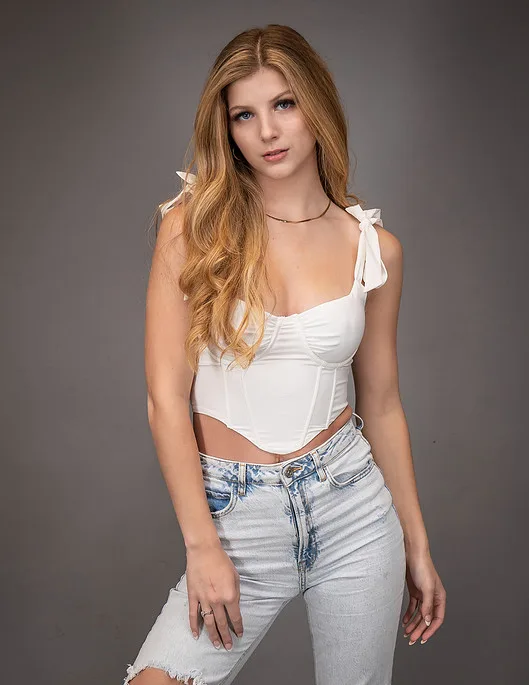
The Full-Body Shot: Clean styling, good posture, simple background. Shows how the model presents their entire physique and carries themselves.
Commercial/Lifestyle Images: These show the model in context — interacting with an environment, suggesting a narrative, conveying the kind of mood that commercial advertising uses. These can be shot in the studio with simple props or on location.
Range Images: At least two images that show different expression, styling, or mood. This demonstrates versatility, which is one of the primary things agencies assess in new talent.
What to Avoid in a Modeling Portfolio
Over-editing. Heavy retouching makes it impossible for an agency to assess the model's actual appearance. Light retouching that addresses technical issues while preserving natural appearance is appropriate.
Over-styling. A portfolio that is all high-fashion editorial work may look impressive visually, but if the model is pursuing commercial work, it does not show what the casting director needs to see. Match the styling to the kind of work you are pursuing.
Photos with other people. Portfolio images should be single-subject. Group shots or images where the model is not clearly the focus create confusion and dilute the impression.
Selfies or phone photos. Even strong smartphone cameras do not produce the same result as professional studio equipment in terms of lighting quality, depth of field, and overall polish. Amateur images in a portfolio submission communicate that the candidate has not invested in their career.
Old images. If your appearance has changed significantly since the photos were taken — haircut, weight, age — the portfolio no longer accurately represents you. Agencies need current representation.
Shooting Your Portfolio at Photography Shark
Why Studio Experience Matters for Model Portfolio Work
Shooting models for agency submission is a specific skill set. The images need to meet commercial photography standards — clean, well-lit, technically precise — while also drawing out the natural quality of the subject. This requires a photographer who understands commercial work, not just portrait photography.
Photography Shark's studio is equipped with professional strobe lighting, multiple backdrop options, and the full range of camera equipment necessary to produce portfolio-quality images. More importantly, Chris McCarthy's decade-plus of portrait experience translates directly to the specific challenges of model portfolio photography — working with subjects who are learning to perform in front of a camera, directing expression and movement effectively, and producing images that demonstrate genuine range.
The Portfolio Session
A portfolio session at Photography Shark is typically planned around the specific submission requirements of the agencies you are targeting. We discuss this during the pre-session consultation — which types of images you need, how many outfit changes make sense, and whether any lifestyle or location elements should be incorporated.
Sessions typically run two to three hours for a complete portfolio shoot. Outfit changes are planned in advance to maximize variety while maintaining a professional, cohesive overall impression.
If you need professional hair and makeup, we can coordinate this as part of the session. For agency headshots specifically, we recommend either having a professional makeup artist do natural, polished application or arriving with clean, professional everyday makeup and no styling decisions that date the images.
Building From Your Portfolio Session
The images from your Photography Shark portfolio session are delivered at full resolution — appropriate for print submissions, digital agency applications, and personal website and social media use. We can advise on how to present the images in different contexts — including assembling them into a model comp card, the standard one-sheet agencies expect alongside your portfolio.
For clients who are new to modeling and building a career foundation, a portfolio session is often the beginning of an ongoing relationship rather than a one-time event. As you develop your look, as your career direction becomes clearer, and as your technique in front of the camera improves, updating your portfolio is a regular part of maintaining your professional presence. Understanding when you should pay for photography vs. when TFP or paid-model arrangements apply helps you navigate those decisions at every stage.
The Digital Presence Dimension
Modern modeling careers have a social component that did not exist in previous generations. Modeling agencies increasingly assess a candidate's social media presence as part of their evaluation — particularly for commercial and influencer-adjacent work. Having a professional portfolio online, presented thoughtfully on a personal website or professional Instagram, signals that you understand this dimension of the contemporary industry.
The images from your portfolio session are the foundation of this presence. A professional headshot used consistently across LinkedIn, Instagram, and a personal website creates visual coherence. Lifestyle and commercial images from your portfolio session can build out a professional-looking feed that demonstrates your capability before you have the agency relationship.
What to Expect From the Agency Submission Process
Most agencies in New England accept online submissions through their websites. A standard submission includes a selection of portfolio images (typically three to six for initial contact), basic measurements and physical statistics, and contact information.
The response timeline varies. Some agencies respond within weeks; others take longer. A lack of immediate response does not mean rejection — follow up professionally after four to six weeks if you have not heard.
If you receive a request for an in-person meeting, that is a significant positive sign. Be prepared to present your full portfolio, discuss your experience and goals, and potentially do a brief test shoot in the agency's space.
Not all agencies you approach will be the right fit. This is normal. The goal is to find representation that understands your category and has real commercial relationships in that space. A smaller agency with genuine commercial connections is more valuable than a larger agency that does not actively work in your category.
Ready to Build Your Portfolio?
Whether you are just starting out or updating a portfolio that no longer represents your current look, Photography Shark is ready to plan your session. A great portfolio is the first and most important investment in a modeling career, and we know how to produce one.
Boston headshot rate card See also: headshot for a new title.
Frequently Asked Questions
What does Photography Shark charge for a modeling portfolio shoot?
Photography Shark's model portfolio packages: Bronze $395 (45 min, 10 images), Silver $495 (1 hour, 15 images), Gold $595 (1.5 hour, 20 images), Platinum $795 (2 hour, 30 images). Additional images $20 each.
Does Chris McCarthy understand what Boston modeling agencies need in a portfolio?
Yes. With 10+ years of experience shooting models pursuing representation, Chris understands what agencies like Maggie Inc. and Model Club look for and structures sessions to meet that standard.
What are the most common portfolio mistakes Photography Shark helps new models avoid?
Submitting phone photos, over-retouched images that don't match the model in person, wrong styling for their category, and too few looks. Chris addresses all of these during pre-session consultation.
Is Photography Shark's studio in Rockland equipped for commercial modeling work?
Yes. The studio at 83 E Water Street has professional lighting, seamless backdrops, and all equipment needed for commercial, lifestyle, and fitness portfolio work.
Can I book a test shoot if I have zero modeling experience?
Absolutely. Photography Shark regularly works with first-time models. Chris directs posing and expression throughout the session and coaches clients who have never been professionally photographed.
How soon after my session will I have images ready to submit?
Edited images are delivered within 5–7 business days via private gallery. Files are full-resolution and ready for agency submissions, comp cards, and digital portfolios.
Related Posts
You Might Also Like
About the Author
Chris McCarthy
Chris McCarthy has run Photography Shark Studios in Rockland, MA for over 10 years and 500+ sessions, with executive headshot work for Rockland Trust, Clean Harbors, M&T Bank, and McCarthy Planning; founder portraits for AI startups including Lowtouch.ai; product photography for South Shore brands like Lauren's Swim; and headshots across South Shore legal, medical, financial, and academic practices. Every session is personally shot and edited by Chris on Sony mirrorless and Godox strobe systems — no assistants, no outsourcing, no batch retouching. Galleries deliver in 3–5 business days. About Chris McCarthy →
Photography Shark · Boston & South Shore MA
Ready to Book a Session?
Professional headshots, senior portraits, boudoir, and model portfolios. Studio in Rockland, MA — 25 miles south of Boston. Sessions from $395.