Headshots
Your First Modeling Headshot: A Beginner's Guide to What to Expect
Brand new to modeling? A plain-language guide to your first modeling headshot — what it actually is, why you need one, what happens step by step, and how to prep. No jargon.
Chris McCarthy
Professional Photographer, Photography Shark · August 31, 2025 · Updated May 28, 2026
So You've Never Had a Modeling Headshot Before
If you've landed here, you're probably brand new to all of this. Maybe a friend told you that you should model, maybe you saw an agency casting call online, or maybe you've just always been curious. And the very first thing everyone tells you to get is a "modeling headshot" — but nobody actually explains what that is or what it involves.
I'm Chris McCarthy, and I photograph people for a living at my studio in Rockland, MA. A big part of my week is sitting down with people who have never stood in front of a professional camera in their life. They walk in nervous, unsure what to do with their hands, convinced they're going to do it wrong. They walk out relaxed, with images they're proud of. So before anything else, let me say this plainly: you do not need any experience, and you do not need to know how to "model." That's literally my job to handle.
This guide is the no-jargon version. I'll explain what a modeling headshot really is, why you need one if you want to get in front of agencies, exactly what happens at your first session step by step, how to prep without stressing, and what you'll walk away with. If you want the deep technical craft of lighting and angles, I'll point you to the right place at the end — but you don't need any of that to get started.
What a Modeling Headshot Actually Is (and What It Isn't)
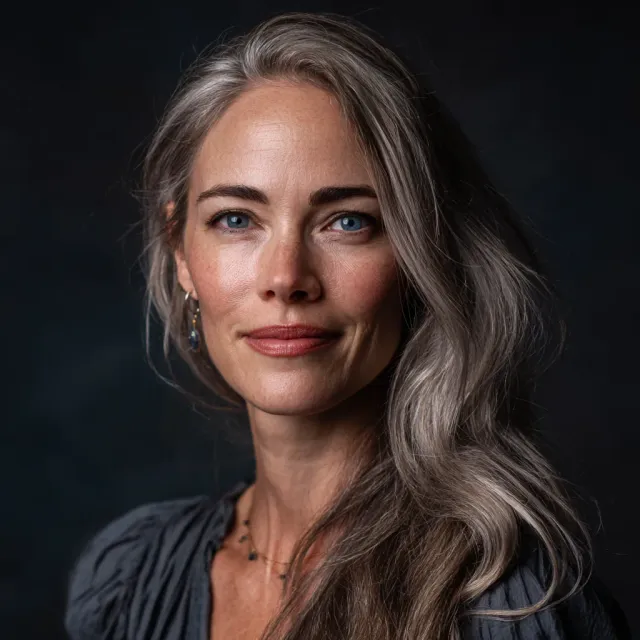
A modeling headshot is a clean, professionally lit photograph of your face and shoulders. That's the simple version. Its entire purpose is to show an agency or casting director exactly what you look like in person — your real face, your real skin, your real features — with nothing getting in the way.
The easiest way to understand it is to compare it to what it isn't:
- It isn't a selfie. A phone held at arm's length distorts your face, the lighting is whatever happens to be in the room, and the angle flatters in a way real life doesn't. Agencies have seen a million selfies and they don't trust them.
- It isn't a filtered photo. Filters smooth your skin, change your face shape, and brighten your eyes. An agency wants the unfiltered truth, because they're going to send you to clients who expect you to look like your photo.
- It isn't a fun snapshot from a night out. Even a great candid photo of you has a busy background, mixed lighting, and a moment that wasn't built for the camera.
A modeling headshot strips all of that away. Even lighting, a plain background (usually white or gray), sharp focus on your eyes, and an honest, natural expression. It says to an agency: this is what this person genuinely looks like, and here's how their face works on camera. That honesty is the whole point.
Why a New Model Needs One
You might be wondering why you can't just send an agency a few good photos from your phone. Here's the straight answer: a professional headshot is the price of being taken seriously. When an agency opens dozens of submissions a day, a clean, professional headshot signals that you understand the business and you're serious. A selfie signals the opposite, before they've even looked at your face.
There's a practical reason too. Agencies and casting directors are trying to picture you in a specific job — a retail catalog, a healthcare ad, a runway, a clothing brand. To do that, they need to see your true proportions and features without distortion or distraction. A proper headshot gives them that. A snapshot makes them guess, and busy people don't guess — they move on to the next submission.
A strong first headshot also becomes the foundation of everything else. It's the image on your comp card, your Backstage profile, and your agency submission. Once you have it, you can build out a fuller model portfolio around it — three-quarter shots, full-length looks, and more variety. But it all starts with one clean, honest headshot of your face.
What Actually Happens at Your First Session, Step by Step
The biggest source of first-timer nerves is simply not knowing what to expect. So here's the entire thing, start to finish, the way it really goes at my studio.
Step 1: A quick chat to settle in
When you arrive at the studio, we don't dive straight into shooting. We talk for a few minutes — what kind of modeling you're curious about, whether you have a specific agency in mind, and what looks you brought. This isn't a test. It's mostly to help you relax and to make sure we shoot with a plan instead of just clicking randomly. Most people loosen up within the first five minutes once they realize there's no pressure.
Step 2: Settling in front of the lights
Then we get you in front of the camera. The studio lights might look a little intimidating at first, but they're just there to make your skin and features look clear and even. You don't have to do anything with them. I'll have you stand or sit on a simple mark, and we'll take a few test frames so you can see yourself on the screen and get comfortable.
Step 3: I direct you the whole way
This is the part people worry about most, and it's the part you genuinely don't need to think about. I tell you everything — where to put your chin, which way to turn your shoulders, where to look, when to breathe. "Chin down a touch, eyes to me, now think of something that made you laugh this week." You're never left standing there wondering what to do. If you feel stiff, I'll keep talking and keep the energy moving so you loosen up naturally. Some of the best frames happen between poses, while you're laughing at something I said.
Step 4: A second look (if there's time)
If you booked a longer session and brought a second outfit, we'll change looks partway through — maybe a clean, friendly commercial look first and a slightly sharper one second. For a true first headshot, even one strong look is plenty to get you started, so don't feel you need a suitcase of clothes.
Step 5: We wrap, and I take it from there
The shooting part usually takes 30 minutes, or 60 minutes if you book two looks. After you leave, I go through every frame, pick the strongest images, and edit them with light, natural retouching — clearing a temporary blemish, but keeping your real skin texture and features. Within 3 to 5 business days, you get a private online gallery with your final, full-resolution images, ready to send to agencies. That's it. That's the whole process.
Simple Prep: What to Do Before You Come In
You don't need to do much, and you shouldn't overthink it. Here's the short list I give every first-timer.
- Bring two or three plain, solid-color tops. At least one neutral (white, gray, navy, soft earth tone). Skip loud patterns, logos, and graphics — they pull attention away from your face. A simple crew neck or V-neck works great.
- Keep makeup clean and natural, or come bare-faced if you prefer. Agencies want to see your real skin, not a full glam look. Same with hair: tidy and like-you, not a brand-new style you're still getting used to.
- Get a good night's sleep and drink water. It genuinely shows up in your skin and your eyes. This matters more than any product.
- Don't make big changes right before. No new haircut, no new color, no first-time spray tan the day before. You want to look like the version of you that walks into an agency.
- Show up a few minutes early and just breathe. The relaxed feeling you bring into the room is the single biggest thing you control, and it shows in the photos.
That's the entire prep. If you have a specific question, I'll cover the details with you when you book.
One more reassurance, because it comes up every time: you do not need to be a certain size, height, or "look" to get a first headshot worth having. Commercial modeling in the Boston market is broad and diverse — brands want relatable, approachable faces of every age and shape, not just one narrow ideal. So if a little voice is telling you that you're "not model material," set it aside. The headshot's job is simply to show who you are clearly and honestly. What an agency does with that is their decision, not yours to pre-judge before you've even tried.
What You'll Walk Away With
After your first session, you'll have a small set of professionally edited headshots that look like the real you on your best day — clean, well-lit, and honest. Practically, those images are ready to:
- Submit directly to Boston and South Shore modeling agencies
- Use as the main photo on a comp card or Backstage profile
- Anchor the rest of a portfolio as you build it out over time
Just as importantly, you'll walk away knowing you can do this. The mystery is gone. Most first-timers tell me the session was far easier and more fun than they expected, and that knowing what a professional shoot actually feels like takes a huge weight off. That confidence is part of what you're paying for.
Where to Go Next (When You're Ready for More)
This guide is deliberately the beginner's version — the what, the why, and the what-to-expect. Once you've got your first headshot and you want to go deeper, here's where to head:
- Want the technical craft behind a great headshot — lighting setups, angles, expression, and retouching? That's a whole topic of its own, and I break it down in mastering the art of modeling headshots.
- Submitting to Boston agencies specifically? Different offices want slightly different things. I cover what Boston modeling agencies want in submission headshots in detail.
- Curious how to pose once you're past the basics? Start with the best modeling headshot poses.
Ready for Your First Modeling Headshot?
You don't need to "lose the weight," fix your skin, or wait until you feel ready. The whole point of working with a professional is that I meet you exactly where you are and build images that show your authentic best, right now. Every experienced model started with a first headshot — and almost all of them were nervous walking in.
If you're in Boston or anywhere on the South Shore, my studio at 83 E Water Street, Rockland, MA is an easy trip — about 25 minutes from the city. When you're ready, book a modeling headshot session in Boston and we'll get you that clean, agency-ready first image. Or simply reach out with your questions — I'm happy to walk a first-timer through any of it before you commit.
Boston headshot cost breakdown · Headshot photographer · Rockland · Plymouth headshots
Frequently Asked Questions
What is a modeling headshot, in simple terms?
A modeling headshot is a clean, professionally lit photo of your face and shoulders that shows exactly what you look like in real life. Unlike a selfie or snapshot, it has even lighting, a plain background, and no filters — so an agency can see your true features clearly.
Do I need experience before my first modeling headshot?
No experience needed at all. Most people I photograph have never done this before and feel nervous walking in. I direct you through every pose and expression, so you do not need to know how to "model." Showing up open and relaxed is genuinely all you need to bring.
How long does a first modeling headshot session take?
Plan for a 30-minute session ($395) at my Rockland studio, plus a short chat at the start. Beginners often book the 60-minute two-look option ($495) so there is time to settle in, try a couple of looks, and get comfortable before we capture the keepers.
What should I bring to my first modeling headshot session?
Bring two or three tops in plain, solid colors (at least one neutral), minimal jewelry, and clean natural makeup. Skip busy patterns and logos. I will give you specifics when you book. Avoid big haircuts or new color right before the session.
Is Photography Shark's Rockland studio easy to reach from Boston?
Yes. The studio at 83 E Water Street, Rockland is about 25 minutes from Boston via Route 3 and accessible by commuter rail. It serves brand-new models from across Boston and the South Shore.
When will I get my photos after a first session?
Your edited images arrive within 3 to 5 business days through a private online gallery. The files are full resolution and ready to use right away for agency submissions, comp cards, and Backstage profiles.
Related Posts

You Might Also Like
About the Author
Chris McCarthy
Chris McCarthy has run Photography Shark Studios in Rockland, MA for over 10 years and 500+ sessions, with executive headshot work for Rockland Trust, Clean Harbors, M&T Bank, and McCarthy Planning; founder portraits for AI startups including Lowtouch.ai; product photography for South Shore brands like Lauren's Swim; and headshots across South Shore legal, medical, financial, and academic practices. Every session is personally shot and edited by Chris on Sony mirrorless and Godox strobe systems — no assistants, no outsourcing, no batch retouching. Galleries deliver in 3–5 business days. More about the photographer →
Photography Shark · Boston & South Shore MA
Ready to Book a Session?
Professional headshots, senior portraits, boudoir, and model portfolios. Studio in Rockland, MA — 25 miles south of Boston. Sessions from $395.