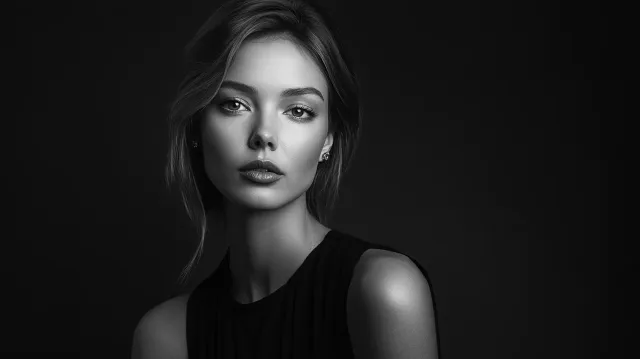
Headshots
Celebrity Headshots vs Standard Professional Headshots
How celebrity headshots are made, who shoots them, and what techniques translate to standard professional photography. From a Boston-area headshot studio.
Chris McCarthy
Professional Photographer, Photography Shark · April 27, 2026 · Updated May 27, 2026
Celebrity headshots are at the visible top of the professional headshot industry, and they shape what people expect their own headshots to look like. The reality is more practical than the perception: the technical principles behind celebrity headshots are identical to the principles behind standard professional headshots. The differences are scale, production team size, and budget — not fundamentally different photography. This guide breaks down what celebrity headshots actually involve, who makes them, and what techniques translate to standard professional sessions.
I have photographed headshots for every industry represented on the South Shore, and the preparation questions are remarkably similar.
The Technical Reality
A celebrity headshot session and a Photography Shark session use the same underlying tools:
- Studio strobes with softboxes, beauty dishes, or rim lights
- Seamless backdrops in deliberate colors
- 85mm or longer portrait lenses for flattering compression
- Direct-camera or off-camera framing
- Multiple wardrobe looks captured across the session
- Professional retouching addressing skin, eyes, color, and tone
The technical vocabulary is identical. What differs:
| Factor | Celebrity session | Standard professional session |
|---|---|---|
| Session length | 4–8 hours | 30–60 minutes |
| Production team | Photographer + 4–10 person crew | Photographer + sometimes 1 assistant |
| Hair & makeup | Dedicated artist on set, 1–2 hours of prep | Optional, shorter prep if included |
| Wardrobe stylist | Dedicated stylist with rack of options | Client brings own wardrobe |
| Wardrobe changes | 5–10 looks | 1–3 looks |
| Retouching time per image | 2–4 hours per final | 15–30 minutes per final |
| Final image count | 5–15 hero images | 8–15 retouched images |
| Cost | $5,000–$25,000+ | $300–$800 |
The output difference is real but smaller than the cost difference suggests. At LinkedIn or directory scale, a strong standard session produces results that read indistinguishably from celebrity-quality work.
Who Actually Shoots Celebrity Headshots
The celebrity portrait market splits into two categories:
Editorial Portrait Photographers
These photographers shoot the polished, published images that appear in Vanity Fair, Time, Rolling Stone, Vogue, and major magazines. Their work is editorial portraiture more than headshot work — broader framing, environmental setups, more conceptual direction. Major names include:
- Annie Leibovitz — defining editorial portrait voice for 40+ years; Vanity Fair, Vogue
- Mark Seliger — Rolling Stone, GQ; clean studio + environmental hybrid
- Martin Schoeller — extreme close-up signature on white background
- Platon — close-up portrait specialist; The New Yorker, Time covers
- Marco Grob — editorial portraiture; Time, Esquire
- Mary Ellen Mark (estate) — documentary-portrait crossover
Their work is recognizable by signature lighting, framing, and post-processing approaches. A "Schoeller portrait" or "Platon portrait" is identifiable at a glance to anyone who knows the work.
Working Hollywood Headshot Photographers
Distinct from editorial portrait photographers, this group shoots the day-to-day headshots that working actors submit to casting. The volume is much higher and the per-session production is leaner. Names that come up frequently in actor circles include:
- Joanna DeGeneres — Los Angeles, longtime actor headshot specialist
- Vanie Poyey — LA, theatrical-commercial actor work
- Bradford Rogne — LA, casting-format actor headshots
- Brad Buckman — NYC, Broadway and theatrical
- Diana Ragland — LA, working actor specialist
These photographers' sessions are closer in format to a Photography Shark actor headshots Boston session than to an Annie Leibovitz portrait. The actor industry uses "headshot" specifically — broader portrait work is a separate category.
Visual Signatures of Celebrity Headshots
A few patterns that appear across high-end celebrity work:
Lighting Signatures
- Clean key + fill — even, flattering, no harsh shadows. The dominant choice for press headshots.
- Single hard key with negative fill — sculpted, dramatic. Used for editorial portraiture, less for headshots proper.
- Beauty dish key, slight rim — defined facial structure, clean separation. Common for Hollywood headshot specialists.
- Window-light style — soft directional, naturalistic. Common for press kit alternates.
Framing
Most celebrity headshots use slightly tighter framing than standard corporate headshots — head fills more of the frame, shoulders are partially cropped. This works at editorial reproduction sizes; less optimal for thumbnail use cases.
Wardrobe and Styling
The clothing in celebrity headshots is almost always selected by a stylist, fitted on set, and often custom or designer pieces. The visible signal: clothes that fit perfectly, with no awkward bunching, gaps, or pulls. This is achievable in standard sessions through careful client-side wardrobe selection — the difference is consistency, not capability. If you are preparing your own wardrobe rather than working with a stylist, the what-to-wear guide for professional headshots in Boston covers the fabric, color, and fit decisions that close the gap between celebrity-styled and self-styled.
Retouching
High-end celebrity retouching is invisible. Skin texture is preserved, blemishes are addressed selectively, color is corrected without obvious cast, and the result reads as "this person looks great" rather than "this person was retouched." Heavy retouching that smooths skin to plastic is the mark of lower-end work, regardless of subject.
What Translates to Standard Sessions
The principles behind celebrity headshots that apply to standard sessions:
Direction Beats Posing Knowledge
Working celebrities aren't necessarily skilled posers. They have practice being photographed, but the strongest frames come from the photographer's continuous direction, not from the subject knowing what to do. The same dynamic operates in standard sessions — you don't need to know how to pose; the photographer directs you in real time.
Multiple Looks Beats One Perfect Look
Celebrity sessions capture multiple wardrobe and lighting variations. The deliverable set includes options for different uses (press, editorial, social, casual). This translates directly to standard professional sessions — capturing 2–3 looks gives you flexibility across LinkedIn, directories, press kits, and bio photos.
Lighting Is Most of the Image
The biggest visible difference between celebrity-quality and amateur work is lighting, not the subject's face. Even celebrity subjects look amateur in bad light; even average subjects look professional in good light. A studio with calibrated strobe lighting (Photography Shark uses Godox systems with multiple light shapers) produces lighting that translates across subjects.
Retouching Done Right Is Invisible
The retouching mark of celebrity work is subtlety. Standard professional retouching should follow the same principle — address what needs addressing, preserve what should be preserved, don't smooth skin into plastic. Over-retouching is the most visible mark of cheap work, more than any other factor.
Calm Studio Energy Produces Better Frames
Celebrity sessions are calm. The crew is professional, the photographer is unhurried, the subject is given time to settle. This is the most underrated factor in producing strong headshots — rushed, anxious sessions produce rushed, anxious-looking frames. A standard session that prioritizes calm energy produces better results than a hurried session at any budget.
What Doesn't Translate (And Doesn't Need To)
Some elements of celebrity sessions are genuinely scale-dependent and don't apply to standard work:
- Multi-person production crew — necessary for high-volume editorial output, unnecessary for individual professional headshots
- Designer wardrobe styling — relevant for press use; standard professional contexts work fine with client-brought wardrobe
- Multi-hour hair and makeup — overkill for most professional headshot use cases
- Print-publication-grade retouching — relevant for billboard or magazine reproduction; LinkedIn doesn't need it
A standard professional session that includes good lighting, deliberate framing, calibrated direction, and conservative retouching produces results that satisfy 95% of professional use cases. The remaining 5% is what celebrity-budget production handles.
What to Look for in a Photographer Without a Celebrity Budget
When evaluating photographers for your own session, the celebrity-quality signals to look for:
- Lighting variety in their portfolio. Multiple lighting setups across different subjects suggests calibration to subject, not template-driven work.
- Skin texture preserved in retouching. Look closely at skin in their portfolio. If everyone looks plastic-smooth, the retouching is heavy-handed.
- Expression range across subjects. Different subjects shouldn't look like they're all making the same face. Direction is responsive, not scripted.
- Calm session description. Photographers who emphasize speed and efficiency in their marketing often produce rushed-looking work. Look for "thorough," "calibrated," "consultative" language.
- Real reviews, not testimonials. Google reviews especially — they're harder to curate. See reviews for the Photography Shark equivalent.
The how to choose a Boston headshot photographer guide goes deeper on the evaluation framework.
What a Working Actor Should Spend on Headshots
For working actors specifically — the closest standard-session category to celebrity work — the realistic budget guidance:
- Beginning actor (1–2 years in): $300–$500 session. Standard professional studio. Multiple looks (theatrical + commercial).
- Working actor (3+ years, regular bookings): $500–$800 session. More looks, more deliverables, possibly add hair/makeup.
- Advanced actor (regular network/film work): $1,000–$2,500+. May include stylist, makeup artist, longer session, more retouching.
These tiers map roughly to the headshot cost Boston ranges, with actor-specific calibration.
Celebrity Headshot Trends in 2026
The celebrity headshot world has shifted noticeably over the past few years, and those shifts trickle down to every professional headshot session I shoot. Here's what I'm seeing:
The Natural Aesthetic Is Winning
Heavy retouching — the kind that erases every pore and makes skin look like polished marble — is falling out of favor at every level. Celebrity publicists are requesting more natural-looking headshots because audiences have become allergic to obviously processed imagery. This is good news for everyone: the "less retouched" look is actually harder to execute well (you need better lighting to compensate), but it produces more trustworthy images. At Photography Shark, I've always leaned toward skin-texture-preserving retouching, and now the celebrity world is catching up.
Vertical Format for Social-First Use
The traditional horizontal or square celebrity headshot still exists for press kits and editorial use, but vertical-format headshots optimized for Instagram, TikTok, and LinkedIn feeds are now a standard deliverable in celebrity sessions. I've adapted the same approach for my standard sessions — you'll get crops that work in both orientations, but the vertical format gets priority because that's where most people will actually see your headshot.
The Casual-Professional Hybrid
The hard line between "corporate headshot" and "casual portrait" has blurred significantly. Celebrity headshots increasingly feature relaxed wardrobe — a well-fitted t-shirt, an unbuttoned collar, a blazer with no tie — combined with precise studio lighting. The message is "I'm approachable and I'm serious." This hybrid look works especially well for executive headshots where the subject wants authority without stiffness.
Diversity in Representation
Celebrity headshot photography has expanded significantly in who gets photographed and how. Lighting techniques that were historically calibrated for lighter skin tones are being rethought and relearned across the industry. As a headshot photographer, I've invested in learning and practicing lighting approaches that render every skin tone accurately and beautifully — different modifier positions, different fill ratios, different white balance calibrations. This isn't a trend; it's a correction.
The AI-Generated Celebrity Imagery Question
AI-generated "celebrity headshots" are everywhere in 2026 -- the AI headshots vs professional photography comparison covers the full landscape of tools and their limitations -- and they've created an interesting counter-reaction: real photography is being valued more explicitly. Publicists and casting directors are increasingly specifying "no AI-generated or AI-enhanced imagery" in their submission requirements. The uncanny-valley quality of even the best AI headshots — subtle symmetry artifacts, inconsistent catchlights, textureless skin — is detectable to trained eyes. Real studio photography with real lighting on a real human face remains the standard, and the AI wave has actually reinforced that standard rather than undermining it.
Celebrity Headshot Examples by Industry
Celebrity headshots aren't one-size-fits-all. The visual expectations vary dramatically by industry, and understanding those differences can help you decide what style fits your own professional context.
Hollywood Actors
Actor headshots — the working-submission kind, not editorial portraits — prioritize casting readability. Tight crop (head and partial shoulders), clean background (usually mid-gray or muted tone), natural expression that suggests range without committing to a specific character. The lighting is deliberately neutral: flattering but not dramatic. Casting directors need to see the actor's face clearly and imagine them in roles. This is the closest category to what I shoot in my actor headshot sessions.
Musicians
Musician headshots lean harder into mood and visual identity. Darker backgrounds, more dramatic lighting ratios, wardrobe that signals genre. A jazz musician's headshot looks nothing like a country artist's headshot, and both look nothing like a classical performer's press photo. The common thread is intentional atmosphere — the headshot should feel like the music sounds. More creative license with cropping and angles than actor work. For a full breakdown of artist press photos and band sessions, see the musician headshots and press photo guide.
TV Personalities and News Anchors
Clean, bright, approachable. TV personality headshots are optimized for trust and likability at first glance. The lighting is high-key (bright, even, minimal shadows), the wardrobe is polished but not distracting, and the expression is warm-neutral. These headshots reproduce well at small sizes on screen graphics and station websites. The visual language is closer to corporate headshots than to editorial portraiture.
Politicians
Political headshots occupy a narrow visual band: authoritative but approachable, serious but not stern. American flag or office backdrop is the cliche; stronger political headshots use neutral studio backgrounds with confident but relaxed expressions. The lighting is even and honest — voters are suspicious of heavily stylized political imagery. Wardrobe is always formal. This is one category where the celebrity headshot and the standard professional headshot are nearly identical in approach.
CEOs and Business Celebrities
Business celebrity headshots — the kind you see in Forbes profiles and conference keynote announcements — split between two modes. Mode one is the "power portrait": dramatic lighting, dark background, direct eye contact, minimal smile. Mode two is the "approachable leader": bright background, natural smile, relaxed wardrobe. The choice usually maps to the executive's brand positioning. Both modes translate directly to standard executive headshot sessions.
Athletes
Athlete headshots are the most physically dynamic of any celebrity category. Even in a standard headshot crop, athlete imagery tends toward stronger jawlines (chin-down angles), more defined lighting that emphasizes physical structure, and an intensity of expression that reads as competitive confidence. The wardrobe often includes team gear or athletic wear. Lighting tends toward harder sources with more contrast than you'd use for a corporate headshot.
Influencers and Content Creators
Influencer headshots are the most platform-specific category. The headshot needs to read clearly at 110x110 pixels (Instagram profile size) and at full resolution. This means clean backgrounds, high contrast between subject and background, and expressions that are slightly more animated than traditional headshot work. The lighting is usually bright and even — the social media aesthetic. Wardrobe changes are frequent because the headshot rotates with content cycles.
How to Get Celebrity-Quality Headshots on a Normal Budget
The gap between a $25,000 celebrity headshot session and a $395 studio session is real, but it's mostly production overhead, not photographic quality. Here's how to get celebrity-level results without the celebrity budget.
What to Look for in a Photographer
The single most important factor is lighting control. Look at a photographer's portfolio and ask yourself: does every subject look like they were lit deliberately, or do some images look like the photographer just pointed a flash at someone? Celebrity headshot photographers obsess over light placement — every shadow is intentional, every highlight is controlled. A good studio headshot photographer at any price point does the same thing.
Beyond lighting, look for evidence of direction. Do the subjects in the portfolio show varied, natural expressions, or does everyone look like they're holding the same stiff smile? Celebrity photographers are skilled directors — they talk their subjects into authentic expressions rather than waiting for them to figure it out. I spend more of my session time directing than adjusting equipment, and that's where the strongest frames come from.
The Lighting Techniques That Scale Down
The core lighting setups used in celebrity headshot sessions are not expensive to replicate. A beauty dish key light at a 30–45 degree angle, a fill card or low-power fill strobe opposite, and a rim light for hair and shoulder separation — that's a setup that costs a few thousand dollars in equipment and produces the same quality of light whether the subject is a household name or a first-time headshot client. The modifier (beauty dish vs. softbox vs. octabox) shapes the quality of the light, but the placement and ratio are what make the image. I use the same Godox strobe systems and Westcott modifiers that produce results indistinguishable from high-budget sessions at the final image level.
What to Ask During Your Consultation
Before booking, ask questions that reveal whether the photographer thinks like a celebrity headshot photographer:
- "How do you adjust lighting for different face shapes?" — A photographer who gives a specific, technical answer (moving the key light, changing the fill ratio, adjusting the rim) is thinking at the right level. A vague answer ("I just make it look good") is a red flag.
- "How do you direct expressions?" — You want to hear about conversation, micro-adjustments, and real-time coaching — not "just be natural."
- "What does your retouching process look like?" — The right answer involves skin texture preservation, selective blemish removal, and color correction. The wrong answer is "I smooth everything out" or "I use a beauty filter."
- "Can I see examples of different lighting setups in your portfolio?" — A photographer who only has one lighting look may not be able to adapt to your face and your goals.
These are the same questions a celebrity publicist asks when hiring a headshot photographer for a client. The answers reveal technical depth regardless of the photographer's price point.
The Session Experience Matters
One thing that consistently distinguishes celebrity headshot sessions from mediocre standard sessions is pace. Celebrity photographers don't rush. They build rapport, they let the subject settle into the studio environment, and they shoot deliberately rather than rapid-fire. A 45-minute session that moves at a comfortable pace produces dramatically better results than a 15-minute assembly-line session, even with identical equipment. When I book sessions at Photography Shark, I schedule buffer time so we never feel rushed — that calm energy shows up in the final images.
Check my session pricing and what's included to see how this translates to actual session structure.
Celebrity Headshot FAQs
Can I bring reference photos of celebrity headshots I like to my session?
This is one of the most helpful things you can do. When a client pulls up a celebrity headshot on their phone and says "I want something like this," I can break down exactly what's happening technically — the light direction, the crop, the background tone, the expression quality — and adapt those elements to our session. You're not going to look like that celebrity (different face, different bone structure), but the feel of the image is absolutely reproducible. I've had clients bring references from Annie Leibovitz portraits to Martin Schoeller close-ups, and in each case, the technical approach translates to a standard studio setup.
What's the difference between a celebrity headshot photographer and a regular headshot photographer?
Honestly, less than you'd think. The top celebrity headshot photographers have refined their lighting, direction, and retouching to a very high level — but so have many non-celebrity headshot specialists. The real difference is access and volume: celebrity photographers shoot famous people because they've built relationships in entertainment and media industries, not because they possess fundamentally different technical skills. A skilled headshot photographer outside the celebrity circuit can produce technically equivalent work. The gap is reputation-driven, not skill-driven.
How do I know if my headshot looks "celebrity quality"?
Three checkpoints: First, zoom in on the skin — you should see real texture (pores, fine lines) with blemishes selectively addressed, not a smooth plastic sheen. Second, look at the lighting — there should be deliberate shadow placement that sculpts your face, not flat overhead light or harsh direct flash. Third, check the expression — it should look like a genuine moment, not a held smile. If all three pass, your headshot is technically at the level of professional celebrity work, regardless of what you paid for it.
Ready to Book?
Get in touch to schedule a session. Photography Shark is in Rockland, MA — 25 minutes south of Boston. Studio sessions from $395 with 10 retouched images and full commercial use.
Related reading: Actor headshots Boston · Executive headshots Boston · Professional headshot poses · Industry-specific headshot examples with lighting breakdowns · What is a headshot?
Frequently Asked Questions
What makes celebrity headshots different from regular headshots?
Celebrity headshots use the same fundamental techniques as standard professional headshots — controlled lighting, deliberate framing, calibrated expression — but with longer sessions, larger production teams (hair, makeup, wardrobe stylists), more wardrobe variation, and significantly more retouching time per image. The technical vocabulary is the same; the production scale is different.
How much does a celebrity headshot session cost?
A-list celebrity headshot sessions through major Hollywood photographers typically range $5,000–$25,000+ for a single subject with full hair/makeup/styling production. The fee accounts for photographer reputation, production crew, longer session time, and expected reproduction across press materials. Standard professional headshots in the Boston market run $300–$800.
Can a regular person get celebrity-quality headshots?
The technical signatures of celebrity headshots — clean lighting, thoughtful posing, polished retouching, multiple looks — are achievable in a standard professional session. The differences that remain are scale (Hollywood photographers have dedicated production teams) and access (some celebrity photographers only shoot major names). For most professional use cases, a strong standard session produces results that read as celebrity-quality at thumbnail or LinkedIn scale.
Who shoots celebrity headshots?
Major celebrity portrait photographers include Annie Leibovitz, Mark Seliger, Mary Ellen Mark (estate), Martin Schoeller, Platon, and Marco Grob, among others. Each has a recognizable visual signature. For headshot-specific work (vs editorial portraiture), specialized Hollywood headshot photographers like Joanna DeGeneres and others handle the bulk of working actor headshots.
What can I learn from celebrity headshots for my own session?
The patterns that translate: clean controlled lighting beats anything else, expression is more important than wardrobe, multiple looks within one session create flexibility, professional retouching done right is invisible (not heavy-handed), and the strongest images come from the photographer's direction, not the subject's posing knowledge. These principles apply to a $395 session as much as a $25,000 one.
Can I bring celebrity reference photos to my headshot session?
Absolutely — bringing reference photos is one of the most useful things you can do. When a client shows me a celebrity headshot they admire, I can reverse-engineer the lighting setup, framing, and mood. I may not replicate it exactly (different face, different body, different wardrobe), but I can identify the technical elements — key light position, background tone, crop tightness — and adapt them to your session. Most celebrity headshot looks are achievable with standard studio lighting.
What lighting do celebrity headshot photographers use?
Most celebrity headshot photographers use studio strobes (not continuous light or speedlights) with large modifiers — softboxes, beauty dishes, or parabolic umbrellas — as the key light. A common setup is a beauty dish at 45 degrees with a fill card or second strobe at lower power, plus a rim or hair light for separation. The specific modifier matters less than the photographer's ability to shape light to a particular face. At Photography Shark, I use Godox studio strobes with multiple modifier options calibrated per subject.
How long does a celebrity-quality headshot session take at a normal studio?
A celebrity production session runs 4–8 hours because of multi-person crew coordination, extensive wardrobe changes, and editorial-level setup between looks. A standard studio session that produces celebrity-quality results — with the same lighting principles, posing direction, and retouching standards — takes 30–60 minutes for most clients. The time difference is mostly crew logistics, not photography technique. My sessions at Photography Shark run about 45 minutes for a full multi-look headshot set.
Related Posts
![AI Headshot Generators vs Professional Headshots: Complete Guide [2026]](/blog/ai-headshots-vs-professional-headshots-w640.webp)
You Might Also Like
About the Author
Chris McCarthy
Chris McCarthy has run Photography Shark Studios in Rockland, MA for over 10 years and 500+ sessions, with executive headshot work for Rockland Trust, Clean Harbors, M&T Bank, and McCarthy Planning; founder portraits for AI startups including Lowtouch.ai; product photography for South Shore brands like Lauren's Swim; and headshots across South Shore legal, medical, financial, and academic practices. Every session is personally shot and edited by Chris on Sony mirrorless and Godox strobe systems — no assistants, no outsourcing, no batch retouching. Galleries deliver in 3–5 business days. More about the photographer →
Photography Shark · Boston & South Shore MA
Ready to Book a Session?
Professional headshots, senior portraits, boudoir, and model portfolios. Studio in Rockland, MA — 25 miles south of Boston. Sessions from $395.