Photography Tips
How to Become a Model in Boston
A practical guide to breaking into modeling in Boston — the commercial market, portfolio strategy, and how Photography Shark helps South Shore models.
Chris McCarthy
Professional Photographer, Photography Shark · October 25, 2024 · Updated May 17, 2026
"How do I become a model in Boston" is almost always asked by someone at step zero — no portfolio, no agency, no clear sense of which category they'd actually be cast in, no idea of what the realistic timeline or cost looks like. I have photographed hundreds of aspiring models at my Rockland studio over the past decade, and the ones who build real careers follow a specific sequence. This is the zero-to-first-booking playbook for the Boston market specifically: the realistic path, the steps in order, what each step costs, what to expect at each milestone, and where it diverges from the playbooks that work in NYC or LA.
(For what agencies are looking for, agency rejection handling, and model portfolio costs, see those individual posts. This is the beginner-from-scratch overview that ties them together.)
The realistic Boston market context
Before any specifics: the Boston modeling market is primarily commercial. Healthcare, financial services, retail catalog, lifestyle brands, regional advertising, family-friendly TV. Editorial and fashion-runway work exists but is a small share of the regional bookings. New models trying to enter as "fashion" or "high fashion" almost always struggle locally and would do better starting commercial and building from there.
The earnings reality is honest: working commercial models in Boston who book regularly through agencies earn somewhere between $500 and $5,000+ per booking depending on usage, exclusivity, and brand. Most working models combine modeling with other income — it's a real revenue stream, not always a full income, especially in the first 2–3 years.
Step 1: Honest type assessment
Before spending any money on photography, take an honest look at where the model fits. Useful questions:
- Height and proportion. Commercial models in Boston are typically 5'7"+ for women, 5'10"+ for men, but mature and specialty commercial has more flexibility on height than fashion does.
- Age. Boston casts heavily in the 25–45 range for commercial work, with steady demand in 45+ for mature commercial modeling (healthcare brands, financial services).
- Body type. Commercial markets cast broader body types than fashion. Plus-size commercial, athletic/fitness, and standard-size commercial all have ongoing demand.
- Specialty potential. Hands, feet, hair (parts modeling), petite (under 5'7"), tall (6'+ for women, 6'3"+ for men), and specific ethnicities all have niche agency representation worth considering.
The type assessment determines which agencies to target and how to structure the portfolio. Aiming for the wrong type is the single most common reason for beginner models to spin their wheels.
Step 2: A first portfolio
Most agencies want to see 8–15 images covering range. For the Boston commercial market specifically, the first portfolio should include:
- 1–2 strong clean headshots (lead and secondary)
- 2–3 three-quarter or full-body shots showing body proportions
- 1–2 lifestyle images suggesting interests or context
- 1 editorial-leaning frame if the model's type supports it
- Multiple wardrobe registers (business-casual, casual, slightly dressed-up, lifestyle)
Photography Shark's model portfolio service page has four package tiers sized around this decision:
- Bronze ($395, 10 images) — single-look refresh, not appropriate for first submission
- Silver ($495, 15 images) — tight first submission package on a budget
- Gold ($595, 20 images) — standard first agency submission, sized for range
- Platinum ($795, 30 images) — multi-agency targeting or comp-card build
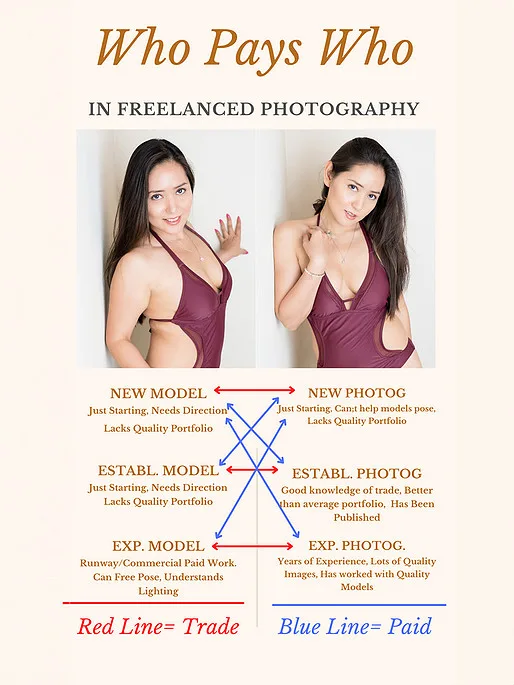
Add $100–$200 for a professional makeup artist (almost always worth it for the first portfolio). Total realistic first-investment: $600–$1,000. For context on why this is a model-pays situation and when the economics reverse, see who pays who in freelance modeling.
Step 3: Identify and submit to the right agencies
Boston's primary modeling agencies:
- Maggie Inc. — commercial, lifestyle, mature, family
- Model Club — commercial, fashion-commercial
- LDM (Boston) — commercial, lifestyle, mature
- Dynasty — commercial, fashion-commercial
Each has a submission process on its website — for a full comparison of submission platforms and what actually works in 2026, see that dedicated guide. Submissions typically include digital portfolio attachments (full-resolution JPGs, not low-res social-media files), stats (height, measurements, hair, eye color), and basic contact info. Cover letters are optional but help.
Submit to 2–4 agencies that match the model's type. Don't submit to "all agencies" — submitting widely without matching reads as scattershot and can damage the credibility of the submission package.
Expected response timeline: 4–12 weeks. Most submissions get a form-rejection or no response. The acceptance rate is low — by structural design (limited roster spots), not by judgment of the model individually.
Step 4: If signed — what happens next
Agency signing typically includes: a contract (read it carefully, especially exclusivity clauses), digital comp card production, addition to the agency's roster page on its website, and entry into the agency's submission rotation. The first 30–60 days after signing are usually quiet while the agency calibrates how to position the model.
First bookings typically come within 3–9 months of signing. Healthcare brand campaigns, regional retail lookbooks, financial services lifestyle imagery, and family-friendly commercial work tend to be the first commercial categories. Rates for first bookings typically run $500–$2,500 depending on usage.
Step 5: If not signed — alternative paths
Boston's modeling market has real alternative paths that don't require traditional agency signing:
- Freelance commercial through direct DM contacts. Brands increasingly find models directly through Instagram. A model with a strong portfolio and a coherent social presence can build a freelance income stream that doesn't require agency signing.
- Adjacent market submissions. Providence, Hartford, Manchester NH, and NYC all have agency markets that draw from Greater Boston. Models rejected by Boston agencies are sometimes readily signed in Providence or NYC.
- Specialty agencies. Parts modeling, mature commercial, petite, plus-size, and ethnic-specific agencies operate alongside the major commercial houses. A type that doesn't fit the major rosters often fits specialty representation cleanly.
- Acting crossover. Many working Boston commercial models also book through actor representation (theatrical and on-camera commercial). The actor headshots service covers that side, and Photography Shark sessions often produce content that serves both modeling and acting submissions.
What to skip
- Modeling "schools" that charge tuition before placement. These are almost always scams in the Boston market. Legitimate agencies don't charge upfront training fees.
- AI headshot generators. Don't use these for submission portfolios. Agencies recognize them immediately and treat them as a credibility red flag.
- Free or barter "TFP" shoots from photographers building their own portfolios. These can be useful for practice but should not be the model's submission portfolio. The technical and direction quality is typically below what an agency expects.
- Online modeling "discovery" sites. Most are scams or marketing-list builders. Direct agency submission is the legitimate path.
Where Photography Shark fits
For first-portfolio sessions specifically, the studio at 83 E Water Street in Rockland is 35 minutes south of downtown Boston via Route 3 with free on-site parking. Chris McCarthy has 10+ years of experience photographing Boston-market models and provides active session direction throughout (especially valuable for first-time models with no prior camera experience). Pre-session consultation discusses type positioning, agency targeting, and session structure.
See the model portfolio service page, the Boston model headshots city page, or the male modeling Boston page for male-specific structure.
Frequently Asked Questions
Do I need modeling experience to book a portfolio session at Photography Shark?
No. Chris McCarthy regularly works with first-time models. The session includes direction on posing, expression, and how to present yourself for the Boston commercial market.
What does a starter modeling portfolio session cost?
Studio sessions start at $395 for 10 professionally edited images
Does Photography Shark know what Boston agencies look for in portfolio submissions?
Yes. Chris has 10+ years of experience working with models pursuing Boston-area agencies and understands what commercial clients in healthcare, lifestyle, and regional advertising need to see.
Where is Photography Shark located relative to Boston?
The studio is at 83 E Water Street, Rockland, MA — about 25 minutes south of Boston on Route 3. It serves aspiring models from the South Shore and greater Boston area.
Should I pursue commercial or fashion modeling in Boston?
The Boston market is primarily commercial. Chris advises new models to build a commercial portfolio first — it has the widest demand and the fastest path to paid work in the region.
How long does it take to receive my portfolio images?
Edited images are delivered within 5–7 business days via a private online gallery. Files are full-resolution and ready for agency submissions or digital comp cards.
Related Posts

You Might Also Like
About the Author
Chris McCarthy
Chris McCarthy has run Photography Shark Studios in Rockland, MA for over 10 years and 500+ sessions, with executive headshot work for Rockland Trust, Clean Harbors, M&T Bank, and McCarthy Planning; founder portraits for AI startups including Lowtouch.ai; product photography for South Shore brands like Lauren's Swim; and headshots across South Shore legal, medical, financial, and academic practices. Every session is personally shot and edited by Chris on Sony mirrorless and Godox strobe systems — no assistants, no outsourcing, no batch retouching. Galleries deliver in 3–5 business days. More about the photographer →
Photography Shark · Boston & South Shore MA
Ready to Book a Session?
Professional headshots, senior portraits, boudoir, and model portfolios. Studio in Rockland, MA — 25 miles south of Boston. Sessions from $395.