Photography Tips
Petite Model Portfolio: Commercial & Print Options
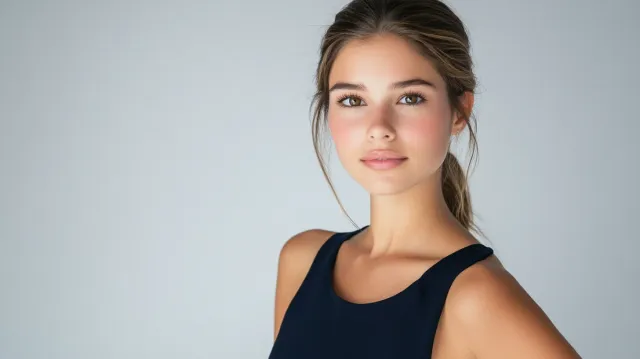
Petite models (under 5'6'') are shut out of runway but have full access to commercial print, catalog, and lifestyle modeling.
Chris McCarthy
Professional Photographer, Photography Shark · March 21, 2026
If you're 5'5'' or shorter and considering modeling, the most useful thing to know up front: runway and traditional high fashion editorial are not the markets for you. That's not limiting — it's clarifying. The markets that remain open (commercial print, catalog, beauty, lifestyle, parts, jewelry, e-commerce) are substantially larger than runway by total volume, pay well, and cast consistently for all heights.
In my experience working with clients across Boston and the South Shore, the biggest gains come from the simplest adjustments.
Here's the practical landscape for petite model portfolios in Boston and the South Shore from photographer Chris McCarthy of Photography Shark, and what a portfolio session should specifically emphasize for shorter-stature clients.
The Height Barrier, Explained
Runway modeling uses a narrow height band (typically 5'8''–5'11'' for women, 6'0''–6'3'' for men) because runway sample sizes are made to standardized measurements. Designers cut garments to fit a specific figure, and runway models need to match those garments without alteration. It's not about aesthetics — it's about production logistics.
High fashion editorial adopted runway standards because editorial work cross-pollinates with runway casting. If you can't walk the runway, you mostly don't land on the editorial board.
Everything else is open. Runway and fashion editorial are visually visible; commercial is where the money and sustained work live.
Markets Open to Petite Models
Commercial print and catalog. The dominant category. Retail brands, department stores, lifestyle companies. Casting specifically prioritizes relatable appearance over height. Boston-area retail and catalog photography casts petite models consistently.
Beauty. Close-framed work focused on face, skin, hair, and makeup. Height is entirely irrelevant. Strong, defined facial features matter far more than body dimensions. Major cosmetic brands, skincare, and beauty campaigns all cast beauty specifically.
Lifestyle. Wellness, consumer products, home goods, food and beverage. "Real person" casting with no height bar.
Parts and jewelry. Hand modeling, foot modeling, neck and décolletage modeling, hair modeling. A specialized but real market — considerations discussed in the parts and beauty specialties section below.
Petite-specific fashion. Brands specifically targeting petite consumers (Ann Taylor LOFT Petites, Banana Republic Petite, petite-focused direct-to-consumer brands) cast petite models specifically for their petite lines.
E-commerce product photography. The fastest-growing modeling category. Product-on-model shots for online retailers. Height is secondary to fit and clean presentation.
What the Portfolio Emphasizes
A petite portfolio prioritizes face, beauty, and proportion over traditional fashion silhouette work:
1. Clean commercial headshot. Essential. Same standard as any commercial headshot — direct expression, clean backdrop, shoulders-up framing.
2. Beauty close-up. Tight face crop emphasizing skin, eyes, features. Not a standard commercial headshot — a beauty-specific shot with attention to makeup, lighting for skin, and expression. Often the strongest frame for petite submissions.
3. Full-body fitted shot. Shows proportion — critical for confirming you photograph well at your actual height in well-fitted clothing. Not about appearing taller; about confirming the proportions work.
4. Wardrobe variation. Second outfit demonstrating range. Typically more styled or elevated than outfit one.
5. Lifestyle or product shot. Context-forward image — environmental, activity-based, or product-in-use. Demonstrates commercial castability.
Five focused images typically beat eight generic ones. See how to build a modeling portfolio that stands out for broader portfolio construction guidance.
Wardrobe That Works for Petite Portfolios
Fit is disproportionately important. Standard guidance:
- Well-fitted solid-color tops in neutrals that scale to your frame
- Petite-specific fitted pieces when available — they photograph better than standard sizes that have been tailored
- Fitted dresses rather than loose silhouettes
- Cropped or tailored jackets that don't overwhelm the frame
- Avoid: oversized clothing (drowns petite frames on camera), busy patterns (overwhelm smaller face-to-body ratio), maxi skirts or extremely long garments (visually cut proportion)
See what to wear for a model portfolio session for general guidance.
Posing for Petite Portraits
Posing principles that work consistently:
Lengthening poses. Legs extended, body elongated, weight distributed away from the camera on one foot. Creates visual length without requiring yoga-level flexibility.
Camera angle from slightly below. Shooting from slightly below eye level visually extends the body. The photographer handles this — your contribution is knowing your legs should typically be fully extended rather than tucked in most poses.
Close-framed beauty work. Petite models often produce their strongest frames in close-framed work where proportion isn't the subject. Face-forward, expression-forward shots play to the strengths.
Strong posture. Shoulders back, spine lengthened. Counters the compression instinct.
For broader pose reference, see the best modeling headshot poses and mastering the art of modeling headshots.
Parts and Beauty Specialties
Two high-value specialties that are particularly worth considering for petite models:
Hand modeling. A remarkably sustained specialty with strong pay. Requirements: evenly proportioned hands, clean and smooth skin, minimal veining, no visible scars, symmetrical nail beds. Height is completely irrelevant. Portfolios for hand modeling are simpler — clean detailed hand shots in various positions.
Beauty modeling. Face-focused work for cosmetics, skincare, hair, and makeup brands. Requirements shift to skin quality, defined features, and strong expression. Petite models often compete exclusively in beauty and do very well.
Both specialties have their own submission and agency structures. For Boston-area clients, these are realistic paths that bypass the height barrier entirely.
Realistic Career Expectations
Petite modeling careers typically involve:
- Higher volume of smaller bookings — e-commerce and commercial print pay per shoot, bookings are shorter
- Longer career windows — commercial work doesn't have the sharp age cliff of editorial and fashion
- More geographic flexibility — e-commerce and commercial print work exists in every major market, not concentrated in NYC/LA
- Lower ceiling but broader floor — fewer breakthrough high-pay opportunities, but more consistent steady work
For broader context on industry economics, see who pays who in freelance modeling and how much does a model portfolio cost in Boston.
How Petite-Specific Agencies Actually Work
Most major modeling agencies have a "petite division" or a "commercial board" where shorter-stature models are represented separately from the runway-focused main board. Understanding how this internal structure works is helpful because it affects what your portfolio needs to communicate and which agencies are realistic submission targets.
Wilhelmina Petites and Commercial Divisions. Wilhelmina was one of the earliest agencies to formalize a dedicated petite/commercial board, and it remains one of the most active. Models on this board are submitted exclusively for commercial print, beauty, e-commerce, and lifestyle campaigns — they are not in the rotation for runway and editorial fashion.
Ford Models Commercial Board. Ford's commercial division accepts shorter-stature talent and has a strong record of placing petite models in national commercial campaigns. The submission bar for the commercial board is different from the main board — agencies are evaluating face, presence, and commercial castability rather than runway proportions.
MSA Models, BMG Models, and others. Several agencies are organized primarily around commercial work and don't impose a height requirement at all. For petite models who can't get past the height filter at runway-focused agencies, these are realistic submission targets.
Boston-area agencies (Maggie Inc., Model Club Inc.). Both regional agencies sign petite talent for the New England commercial market — local print, healthcare, and lifestyle bookings. Height is rarely the disqualifying factor at this level; the question is whether you photograph well and have a portfolio that demonstrates commercial castability.
The dual-representation pattern that's common for plus size and mature models also applies to petite: a regional agency for local bookings and a national NYC commercial board for higher-rate work.
What Boston-Area Petite Models Actually Book
A practical breakdown of the work that runs through the Boston market for petite talent:
Hospital and healthcare system advertising. Major Boston-area hospital networks (MGH, Beth Israel, Boston Children's, Brigham and Women's) cast extensively for patient-authentic imagery. Height is irrelevant; relatable presence and authentic warmth matter. This is a substantial, recurring local market.
Retail catalog and e-commerce. Direct-to-consumer brands with New England headquarters or distribution centers run regular casting calls. Petite models who fit standard sample sizes (typically size 0–6 in petite-cut clothing) book consistently.
Beauty campaigns. Skincare brands, cosmetic lines, and hair care companies with local marketing presence. Skin quality, defined features, and expression range matter far more than height.
Educational and corporate. Boston's education and biotech industries cast for "professional employee" imagery in their marketing, websites, and corporate communications. Petite models with a polished commercial look are regularly cast for this work.
Wellness and fitness: Yoga studios, wellness brands, supplement companies — all categories where lifestyle authenticity outweighs runway proportions.
Hand and parts modeling specifically: Boston has more hand modeling work than most regional markets because of the concentration of medical device manufacturers, jewelry brands, and consumer products with East Coast marketing presence. Hand modeling is a niche but persistent local opportunity.
Petite vs. Short Stature: A Distinction Worth Knowing
Within the broader "petite" category, the industry distinguishes between two ranges:
Petite (5'2"–5'5"). Standard commercial and beauty work, full access to the categories described above. The most common petite signing range.
Short stature (under 5'2"). A narrower but real specialty market. Specific brands cast for "short stature" modeling — petite-specific fashion brands targeting consumers under 5'2", certain product photography categories, hand and parts work, and specialty editorial work that's specifically built around short stature as a feature rather than a flaw.
Some agencies treat anything under 5'2" as a separate specialty board. Models in this range often do well in beauty and parts work where height is irrelevant, plus targeted submissions to the brands explicitly serving the short-stature consumer market.
If you're 4'11" or 5'0", don't write off modeling — the market exists for you, but it's narrower and more deliberate than the broader petite market. Agencies in this specialty include some of the same names (Wilhelmina, Ford) plus specialty representation like Shorty Modeling and various specialty boards that emphasize short stature as a defining feature.
The Editing and Retouching Question
A specific issue that comes up in petite portfolio work: should the editing visually elongate the model? Honest answer: a small amount of careful proportion work is industry-standard and unobjectionable; aggressive elongation that misrepresents your actual height is dishonest and counterproductive.
The standard light retouching includes color correction, skin cleanup, and minor proportion balancing — particularly when full-length shots have any lens distortion that needs neutralizing. What I don't do, and what petite models should refuse from any photographer offering it: stretching the body in post to add 2–3 inches of apparent height. Casting directors notice when the photo doesn't match the person who walks into the room. The booking ends, and so does any future opportunity with that client.
Your portfolio should represent how you actually look. The market for petite models is large enough that misrepresenting your height is unnecessary and self-defeating.
Ready to Book?
If you're petite and considering a commercial-focused modeling career, get in touch to schedule a consultation. Photography Shark is based in Rockland, MA, serving Boston and the full South Shore.
Related reading: Commercial vs editorial model portfolios · The ultimate guide to modeling headshots for new and aspiring models · Model portfolio services & pricing
Frequently Asked Questions
What height is considered 'petite' for modeling?
Traditionally, petite modeling starts at 5'5'' and under. Some agencies define petite more broadly as 5'6'' and under, especially for commercial and print work. Below 5'0'' enters 'short stature' specialty casting with its own narrower but real market.
What modeling work is available for petite models?
Commercial print and catalog (the largest category), lifestyle photography, beauty campaigns, hand and parts modeling, petite-specific fashion brands, jewelry modeling, and e-commerce product photography. Runway and high fashion editorial are effectively closed below 5'8''.
Do petite models make less than taller models?
Not necessarily. Commercial print pays the same regardless of height. The difference is volume — petite models are excluded from runway and editorial work that represents a significant share of top-earning modeling careers. But commercial careers pay consistently for models of all heights.
What should a petite portfolio include?
Clean commercial headshot, beauty close-up, full-body shot in fitted clothing showing proportion, wardrobe variation, and lifestyle or product shot. Emphasizing face, beauty, and proportion matters more than traditional 'fashion' shots.
How much does a petite model portfolio session cost?
Pricing is the same regardless of height. Sessions at Photography Shark start at $395 for Bronze (10 retouched images). Most petite portfolios use Silver ($495, 15 images) or Gold ($595, 20 images) packages.
Related Posts

You Might Also Like
About the Author
Chris McCarthy
Chris McCarthy has run Photography Shark Studios in Rockland, MA for over 10 years and 500+ sessions, with executive headshot work for Rockland Trust, Clean Harbors, M&T Bank, and McCarthy Planning; founder portraits for AI startups including Lowtouch.ai; product photography for South Shore brands like Lauren's Swim; and headshots across South Shore legal, medical, financial, and academic practices. Every session is personally shot and edited by Chris on Sony mirrorless and Godox strobe systems — no assistants, no outsourcing, no batch retouching. Galleries deliver in 3–5 business days. About Chris McCarthy →
Photography Shark · Boston & South Shore MA
Ready to Book a Session?
Professional headshots, senior portraits, boudoir, and model portfolios. Studio in Rockland, MA — 25 miles south of Boston. Sessions from $395.