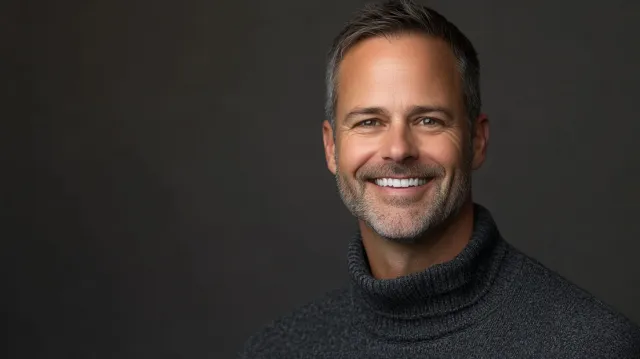
Headshots
Physician Headshots in Boston and on the South Shore
Doctor headshots for hospital directories, Doximity, Healthgrades, and practice sites. Photography Shark in Rockland — 25 min from Boston. From $395.
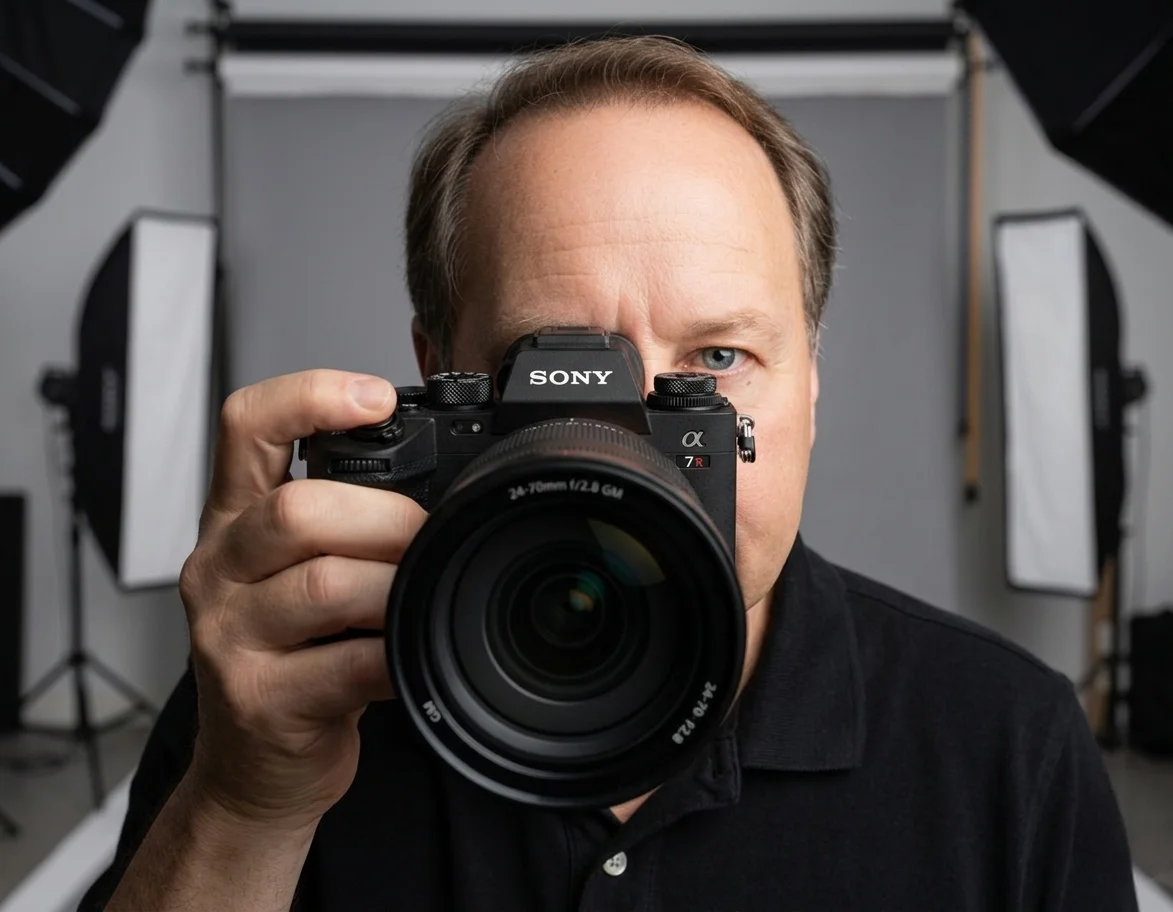
Chris McCarthy
Professional Photographer, Photography Shark · March 27, 2026 · Updated May 18, 2026
Physician headshots are not generic professional headshots. They appear on hospital provider directories, Doximity profiles, Healthgrades pages, and practice websites — each of which is a decision surface for prospective patients deciding which doctor to call. The expression, framing, and clinical context all matter, and the right choices depend on the specialty and the platform. Photography Shark Studios in Rockland — 10 minutes from South Shore Hospital, 20 minutes from Beth Israel Deaconess Plymouth, and 25–30 minutes from major Boston medical centers via Route 3 — has photographed physician headshots for primary care, surgical, pediatric, mental health, and dental practices across Greater Boston and the South Shore.
After more than a decade and 500-plus headshot sessions at my Rockland studio, the patterns are consistent.
White coat or no white coat — the decision tree
Most physicians arrive uncertain on this question and the right answer is almost always: bring both and decide during the session. Each register serves a different surface.
White coat photos read as clinical authority. They communicate context immediately to a patient scanning a hospital directory or Healthgrades page — this is a doctor, here's what they look like, here's their specialty. White coat photos perform best when the platform is medical-system-owned (hospital directory, academic medical center faculty page) or when the patient-facing platform expects clinical signaling (Healthgrades, Doximity, Zocdoc).
Business-attire-without-coat photos read as approachable expertise. They're more versatile across LinkedIn, speaker pages, board profiles, conference materials, and patient-facing practice websites that lead with warmth rather than institution. For private-practice physicians, this register is often the primary photo with the white coat as the secondary clinical option.
Shooting both in a single session costs nothing extra — same lighting, same hair and makeup, two wardrobe variations during the 30–45 minute session. Most physicians leave with both and use them across different platforms.
Specialty-specific direction
Different medical specialties photograph well in slightly different registers, and matching the register matters as much as wardrobe.
- Primary care, internal medicine, family medicine: Warm expression, soft direct gaze, neutral background. The signal is "approachable, listens, here for the long haul." Most defensible expression is the one between a polite smile and a fuller laugh — a calm acknowledgment.
- Surgical specialties: Slightly more direct, slightly more authoritative. The patient looking at this photo is preparing to trust the doctor with a procedure; the photo should not look uncertain. Crisp white coat, clear blue or charcoal scrubs visible at the collar, sharp focus.
- Pediatrics: The warmest register on the spectrum. Slightly broader smile, slightly softer lighting, slightly more saturated wardrobe. The patient making the call is a parent.
- Psychiatry / mental health (see separate therapist headshots Boston page): Warm and approachable, but with stillness. The expression coaching is different — softer, more reflective. This is the same register Psychology Today and TherapyDen optimize for in their directory layouts.
- Dental practices (dentist headshots Boston covers this in detail): Bright, confident, smile-visible. The teeth are part of the credibility signal — show them deliberately, not awkwardly.
What the patient is actually doing when they see your photo
Most physician headshots are made without thinking about the actual moment a patient sees them. That moment is short, distracted, and decisive — and physicians who understand it tend to get the look right.
The typical pattern: a patient (or a parent of a patient) has a referral, a network search result, or three or four physicians shortlisted on Healthgrades / Zocdoc / their insurance directory. They open each profile in a separate browser tab. They spend somewhere between 4 and 12 seconds per profile on the first pass. They look at the photo first, the credentials second, the patient reviews third, and the location fourth. They make a "call / don't call" decision on roughly half the profiles in that first scan, then read the remaining ones more carefully.
The photo's job in those 4–12 seconds is to look like the doctor the patient is hoping they'll meet. Not perfect, not aspirational — competent, present, and ideally someone the patient can imagine talking to about a personal medical concern. The single most common mistake on physician profile photos is an expression that reads as either rushed (slight tension across the eyes) or distant (eyes not quite meeting the lens). Both fail at the 4-second test. Direct eye contact through the lens, neutral-to-warm expression, and a posture that does not lean forward aggressively are the three signals that produce the highest patient response rates per practice consulting data we've informally collected from multi-provider clients.
Hospital system and credentialing requirements
Different Boston-area hospital systems have different headshot requirements for their provider directories. Some are strict, most are not — but it's worth knowing the standard before shooting:
- Mass General Brigham (MGH, BWH, Newton-Wellesley, Salem) — provider photos use a consistent neutral-light-gray backdrop across most departments, with the white coat as the default. Some specialty departments (psychiatry, primary care at certain ambulatory sites) use business attire without coat. The MGB provider photo system is internally standardized and outside photographers shooting MGB physicians should match a similar backdrop to fit cleanly.
- Beth Israel Lahey Health (BIDMC, Lahey, BID-Plymouth, BID-Milton, Mount Auburn) — looser standards across affiliated hospitals. White coat over business attire is most common. Background is usually neutral.
- Boston Medical Center — patient-facing provider photos lean approachable; white coat is common but not required.
- Tufts Medical Center, St. Elizabeth's, Carney — variable by department; usually white coat optional, neutral backdrop.
- South Shore Health (South Shore Hospital, ambulatory sites) — white coat is the visual standard for most physician-facing directory pages; nursing and APP staff use a separate convention.
- Atrius Health (Harvard Vanguard, Granite Medical) — standard provider headshot format across all locations; outside photographers shooting Atrius physicians should match the institutional crop ratio (close-cropped, shoulder-up).
Physicians moving between systems (a common pattern for academic physicians and consulting work) often end up needing two slightly different photo formats. Photography Shark can shoot to match each system's specific crop and backdrop convention in a single session.
Platform-specific framing — Doximity, Healthgrades, Zocdoc, hospital directories
The professional networks and patient-facing directories each crop photos differently, and the crop matters:
- Doximity — tight headshot, shoulders-up. Photos that include too much chest read as cropped LinkedIn photos. The platform displays at small thumbnail sizes throughout most of the user experience, so tight crops with good eye contact dominate.
- Healthgrades — slightly more chest visible. White coat reads cleanly here.
- Zocdoc — circular crop, very small at thumbnail level. Faces need to be CENTERED with conservative framing or the circular mask will cut off important features.
- Hospital provider directories — variable; most use a roughly 4:5 vertical crop with shoulders-up framing.
- LinkedIn (where every physician now also maintains a profile) — square circular crop. This is the most-viewed photo for most physicians and warrants the warmer / no-coat version if you only pick one.
- Speaker pages, CME profiles, academic faculty pages — usually want a 4:5 or 1:1 ratio at higher resolution. Backdrop is variable; institutional academic pages often want neutral gray or white.
A 30–45 minute session captures all the crops needed to populate every platform without re-shooting.
Sub-specialty notes that show up in scheduling
A few sub-specialty patterns that come up in physician headshot scheduling:
- Cardiology, oncology, neurology — patients are often facing serious diagnoses when they encounter these photos. The register skews toward calm authority. Less smile, more presence.
- OBGYN — patient base is largely women navigating sensitive care decisions; warmth matters. Slightly broader expression range works.
- Concierge and direct-primary-care practices — the photo IS a major part of the marketing. Higher production register, often editorial-style location work in addition to studio.
- Anesthesia, radiology, pathology — patient-facing visibility is lower but referring-physician visibility is high. Photo register is closer to academic faculty than to retail medicine.
- Sports medicine, ortho — slightly more energy in expression is welcome; patients are often active adults choosing among providers based partly on perceived dynamism.
Team sessions for multi-provider practices
Practices with 4–20+ providers need consistent headshots across the entire team — same backdrop, same lighting, same crop, same retouching register. Inconsistent provider photos on a website undermine the visual cohesion that signals an established practice. Photography Shark schedules team sessions in two formats:
- Studio block — providers come to the Rockland studio in 15–20 minute slots over a half-day. Lighting and backdrop are locked in once, every provider gets the same look, no on-site logistics.
- On-location at the practice — Photography Shark brings the Godox strobe + backdrop setup to the practice and shoots everyone in an unused exam room or conference room. Useful when scheduling 20 providers around clinical hours makes a studio block impractical.
Per-provider pricing is lower than individual sessions when booked as a team block. Contact the studio for group pricing — the right format depends on team size, geography, and schedule.
Pricing and turnaround
Individual physician headshot sessions are $395 for studio (30 minutes, two wardrobe variations, 10 retouched images) or $495 on-location at your practice. Team and group pricing is custom based on size and format. Edited images are delivered via private online gallery in 3–5 business days, with full commercial-use rights for hospital directories, third-party platforms, and practice marketing.
See the medical headshots Boston service page for the full provider list and current scheduling. See also: Medical provider headshots in Quincy.
Further reading: Plymouth physician headshot session.
Also relevant: Headshots for nurse practitioners in Boston.
Frequently Asked Questions
Should a doctor wear a white coat or business attire for their headshot?
Most physicians bring both and decide during the session. White coat photos read well for hospital directories, Doximity, and Healthgrades — they communicate clinical context immediately. Business attire without the coat is more versatile across LinkedIn and non-clinical platforms. If you have time, shooting both in a single session costs nothing extra and gives you options.
How far is the studio from South Shore Hospital and Boston medical centers?
The studio at 83 E Water Street in Rockland is approximately 10 minutes from South Shore Hospital in Weymouth, 20 minutes from Beth Israel Deaconess Plymouth, and 25–30 minutes from major Boston medical centers via Route 3. Free on-site parking.
Can you photograph an entire medical practice team?
Yes. Team headshot sessions for medical practices — physicians, NPs, PAs, therapists, and administrative staff — are available at the studio or on-location at your practice. We lock in consistent lighting, background, and framing across the whole team. Contact us for group pricing.
How long does a physician headshot session take?
Most physician headshot sessions run 30–45 minutes — efficient enough to fit in around a clinical schedule. You receive a curated set of retouched images within approximately one week.
Do you shoot headshots for therapists and mental health professionals?
Yes, and this is one of our most frequent medical professional requests. Psychology Today, TherapyDen, and private practice websites all require a professional headshot. The right expression for a therapist headshot is warm and approachable — we direct specifically for that, which is different from the clinical authority expression a physician headshot requires.
Related Posts
Headshots
Modeling Headshots vs Actor Headshots — What is Actually Different
Headshots
What Boston Modeling Agencies Want in Submission Headshots
![AI Headshot Generators vs Professional Headshots: Complete Guide [2026]](/blog/ai-headshots-vs-professional-headshots.webp)
Headshots
AI Headshot Generators vs Professional Headshots: Complete Guide [2026]

Headshots
Affordable Boston Headshots — Studio Sessions from $395
![Financial Advisor Headshots: Complete Professional Guide [2026]](/blog/financial-advisor-headshots-boston.webp)
Headshots
Financial Advisor Headshots: Complete Professional Guide [2026]
Headshots
LinkedIn Headshots in Boston: What Works
You Might Also Like
About the Author
Chris McCarthy
Chris McCarthy has run Photography Shark Studios in Rockland, MA for over 10 years and 500+ sessions, with executive headshot work for Rockland Trust, Clean Harbors, M&T Bank, and McCarthy Planning; founder portraits for AI startups including Lowtouch.ai; product photography for South Shore brands like Lauren's Swim; and headshots across South Shore legal, medical, financial, and academic practices. Every session is personally shot and edited by Chris on Sony mirrorless and Godox strobe systems — no assistants, no outsourcing, no batch retouching. Galleries deliver in 3–5 business days. More about the photographer →
Photography Shark · Boston & South Shore MA
Ready to Book a Session?
Professional headshots, senior portraits, boudoir, and model portfolios. Studio in Rockland, MA — 25 miles south of Boston. Sessions from $395.