Photography Tips
Studio Headshots vs On-Location Headshots — Which to Choose
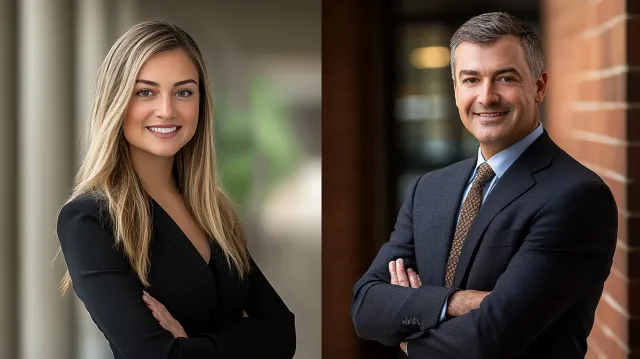
Studio sessions vs on-location sessions both produce professional headshots, but the right choice depends on lighting control, environmental context, and what the image needs to do. How to decide.
Chris McCarthy
Professional Photographer, Photography Shark · May 15, 2026
The "studio versus on-location" decision is one of the most common questions clients ask before booking a headshot session. Both formats produce professional results, but they're not interchangeable. The right choice depends on what the image needs to communicate, how much lighting control the project requires, and whether the environment itself is part of the story.
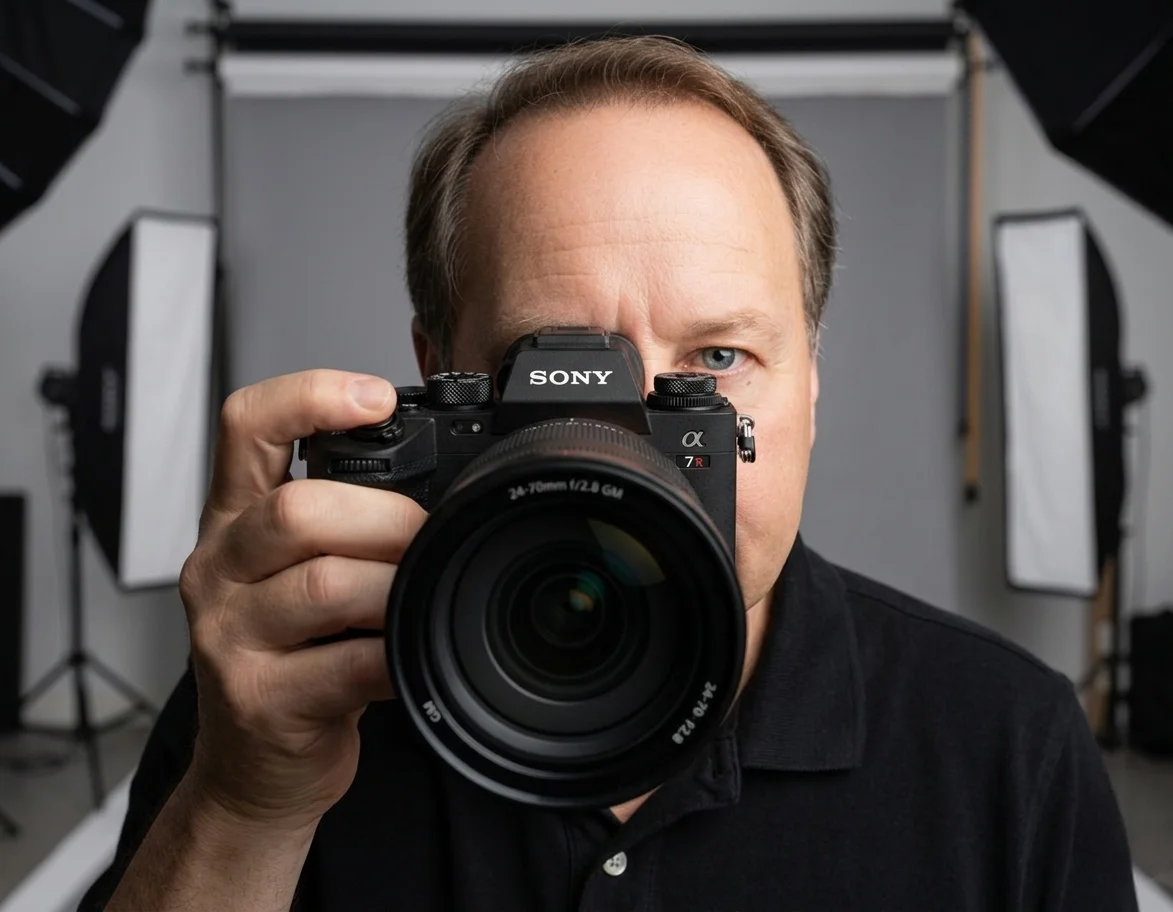
I'm Chris McCarthy at Photography Shark. I shoot both — the studio is at 83 E Water Street in Rockland, MA, and on-location work happens across Boston, the South Shore, and occasionally further afield. The advice below is what I'd tell you over a phone call before you booked. There are clear cases where one format is correct and the other is the wrong choice, and there are cases where either would work. Knowing which you're in saves money and produces a better result.
> For pricing on either format, see Boston headshot packages for full session details, or the Boston headshots overview for a broader view of how the service is structured.
What a Studio Session Actually Delivers
A studio session means controlled light, controlled background, and predictable conditions. Every variable that affects the final image is set deliberately by the photographer, which is why studio work is the format of choice when the brief requires technical precision.
Lighting control. The studio runs on Godox strobes with modifiers — softboxes, octaboxes, beauty dishes — that produce specific light qualities the photographer can dial in to the watt-second. Want a 3:1 ratio on the face with a gentle hair light? That's a five-minute setup. Want the classic clamshell beauty look for a fashion headshot? Same thing. None of this is available outside a controlled environment because you can't override the sun.
Backdrop options. White, gray, charcoal, and black seamless are all available in the Rockland studio. Each one produces a different read. White seamless is the standard for agency submission headshots and high-key corporate work. Light gray is the go-to for LinkedIn and executive headshots because it's flattering across skin tones and reads professional without being clinical. Charcoal and black are used for editorial portraits, actor headshots, and any image where the subject needs to feel weighted and serious.
Predictable conditions. No weather, no schedule risk, no waiting for the right light. A 10am booking starts at 10am and the conditions are identical to a 4pm booking. This matters more than people realize when deadlines are tight or the session is part of a larger production — a company headshot day for 30 people can't afford to lose two hours to overcast skies.
Specific use cases where studio is correct. Agency submission headshots for modeling. Standard LinkedIn headshots for individuals and teams. Actor commercial headshots that need to read against neutral background. Corporate executive portraits where consistency across multiple people matters. Boudoir and glamour work, which is essentially always studio. Personal branding shots where the person — not the environment — is the brand.
For background on how studio headshots are structured for different industries, the Boston headshot service page breaks down what each format produces.
What an On-Location Session Actually Delivers
An on-location session means bringing the gear to the subject. This sounds simple but it changes the entire calculation — what's gained is environmental context, and what's traded away is some degree of control.
Environmental context. A CEO photographed at her desk with the office behind her tells a different story than the same CEO against gray seamless. A real estate agent shot on a Back Bay block reads differently from the same agent in a studio. A press headshot taken in the magazine's actual newsroom carries authority that no studio shot can replicate. The location becomes a silent character in the image.
Authentic-to-context imagery. When the project is about who the person is where they work, on-location is the right answer. This applies to founders being profiled, executives in industries where setting matters (architecture, hospitality, finance), and anyone whose role is bound up with a specific place.
Mixed light, environmental modifiers. Skilled on-location work blends available light from windows and ambient sources with portable strobes to produce a result that looks natural in the space rather than dropped into it. This takes experience to execute well — and it takes the right gear. Cheap on-location work that ignores ambient and just blasts strobe ends up looking like a studio shot accidentally taken in a lobby.
Specific use cases where on-location is correct. Press and editorial headshots for journalists, publications, and media kits. Executive portraits where the office or facility is part of the brand. Real estate agent headshots with a Boston neighborhood backdrop. Team headshot days where bringing 30+ employees to Rockland isn't practical and a portable studio is set up at the company's office. Conference and event headshots — which the conference headshots Boston page covers in detail — where the photographer comes to the venue.
The on-location version of a corporate team shoot deserves its own note: even when the result is meant to look studio-clean, the delivery is on-location, because the alternative is asking 30 people to make the same 25-mile drive. That's a logistics problem solved by bringing a portable backdrop and lighting kit to the company.
Side-by-Side Comparison
| Factor | Studio (Rockland) | On-Location (Boston) |
|---|---|---|
| Starting price | $395 | $495 |
| Session length | 60–90 minutes | 90 minutes–2 hours |
| Lighting precision | Maximum — full strobe control with modifiers | High, but constrained by ambient and space |
| Background control | Complete — 4 seamless options on hand | Whatever's at the location (or portable backdrop) |
| Wardrobe flexibility | Multiple changes, dedicated changing space | Depends on location — office bathroom is not ideal |
| Weather/schedule risk | None | Real for outdoor; minimal indoors |
| Travel burden | Subject travels to Rockland (~25 miles from Boston) | Photographer travels to subject |
| File quality | Identical — same camera, same retouching workflow | Identical — same camera, same retouching workflow |
| Best for | LinkedIn, actor, model, executive, boudoir, corporate teams (under 5) | Press, editorial, environmental executive, large team days, neighborhood/industry context |
The file quality row is worth lingering on. The camera body, lens, and retouching workflow are identical across formats. The difference is in what the gear is doing — building light from scratch in studio, blending and supplementing it on location. The final files have the same resolution, color science, and finish.
When On-Location Is Worth the Extra Cost
The $100 premium for on-location work in Boston isn't arbitrary — it covers travel time, gear transport, on-site setup of portable lighting and (often) a portable backdrop, and the slower pace of working in an uncontrolled space. The question worth asking is whether the project earns that premium back.
It earns it back when:
- The environment is identifiable and on-message. Office, retail space, restaurant, gallery, classroom, hospital — a place that says something about the subject's work and gives the photo a sense of place.
- The subject is being profiled for press or editorial. Magazine, newspaper, podcast launch, conference speaker bio. Editorial readers expect environmental context; studio shots can feel corporate by comparison.
- A team day requires it logistically. Bringing 25 people to Rockland one at a time means 25 commutes, 25 schedule coordinations, and a full week of session days. Bringing the studio to the office consolidates it into a single day.
- The brand identity is location-bound. A South End restaurant, a Beacon Hill law firm, an East Boston gallery — places where the location is part of the brand and the headshot should reflect that.
It does not earn the premium back when:
- The background is going to be a generic office wall or hotel lobby that adds nothing.
- The subject's industry doesn't read from environmental context (most LinkedIn users).
- The lighting situation at the location is genuinely bad and the result will be a studio shot taken in a hallway.
- The plan is "on-location because it sounds nicer" without a real reason tied to use case.
In the last case, studio is the better choice and the budget is better spent on additional retouching, extra wardrobe changes, or a second session in six months.
When Studio Is Worth the Trip to Rockland
The Rockland studio is roughly 25 miles south of downtown Boston — a 35-to-45-minute drive depending on traffic, or the MBTA Plymouth/Kingston commuter rail line for those who'd rather not drive. That's a real commute, and it's fair to weigh it against the convenience of on-location work in town.
It's worth the trip when:
- Lighting precision is the priority. Modeling, actor, boudoir, and high-end executive work all benefit from full studio control in ways that on-location simply can't match without renting a Boston studio space and bringing the same kit in.
- The deadline is tight. Studio removes weather risk and venue coordination. Booking a 2pm Wednesday slot at the studio is a single decision; booking the same time on-location involves the photographer, the subject, the venue, and the weather.
- Multiple background options need to be on hand. Studio means switching from gray to white to black seamless in five minutes. On-location means whatever's available unless a portable kit is brought in.
- The session is for an actor or model. Both actor headshots and modeling submission work are essentially always shot in studio for technical reasons — agencies and casting directors expect the clean read that controlled light produces.
- Privacy matters. A studio is private. An office headshot session usually has coworkers walking through the frame.
The 25-mile drive is real but it's also a one-time cost for a result that's used for years. The trip costs an hour each way; the headshot is the image clients see for the next two or three years.
What Photography Shark Actually Recommends
Most of the decision falls into one of four use cases. Here's the plain-language version of what I'd recommend on a phone call:
LinkedIn headshot for an individual professional. Studio. The neutral background reads professional across industries, the lighting is consistent with what hiring managers expect, and the result holds up across a profile, About page, and email signature. See LinkedIn headshots Boston for what these look like in practice.
Actor headshot for commercial or theatrical submission. Studio, almost always. The casting expectation is a clean read against neutral background — anything else introduces noise that works against the submission. Specific exceptions exist for character actors building a wider portfolio, but the lead headshot is studio.
Modeling headshot for agency submission. Studio. White or light gray seamless, natural makeup, accurate representation. Boston agencies (Maggie Inc., Model Club, regional offices) expect this read and screen against it.
Executive or founder portrait for a profile or press use. On-location, usually. The environment is doing work in the image — placing the subject in their actual context — and that's exactly what press readers expect. Studio works here too, but it produces a different image: more universal, less specific.
Team headshots for a company of 10 or more. On-location with a portable backdrop. The logistics overwhelm the alternative — a single day at the company's office is faster and cleaner than coordinating dozens of individual studio bookings.
Team headshots for a company under 5. Studio is often easier. Five people can usually find a way to make the same morning work, and the consistency of doing them all on the same backdrop in the same light is excellent.
Press headshot for a journalist, podcaster, or speaker. On-location preferred if the location matters. Studio if speed and clean read are the priorities.
Personal branding for a coach, consultant, or solopreneur. Either, depending on the brand. If the brand is "professional and approachable" — studio. If the brand is "I work in a specific place doing specific work" — on-location.
A Note on Price
Studio sessions start at $395. On-location sessions in Boston start at $495. The $100 difference reflects real costs (travel, gear transport, setup time) and not a margin choice. For projects that genuinely need the environmental context, it's well worth it. For projects where the environment is incidental, studio produces a stronger result for less money.
If you're not sure which format your project needs, the answer is usually in the use case rather than the preference. A 30-minute conversation before booking sorts it out for almost everyone, and it's a conversation worth having before paying for a session that doesn't match the requirement.
Contact us here to talk through what you need. Full pricing and package details on the Boston headshots page.
Frequently Asked Questions
What is the price difference between studio and on-location headshots?
At Photography Shark, studio sessions in Rockland start at $395 and on-location sessions in Boston start at $495. The $100 difference covers travel, gear transport, and the additional setup time required to build a controlled lighting environment in an uncontrolled space.
Which produces better image quality — studio or on-location?
Studio produces more technically precise images because every variable is controlled — strobe output, modifier distance, background tone, ambient light. On-location can match studio quality when the environmental light is good and the photographer brings the right gear, but it carries more variability. For pure technical precision, studio wins. For context and authenticity, on-location wins.
When is an on-location headshot worth paying extra for?
On-location is worth the upgrade when the environment itself is part of the message — a CEO photographed in the company office, a real estate agent in a Boston neighborhood, a press headshot that needs to read as editorial rather than studio. If the background is generic or distracting, the premium isn't earning anything and studio is the better choice.
Can on-location headshots be shot against a clean background?
Yes. A portable backdrop can be set up in an office, conference room, or hotel space to produce headshots that look like studio shots but were captured at your location. This is common for team headshots where bringing 30 employees to Rockland isn't feasible. The result is a clean studio look without the studio commute.
How long does a studio vs on-location session take?
Studio sessions run 60–90 minutes for an individual, including wardrobe changes. On-location sessions take longer because of setup and teardown — typically 90 minutes to two hours for a single subject, and longer when multiple backdrops or locations are involved within the same booking.
Do studio headshots look "less authentic" than on-location?
No, but the read is different. Studio headshots emphasize the person — face, expression, posture — against a neutral field. On-location headshots add environmental context that places the person in a setting. Neither is inherently more authentic; they communicate different things. For LinkedIn and most professional use, the studio read is more universally appropriate.
Is weather a real factor in choosing between formats?
For outdoor on-location sessions in Boston, yes. Wind, rain, harsh midday sun, and cold all affect the result and the experience. Indoor on-location (an office, hotel, or studio rental) removes weather risk. Studio removes it entirely. For tight deadlines — a press release going out Friday, a website launching Monday — studio is the safer booking.
Related Posts


You Might Also Like
About the Author
Chris McCarthy
Chris McCarthy has run Photography Shark Studios in Rockland, MA for over 10 years and 500+ sessions, with executive headshot work for Rockland Trust, Clean Harbors, M&T Bank, and McCarthy Planning; founder portraits for AI startups including Lowtouch.ai; product photography for South Shore brands like Lauren's Swim; and headshots across South Shore legal, medical, financial, and academic practices. Every session is personally shot and edited by Chris on Sony mirrorless and Godox strobe systems — no assistants, no outsourcing, no batch retouching. Galleries deliver in 3–5 business days. About the photographer →
Photography Shark · Boston & South Shore MA
Ready to Book a Session?
Professional headshots, senior portraits, boudoir, and model portfolios. Studio in Rockland, MA — 25 miles south of Boston. Sessions from $395.