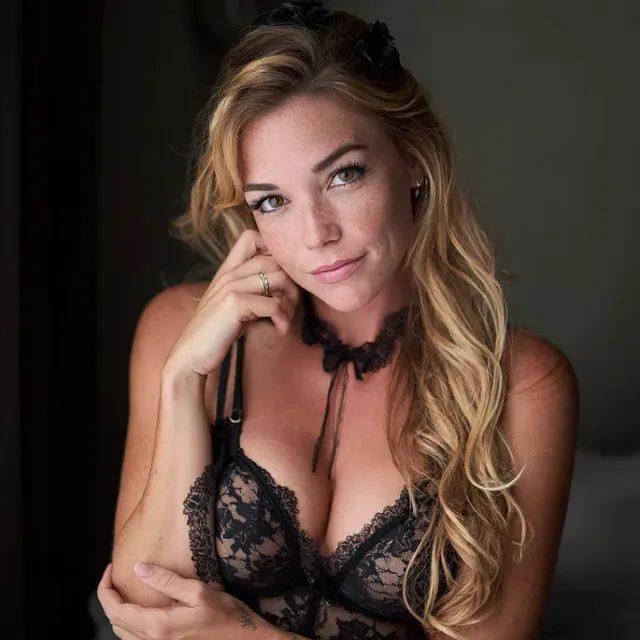
Boudoir Photography
What Boudoir Photography Does for Your Confidence and Body Image
The specific way a boudoir session changes how you see your own body — why seeing professional photographs of yourself rewrites your internal image, and what that shift actually feels like.
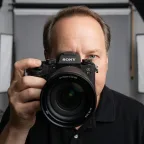
Chris McCarthy
Professional Photographer, Photography Shark · November 19, 2025 · Updated September 17, 2026
There is a gap between how you think you look and how you actually look, and for most people that gap runs in the wrong direction. The internal image is harsher, more critical, more fixated on the things you have decided are flaws. A boudoir session, done well, closes that gap — not with flattery, but with evidence. This is a post about that specific mechanism: what professional boudoir photography does to your body image, and why the effect is more durable than people expect.
If you want the logistics of a first session instead, see what to expect from boudoir photography in Massachusetts, and if you are still choosing a photographer, the Boston and South Shore guide covers that. This piece is narrower: it is about the shift in how you see yourself.
The Internal Image Is Usually Wrong
Most people carry a mental picture of how they look that was assembled from bad sources: unflattering mirror angles, phone selfies shot from below, a decade of comparing themselves to edited images. That composite becomes the default, and it is almost always more critical than reality.
The reason this matters for boudoir is that a professional session produces the opposite kind of evidence — images made with intentional lighting, real posing direction, and an editor who knows how to render skin and form honestly and well. When you see those images, the discrepancy with your internal picture is the whole point. It is not that the photos lie. It is that your internal picture was the distortion.
Why Photographs Override the Mirror
A mirror is a fleeting, self-conscious experience — you are looking and judging in the same instant. A photograph is different. It is fixed, external, and you can look at it without performing for it. That changes how the information lands.
When a client sees a frame in which they look strong, or soft, or genuinely beautiful, there is no live self-consciousness in the way. They are looking at someone — and then realizing that someone is them. That realization is the before-and-after moment. It is consistent enough that I have come to expect it in the gallery reveal, across body types, ages, and confidence levels.
Confidence Is the Output, Not the Entry Fee
The most common thing people say before booking is that they are not confident enough to do this. It is worth being direct: confidence is not the ticket you need to get in the door. It is what the session is designed to produce.
A good boudoir session is heavily directed. You are not left to figure out what to do with your hands or your posture. The posing, the angles, the lighting, and the pacing are all handled, and the first stretch of the shoot is built specifically to get you past the initial stiffness. By the middle of the session, almost everyone has loosened into it — and that ease is what shows up in the strongest frames. People who arrive certain they will be hopeless in front of a camera are routinely the ones most surprised by their own gallery.
You Do Not Need a Different Body First
The other near-universal hesitation is the plan to do this after — after losing weight, after getting in shape, after some imagined future version of the body arrives. That future keeps receding, and the session never gets booked.
The skill of the work is posing and lighting for the body that is actually present. That is not a workaround; it is the craft itself. The clients who book at the body they have, today, are not settling for a lesser result — they are getting the real one, now, instead of trading it for a hypothetical.
Why This Outlasts the Rest of "Self-Care"
Self-care has become a category broad enough to lose meaning — face masks, silent retreats, expensive workout classes, $14 oat-milk lattes. It obscures a real distinction. Most self-care delivers its benefit during the activity and fades within hours of finishing. A few kinds produce a lasting artifact that keeps working afterwards.
Boudoir is firmly in the second category. The session is ninety minutes to two hours. The gallery arrives days later. The images then become something you return to for years — pulled up on hard days, framed in a bedroom or an office, set as a phone background. A spa afternoon cannot do that, because there is nothing left of it by evening.
Three Things the Session Does Besides Produce Photographs
It is practice at being seen. Most of us spend real energy managing how we are perceived — regulating expression, presenting the least vulnerable version available. Boudoir inverts that: you are asked to be seen clearly, under revealing light, as your actual self. That is unfamiliar rather than unpleasant, and it is a skill that gets easier with practice.
It is an experience of your own agency. Every significant decision in the session is yours — what you wear, what the mood is, which poses feel right, whether the images are bold or soft, and who they are ultimately for. Making deliberate choices about how you want to be seen, and watching those choices get respected and reflected back, is a markedly different relationship with your appearance than the passive one most people have with being photographed.
It marks a moment. Memory is unreliable about ourselves; we do not accurately recall what we looked like at 35 or 42 or 58. We remember a handful of photographs, and those become the anchor. A boudoir session produces something ordinary life does not: a deliberate document of who you are right now — not at a wedding where you were focused on someone else, not in the background of a family photo.
Why the Shift Tends to Last
Plenty of confidence boosts are temporary because they are not anchored to anything. This one is, because it is attached to permanent evidence. The images do not expire, and neither does the fact of having seen yourself clearly. Clients describe returning to the gallery — months or years later — as a reference point: proof that contradicts the old internal picture whenever it tries to reassert itself.
That durability is the real argument for doing it. A session is a couple of hours. The recalibration of how you see yourself is the thing you keep.
How a Photography Shark Session Is Built for This
Every session at Photography Shark is shot and edited personally by Chris McCarthy in a private Rockland studio — one client at a time, fully confidential. The session is structured around getting you comfortable before the camera does any serious work, with continuous direction rather than "now look natural." Retouching is honest: skin and form rendered cleanly, not airbrushed into someone else. The goal is an image that looks unmistakably like you on your best day — because that is the version that does the work on your body image.
See packages and pricing, then reach out to book a session.
Choosing a boudoir photographer in Boston and the South Shore · South Shore boudoir studio · Boudoir after weight loss · Boudoir after divorce
Frequently Asked Questions
Can a boudoir session really change how I see my body?
For most clients, yes — and it's specific, not vague. Seeing high-quality photographs in which you look genuinely good interrupts the distorted internal image most people carry. The change is in the gap between how you assumed you look and the evidence in front of you.
I don't feel confident enough to do a boudoir shoot. Is that normal?
It's the norm, not the exception. Most people arrive nervous and unsure. Confidence is the output of a well-directed session, not a prerequisite — the direction, pacing, and lighting are built to get you there.
Do I need to lose weight or "get in shape" first?
No. Waiting for a future body is the most common reason people postpone indefinitely. A skilled photographer poses and lights for the body in front of the camera today — that is the entire job.
How long does the confidence effect last?
The images are permanent and the shift in self-image tends to stick, because it's anchored to real evidence you can return to. Many clients describe it as a reference point they keep going back to.
Is boudoir "self-care", or something else?
Both, and the distinction matters. Most self-care delivers its benefit during the activity and fades within hours. A boudoir session produces a permanent artifact you return to for years, which is why the effect on body image outlasts the afternoon it took to create.
Related Posts





You Might Also Like
About the Author
Chris McCarthy
Chris McCarthy has run Photography Shark Studios in Rockland, MA for over 10 years and 500+ sessions, with executive headshot work for Rockland Trust, Clean Harbors, M&T Bank, and McCarthy Planning; founder portraits for AI startups including Lowtouch.ai; product photography for South Shore brands like Lauren's Swim; and headshots across South Shore legal, medical, financial, and academic practices. Every session is personally shot and edited by Chris on Sony mirrorless and Godox strobe systems — no assistants, no outsourcing, no batch retouching. Galleries deliver in 3–5 business days. About photographer Chris McCarthy →
Photography Shark · Boston & South Shore MA
Ready to Book a Session?
Professional headshots, senior portraits, boudoir, and model portfolios. Studio in Rockland, MA — 25 miles south of Boston. Sessions from $395.