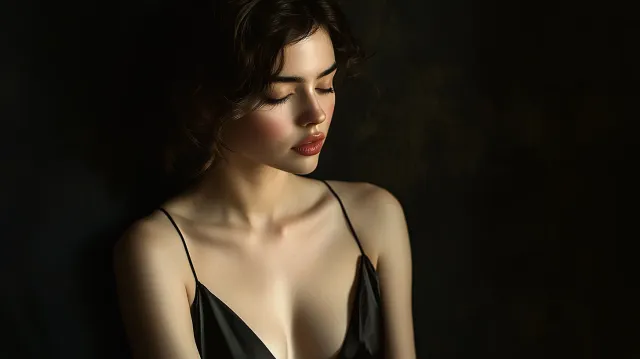
Boudoir Photography
What Is Boudoir Photography? A Complete Definition
Boudoir photography is intimate, empowering studio portraiture — typically semi-clothed, captured in private.
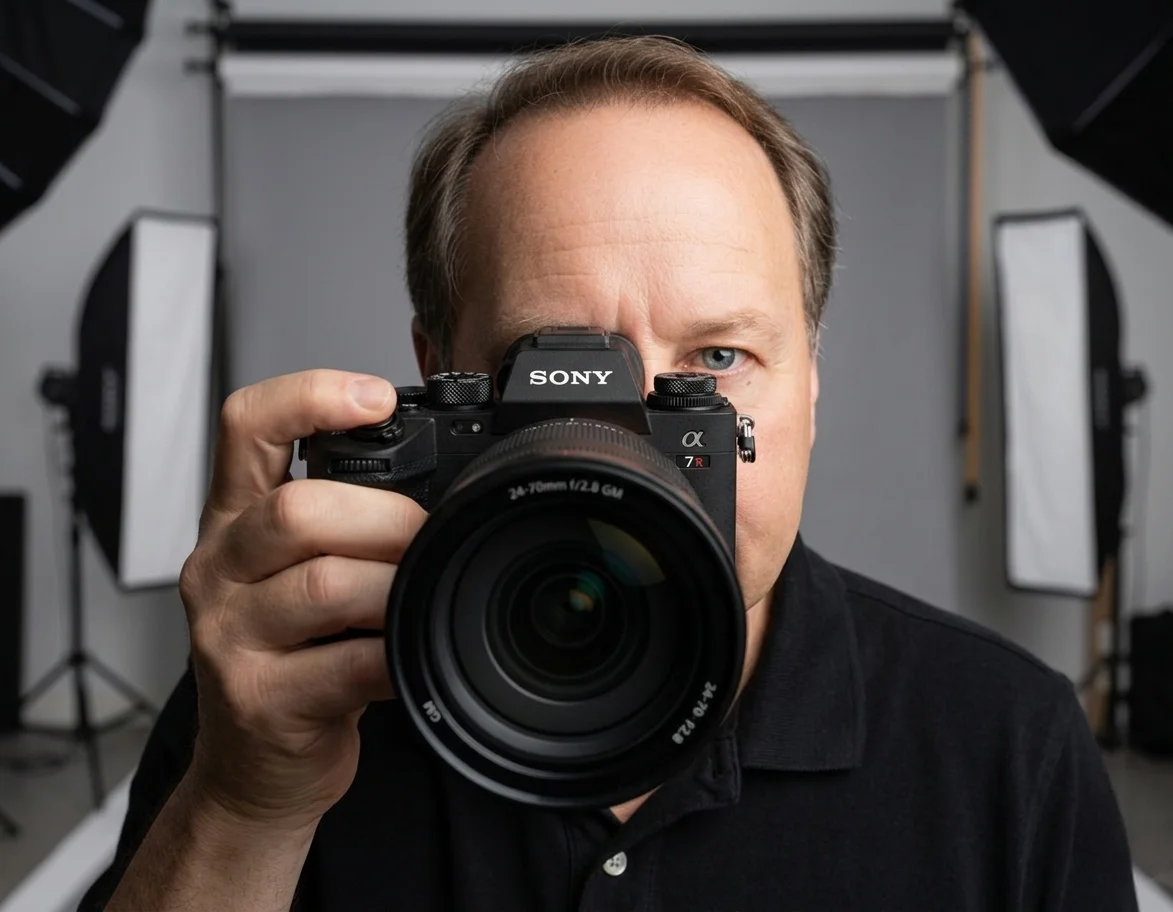
Chris McCarthy
Professional Photographer, Photography Shark · April 14, 2026 · Updated May 31, 2026
Boudoir photography is intimate, empowering portrait photography captured one-on-one in a private studio. The subject — usually in lingerie, a slip dress, a robe, or an oversized shirt — is photographed for themselves first, with professional hair and makeup included. Sessions typically run 90 minutes to two hours of shooting and cost $1,200–$2,500 in most US markets. Modern boudoir serves motivations ranging from milestone celebrations to simple self-documentation, rather than being primarily a gift for a partner.
The word "boudoir" is French, from bouder, "to sulk" — historically the private inner chamber where a woman could be alone, undress, rest, or receive only her most trusted visitors. The genre carries that intimacy forward: closed-set sessions, personal wardrobe, and images that emphasize vulnerability and self-expression over pure aesthetics. Styles range from soft and conservative (oversized shirts, natural light) to dramatic (lingerie, low-key chiaroscuro), with each session calibrated to the comfort level the client sets at consultation.
Boudoir Photography Definition — The One-Sentence Version
If you want a tight, accurate definition of boudoir photography: boudoir photography is intimate, semi-clothed studio portraiture, captured privately, intended primarily for the subject themselves. That definition does some work — every part of it matters.
- Intimate — the genre's signature is emotional closeness and a sense of personal moment, not just aesthetic prettiness.
- Semi-clothed — the dominant wardrobe is lingerie, slip dresses, oversized shirts, robes, or athletic wear. Fully nude is a sub-genre, not the default.
- Studio portraiture — most professional boudoir is shot in a controlled studio environment, not on location.
- Captured privately — closed-set, one-on-one with the photographer (and sometimes a hair/makeup professional).
- For the subject — the modern market overwhelmingly books boudoir as something the subject does for themselves first; gifting is secondary.
Each of those qualifiers excludes adjacent genres. Glamour photography, for instance, can look similar but tends to be more performative and aesthetic-driven, often without the intimacy — how glamour is defined as its own genre sets out the distinction in full. Editorial fashion uses similar lighting and framing but is shot for publication, not for the subject.
Where the Term Comes From
"Boudoir" is French. In the 18th and 19th centuries, the boudoir was the private inner chamber of a woman's apartment — a space distinct from public reception rooms, where the occupant could undress, rest, write letters, or receive only the most trusted visitors. Boudoir photography as a genre emerged in the early-to-mid 20th century, originally as a private commission style for affluent clients, and shifted toward its modern form (broadly accessible, client-led, empowerment-oriented) in the 1990s and 2000s.
The historical context still informs the genre's practice. The session is treated as something done in a private space, with control over who sees the resulting images. The studio replaces the boudoir room; the photographer replaces the trusted visitor. The privacy framework is structural to the work, not just a marketing claim.
What Happens in a Professional Boudoir Session
A typical professional boudoir session follows roughly this arc:
- Consultation (pre-session) — wardrobe planning, comfort-level conversation, any specific concerns flagged. Usually a video or phone call 1–2 weeks before the session.
- Hair and makeup (session day) — 30–60 minutes with a professional artist, calibrated for studio strobe lighting (this is different from event makeup).
- Wardrobe one — typically the most-clothed look. Builds comfort. Often produces stronger frames than expected because tension is lowest.
- Wardrobe transitions — 2–4 wardrobe changes across the session, with the photographer guiding pose categories appropriate to each piece.
- Close-framed portraits — the most emotionally direct frames usually come from this block. Often these become the keeper images.
- Same-day or next-day preview — many studios offer a small selection of images within hours so the client can see what landed before the formal gallery delivery.
- Retouched gallery delivery — 5–10 business days after the session.
Total session length is usually 2.5–3 hours including hair and makeup. The shooting itself runs 90 minutes to 2 hours.
Common Misconceptions
There are a small set of misconceptions about the genre that come up repeatedly during consultations:
"It's only for partners." No — the modern client base overwhelmingly books for themselves. Partner gifting is a use case, not the use case.
"You have to be in great shape." No — the genre serves a wide range of bodies and ages. The work is built around lighting, posing, and wardrobe choices that flatter whatever body is in front of the camera. Body-type-specific resources include plus size boudoir, petite body boudoir, boudoir after weight loss, and boudoir after 40.
"It's nude photography." No — semi-clothed is the dominant mode. Nude work is a sub-genre and is always the client's explicit choice, never the default.
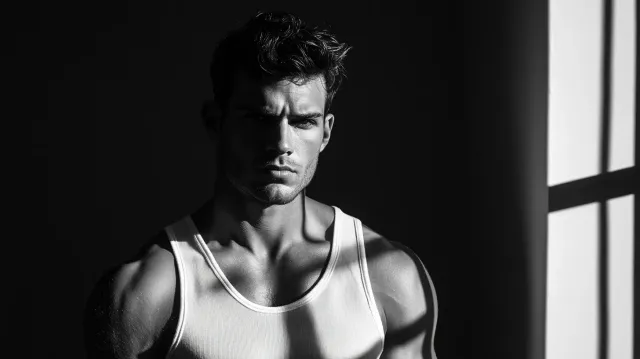
"It's only for women." No — male boudoir photography is a real and growing segment. Couples boudoir is also common.
"You'll be told to do things you're uncomfortable with." No — comfort level is established at consultation and held throughout. Pose categories that fall outside the client's stated range are not introduced.
How Boudoir Differs From Other Genres
| Genre | Setting | Purpose | Wardrobe |
|---|---|---|---|
| Boudoir | Private studio | Personal/empowerment, gift | Lingerie, slip dress, robe, oversized shirt |
| Glamour | Studio or location | Aesthetic showcase, modeling | Evening wear, fashion editorial pieces |
| Editorial fashion | Studio or location | Publication, brand work | Designer-driven, editorial |
| Pin-up | Themed studio | Stylistic, retro aesthetic | Period-accurate vintage |
| Maternity | Studio or location | Document pregnancy | Form-fitting, gowns, lace |
| Headshots | Studio | Professional/commercial use | Business, casual professional |
These categories overlap visually but are distinct in intent and approach. A photographer experienced in one is not automatically experienced in another — the posing direction, wardrobe planning, and emotional pacing are genre-specific.
Boudoir vs Glamour vs Fine Art Nude — Three Adjacent Genres
The three genres most often confused for one another are boudoir, glamour, and fine art nude. They share visual vocabulary but differ on three axes: who the work is for, the dominant intent, and how the body is depicted. (For a deeper two-way comparison of just boudoir and glamour — wardrobe, posing, and how to decide which session to book — see Boudoir vs Glamour Photography.)
| Axis | Boudoir | Glamour | Fine Art Nude |
|---|---|---|---|
| Primary audience | The subject themselves | Public/aesthetic audience | Gallery / collector / artistic |
| Intent | Emotional intimacy, empowerment | Idealized beauty, performance | Formal study of the human body |
| Wardrobe | Lingerie, slip dress, partial | Evening wear, full styling | Often fully nude, abstracted |
| Lighting | Soft, dimensional, intimate | High-key, polished, retouched | Sculptural, often dramatic chiaroscuro |
| Posing | Natural, relaxed, client-directed | Stylized, modeling-influenced | Form-driven, often abstracted |
| Publication | Private use, partner gift | Modeling portfolio, magazines | Gallery shows, art prints |
The clearest way to distinguish them: boudoir is autobiographical, glamour is performative, and fine art nude is formal/compositional. The same lighting setup can serve all three — what differs is the emotional register of the resulting image and what it's intended to do.
Other Names and Adjacent Terms for Boudoir Photography
Several other terms describe overlapping or adjacent work. They are not perfect synonyms — each carries slightly different connotations.
- Boudoir shoot / boudoir photoshoot / boudoir photo session — interchangeable everyday terms for a boudoir session.
- Intimate portraiture — broader academic/artistic framing of the same work.
- Lingerie photography — overlaps strongly but emphasizes the garment rather than the emotional intent. Often used for product/brand work rather than personal sessions.
- Empowerment session — marketing-forward term used by some studios; substantively the same as boudoir but signals emphasis on the personal/empowerment angle.
- Bedroom photography — older British term for the same genre, now rare.
- Pin-up photography — a related but distinct retro-styled sub-genre.
- Glamour photography — adjacent but performative rather than intimate (see comparison above).
If someone offers "intimate portraiture" or an "empowerment session," they usually mean boudoir. If they offer "lingerie photography," they may mean either personal sessions or product-focused work — worth clarifying.
What "Boudoir Model" Means
The term "boudoir model" has two distinct meanings depending on context, which is the source of most confusion:
- The subject of a boudoir session — many studios refer to their clients as "models" during the shoot, regardless of whether the client has any modeling background. This is the dominant meaning. It's an honorific intended to set the energy for the session, not a claim about professional modeling status.
- A professional model who does boudoir work — a smaller category. Some professional models specialize in lingerie, boudoir, or implied-nude work and are booked by photographers building portfolios, brands building lookbooks, or studios producing marketing imagery. This is paid modeling work distinct from a client booking their own session.
When prospective clients search "boudoir model," they're almost always looking for examples of what a session looks like, not researching how to become a paid boudoir model. The genre's flagship feature is that anyone can be the model in their own session.
Styles, Types, and Genres of Boudoir Photography
Within the boudoir umbrella, several recognizable styles and sub-types exist. Most professional studios offer multiple, calibrated to client preference during consultation.
- Classic / soft boudoir — soft lighting, lingerie or slip dresses, natural posing. The dominant style and the most common first session for new clients.
- Dark / dramatic boudoir — low-key chiaroscuro lighting, more sculptural shadow work, often shot against black backdrops. Common for clients who want a moodier final image.
- Bridal boudoir — boudoir session captured before a wedding, traditionally gifted to the partner. See bridal boudoir for the dedicated workflow.
- Anniversary boudoir — milestone session marking a wedding anniversary; see anniversary boudoir gift.
- Postpartum / motherhood boudoir — celebrating the post-pregnancy body, typically 3-12 months postpartum.
- Empowerment / divorce boudoir — marking the end of a chapter; see boudoir after divorce.
- Weight-loss / fitness milestone boudoir — celebrating a body transformation; see boudoir after weight loss.
- Mature / over-40 boudoir — boudoir specifically positioned for clients in their 40s, 50s, and beyond; see boudoir photography after 40.
- Couples boudoir — two-person session, more relational and narrative.
- Male boudoir — see male boudoir photography.
- Plus-size boudoir — see plus size boudoir.
- Implied-nude boudoir — coverage by strategic posing, no visible nudity in frame.
- Fine art nude crossover — fully nude work shot with a boudoir intent rather than a formal/artistic one. A sub-genre, never a default.
Most professional studios cover four to six of these as their standard range, with the rest available on request. The styles are not mutually exclusive — a single session can blend classic and dramatic, for instance.
Privacy and Image Control
A standard professional boudoir contract gives the client full control over how images are used. Specifically:
- Client owns personal use rights — can print, share, and gift without restriction.
- Photographer cannot use images publicly without explicit written consent — separate from the session contract.
- Image deletion on request — many studios will delete client galleries from their archives at the client's request after delivery.
- Closed-set sessions — only the photographer (and sometimes the hair/makeup artist) is present. No assistants unless the client agrees.
This is a hard requirement for professional studios in this genre. If a photographer's standard contract doesn't include these protections, that's a flag.
What a Boudoir Session Costs
Professional boudoir packages in major US markets typically run $1,200–$2,500. The price reflects both the longer session time (2–3 hours total studio) and the included professional hair and makeup, which alone can run $200–$400 separately. See boudoir photography packages for current pricing and what's included at Photography Shark.
Who Books Boudoir Sessions
A non-exhaustive list of common motivations clients name during consultations:
- Birthday or milestone (40th, 50th, etc.)
- Divorce — closing one chapter, opening another
- Significant weight loss or fitness milestone
- Postpartum reclaiming of the body
- Wedding gift for partner (bridal boudoir)
- Anniversary gift (anniversary boudoir)
- Cancer survival
- Top surgery or other gender-affirming milestone
- Simply wanting to see oneself documented well, with no specific occasion
The "no specific occasion" reason is one of the most common.
A short history of how the genre evolved
The boudoir genre has shifted meaningfully over the last 50 years, and understanding the shift helps explain what it is today vs what it was historically.
- 1950s-1970s — "glamour pinup" era. Stylized, performative, often produced for men's magazines and pinup work. The subject was rarely the primary audience; the genre served a publishing/commercial market.
- 1980s — "couples photography" subset. A small private-studio market existed for couples to commission intimate portraits as gifts for their partners. Production quality was variable; the work was largely uncredited.
- 1990s — emergence of modern boudoir. Several photographers began marketing intimate portraiture explicitly as something women did for themselves. The framing shifted from "for him" to "for me." Studio quality improved. The work became more accessible to middle-class clients.
- 2000s — boudoir-as-marketing-segment. Photography studios began establishing dedicated boudoir lines distinct from wedding or family portraiture. The standard album-and-print package model took shape.
- 2010s — body-positive and empowerment-focused. Boudoir moved into a broader cultural conversation about body image and self-worth. The client base expanded to include broader body types, ages, and motivations. Postpartum, post-divorce, and milestone-birthday bookings grew substantially.
- 2020-present — diversified and democratized. Male boudoir, couples boudoir, LGBTQ+ boudoir, plus-size-specific work, mature-client work, and post-surgical celebration work all exist as recognized sub-genres. The default client is no longer a woman in her 20s-30s; it's anyone of any demographic who wants intimate self-documentation.
Boudoir in the US vs other markets
The American boudoir market has specific characteristics worth naming:
- Studio-based dominance. US boudoir is overwhelmingly studio-based; European boudoir (particularly French, Italian) more often happens in clients' homes or rented hotel suites.
- Album-and-print product model. US studios typically sell the session + curated album + wall prints as the primary deliverable. UK and Australian markets sell more digital-first packages.
- Emphasis on hair and makeup inclusion. HMU is standard-included in US boudoir packages; less universal elsewhere.
- Privacy expectations. US clients consistently emphasize privacy and image control. European clients are sometimes more comfortable with portfolio use.
- Pricing range. US boudoir runs $800-$3,000+ for full packages; comparable European work is often less expensive but includes less production.
The Boston/New England market specifically falls in the middle-to-higher end of US boudoir pricing, with strong privacy expectations and high HMU standards.
Specific questions first-time clients often ask
A few additional questions that come up regularly during consultations:
- "Will I be alone with the photographer?" Photography Shark sessions are closed-set with Chris McCarthy as the photographer. A hair and makeup artist is present for the HMU portion. No assistants, no observers, no other clients in the studio during your window.
- "Where do I change?" A private dressing area in the studio, with mirror, hanging space, and full privacy. Wardrobe changes happen there, not in the shooting area.
- "What if I need a break?" Sessions are paced around your comfort. Pause anytime, for any reason, for any length. Most sessions involve at least one mid-session break for water, repositioning, or a brief reset.
- "What if I don't like any of the photos?" This is extremely rare — out of 200-400 frames per session, most clients find 30-60 they genuinely love. If for some reason the session produces an outcome you're unhappy with, a re-shoot consultation can be arranged.
- "Can I see my images during the session?" Yes. Periodic image previews during the session are part of the standard structure — they reduce pre-session anxiety meaningfully.
- "Can I bring my partner / a friend?" Most studios discourage this for the same reason: a third person in the room changes the energy of the session and produces more self-conscious frames. Photography Shark sessions are solo-only for shooting.
Ready for Your Session?
Get in touch to schedule a consultation. Photography Shark is based in Rockland, MA, serving Boston and the full South Shore. Sessions are private, hair and makeup is included in every package, and payment plans are available.
Related reading: How boudoir payment plans work · Boudoir poses for beginners · What to bring to a boudoir session · Navigating pre-session nerves · 10 perfect outfit ideas for boudoir shoots
Frequently Asked Questions
What is the meaning of boudoir photography?
Boudoir photography is a style of intimate portrait photography typically shot in a private studio setting. The word "boudoir" is French for a woman's private dressing or sitting room — historically, the most personal space in a home. As a photographic genre it emphasizes elegance, empowerment, and self-expression, with the subject usually in lingerie, lounge wear, an oversized partner's shirt, or other intimate-but-clothed attire. Modern boudoir is for the subject themselves first; secondary uses include partner gifts, milestone celebrations, and personal portfolio.
Is boudoir photography always nude?
No. The vast majority of boudoir sessions are semi-clothed — lingerie, slip dresses, oversized shirts, robes, or athletic wear. Nude or implied nude work is a separate sub-genre that some clients choose, but it is never a default. The session begins from whatever comfort level the client establishes during consultation, and that level is held for the entire shoot unless the client explicitly asks to push it.
Who is boudoir photography for?
Boudoir is for adults of any gender, body type, or age who want intimate portraiture for themselves. Common motivations include marking a milestone (birthday, divorce, weight loss, becoming a parent), gifting a partner, or simply documenting how the subject looks and feels at this stage of life. There is no required occasion — many clients book without one.
How long does a boudoir session take?
A standard professional boudoir session runs 90 minutes to 2 hours of shooting, plus 30–45 minutes of professional hair and makeup beforehand. Total studio time is typically 2.5–3 hours. Clients receive their retouched gallery 5–10 business days after the session.
Is boudoir photography appropriate for me?
The threshold for "appropriate" is whether you want it for yourself — not body type, age, or partnership status. The professional boudoir market is overwhelmingly serving people who do not consider themselves "models" and who book for personal reasons. Pre-session nerves are universal; the studio is set up to manage them.
What does boudoir photography mean?
Boudoir photography means intimate portrait photography captured in a private studio, with the subject in personal wardrobe such as lingerie or slip dresses. The word "boudoir" is French for a woman's private dressing room. The genre emphasizes empowerment and self-expression, and sessions are primarily booked by the subject for themselves rather than for a partner.
What is the difference between boudoir and glamour photography?
Boudoir photography is intimate and autobiographical — shot privately for the subject themselves, emphasizing vulnerability and empowerment. Glamour photography is performative and aesthetic-driven — shot for a public or portfolio audience, emphasizing idealized beauty. Boudoir wardrobe is typically lingerie or loungewear; glamour wardrobe is evening wear or editorial fashion. Both use professional studio lighting, but the emotional register and intended audience differ.
Why is it called boudoir photography?
The word "boudoir" is French, derived from bouder, meaning "to sulk." It referred to a woman's private inner room — a dressing or sitting room where she could be alone or receive only trusted guests. Boudoir photography took the name because the genre is built around that same privacy and intimacy: sessions are shot on a closed set, for the subject themselves, in personal wardrobe.
Why is boudoir photography so expensive?
A professional boudoir session is priced for what it includes, not just the time behind the camera. A typical $1,200–$2,500 package covers 2.5–3 hours of private studio time, professional hair and makeup (a $200–$400 value on its own), expert posing direction for someone who isn't a model, extensive individual retouching, and a curated album or prints. Because sessions are closed-set and one client at a time, a boudoir studio books far fewer sessions per day than a headshot or family photographer, which is reflected in the price.
Do you bring your own clothes to a boudoir shoot?
Yes — most clients bring their own wardrobe: lingerie, a slip dress, a robe, a bodysuit, an oversized partner's shirt, or athletic wear. A good studio sends a wardrobe guide beforehand and advises on what photographs well — fit matters more than expense, and well-fitting, solid-color pieces read best. Many studios also keep a small client closet in common sizes as backup, but planning your own pieces at the consultation is standard.
How do I prepare for a boudoir photo shoot?
Preparation is light. In the day or two before, hydrate well, moisturize, handle any nail or grooming appointments you want, and avoid tight clothing, socks, or elastic right before the session so there are no temporary marks on your skin. Bring your planned wardrobe on hangers plus any meaningful accessories. You do not need to diet, tan, or change your body — professional lighting, posing, and retouching do the heavy lifting, and hair and makeup are handled at the studio on the day.
Related Posts
About the Author
Chris McCarthy
Chris McCarthy has run Photography Shark Studios in Rockland, MA for over 10 years and 500+ sessions, with executive headshot work for Rockland Trust, Clean Harbors, M&T Bank, and McCarthy Planning; founder portraits for AI startups including Lowtouch.ai; product photography for South Shore brands like Lauren's Swim; and headshots across South Shore legal, medical, financial, and academic practices. Every session is personally shot and edited by Chris on Sony mirrorless and Godox strobe systems — no assistants, no outsourcing, no batch retouching. Galleries deliver in 3–5 business days. More about the photographer →
Photography Shark · Boston & South Shore MA
Ready to Book a Session?
Professional headshots, senior portraits, boudoir, and model portfolios. Studio in Rockland, MA — 25 miles south of Boston. Sessions from $395.