
Boudoir Photography
10 Perfect Outfit Ideas for Boudoir Shoots
10 boudoir outfit ideas with reasoning — lace sets, silk robes, oversized button-downs, sentimental pieces — plus prep tips from Photography Shark.
Chris McCarthy
Professional Photographer, Photography Shark · September 5, 2023 · Updated May 17, 2026
Most boudoir wardrobe advice on the internet falls into two failure modes: a 30-item list with no specifics on why each item works, or a single "buy this $200 set" recommendation that doesn't fit half the people who read it. This is the actual packing list — 10 specific outfit ideas with the reasoning behind each, what fabrics and colors work, what to avoid, and how each item lands at the Photography Shark boudoir session at the Rockland studio.
After a decade of boudoir work at Photography Shark, I can say with confidence that every session transforms how the client sees themselves.
(Pricing and session structure are on the boudoir photography packages page. The "why book a session at all" question is covered separately in what a session does for confidence and body image. This post is the practical wardrobe list.)
1. The oversized men's button-down
A classic for a reason. An oversized white or pale blue button-down, worn unbuttoned over lingerie or with bare legs, reads as morning-quiet and intimate without trying. Works for almost every body type because it's not fitted. Pair with bare feet, hair down, soft natural makeup. Best on bed-setting frames or seated against window light.
Why it works: The drape of an oversized shirt creates shape without requiring the body to do the work. The casualness reads as authentic rather than posed.
What to avoid: Anything fitted, anything with a busy pattern. Solid white, solid cream, very pale blue, or a soft black are the safest choices.
2. The silk robe (or kimono)
A floor-length or three-quarter-length silk robe — solid color or simple pattern — produces some of the most consistently flattering boudoir images. The fabric catches light in ways that add motion and texture without requiring the photographer to fight the wardrobe.
Why it works: Silk drapes against the body in a way that creates curve and movement. The way it falls during a casual pose is part of what the camera captures.
Best colors: Black for drama, ivory or champagne for romance, deep emerald or wine for sophistication.
What to avoid: Heavy synthetic silk-look fabrics that don't drape. Spend a bit more on the robe — it's the easiest single piece to add to a permanent collection.
3. The slip dress (the classic 90s-style satin slip)
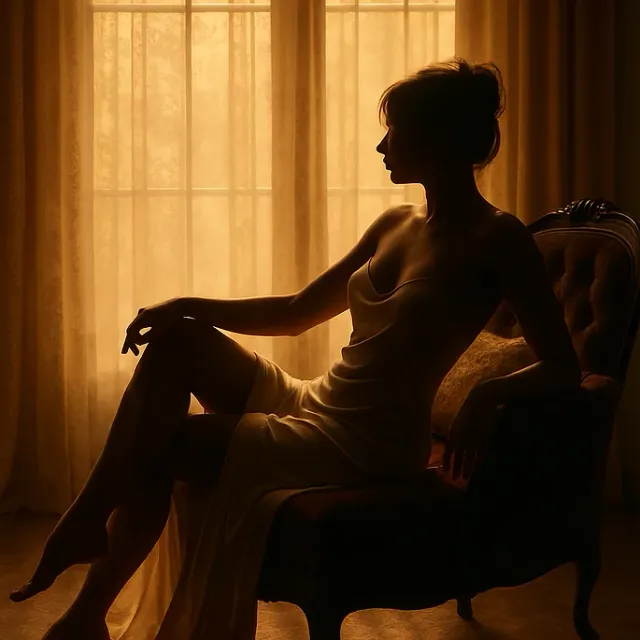
A satin or silk slip dress, knee-length or shorter, photographs beautifully. Different from the robe in that it's fitted to the body — gives shape rather than draping. Works with bare legs or thigh-highs.
Why it works: The body is supported by the dress's structure but the fabric is light enough to read as intimate. Less explicit than traditional lingerie, more confident than the button-down.
Best colors: Champagne, ivory, blush, soft sage, deep navy. Avoid neon or saturated brights.
4. A traditional lace lingerie set
If lingerie is what feels right, lace is the fabric that photographs most consistently well. The texture catches light in complex ways and the slight transparency adds depth without revealing too much. Bra + matching bottoms in a coordinated set is more flattering than mismatched pieces.
Best colors: Black is the most universally photogenic. Ivory and dusty rose are next. Red is dramatic but tricky — it can dominate the frame.
Sizing matters here more than color or style. A poorly-fitted lace set photographs as poorly-fitted. Take time to size up or have alterations done; this is the one item where the investment is real.
5. The classic boyfriend tee + cotton shorts
A loose plain cotton tee (white, gray, or heather) worn with simple cotton shorts (or just underwear) produces some of the most "this is what I look like at home" intimate frames. Lower-stakes wardrobe than lingerie, often produces the most genuine expression because the client is most comfortable in it.
Why it works: No styling pressure. The simplicity reads as authenticity.
Best with: Bare feet, simple jewelry, hair pulled up or naturally down.
6. The sentimental piece (his shirt, his jacket, a meaningful sweater)
The wardrobe item that doesn't photograph as "boudoir" in any conventional sense but means something specific to the client or the gift recipient. A partner's college sweatshirt, an oversized cable-knit, a leather jacket worn open over a simple top — these are often the strongest individual frames in a gallery because the meaning carries through.
Why it works: The emotional weight of the garment shows up in expression and posture in ways that staged wardrobe doesn't replicate.
What to bring: Whatever has personal meaning. Don't overthink it.
7. A simple bralette + high-waist underwear
Soft, comfortable, modern. A bralette (lightly structured, no underwire, often lace-trimmed) paired with high-waist underwear in the same color produces a confident, contemporary look that flatters most body types better than traditional lingerie.
Best colors: Soft black, ivory, dusty pink, sage green, gray.
What to avoid: Anything too sporty (bralettes designed for yoga can read as casual rather than intimate) or anything with a busy print.
8. A long evening dress or formal gown (worn off-shoulder or slipped)
For drama. A long dress in silk, velvet, or a structured satin — pulled slightly off the shoulder or worn slipping — produces gallery-worthy frames that play more cinema than bedroom. Different register from the rest of the list, and worth including if the client wants a hero image for the wall.
Best colors: Black, deep red, emerald, sapphire, ivory.
What to wear with it: Statement earrings, soft hair, heels (for these frames specifically).
9. A vintage piece
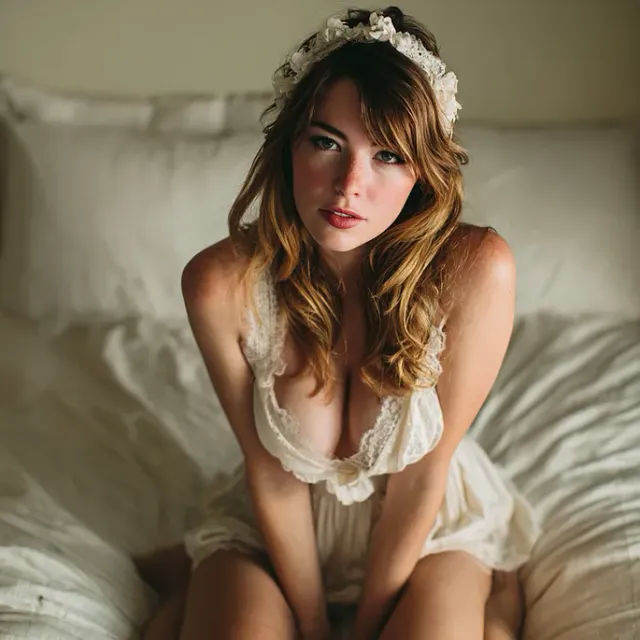
Boudoir often plays well with vintage — a 1940s-style satin nightgown, a slip with lace edging that reads heirloom rather than mass-market, a piece from a grandmother's collection that fits well. Vintage pieces photograph with character that brand-new lingerie often doesn't.
Where to find them: Estate sales, vintage shops (Brattle Square in Cambridge has a few), grandmother's closet, eBay (search "1940s silk slip" or similar specific terms).
10. Just yourself — no clothing, with careful posing
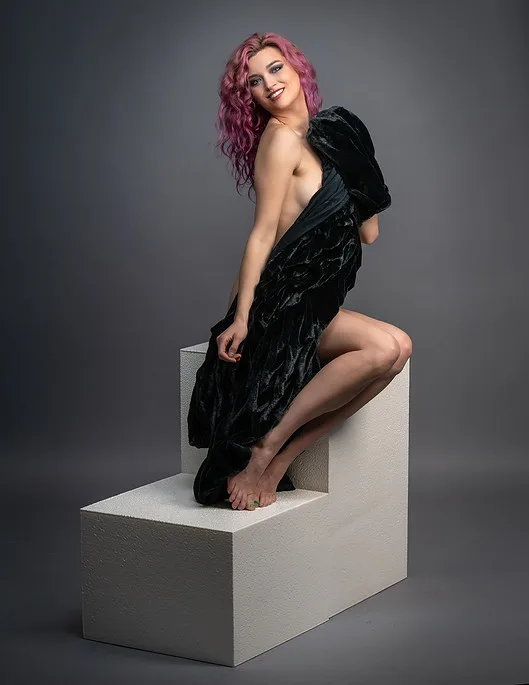
Implied nude — the body draped with a sheet, hidden behind crossed arms, partially under bedding, or carefully framed by the photographer's positioning. Not "nude photography" in the traditional sense, but the most intimate register of boudoir work, and produced regularly at Photography Shark for clients who want this option.
What it requires: Trust with the photographer, conversation about boundaries before the session, posing direction throughout. Sessions are private (no other clients or staff present during the booking), and the privacy policy is absolute — images are never used for marketing without explicit written consent.
The packing principle
The single best heuristic for boudoir wardrobe selection: bring 3–5 items that fall across this list, focused on what you genuinely feel comfortable in. The session has time to work through multiple looks, and the photographs that end up in the gallery are usually NOT the ones the client was most anxious about — they're the ones where the wardrobe disappeared and the expression carried.
For session structure and the four boudoir photography packages at Photography Shark, see the service page. The studio at 83 E Water Street in Rockland is private, climate-controlled, and booked exclusively for each session. Free on-site parking. See also: post-body-change headshot session.
Frequently Asked Questions
What should I wear to a boudoir session if I don't own traditional lingerie?
You don't need traditional lingerie. An oversized men's dress shirt worn open, a simple cotton tank and shorts set in white or cream, or a slip dress can all produce compelling boudoir images. The most important thing is that you feel genuinely comfortable and like yourself — an expensive set that sits foreign on your body will photograph less compellingly than something you've had for years and feel at ease in.
How many outfits should I bring to a Photography Shark boudoir session?
Bring two or three looks — usually enough for a standard session. Having alternatives is important because wardrobe that looks good in a mirror can read differently under studio lighting. Photography Shark's boudoir sessions accommodate wardrobe changes, and seeing early images helps clients make informed decisions about what's working as the session progresses.
What colors photograph best in boudoir sessions?
Black lace reads as dramatic and confident. Ivory and cream read as romantic and soft. Deep jewel tones — emerald, midnight blue, deep plum — photograph with richness and sophistication. Avoid neon or very saturated colors, which tend to dominate the frame and compete with your face. Cool tones like pale blue or sage complement warmer skin tones; warm champagne and blush work well with cooler skin.
What fabrics work best for boudoir photography?
Fabrics with texture — lace, silk, velvet — photograph particularly well because they catch light in complex ways that add depth and visual interest without requiring extra styling. Smooth satin creates movement and luxury. Avoid limp or thin synthetic fabrics that collapse or wrinkle, as the structure (or lack of it) reads clearly on camera.
Should I wear heels or go barefoot for boudoir photos?
It depends on the look. The oversized button-down look, for example, typically works better with bare feet — heels undercut the morning-quiet, intimate mood. A slip dress or a more formal lingerie look often benefits from strappy sandals or heels. Bring options and decide based on how the looks are developing during the session.
What is the most important thing to remember when choosing boudoir outfits?
Confidence reads on camera in ways that are difficult to manufacture. The right outfit is almost never about a specific garment — it's about how you feel wearing it. Before your Photography Shark session, go through your wardrobe with fresh eyes; something you already own and genuinely feel yourself in may be the strongest choice you bring.
Related Posts
You Might Also Like
About the Author
Chris McCarthy
Chris McCarthy has run Photography Shark Studios in Rockland, MA for over 10 years and 500+ sessions, with executive headshot work for Rockland Trust, Clean Harbors, M&T Bank, and McCarthy Planning; founder portraits for AI startups including Lowtouch.ai; product photography for South Shore brands like Lauren's Swim; and headshots across South Shore legal, medical, financial, and academic practices. Every session is personally shot and edited by Chris on Sony mirrorless and Godox strobe systems — no assistants, no outsourcing, no batch retouching. Galleries deliver in 3–5 business days. More about the photographer →
Photography Shark · Boston & South Shore MA
Ready to Book a Session?
Professional headshots, senior portraits, boudoir, and model portfolios. Studio in Rockland, MA — 25 miles south of Boston. Sessions from $395.