Dating Photography
Best Hinge Profile Photos: What Actually Works in 2026
A photographer's guide to the Hinge six-photo lineup — first-photo rules, the video prompt slot, what to wear, common mistakes, and where pro photos beat selfies for getting more likes and conversations.
Chris McCarthy
Professional Photographer, Photography Shark · May 29, 2026 · Updated September 12, 2026
Hinge is a comment app, not a swipe app. That single design choice changes how the photo lineup should be built. On Hinge, a viewer has to like a specific photo or prompt to start a conversation — which means every slot is potentially the one that does the work. A lineup of six near-identical headshots loses to a lineup that gives people six different reasons to send a comment. This guide breaks down what actually works on Hinge in 2026: the first-photo anchor, the six-slot variety rule, the video prompt, what to wear, and the mistakes that quietly cost likes.
I run a studio in Rockland, MA, and a steady share of clients book sessions specifically to rebuild a Hinge lineup that has plateaued. The patterns are consistent — strong portrait, real variety, real activities, real expression — and they translate directly into better matches. Here is the full breakdown.
If you already know you want the photos done properly and want session details, dating profile photography in Boston has the formats and pricing — a session is built to fill all six Hinge slots plus the video prompt, not just produce one good frame. Otherwise, read on.
What Makes Hinge Different
Before the lineup, it helps to be clear on the mechanic. Hinge does not stack you in a card deck the way Tinder does. Someone scrolling your profile sees photos and written prompts mixed together, and to start a conversation they have to like a specific element — comment on a particular photo, react to a particular prompt. The result:
- Every photo slot is doing real work. It is not just supporting the lead image; it is its own potential like.
- Hooks beat polish. A photo that gives a viewer something specific to react to ("are those mountains in Norway?") outperforms a beautiful but generic frame.
- Variety is mandatory, not optional. Six versions of the same head-and-shoulders pose gives the viewer one hook spread thin. A lineup with six distinct frames gives them six.
The reframe that helps: don't think of the lineup as "my best photos." Think of it as "six different reasons someone might say something to me."
What Is the Best First Photo on Hinge?
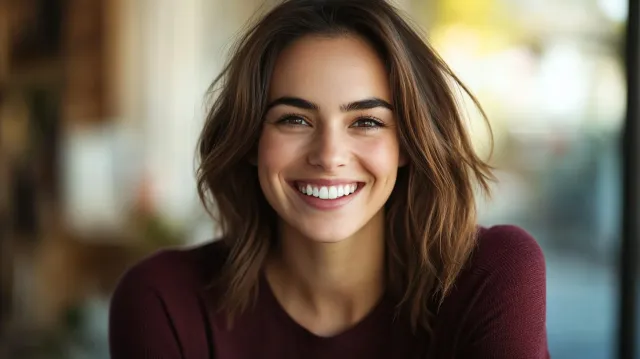
The lead image still matters. When a viewer taps into your profile, it loads first and anchors the impression that colors how they read everything underneath. The first-photo rules on Hinge mirror what works on every dating app, with one Hinge-specific note: it does not need to be your single most "comment-worthy" frame, because the prompts and later photos pick up that job. It needs to be your most recognizable and warmest frame.
- Head-and-shoulders or upper body, close enough that your face is clearly readable.
- Front-facing. Eyes on the camera, not off to the side.
- No sunglasses, no hat brim shading the eyes. Eyes are the most important feature in a portrait.
- Genuine smile. Not forced, not a smirk, not a clenched grin — the smile you have when something is genuinely funny.
- Clean background. Neutral wall, out-of-focus park, simple environment. Nothing that pulls attention away from your face.
- You alone. No groups in the lead slot, no exception.
A first photo that hits every one of those out-performs roughly everything else. For more on what makes a portrait read at thumbnail size, the importance of a perfect dating profile photo walks through the small-image problem in detail.
How Many Photos Should You Have on Hinge?
Six — Hinge caps the profile at six media slots and requires a minimum of four to six filled before it will publish, depending on local requirements.
| Hinge | |
|---|---|
| Photo slots available | 6 |
| Minimum to go live | 4–6, varies by region |
| Maximum | 6 |
| Videos | Allowed; count toward the same 6 slots |
| Prompts required | 3 |
If your profile will not publish, the app is telling you that you are under your region's minimum — add photos until it does. That is the whole of the technical answer. The rest of this section is about why the minimum is a bad target.
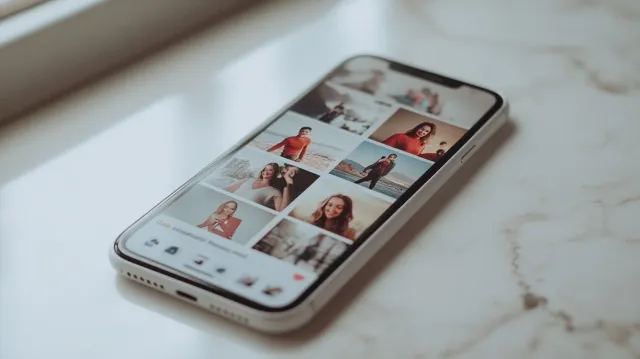
Because Hinge rewards comment-able variety, the lineup that wins distributes hooks across all six slots. A useful default mix:
- Strong front-facing portrait — the first-photo rules above. Your warmest, clearest frame.
- Full-body, well-lit — fitted clothes, a clean environment, ideally outdoors. People do scroll for this and its absence reads as evasive.
- An identifiable activity — climbing, surfing, cooking, playing music, painting, running, sailing. Something the viewer can name and ask about.
- A recognizable place — a clear location (a city skyline, a national park, a foreign street) that doubles as a conversation hook. Travel and place-specific photos are among the most-commented categories on Hinge.
- A second portrait with a different mood — composed-thoughtful, slight smile or none, eye contact. Adds depth and demonstrates you can hold a frame without forcing a grin.
- A social or story photo — with friends in a clearly readable way (you can tell which person is you), or doing something with a story behind it: building, performing, volunteering, working on a hobby project.
The mistake to avoid is six near-duplicates of the same headshot. Even if every individual frame is good, the lineup as a whole gives a viewer nothing to ask about beyond "where was this taken?" — and a viewer who has to invent a question will often just not.
When Five Beats Six
The "always fill all six" rule gets repeated everywhere without its exception, and the exception matters: viewers judge a lineup by its weakest photo more readily than its strongest. A profile with five strong images and one blurry group shot where you are ambiguous does not read as five-sixths good. The weak frame introduces doubt, and doubt on a dating app resolves as a scroll past.
So fill all six if you have six worth showing. If your sixth candidate is one you are unsure about, go with five — then go and take a sixth that earns its place. The same logic covers the very common case of one excellent photo and five mediocre ones: that is not a photo-count problem, and a seventh slot would not fix it if Hinge allowed one.
Change One Photo at a Time
Because Hinge tells you which element someone liked, you have a feedback signal most apps do not give you. Use it. Change one photo at a time, not the whole lineup, and give it a couple of weeks. Watch which slots collect likes, swap out the one that never does, and repeat.
Rebuilding the entire profile at once destroys the signal — if likes go up, you will not know which change did it. Iterating one slot at a time is slower, and it is the only way to learn what works for you specifically as opposed to what works on average.
The Hinge Video Prompt: The Most Under-Used Slot
Hinge lets you include short video clips in your profile, and most users skip it. That is a missed opportunity. A well-shot 5-to-10-second video does work that no still photo can: it shows your voice, your expression in motion, and how you actually carry yourself. For viewers who are uncertain after the still lineup, the video is often the thing that pushes them to like.
What works as a Hinge video:
- Short. Five to ten seconds. Longer doesn't help and tests attention.
- Well-lit. Same lighting rules as a photo — diffused, front-ish, not from above.
- Sharp focus on you. Not your dog, not the scenery. You.
- Natural expression. A smile, a laugh, a one-line story, a small action (catching a ball, finishing a climb, plating a meal). Not a static talking-head pitch.
- Audio matters. Wind, traffic, or a noisy bar wrecks an otherwise good clip. Quiet environments beat scenic noisy ones.
If you are using a phone, lock the focus on your face and shoot it at chest height in good window light. If you are shooting in a studio, the same rig that produces a clean headshot produces a clean Hinge video.
What to Wear
The wardrobe rules for Hinge are the same as for any portrait that has to read at small sizes:
- Solid muted colors photograph best — navy, charcoal, deep green, burgundy, warm neutrals. They render cleanly at the small sizes Hinge displays.
- Patterns and logos compete with your face. A solid, well-cut piece beats an interesting print almost every time at thumbnail size.
- Fit is the single biggest under-rated lever. A well-fitted t-shirt outperforms an ill-fitting designer item. Anything baggy or visibly tight reads worse than something that simply fits.
- Variety across the lineup. Don't wear the same outfit in five of six photos. Smart-casual for the lead portrait, an activity-appropriate outfit for the action shot, a dressier piece for one frame.
For deeper guidance on color, fabric, and fit under controlled lighting, the professional headshot wardrobe guide covers what holds up on camera and what doesn't.
Should You Smile in Hinge Photos?
In the first photo, smile. Across dating apps the data is consistent — genuine, eye-reaching smiles in the lead slot outperform neutral expressions by a meaningful margin. The reason is psychological: warmth is the trait most people are screening for in the first half-second, and a smile is the cheapest, fastest signal of it.
Across the rest of the lineup, mix in one composed-thoughtful frame for range. A direct-eye-contact, slight-smile-or-none portrait suggests depth and confidence. But a stoic first photo is one of the most common reasons profiles that should pull likes do not.
The hard part is producing a real smile on cue. This is where DIY dating photos struggle most: an isolated person holding a phone usually cannot generate the spontaneous expression that the camera needs to capture. A professional session solves this with a photographer who reacts to you in real time — joking, asking questions, directing — so the smile is a reaction, not a performance.
Why Selfies Underperform on Hinge Specifically
The technical reason selfies look "off" applies on every dating app, but it hurts more on Hinge because the lineup is doing more work. Phone front cameras use a very wide lens, and held at arm's length, that lens distorts facial proportions — bigger nose, longer forehead, awkward angles. A viewer won't articulate the cause; they'll just feel that something is off, and that feeling carries across all of your selfies. A six-selfie lineup compounds the problem six times over.
Lighting compounds it. Bathroom mirror selfies are lit from above by harsh overhead bulbs, which throws shadows under the eyes and nose. Outdoor selfies in midday sun do the same. The flattering light for a face is soft, slightly elevated, and frontal — exactly what window light or a controlled studio setup provides and exactly what a handheld phone in most environments does not.
A mixed lineup — one or two casual phone shots blended into four or five well-shot images — works fine. A lineup that is all phone-camera selfies almost never does. For a fuller breakdown of where DIY holds up and where it falls apart, the diy headshots vs. professional walkthrough is the longer version.
Common Hinge Mistakes
The recurring problems I see on Hinge profiles that have stalled:
- Group lead photo. Forces a viewer to guess which one is you. Most won't.
- Sunglasses or hat brim hiding the eyes. Eyes are the photo. Hide them and the slot is wasted.
- Distant or blurry shots. If the face is not clearly readable, the photo is not doing its job.
- The mirror selfie, especially in a bathroom. Reads as low effort and shows a phone-in-hand.
- Heavy filtering. Creates a trust gap that surfaces on the first date.
- The cropped-out ex. A disembodied shoulder or arm is loud and everyone notices.
- Six near-identical portraits. Wastes the slots — gives the viewer one hook spread thin instead of six distinct ones.
- No activities, no context. The lineup reads as "anonymous attractive person" rather than "specific person with a life."
- Skipping the video prompt. A high-impact slot left empty.
Each is a small avoidable negative. Together, they explain most of the gap between profiles that should perform and profiles that do.
When a Professional Session Pays for Itself
A $395 dating-profile session typically produces eight to ten usable frames — enough for a full Hinge lineup, a Tinder lineup, a Bumble lineup, and frames left over for LinkedIn or anywhere else. The match-rate uplift is real and the mechanism is mundane: the session removes the things that quietly cost you likes (lens distortion, bad light, forced smiles, missing variety) and replaces them with frames that clear the bar on each. Across a year of active use, the cost is low relative to what most active daters spend on subscriptions, drinks, and first-date meals.
For the longer overview of how a session is structured, see the Boston dating profile photographer page.
Quick Hinge Pre-Session Checklist
- Three outfits, all fitted, all solid colors, varied in formality.
- A short list of activities you'd like represented — even one or two changes the lineup meaningfully.
- Haircut about a week out, not the day before. Facial hair groomed.
- Sleep. Under-eye shadows are harder to fix in post than people think.
- Eye drops and lip balm. Small fixes between frames.
- A plan for the video prompt if you want to use it — a 5-second clip idea is enough.
- Ideas for prompts — your strongest written hooks land harder against a strong photo lineup, so give the prompts the same attention as the photos.
What 500+ Boston-Area Sessions Have Taught Us About Hinge
Photography Shark has shot dating-profile sessions for hundreds of Boston and South Shore singles over the last decade — actors, attorneys, healthcare workers, founders, post-divorce returners in their 40s and 50s. The pattern that wins on Hinge specifically is consistent: a strong front-facing portrait, full-body variety, two real activities, one social-context frame, and the video prompt slot filled. Sessions deliver eight to ten frames structured to fill all six photo slots plus the video. Book a session — base rate $395 for 30 minutes (60 minutes for two looks, $495), retouched gallery in 3–5 business days.
Local Hinge photo sessions: Boston · Quincy · Braintree · Cohasset · South Shore
Free download: free dating photo guide with the six-photo lineup — prep, wardrobe, posing and the six-photo lineup in one PDF.
Related reading: Shooting for Bumble · Best Tinder profile photos · Dating profile photos for men · How to take good dating profile pictures · Boston dating profile photographer
Frequently Asked Questions
How many photos should you have on Hinge?
Use all six photo slots. Hinge profiles with the full six photos consistently generate more likes than profiles with three or four, because each additional image gives someone a new place to comment and a new reason to send a like. Hinge is a comment-driven app — a thin profile gives people nothing to react to, which is why fuller lineups perform.
What is the minimum number of photos on Hinge?
Between four and six, depending on where you are — Hinge's own help documentation notes the requirement varies by local requirements. You will find out which applies to you when the app blocks your profile from going live until you add more. Either way, the minimum is not the target; it is the floor.
What is the maximum number of photos on Hinge?
Six. Unlike some apps that allow nine or more, Hinge caps the profile at six media slots, and short videos count against the same six. That cap is why slot selection matters more on Hinge than on other apps — you cannot compensate for a weak photo by adding three more.
Do videos count toward the six photos on Hinge?
Yes. Hinge lets you use short video clips in your profile and they occupy the same six slots as photos. Most people skip video entirely, which makes it one of the least contested things you can put on a profile. One video among five stills is a reasonable allocation for most people.
Is six photos better than four on Hinge?
In almost every case, yes — but for a structural reason rather than a numerical one. On Hinge, someone starts a conversation by liking a specific photo or prompt. Six varied photos give a viewer six distinct things to react to; four give them four. The gain comes from variety across the slots, not from the count itself. Six near-identical selfies perform worse than four genuinely different photographs.
How often should you change your Hinge photos?
Swap your weakest photo every few weeks rather than rebuilding the whole profile at once. Changing one slot at a time is the only way to learn which photos are actually earning likes, since Hinge shows you which element someone liked. Full replacements every couple of months also help if you are being seen repeatedly in a smaller local dating pool.
What is the best first photo on Hinge?
A clear, front-facing, head-and-shoulders portrait of you alone, with a genuine smile and your eyes visible. Hinge differs from swipe apps in that someone has to like a specific photo or prompt, but the first photo still anchors the impression — it loads at the top of your profile when a viewer taps in, and a weak lead image makes the rest of the lineup fight uphill. The first photo should be your single strongest frame.
Should you smile in Hinge photos?
Yes in your lead photo and in most of the lineup, with one composed or neutral frame for range. Genuine, eye-reaching smiles consistently outperform neutral expressions in the lead slot across dating apps, because they signal warmth — the trait most users are scanning for in the first second. A composed-thoughtful frame in a later slot adds depth without changing the warm baseline.
What kind of photos work best for the Hinge video prompt?
Short, well-lit, sharply focused clips of you doing something natural — smiling at the camera, in motion at an activity, or delivering a one-line story. The video prompt is one of the most under-used slots on Hinge and one of the most effective when done well, because it shows voice, expression, and movement that still photos cannot. Bad lighting and bad audio sink it; a 5-second clip in good window light with a genuine smile is enough.
Are professional photos worth it for Hinge?
For most active users, yes. Hinge specifically rewards image quality because the entire interaction model — comment on a photo or prompt to start a conversation — makes each photo do more work than on a swipe-only app. A $395 session that produces eight to ten usable images gives you a full lineup with frames to spare, and the same set typically carries you for twelve to eighteen months across Hinge, Bumble, and anywhere else you maintain a profile.
What Hinge photos hurt your profile the most?
Group photos as the lead image, sunglasses or hats hiding the face, distant shots where your face is not clearly readable, mirror selfies, heavily filtered images, and lineups where five of six photos are the same head-and-shoulders pose. Hinge's design rewards variety — a lineup that gives a viewer something specific to comment on across every slot.
How is a Hinge lineup different from a Tinder lineup?
A Hinge lineup needs to give people something to comment on. The interaction is comment-on-a-photo-or-prompt, not swipe, so every slot should ideally be a conversation hook — an activity, a clear location, a recognizable interest, or a story-worthy moment. A Tinder lineup can lean harder on portrait variety because the first photo carries most of the early weight; a Hinge lineup needs to distribute attention across all six.
What sort of photos should you use on Hinge — do they have to be solo shots?
Your lead photo should always be a solo shot — a clear, front-facing head-and-shoulders portrait of you alone, because a viewer needs to know instantly which person is you. After the first slot you do not have to be solo: one or two group or activity photos later in the lineup add social proof and conversation hooks. The rule is solo and unmistakable up top, variety (including a couple of non-solo frames) below — never a group shot as the first image.
What kind of pictures do well on dating apps if you are over 40?
Over 40, the pictures that perform are current, high-quality, and honest: a warm, genuine-smile lead portrait taken within the last year, full-body and activity shots that show an active life, and clean grooming and well-fitted clothing. Skip decade-old photos, heavy filters, and sunglasses — authenticity and recency matter more after 40 than youth-signaling, and a profile that looks exactly like you on the day you meet builds the trust that converts matches into dates.
What makes a good Hinge profile picture for women?
For women, a strong Hinge lead is a well-lit, solo, head-and-shoulders portrait with a genuine smile and visible eyes, followed by full-body shots and real-activity frames that signal personality and lifestyle. Natural light and honest, lightly-edited images outperform heavily-filtered ones. The goal across the six slots is range — warmth, an interest or two, and a clear sense of who you are — so each photo gives someone a specific reason to comment.
Related Posts


You Might Also Like
About the Author
Chris McCarthy
Chris McCarthy has run Photography Shark Studios in Rockland, MA for over 10 years and 500+ sessions, with executive headshot work for Rockland Trust, Clean Harbors, M&T Bank, and McCarthy Planning; founder portraits for AI startups including Lowtouch.ai; product photography for South Shore brands like Lauren's Swim; and headshots across South Shore legal, medical, financial, and academic practices. Every session is personally shot and edited by Chris on Sony mirrorless and Godox strobe systems — no assistants, no outsourcing, no batch retouching. Galleries deliver in 3–5 business days. About photographer Chris McCarthy →
Photography Shark · Boston & South Shore MA
Ready to Book a Session?
Professional headshots, senior portraits, boudoir, and model portfolios. Studio in Rockland, MA — 25 miles south of Boston. Sessions from $395.