Boudoir Photography
What Is Pin-Up Photography? History, Style, and How It Differs From Boudoir
A clear definition of pin-up photography — its 1940s–50s illustration roots, the poses, lighting, and styling that define the look, and how it differs from boudoir.
Chris McCarthy
Professional Photographer, Photography Shark · January 7, 2024 · Updated June 10, 2026
Pin-up photography is one of those genres people recognize instantly but rarely define precisely. This is the definition — what the style actually is, where it comes from, and how it differs from the genres it gets confused with. This piece is about the what and the why.
A Working Definition
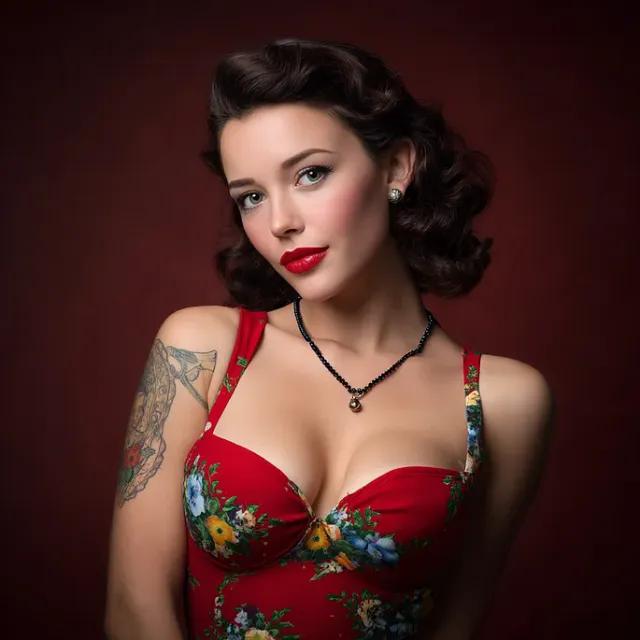
Pin-up photography is a styled portrait genre built on a specific visual language with roots in the 1940s and 1950s American illustration tradition. The poses are exaggerated and playful. The expressions are performative and knowing — a wink at the viewer rather than a private moment. The wardrobe is deliberately styled to reference a particular era. The lighting is bright, clean, and saturated rather than moody or dramatic.
That last point is the technical heart of it. Where many portrait genres chase shadow and mood, classic pin-up is high-key and crisp: even light, punchy color, and a finish that feels closer to illustration than to documentary photography.
The Illustration Roots
The genre did not start with cameras. It started with painters and illustrators — Gil Elvgren, Alberto Vargas, Zoë Mozert and their contemporaries — whose "pin-up girls" ran in calendars, magazines, and advertising through the mid-century. Their work established the vocabulary the photographic genre still borrows: the over-the-shoulder glance, the playful surprise, the impossible-but-charming posture, the saturated palette.
Understanding that lineage explains why pin-up looks the way it does. A good pin-up photograph is, in a real sense, a photographic translation of a painted illustration — which is why styling, posing, and color all lean slightly past realism on purpose.
Pin-Up vs. Boudoir
The cleanest way to understand pin-up is by contrast with boudoir photography, the genre it is most often confused with.
Boudoir is intimate and inward-facing. The lighting tends to be soft and directional, the mood private, the subject often unaware of or indifferent to the viewer — it documents a feeling. Pin-up is the opposite posture: theatrical and outward-facing. The subject knows there is an audience and plays to it. The lighting is bright, the mood is fun, and the whole image performs a character and a period rather than capturing a quiet moment.
Neither is "more" than the other — they are different tools for different intentions. A client who wants playful, confident, retro-styled images is describing pin-up. A client who wants soft, intimate, personal images is describing boudoir.
What Makes Pin-Up Work
Three things separate a real pin-up image from a costume-party snapshot:
- Styling that commits to the era. Hair, makeup, and wardrobe have to read as intentional references, not approximations. This is where most amateur attempts fall apart.
- Posing that performs. Pin-up poses are specific and a little exaggerated. They require direction; they do not happen by accident.
- Clean, bright lighting. The high-key look is a deliberate setup, not a default — and it is unforgiving of sloppiness, which is why studio control matters.
The Classic Pin-Up Lighting Setup
The high-key look is the part most home attempts get wrong, because it is harder than it appears. Classic pin-up lighting is bright and even — but "bright and even" is not the same as "flat." A proper setup still has shape; it just keeps the shadows soft and the overall exposure lifted.
In the studio I build it around a large, soft key light placed fairly high and close to the lens axis, which wraps the face cleanly and flatters skin. A generous fill — a second softbox or a large reflector — lifts the shadow side so contrast stays low and the image keeps that crisp, illustrated feel. A separate light on the background keeps the backdrop clean and bright so the subject pops without a heavy rim. When the styling calls for it, a hair or kicker light adds the glossy mid-century shine that reads as "produced" rather than "snapshot."
The reason this matters: high-key lighting is unforgiving. There is nowhere for sloppy posing, uneven makeup, or wardrobe problems to hide. That is exactly why the look is associated with studio work — the control is the point.
Wardrobe and Styling: Committing to the Era
Pin-up lives or dies on styling, and the era you reference changes the whole image. The 1940s lean more structured and military-influenced — high-waisted trousers, halter tops, victory rolls, a strong red lip. The 1950s tip toward the playful, full-skirted silhouette people picture first: polka dots, gingham, pencil skirts, cat-eye liner, and hair set in soft curls.
You do not need to own a vintage wardrobe. What you need is intentional styling — a few era-referencing pieces, the right hair and makeup, and accessories that commit to the period. The difference between a strong pin-up image and a costume-party photo is almost always in those details, which is why styling guidance is part of planning a session rather than an afterthought.
The Posing Vocabulary
Pin-up posing is a specific, learned language — not the candid posing of a lifestyle shoot. The classics are instantly recognizable once you know them: the over-the-shoulder glance, the wide-eyed "surprise," the leg pop, the seated knee-tuck, the playful skirt-lift. Each one exaggerates a line or an expression slightly past realism, which is what gives the genre its illustrated, performative charm.
These poses require direction. Almost nobody falls into them naturally, and the small adjustments — chin angle, hand placement, where the eyes go — are what separate a pose that reads as confident and deliberate from one that reads as awkward. A session is as much coaching as it is shooting.
Who Books Pin-Up Sessions
Pin-up has a wider audience than people assume. It is popular as a milestone or confidence gift — a birthday, a postpartum reclaiming, a "just because" celebration. Performers in the burlesque, rockabilly, and vintage-scene communities book it for promotional images that fit their aesthetic. Couples and partners commission it as a gift. And plenty of clients simply want one bold, playful, beautifully produced set of images of themselves that does not look like anything else in their camera roll.
What unites them is intention: they want fun, confident, character-driven images with a clear period aesthetic — and they want the styling to read as deliberate, not improvised.
Booking a Pin-Up Session
If the style is what you are after, the production side — wardrobe planning, styling, lighting, and direction — is where it comes together. Photography Shark runs pin-up sessions out of a private Rockland studio, shot and edited personally by Chris McCarthy. Reach out to book and we will plan wardrobe and styling together.
What is boudoir photography? · Boudoir vs. glamour photography
Frequently Asked Questions
What is pin-up photography?
Pin-up photography is a styled portrait genre based on the 1940s–50s American illustration tradition — playful, exaggerated poses, knowing expressions, era-specific wardrobe, and bright, clean, saturated lighting. It is theatrical and outward-facing by design.
How is pin-up different from boudoir photography?
Boudoir is intimate, soft-lit, and inward-facing; pin-up is theatrical, brightly lit, and performative. Boudoir documents a private mood; pin-up performs a character and a period aesthetic. See our boudoir guide for the contrast.
Where does the pin-up style come from?
The look traces to mid-century illustrators like Gil Elvgren, Alberto Vargas, and Zoë Mozert, whose painted "pin-up girls" defined the poses, color, and humor the photographic genre still references today.
Do I need vintage clothing for a pin-up shoot?
Styling matters more than owning a vintage wardrobe. Era-referencing pieces, hair, and makeup carry the look; a good studio can advise on wardrobe and styling so the result reads as intentional rather than costume.
Is pin-up photography the same as glamour?
No. Glamour emphasizes polished beauty and styling for its own sake; pin-up is specifically tied to a mid-century period aesthetic and its characteristic playful, performative posing.
Related Posts
You Might Also Like
About the Author
Chris McCarthy
Chris McCarthy has run Photography Shark Studios in Rockland, MA for over 10 years and 500+ sessions, with executive headshot work for Rockland Trust, Clean Harbors, M&T Bank, and McCarthy Planning; founder portraits for AI startups including Lowtouch.ai; product photography for South Shore brands like Lauren's Swim; and headshots across South Shore legal, medical, financial, and academic practices. Every session is personally shot and edited by Chris on Sony mirrorless and Godox strobe systems — no assistants, no outsourcing, no batch retouching. Galleries deliver in 3–5 business days. About Chris McCarthy →
Photography Shark · Boston & South Shore MA
Ready to Book a Session?
Professional headshots, senior portraits, boudoir, and model portfolios. Studio in Rockland, MA — 25 miles south of Boston. Sessions from $395.