Boudoir Photography
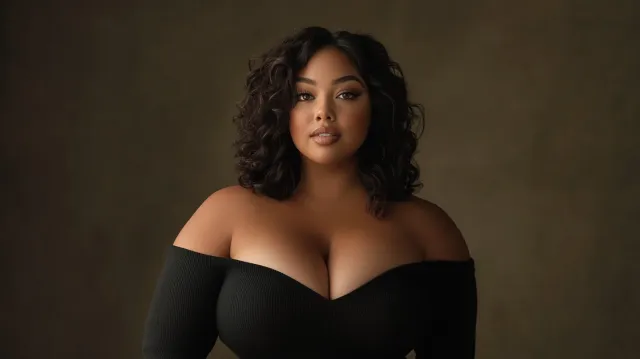
Plus Size Boudoir Photography in Boston
A plus size boudoir session shouldn't feel like an exception — it should feel like a standard session with a photographer who knows what they're doing.
Chris McCarthy
Professional Photographer, Photography Shark · January 6, 2026 · Updated March 1, 2026
Plus size boudoir sessions make up a substantial portion of bookings at Photography Shark. They aren't treated as a separate category and they aren't photographed differently — but they do often come with a different kind of arrival anxiety, and that's worth talking about directly. If you're considering a boudoir session and looking for a photographer in Boston or the South Shore who is comfortable working with your body, here's what to know — Photography Shark has been run by Chris McCarthy from the Rockland studio since 2019, and plus size sessions have been a steady, regular part of the work since the start.
The Session Is the Session
The most important thing to understand up front: plus size boudoir isn't a specialized subcategory that requires specialized equipment or training. It's boudoir. The same lighting setups, the same posing approach, the same editing philosophy, and the same studio environment that work for any body size work for yours.
What distinguishes a photographer who shoots plus size clients well from one who doesn't isn't separate technique — it's attentiveness. Understanding how to position curve to photograph beautifully, knowing which angles flatter which body shapes, recognizing which wardrobe pieces photograph well on different body types. These are skills that good boudoir photographers develop across every client, not a separate skillset reserved for plus size clients.
What Posing Actually Does
Posing is where most of the body-flattering work in boudoir happens. The good news: it's the photographer's job, not yours. You don't need to arrive knowing your angles.
Across bodies of every size, certain posing principles consistently produce flattering images: slight turns that create shape, weight distribution that elongates rather than compresses, arm positions that define the waist, chin and neck positions that create separation. These aren't "plus size techniques" — they're posing principles that work for most bodies, including yours.
An experienced boudoir photographer watches which poses are working for your specific body and adjusts accordingly. By midway through the session, patterns emerge: the angles that are producing your strongest frames, the positions that feel natural and photograph beautifully. The second half of a session often builds on what the first half discovered.
Wardrobe That Works
The rules for wardrobe in plus size boudoir are mostly the same as for any boudoir session:
Fit over size. Well-fitted pieces photograph better than expensive pieces that don't sit right. If a piece is too tight, too loose, or has visible pulling or bunching, it won't read well. This is especially worth saying about lingerie, where sizing is wildly inconsistent across brands.
Texture is an asset. Lace, silk, velvet, and other fabrics with visible texture photograph beautifully. Texture catches light and gives the eye somewhere to rest.
Bring more than you think you need. Plan for 4–6 outfit options, not 2. Sizing issues, fit surprises, and day-of mood shifts all happen. Alternatives mean the session isn't derailed by a single piece that isn't working.
Avoid shapewear that leaves marks. Spanx and similar pieces create deep lines that can stay visible for hours. If shapewear is part of your plan, make sure to give your skin at least two hours to recover before the session starts.
Consider pieces you already feel good in. Sometimes the strongest frames come from a client's own favorite pieces, not newly-purchased lingerie. Your existing favorites already have the advantage of feeling right on your body.
For more general wardrobe guidance, see 10 perfect outfit ideas for boudoir shoots.
What Editing Does (and Doesn't Do)
The editing approach for every boudoir session — plus size or otherwise — is the same: enhance what's actually there. Adjust exposure, color, and contrast. Reduce transient marks that wouldn't be there on another day (waistband lines, fresh blemishes, temporary irritation). Preserve the features that define how you actually look.
What this means practically: body shape is not altered. Curves are not minimized. The image is you on a great day in great light, not a digitally reconstructed approximation of a person.
This is a deliberate philosophical choice, not a technical limitation. Some photographers will aggressively reshape bodies in editing on request. That approach produces images that clients often find strange in a way they can't articulate — the images don't match what the client sees in the mirror, and the mismatch undermines the emotional function of the session. Images of you that look like you on an excellent day are almost always more valuable than images of a digitally smoothed person who happens to share your face.
If transient concerns come up — a fresh blemish, temporary redness, a mark that's not a regular feature — those are standard retouching adjustments and get handled without discussion. The line is between reducing transients and restructuring permanent features; only the former is part of the process.
The Pre-Session Anxiety Conversation
Many plus size clients arrive at their consultation with some version of "I'm nervous about how I'll look." Some level of pre-session anxiety is universal across every client demographic — but plus size clients sometimes arrive with an extra layer specifically because the dominant boudoir imagery in the culture doesn't often feature bodies like theirs.
A few things to know:
Your body is not an exception. The studio has photographed plus size clients continuously for years. You aren't the first client of your size to walk through the door, and you won't be the last. There's no special adjustment happening around you.
The gap between expected and actual images is often the largest for clients arriving with the most anxiety. This is a consistent pattern. The review of the gallery a few weeks after the session is typically when the emotional weight lands — and for many plus size clients, that's the most significant moment of the entire process.
You're not being tolerated — you're being welcomed. Your session is not a favor. It's a session like any other, and it's going to produce images that you'll likely be surprised by in the direction of "better than I expected."
Lighting That Actually Flatters Curve
Lighting is where most plus size session quality is won or lost, and it's worth being specific about what works in the studio. The default setup at Photography Shark for plus size sessions is a large soft source — typically a 5-foot octabox or a 7-foot parabolic with diffusion — placed at roughly 45 degrees to the subject and slightly above eye level. The size of the source matters more than people expect: a small, hard light creates sharp shadow lines that emphasize every transition between body planes, which on a fuller figure reads as harshness. A large soft source wraps the body, softens those transitions, and produces dimensional skin without flattening it.
A second light — usually a strip box or gridded source — adds rim light along the back edge of the body to separate the figure from the backdrop. This is the single highest-impact addition for plus size sessions specifically. Without rim light, fuller figures can blend into a darker background; with it, the body has clear silhouette and visible depth. On a Sony A7-class sensor with Godox AD600 strobes, the technical execution is straightforward, but it has to be deliberate. It does not happen automatically.
Direction of the light shapes how curve reads. Light coming from slightly above and to the side carves the body — collarbone, waist, hip, thigh all gain definition. Light coming flat from the front (a common mistake on home-based sessions or with phone-camera lighting setups) erases that definition and creates the unflattering compressed look that plus size clients are usually trying to avoid. The studio defaults are calibrated for the former, not the latter.
Specific Posing Adjustments That Matter
Beyond the general posing principles that apply to every body, a handful of specific adjustments produce consistently better frames for plus size clients:
Arm positioning away from the torso. Arms pressed flat against the body widen the visual silhouette of the upper body. Even a small amount of separation — hand on hip with elbow out, arm raised to hair, hand resting on a piece of furniture — creates a visible waistline and changes the entire read of the frame.
Chin extended forward and down slightly. This is universal advice but matters more for plus size clients because it directly addresses the under-chin and jawline area that many clients are self-conscious about. The forward-and-down movement tightens the underside of the jaw without requiring any extreme stretching. It's a one-inch adjustment that completely changes a portrait crop.
Weight rolled forward in seated and reclining poses. Sitting flat or lying flat compresses the torso visually. Rolling the weight forward — leaning slightly into the camera, propping on one forearm, shifting hips slightly — creates length and shape. The photographer cues this in real time; the client doesn't need to memorize it, but it helps to know that "lean in slightly" is a direction that will come up often and produce strong frames.
The cross-leg lift. Lying on the back with one leg bent and the foot flat, then lifting the bent knee outward — this single pose works exceptionally well for plus size clients across body shapes. It creates length, reveals waist definition, and produces a flattering thigh line. It's in the standard rotation for almost every plus size session.
What Sessions Actually Cost
Sessions start at $1,295 with hair and makeup included. Albums, framed pieces, and additional digital files are decided after the gallery is delivered, not pressured at the booking stage. For a complete cost breakdown, see boudoir session cost in Boston.
Ready to Book a Session?
If you're considering a boudoir session in Boston or the South Shore, get in touch and we'll start with a consultation. Photography Shark is based in Rockland, MA.
Related reading: Best boudoir photographer Boston · Boudoir photography in Massachusetts — what to expect · Boudoir services & pricing · Private South Shore boudoir sessions
Frequently Asked Questions
Do you photograph plus size clients?
Yes. Plus size clients are a regular and substantial portion of boudoir bookings at the studio. The session structure, lighting, posing approach, and editing philosophy are the same — what changes is the specific application of posing guidance to what actually flatters a given body, which is something good boudoir photography does for every client.
Will I be pressured to lose weight before my session?
No. A good photographer works with the body that walks into the studio. Any photographer suggesting you wait until you've changed your body before booking is giving you a reason to look for a different photographer.
What poses work best for plus size boudoir?
Poses that create curve, dimension, and flattering angles — which are also poses that work for every body type. The specific instinct about what works well for a specific body develops through experience; you don't need to arrive knowing your best angles. Posing guidance happens throughout the session.
Will my images be heavily retouched or slimmed?
No. The editing approach is to preserve what makes you recognizable as yourself. Transient marks (waistband lines, fresh blemishes) are reduced. Body shape is not altered. The goal is images that look like you on an excellent day, not a digitally reconstructed version of a person.
What should I wear for a plus size boudoir session?
What makes you feel most like yourself. Well-fitted pieces in fabrics with texture (lace, silk, velvet) typically photograph best for any body type. Bring options — more than you think you need. Sizing in lingerie is famously inconsistent, and having alternatives avoids being stuck with one piece that doesn't sit right on the day.
Related Posts
You Might Also Like
About the Author
Chris McCarthy
Chris McCarthy has run Photography Shark Studios in Rockland, MA for over 10 years and 500+ sessions, with executive headshot work for Rockland Trust, Clean Harbors, M&T Bank, and McCarthy Planning; founder portraits for AI startups including Lowtouch.ai; product photography for South Shore brands like Lauren's Swim; and headshots across South Shore legal, medical, financial, and academic practices. Every session is personally shot and edited by Chris on Sony mirrorless and Godox strobe systems — no assistants, no outsourcing, no batch retouching. Galleries deliver in 3–5 business days. More about the photographer →
Photography Shark · Boston & South Shore MA
Ready to Book a Session?
Professional headshots, senior portraits, boudoir, and model portfolios. Studio in Rockland, MA — 25 miles south of Boston. Sessions from $395.