Boudoir Photography
Why Boston Boudoir Photography Is More Than Just Photos
Boudoir at Photography Shark's private Rockland MA studio goes beyond the photos — what the session experience actually involves and why clients book it.
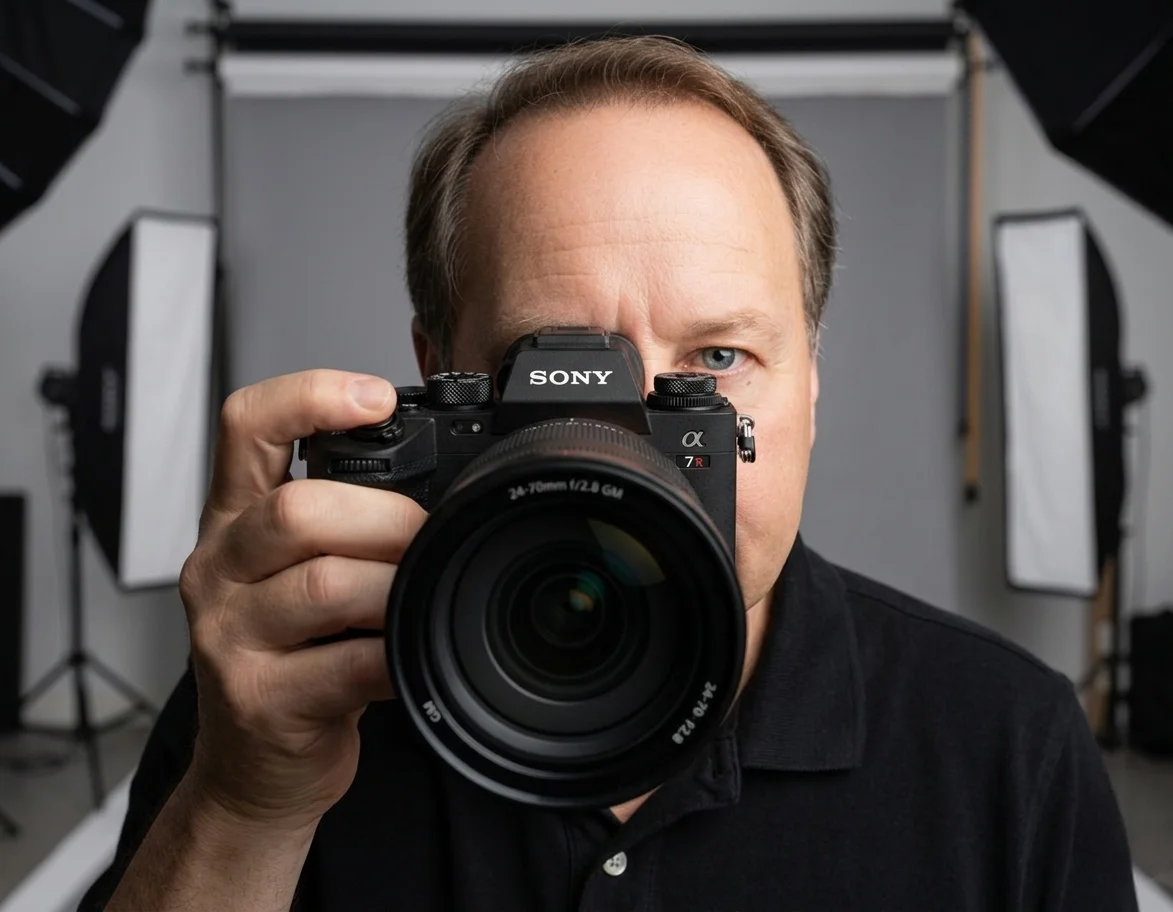
Chris McCarthy
Professional Photographer, Photography Shark · November 11, 2025 · Updated May 24, 2026
The photographs are the deliverable. The experience is the product. That distinction defines boudoir at Photography Shark and separates it from the transactional model of portrait photography where the session is just the manufacturing step between booking and receiving files. In boudoir specifically — more than in headshots, seniors, or family sessions — the session itself is the thing the client is buying.
The reason is psychological. A boudoir session puts a person in front of a camera in an intimate, vulnerable state and asks them to be present and confident. When the session is well-directed, the experience of doing that — of being seen, positioned deliberately, and photographed in a way that produces images the client is proud of — creates a shift in how the person sees themselves. The images document that shift. They do not create it.
What happens psychologically during a boudoir session
The emotional arc of a boudoir session follows a consistent pattern across clients, regardless of age, body type, or prior camera experience.
The first-session step-by-step guide covers the logistics in detail. What follows here is the emotional arc — the part the logistics guide cannot fully capture.
Arrival: anxiety. Nearly every first-time boudoir client arrives nervous. The anxiety is specific: "Will I look good? Will this be awkward? Will I regret this?" The photographer's job at this stage is to normalize the anxiety (it is universal, not a sign of a problem) and to begin establishing the feedback loop that will replace anxiety with confidence over the next 90 minutes.
Hair and makeup: decompression. The hour of professional grooming is not cosmetically necessary for a good boudoir session — many clients look excellent without it. Its primary function is psychological: it gives the client 60 minutes of being taken care of, which shifts the emotional register from "I am about to do something scary" to "I am being prepared for something special." The physical act of being groomed is a transition ritual that marks the boundary between ordinary life and the session space.
First frames: evidence. The first ten minutes of shooting produce the most important psychological moment of the entire session. The client takes direction, holds a pose, and then sees the result on the camera's review screen. The gap between what they expected to see (their anxious self-image) and what they actually see (a well-lit, well-posed portrait that looks genuinely good) is the inflection point. The anxiety breaks. The internal narrative shifts from "I hope this works" to "Oh. I actually look like that."
Chris deliberately shows clients their first strong frame early in the session for exactly this reason. The technical quality of the early frames is less important than the psychological function they serve: they provide evidence that contradicts the anxiety narrative.
Mid-session: exploration. Once the evidence is established, the session enters a collaborative phase where the client is willing to try more — a different pose, a more revealing wardrobe option, a stronger expression. The direction becomes more specific and the results more nuanced because the client is no longer managing anxiety and can focus on being present.
Final frames: ownership. The last thirty minutes of a well-directed boudoir session produce the strongest images because the client has fully settled into the experience. The expressions are genuine, the body language is confident, and the collaboration between photographer and subject is at its most refined. These are the frames that become the favorites — not because they are technically better than the earlier frames, but because the person in them is more fully present.
After: reframe. The lasting impact of a boudoir session is not the images themselves — it is the recalibrated self-perception that viewing the images reinforces. Every time the client opens the gallery, they see evidence that they look the way the camera saw them. Over time, the gap between anxious self-image and photographic evidence narrows. The session does not fix body-image issues or resolve deep insecurities — but it provides a concrete, visual counter-narrative that the client controls and can return to.
Why the photographer matters more in boudoir than in any other genre
In headshot photography, a competent photographer with good lighting can produce a usable result with minimal interaction. In boudoir, the photographer's ability to direct, to read emotional states, and to manage the psychological arc of the session is the primary variable determining whether the experience is empowering or uncomfortable.
Chris McCarthy has directed boudoir sessions at the Rockland studio for over a decade. The directing skill set is specific to intimate work — it includes reading when a client is tensing up and needs a break, knowing when to push toward a more challenging pose and when to stay in a comfort zone, managing verbal tone to maintain warmth without being patronizing, and producing continuous specific physical direction without the direction itself feeling clinical or mechanical.
The result is a session that feels guided rather than observed, intentional rather than accidental, and safe rather than exposed. The photographs emerge from that environment. They cannot be produced in an environment where the client does not feel those things.
The studio environment as a psychological container
The privacy of the Rockland studio is not just a logistical feature — it is a psychological one. A client who knows that no one will walk in, that no one can see through the windows, and that the photographer is the only person present can allocate their emotional energy to being present in the session rather than managing peripheral anxiety about being discovered.
The studio at 83 E Water Street was designed with this in mind: single-client access, no public-facing signage, on-site parking away from view, and no shared building spaces accessed during sessions. The environment communicates safety before the photographer says a word.
Beyond the session
Boudoir clients at Photography Shark report three consistent outcomes beyond the photographs themselves: (1) increased comfort with their physical appearance, (2) increased willingness to be photographed in other contexts (family sessions, headshots, social events), and (3) a private confidence anchor — a set of images they can return to when self-perception wobbles. These outcomes are not guaranteed and are not part of any marketing claim. They are consistent observations from a decade of client feedback.
Booking
Contact Photography Shark at 83 E Water Street, Rockland MA, or call (781) 312-8824. The consultation covers goals, boundaries, wardrobe, and everything else before the session is scheduled. Boudoir pricing is on the investment page.
Frequently Asked Questions
Where is Photography Shark's boudoir studio located?
The studio is at 83 E Water Street in Rockland, MA 02370 — a private, standalone space with a discreet entrance. Clients from Hingham, Norwell, Scituate, and Weymouth are typically within 20 minutes. Plymouth and the lower South Shore are under 45 minutes.
Will my boudoir images ever be used in Photography Shark's marketing?
Never, without your explicit written permission. All boudoir sessions are treated as strictly confidential — images are never used in portfolios, social media, or any public context without a signed release from you.
How long does a boudoir session take, and when are images delivered?
Sessions at the Rockland studio typically run two to three hours. Your private, password-protected online gallery is delivered within approximately three weeks.
Do I need to hire a hair and makeup artist for my session?
We strongly recommend it. Professional hair and makeup makes a real difference in how you move through the session. Chris can recommend South Shore artists we've worked with repeatedly, or you're welcome to bring your own.
What if I want to do my session somewhere other than the Rockland studio?
On-location boudoir sessions are available at your home, a boutique hotel suite, or another private space with good natural window light. We assess the light and logistics in advance.
Is a boudoir session only for milestone occasions?
No. While many clients celebrate a birthday, anniversary, or milestone, you don't need an external reason. The desire to have professional images that show you the way you want to be seen is enough.
Related Posts
Boudoir Photography
Boston Boudoir vs South Shore Boudoir: Studio Compared
Boudoir Photography
Boudoir Photography Payment Plans: How They Work
Boudoir Photography
How Much Does a Boudoir Session Cost in Boston?
Boudoir Photography
Valentine's Day Boudoir in Boston: Booking Timeline
Boudoir Photography
Plus Size Boudoir Photography in Boston
Boudoir Photography
Pre-Session Nerves: Boston Boudoir Guide
You Might Also Like
About the Author
Chris McCarthy
Chris McCarthy has run Photography Shark Studios in Rockland, MA for over 10 years and 500+ sessions, with executive headshot work for Rockland Trust, Clean Harbors, M&T Bank, and McCarthy Planning; founder portraits for AI startups including Lowtouch.ai; product photography for South Shore brands like Lauren's Swim; and headshots across South Shore legal, medical, financial, and academic practices. Every session is personally shot and edited by Chris on Sony mirrorless and Godox strobe systems — no assistants, no outsourcing, no batch retouching. Galleries deliver in 3–5 business days. About Photography Shark →
Photography Shark · Boston & South Shore MA
Ready to Book a Session?
Professional headshots, senior portraits, boudoir, and model portfolios. Studio in Rockland, MA — 25 miles south of Boston. Sessions from $395.