
Photography Tips
Boston Model: Wilka Pimentel
Personal portrait sessions at Photography Shark in Rockland MA — controlled light, active direction, and why South Shore locations matter.
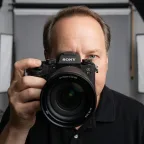
Chris McCarthy
Professional Photographer, Photography Shark · January 4, 2024 · Updated December 7, 2025
Not every person who books a portrait session with Photography Shark Studios is building a modeling career. Some people come in because they want photographs that reflect who they actually are at a specific moment in their lives — images made with intention, with real direction, with professional quality. The experience of being in front of the camera with someone who knows what they're doing changes what you can see in yourself, and that change is the point.
This post is about personal portrait sessions — what they're for, how they differ from commercial or portfolio work, and how to approach them in a way that produces images you'll genuinely value. It's also about the broader question of what it means to be photographed well, and why most people never experience that.
What a Personal Portrait Session Is (and Isn't)
A personal portrait session is photography done for you, not for a client or an employer. The images aren't going into a professional portfolio, they're not for a LinkedIn profile or a company website. They're for you — to have, to keep, to share with people who matter to you, or simply to look at when you want to remember who you were at this particular time.
This kind of session is different from a headshot session and different from model portfolio work, though it borrows techniques from both. The aesthetic direction is more personal, the content is more flexible, and the success metric is more subjective: do the images feel true to who you are?
For Photography Shark Studios, personal portrait sessions draw on the same technical infrastructure and direction approach as our other work. I shoot on Sony with professional studio lighting, I give specific continuous direction, and I deliver fully retouched images at professional quality. The difference is that the creative direction is shaped by you and your vision rather than by a professional objective.
Why Being Photographed Well Is Rarer Than It Should Be
Most people go their entire lives being photographed by people who are not paying attention to light, not giving meaningful direction, not making decisions about when and how to capture the image. The result is a visual record that doesn't look much like how you feel on your best days, or even how you look when you're genuinely in your element.
Professional photography changes this by introducing two things: controlled or deliberately chosen light, and active direction.
Light is the foundation of any photograph. The same person looks dramatically different in flat, overhead fluorescent light versus warm, directional late afternoon light. The difference isn't makeup or posing or even the camera — it's the quality and direction of the light. A professional photographer is always thinking about light first.
Direction is what takes someone from looking like they're being photographed to looking like themselves. The specific instruction — "turn your left shoulder toward me slightly, chin forward and a little down, take a breath and let your jaw relax" — produces a completely different image than "just look natural." Most people have never been photographed with real direction, and experiencing it for the first time is often surprising.
The Creative Element: Building a Concept for Your Session
Personal portrait sessions have more creative latitude than other kinds of portrait photography, and that latitude is worth using intentionally.
What Draws You In Visually
Start by identifying the visual aesthetic that resonates with you. Not in the abstract — specifically. Look at photographs, film stills, art direction, Instagram accounts that you're drawn to. Notice what they share. Is it soft, natural light versus dramatic contrast? Rich color versus desaturated tones? Close and intimate framing versus environmental context?
This analysis forms the basis of the session concept. When I talk with a client before a personal portrait session, I'm asking these kinds of questions: What images do you find yourself returning to? What quality do you want the photographs to have? What's the emotional register you're going for?
The Role of Environment
Some personal portrait sessions are pure studio work — clean backgrounds, controlled light, the full focus on you as the subject. Others incorporate location: the place you live, a landscape that matters to you, an urban environment that represents who you are.
The South Shore has extraordinary visual environments for personal portrait work. The rocky coast at places like Cohasset and Scituate has a quality of light and texture that's hard to find elsewhere. Wooded trails and farm fields in the inland South Shore provide a different kind of natural setting. Boston itself offers urban texture and architectural detail.
Where you shoot shapes what the images look and feel like. A studio portrait and a coastal portrait of the same person say different things. Both can be excellent; the choice depends on what kind of images you want.
Wardrobe as Self-Expression
For personal portrait sessions more than any other kind, wardrobe is a direct expression of identity. The question isn't what photographs well in the abstract — it's what represents you.
That said, some general principles apply: solid colors and simple patterns tend to photograph more cleanly than busy prints. Texture adds visual interest and catches light in ways that flat, matte fabrics don't. Clothes that fit well create better lines than clothes that are too large or too small.
The best approach: choose pieces that make you feel genuinely good in them, not pieces you've been told are flattering or pieces you bought specifically for the occasion. Authenticity in wardrobe choices contributes to authenticity in the images.
Bringing multiple options — three to five looks for a full session — allows for variety in the final gallery and gives you and the photographer flexibility to respond to what's working.
Finding Yourself in the Images
The most common response Photography Shark Studios clients have to seeing their gallery is surprise — not that the images look bad, but that they look better than expected in a specific way that has to do with recognition. "That's actually what I look like" or "I didn't know I could look that way" are common reactions.
This response happens when the photography has done its job: captured something true about the person that their own relationship with their image prevented them from seeing. The distorted self-image we all carry — more critical, more narrow, more fixed than reality — is one of the things good photography can temporarily dissolve.
The Process of Relaxing Into a Session
The early part of any portrait session is the hardest. People are self-conscious, they're in an unfamiliar environment, they're aware of being watched. The instinct is to perform — to produce what you think a "good photo" looks like, which usually involves a tighter expression and stiffer posture than you'd have in any natural context.
Learning to let that performance go is the central internal work of a portrait session. It happens through direction — following specific instruction takes you out of your head and into your body. It happens through time — you warm up as the session progresses. And it happens through trust, which is why the conversation before the session and the first few minutes of the shoot matter so much.
I design the beginning of every session to be deliberately lower-stakes: smaller setups, simpler direction, more conversation. The goal is to get to a place of ease before we go for the strongest material.
Power Poses and Personal Power
The language of "power poses" is popular in general culture, but in photography specifically, the most powerful poses are often not the most forceful ones. A still, direct gaze — relaxed body, weight settled, expression neither smiling nor scowling — projects authority and presence in a photograph in a way that aggressive, expansive posing sometimes doesn't.
The most interesting portrait images I've made are often in the moments between direction — when someone is transitioning from one instruction to the next and something authentic surfaces briefly. Learning to see those moments and capture them is part of what experienced portrait photography involves.
What Self-Documentation Looks Like as a Practice
For some people, personal portrait photography is a recurring practice rather than a single occasion. Coming back every year or two — not because anything specific has changed, but because they want to document the ongoing reality of who they are — is a different relationship with photography than the milestone-event model.
This approach has real value. Photographs from a decade ago look different than photographs from now, not just because people age but because people change in ways that don't announce themselves. What you look like in a photograph at 25, 35, and 45 tells a story that no other medium captures in quite the same way.
Photography Shark Studios serves clients at multiple life stages — from high school senior portraits through family photography and professional headshots. Building an ongoing photography relationship means the same attention and quality applies across all of those contexts. The family photography side of our work often begins with clients who originally came in for personal portrait work and wanted to bring that same quality to images of their families.
The Takeaway: Just Go For It
The most consistent advice experienced portrait subjects give to people who are hesitant: just do it. The anticipation is almost always worse than the reality. The session is almost always more enjoyable than you expect. And the images are almost always better than you think they'll be.
The hesitation usually comes from a fear of not being good enough — not photogenic enough, not interesting enough, not the kind of person who gets professional portraits done. That hesitation is almost entirely self-constructed. The camera doesn't judge; the photographer is rooting for you; and the images will capture something real if you give them the chance to.
Trust the process, follow the direction, and be willing to be surprised by what you see.
Ready to Book Your Session?
If you've been thinking about investing in professional portrait photography for yourself — whether it's personal portrait work, a modeling portfolio, or something in between — contact Photography Shark Studios to discuss what kind of session would serve you best. We're based in Rockland, MA, and work with clients throughout Boston and the South Shore.
Frequently Asked Questions
What is a personal portrait session at Photography Shark, and who is it for?
A personal portrait session is photography done for you — not for a LinkedIn profile or employer, but images you want for yourself. Chris McCarthy directs and delivers professional-quality, fully retouched results. Sessions are open to anyone, no modeling experience required.
Where does Photography Shark shoot personal portrait sessions?
Sessions are available at the studio at 83 E Water Street, Rockland, MA 02370, or on South Shore locations — rocky coastal spots in Cohasset and Scituate, wooded inland settings, or Boston's urban environments.
How does Chris McCarthy make portrait sessions comfortable for people who aren't used to being photographed?
Chris starts every session with lower-stakes setups — simple direction, more conversation — to allow clients to warm up before going for the strongest material. Specific direction takes you out of your head and into the moment.
How much does a personal portrait session cost?
Studio sessions are $395 for 30 minutes with 10 fully retouched images. On-location sessions are $495. Additional session time $100. Bring three to five wardrobe options for variety in the final gallery.
How long until I see my finished portrait gallery?
Finished, retouched images are delivered within 3–5 business days for headshots and studio sessions of the session date.
Can I book a personal portrait session alongside other services like headshots or family photos?
Yes. Many Photography Shark clients combine personal portrait work with professional headshots or family sessions. Contact Chris to discuss how to structure a session that serves multiple goals.
Related Posts
You Might Also Like
About the Author
Chris McCarthy
Chris McCarthy has run Photography Shark Studios in Rockland, MA for over 10 years and 500+ sessions, with executive headshot work for Rockland Trust, Clean Harbors, M&T Bank, and McCarthy Planning; founder portraits for AI startups including Lowtouch.ai; product photography for South Shore brands like Lauren's Swim; and headshots across South Shore legal, medical, financial, and academic practices. Every session is personally shot and edited by Chris on Sony mirrorless and Godox strobe systems — no assistants, no outsourcing, no batch retouching. Galleries deliver in 3–5 business days. About the photographer →
Photography Shark · Boston & South Shore MA
Ready to Book a Session?
Professional headshots, senior portraits, boudoir, and model portfolios. Studio in Rockland, MA — 25 miles south of Boston. Sessions from $395.