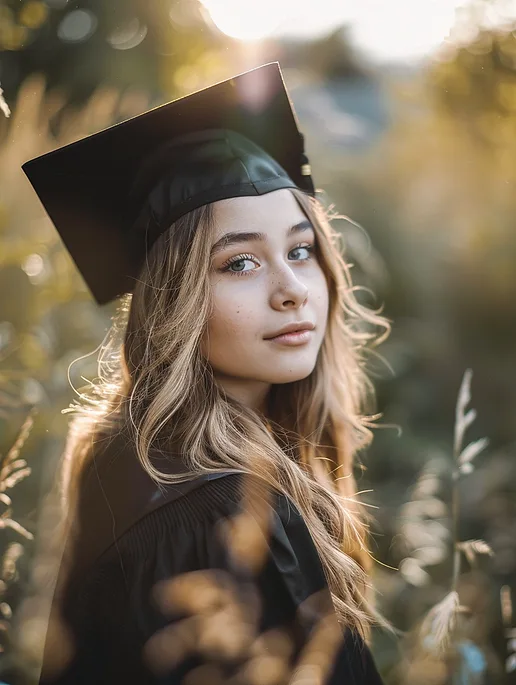
Senior Portraits
Choosing Outfits for Graduation Photos
What to wear for graduation photos — practical outfit advice from Photography Shark's 10+ years photographing Boston-area and South Shore graduates.

Chris McCarthy
Professional Photographer, Photography Shark · March 21, 2024 · Updated January 12, 2026
Graduation photos mark one of the genuine turning points in a person's life. The image you carry forward from this moment — the one that goes on the wall, in the announcement, in the family archive — should look like you: confident, accomplished, and authentically yourself. What you wear is one of the most visible elements in that image, and it's one of the variables you have complete control over.
I photograph seniors across the South Shore every spring and fall, and the session works best when the preparation starts early.
This post is a practical guide to graduation outfit selection — written from 10+ years of experience photographing graduates at Boston-area colleges and South Shore high schools. It covers what actually works on camera, what to avoid, how to plan for multiple looks, and how wardrobe choices interact with different shooting environments.
The Starting Point: Purpose-Driven Selection
Before considering any specific clothing, it helps to be clear about the purpose of each image. Graduation photos serve different functions:
Formal announcement images — for graduation announcements, thank-you cards, and the images that go in formal contexts — benefit from conservative, timeless clothing. These are the images that will be seen by a wide range of people, many older, and that will be referenced for years. Classic silhouettes, solid or subtly patterned clothing, and polished styling read well in these contexts.
Personal milestone documentation — the images for your own wall, your own memory — can reflect more individual style. These images are for you and the people who know you, not for broad distribution.
Professional use — for LinkedIn profiles, graduate program applications, or early professional headshots — wardrobe needs to align with professional norms in your intended field. A future finance professional and a future art director have meaningfully different professional norms to consider.
Understanding which images matter most for which purpose helps prioritize wardrobe decisions across a multi-look session.
Cap and Gown: Making It Look Right
For most graduates, the cap and gown are obligatory components of the session — they're the visual shorthand that communicates "graduation" without any additional context. But academic regalia is designed for ceremony, not photography, and it requires some management to photograph well.
What Shows
In most headshot and three-quarter-length graduation photos, the cap and gown cover the majority of the clothing underneath. What's visible:
- The neckline and collar of the garment beneath the gown
- The drape of the gown at the shoulders
- The cap position and any honor cords, stoles, or medals
- The lower portion of the garment and shoes if shooting full-length
Because so little clothing is visible, the decisions that matter most are neckline shape, collar, and whether anything under the gown creates awkward bunching or visual noise.
Neckline for Under-Gown Garments
For women: a V-neck, scoop neck, or off-shoulder top creates a clean neckline that shows properly above the gown zipper. Turtlenecks and very high necklines create compression between chin and collar that's unflattering in close-up shots.
For men: the button-down shirt and collar beneath academic robes is the standard and it works. A tie adds ceremony and works well for formal images. Make sure the collar fits properly — a collar that's too tight or too loose reads clearly in close-up images.
The Gown Itself
Academic gowns are usually rented and frequently wrinkled. Getting the gown steamed or pressed before the session makes a visible difference in the final images. Wrinkles across the shoulders and chest catch light unfavorably and draw attention away from the face.
Honor cords, graduation stoles, and medals are worth including. They add color, visual interest, and communicate achievement in a way the plain black gown alone doesn't. If you're graduating with honors in multiple areas, wear all relevant regalia — this is the moment for it.
The graduation cap can be challenging compositionally because of its flat, horizontal shape. Wearing it slightly forward — so the edge sits above the eyebrows rather than behind them — frames the face more naturally than pushing it back.
Beyond the Gown: Choosing Your Non-Regalia Outfits
The most memorable graduation portraits are often the non-regalia frames — the ones where the graduate is dressed as themselves, not in ceremonial uniform. These images have more personal character and are the ones graduates most often use for social media, professional profiles, and personal display.
The Timelessness Principle
Graduation photos will still be on walls and in albums in 20 years. The outfit you choose shouldn't look like it belonged to 2024 specifically — it should look like it belongs to you, which is more durable than belonging to a particular trend cycle.
Classic silhouettes — a tailored dress, a well-cut blazer and trousers, a simple structured top — hold up visually in ways that trend-heavy items don't. This doesn't mean boring; it means choosing items whose quality and fit speak for themselves without relying on current fashion relevance.
Colors That Photograph Well
Color selection in portrait photography is not the same as color selection for wearing in person. The camera compresses colors and responds to light in ways the eye doesn't. Some general rules:
Deep solids are consistently strong. Navy, forest green, burgundy, charcoal, black — these colors photograph with presence and depth against almost any background. They focus visual attention on the face rather than the clothing.
Earth tones work well in natural settings. Warm tans, terracotta, olive, and warm white integrate with the South Shore's natural environments without competing with them. They work particularly well at locations like World's End in Hingham and the forested settings of Norris Reservation in Norwell.
Coastal blues and teals photograph beautifully against the ocean and sky backgrounds at Sandy Beach in Cohasset and the Duxbury coastline.
Avoid: Neon, very large patterns, and colors that closely match the background you'll be photographed against. Black-and-white bold patterns create visual interference that competes with the face.
The Fit Variable
Fit is the single most important factor in clothing photography. A moderately priced garment that fits well photographs better than an expensive garment that doesn't. This is because the camera is honest about fit in ways that mirrors and general perception are not.
Before committing to a graduation outfit, try it on and take a photograph of yourself in it — full-length and from different angles. What you see in the photograph is much closer to what the camera will capture than what you see in the mirror. Any fit issues that look minor in the mirror will look significant in a professional photograph.
For garments that almost fit, alterations are worth the cost. Hemming a dress to the right length, taking in a jacket at the waist, adjusting shoulder seams — these changes make visible differences in portrait photography.
Planning for Multiple Outfits
Most graduation portrait sessions benefit from two or three distinct outfit options. The variety produces a gallery with more range and gives the graduate and their family genuine choice in how they use the images.
The Standard Three-Look Structure
Look 1: Cap and gown. The formal ceremonial look. Best for announcement images, formal contexts, and the images that communicate graduation most directly. Photographs best in the morning or late afternoon when light is manageable and the black gown doesn't create exposure challenges.
Look 2: Formal or semi-formal personal clothing. This is the look that represents who you are at this stage of life — polished, intentional, and personal. A dress, a blazer, a tailored outfit that could also serve as professional attire. This look ages well and works across the widest range of display contexts.
Look 3: Casual or personality-driven. This is the optional look where more individual style can come through — the outfit that represents your interests, your aesthetic, your specific self. This could be as casual as jeans and a favorite top or as specific as an outfit that connects to your field, hobby, or identity. These images are often the ones graduates themselves value most.
Transitions Between Looks
For sessions that involve multiple looks, the logistics of changing need to be planned in advance. Changing in a car is practical for outdoor sessions. Bringing a friend or family member who can help with fasteners, hair, and styling between looks reduces transition time.
For sessions that include studio time at Photography Shark's Rockland studio, the studio provides a private space for wardrobe changes, which simplifies multi-look sessions significantly.
Hair and Makeup Consistency
If hair and makeup are being done professionally, plan for the styling to work across all outfit options — since restyling between looks at an outdoor location is impractical. Choose styling that complements the range of looks planned rather than optimizing for one specific outfit.
Location-Specific Wardrobe Considerations
The location of your graduation session directly influences which wardrobe choices work best.
South Shore Coastal Locations
For beach sessions at Sandy Beach in Cohasset, Rexhame in Marshfield, or the Duxbury coastline, several practical considerations apply:
Footwear: If bare feet are part of the plan — which photographs beautifully on sand — plan for footwear that slides on and off easily. Bring flip-flops or sandals for movement between shots.
Wind: Coastal sessions involve wind. Flowy skirts and dresses create beautiful movement in wind but require management. Very short hemlines become a logistics issue in strong coastal wind. Hair that photographs well in still conditions may become chaotic in coastal wind — discuss this with your photographer before committing to a specific style.
Color and backdrop: The Atlantic in warm weather is a blue-gray backdrop with white wave edges. Most colors work against it, but mid-tone blues that closely match the water can disappear. Strong contrast — deep wine against blue water, warm white against gray granite — creates the most visually defined images.
Campus Architectural Settings
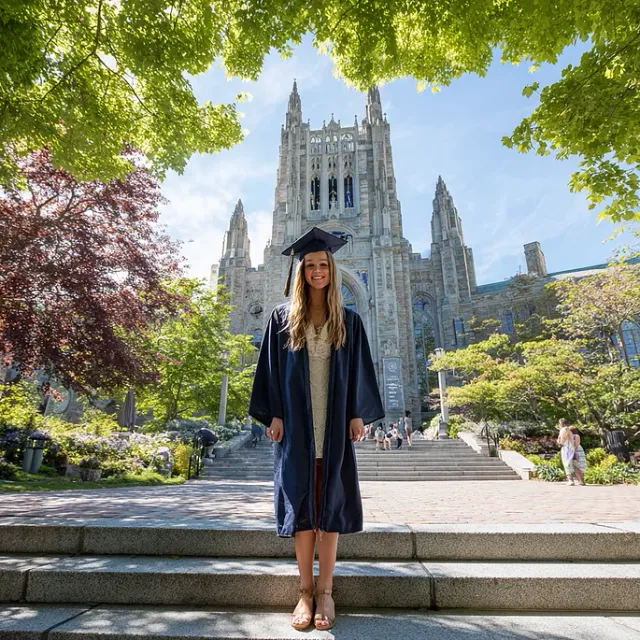
At BC, Harvard, BU, or any campus with significant stone or brick architecture, clothing that provides visual contrast works best. The challenge with dark architectural backdrops is that dark clothing can merge with the background. For Gasson Hall's gray stone at BC, lighter or mid-tone clothing creates better separation than all-black outfits.
Well-structured, slightly formal clothing complements the formal architecture better than very casual clothing. The visual language of Gothic academic architecture reads as formal; clothing that acknowledges that formality creates more unified images.
Forest and Reservation Settings
At Norris Reservation in Norwell or the forested paths at World's End in Hingham, the green canopy backdrop calls for colors that stand out clearly against it. Deep burgundy, rust, cream, and dark navy all read well against summer-green or fall-color forest backgrounds. Pure green clothing disappears into a green forest backdrop.
The Day-Of Checklist
The night before:
- Steam or press all garments
- Lay out accessories, shoes, and undergarments for each look
- Charge phone for reference photos during the session
- Confirm meeting time and location with the photographer
The morning of:
- Eat a proper meal — sessions require sustained energy
- Start makeup and hair early enough to have time if something needs adjusting
- Load garments and accessories in the car in an organized way — not crammed in a bag
At the session:
- Bring small safety pins, fashion tape, and a small lint roller
- Have a travel mirror for touch-ups between looks
- Bring water, especially for outdoor summer sessions
Consulting with Your Photographer
The most useful preparation for graduation outfit selection is a brief conversation with your photographer before the session. At Photography Shark, we build a pre-session consultation into the process specifically to help clients make decisions like wardrobe selection with the session plan in mind.
We can advise on which colors work best at your planned locations, how many looks make sense for your session length, what footwear is practical for specific terrain, and how your personal style can work within the constraints of photographic best practices.
For South Shore high school seniors, our graduation senior sessions include this kind of planning support as a standard part of the process.
Ready to Book Your Session?
Photography Shark serves graduates and families across the South Shore — from Quincy and Braintree through Hingham, Cohasset, Norwell, Scituate, Marshfield, Duxbury, Plymouth, and Kingston — as well as Boston and its surrounding communities. We bring 10+ years of experience photographing milestone portraits to every session.
Contact us to start planning your graduation portrait session.
Professional headshots in Norwell · Professional headshots in Hingham · Marshfield headshots
Frequently Asked Questions
How many outfit changes should I bring to my graduation session?
For a 90-minute session ($495 on-location session), 2–3 outfits works well. The standard 30-minute studio session typically suits 1–2 looks including cap and gown.
What colors photograph best for graduation portraits?
Solid, mid-range tones — navy, burgundy, forest green, camel, and classic black or white — photograph consistently well. Avoid neon, very pale white, or busy patterns.
Should I wear my cap and gown for the whole session?
Typically no. Cap and gown images are standard for announcements, but personal outfit looks add variety and longevity to your gallery. Chris recommends starting with regalia, then switching.
What's appropriate for professional use — LinkedIn or grad school applications?
A clean, polished personal outfit in a neutral tone works well. Chris can advise based on your field — professional norms for finance differ from those for arts or education.
Does Photography Shark provide any styling guidance before the session?
Yes. After booking, Chris shares a prep guide with outfit recommendations and what to bring. You're welcome to send photos of your planned outfits for feedback beforehand.
Where is the graduation portrait studio located?
Photography Shark is at 83 E Water Street, Rockland, MA, with easy access from Hingham, Scituate, Quincy, Braintree, and the wider South Shore.
Related Posts
You Might Also Like
About the Author
Chris McCarthy
Chris McCarthy has run Photography Shark Studios in Rockland, MA for over 10 years and 500+ sessions, with executive headshot work for Rockland Trust, Clean Harbors, M&T Bank, and McCarthy Planning; founder portraits for AI startups including Lowtouch.ai; product photography for South Shore brands like Lauren's Swim; and headshots across South Shore legal, medical, financial, and academic practices. Every session is personally shot and edited by Chris on Sony mirrorless and Godox strobe systems — no assistants, no outsourcing, no batch retouching. Galleries deliver in 3–5 business days. About Chris McCarthy →
Photography Shark · Boston & South Shore MA
Ready to Book a Session?
Professional headshots, senior portraits, boudoir, and model portfolios. Studio in Rockland, MA — 25 miles south of Boston. Sessions from $395.