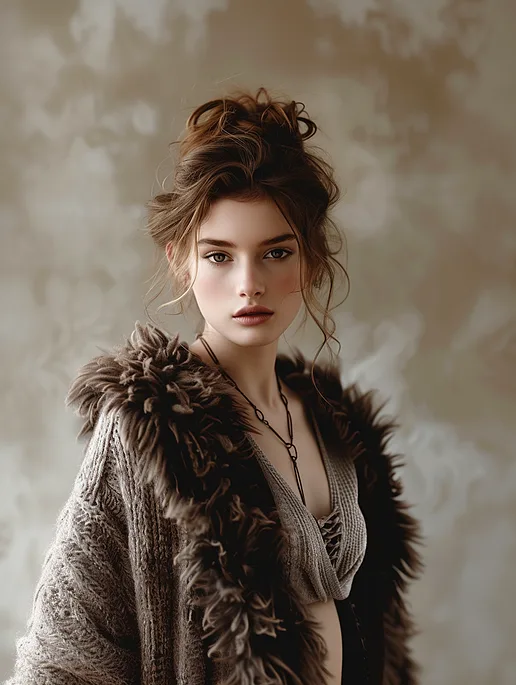
Photography Tips
Latest Trends in Fashion Photography: A Boston Perspective
Boston fashion photography trends and location guide — Beacon Hill, Seaport, Cambridge, and South Shore coastal settings — from Chris McCarthy.
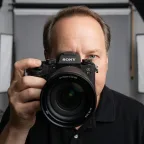
Chris McCarthy
Professional Photographer, Photography Shark · July 28, 2024 · Updated March 27, 2026
Boston's fashion photography scene has developed a distinct identity over the past decade — one that reflects the city's particular character: historically grounded, culturally diverse, academically influenced, and quietly confident. Unlike New York or Los Angeles fashion photography, which can veer toward either extreme high-concept abstraction or celebrity-adjacent excess, Boston fashion photography tends to emphasize story, authenticity, and a certain New England directness that shows up consistently in the best work coming out of the region.
In my experience working with clients across Boston and the South Shore, the biggest gains come from the simplest adjustments.
Photography Shark is based in Rockland, on the South Shore — about thirty minutes south of Boston. We photograph across the Greater Boston area, the South Shore corridor, and specifically understand how the region's visual vocabulary — the coastal landscapes, the historic architecture, the urban texture — can be deployed in fashion work that feels genuinely Boston rather than generically metropolitan.
This piece covers the current landscape of Boston fashion photography: the trends shaping the work, the locations that define the visual language, the technical and creative approaches that distinguish strong images from forgettable ones, and what fashion clients — designers, models, brands, and agencies — should know when they're planning a shoot in this market.
The Visual Geography of Boston Fashion Photography
Location selection in fashion photography communicates as much as the clothing itself. The environment isn't a neutral backdrop — it's an active element that contextualizes the fashion, suggests the lifestyle associated with it, and establishes a tone that the clothing either confirms or complicates. In Boston, there's an extraordinary range of visual environments available within a compact geographic area.
The Historic Urban Core
Beacon Hill's gas-lit cobblestone streets, the brick facade streetscapes of the Back Bay, the Federal-era architecture of the North End — this is the visual vocabulary of old Boston, and it provides a backdrop that carries enormous cultural weight. Fashion shot in this environment inherits some of that weight: it reads as established, historically conscious, and subtly elite.
The challenge of Beacon Hill and Back Bay as fashion locations is access and crowds. These are active residential and commercial neighborhoods, not sets. The best sessions here happen early on weekend mornings before pedestrian traffic builds, or during the quiet winter months when the streets are empty but often dramatically lit.
For brands whose identity is rooted in quality, craftsmanship, or heritage, this visual environment is a natural match.
The Seaport and Innovation District
The contrast to old Boston's brick and cobblestone is the Seaport District — glass, steel, waterfront, and a visual vocabulary that communicates modernity, technology, ambition, and contemporary professional culture. Fashion shot here reads as forward-looking and current.
The South Boston Waterfront offers interesting middle ground: the water access of a coastal city combined with urban infrastructure, creating compositions that incorporate both natural horizon and built environment.
For contemporary brands, streetwear, and fashion that speaks to a Boston professional demographic, the Seaport visual environment is effective and immediately recognizable.
Cambridge and the University Belt
Cambridge's streetscapes — Harvard Square, Central Square, Inman Square — have a different character than Boston proper: more eclectic, more layered, more demographically diverse. The mix of students, academics, longtime residents, and newer arrivals creates a visual energy that's less formal and more genuinely urban than the corporate polish of the Seaport or the residential elegance of Beacon Hill.
For editorial fashion, independent brand identities, and work that's meant to feel genuinely current rather than aspirationally upscale, Cambridge environments offer a richness that's underutilized in commercial Boston fashion photography.
The South Shore Coast
Photography Shark's home territory — the South Shore coastline from Hingham to Plymouth — offers fashion photography environments that are distinctive precisely because they're less heavily photographed than the urban Boston locations.
The rocky coastline at Cohasset, the marsh environments of Scituate and Duxbury, the harbor architecture of Hingham and Plymouth — these are visually compelling locations that carry a specifically Massachusetts coastal character. For brands and editorial work that wants to communicate New England identity, coastal heritage, or a certain kind of outdoors-adjacent lifestyle, the South Shore provides locations that city-based photographers often overlook.
The light on the South Shore coast, particularly in fall and winter, is also genuinely exceptional for photography — low-angle, dramatic, and with the quality that comes from proximity to open ocean.
Current Trends in Boston Fashion Photography
Authenticity as a Creative Directive
The most significant trend across Boston fashion photography right now isn't a visual style — it's a conceptual orientation. The market has shifted substantially toward work that prioritizes authentic feeling over polished artifice. This means real people (or models who photograph as real people rather than as archetypes), real environments rather than obvious studio constructions, and real emotions rather than performed attitude.
This shift reflects broader cultural changes in how fashion is consumed — social media, particularly Instagram and TikTok, has acclimatized audiences to imagery that feels unfiltered even when it isn't. The fashion editorial that looks like a friend's vacation photos, the campaign that reads as documentary — these feel honest in a way that overtly produced imagery no longer does for most audiences.
For Boston specifically, this trend aligns naturally with the city's cultural disposition. Boston isn't Los Angeles; the cultural premium is on substance over surface, and fashion photography that reflects that value tends to perform better in this market than work that simply chases visual spectacle.
Natural Light and Environmental Shooting
Studio-controlled fashion photography is giving way — at least in this market — to natural-light and on-location work. This is driven partly by the authenticity trend described above, partly by the economics of social media content production (less elaborate setup, faster turnaround), and partly by the genuine quality that good natural light provides that artificial setups often struggle to match.
Working with natural light in Boston and the South Shore requires understanding the specific qualities of this region's light: the soft diffuse quality of coastal overcast days, the dramatic low-angle character of winter light, the warm-amber quality of coastal golden hours. A photographer who knows these light conditions can produce fashion images that would be difficult to replicate in a studio at any budget.
Diversity and Inclusive Representation
Boston's fashion photography has developed a notably stronger commitment to diverse representation than it had a decade ago, reflecting both the city's demographic evolution and the influence of a large student and university population that's particularly attuned to representation issues.
For fashion clients working in Boston, this isn't primarily a political calculation — it's an accurate reading of the market. Boston's consumer base is diverse in age, background, ethnicity, and body type, and fashion photography that reflects that diversity performs better with local audiences than work that doesn't.
Retro Revival and Film Aesthetics
The nostalgia cycle in fashion photography has brought back film grain, muted color palettes, and the visual grammar of specific historical periods — the 70s earth tones, the 90s high-contrast, the early-2000s casual aesthetic. This trend works well in Boston because the city's built environment genuinely looks like it's from multiple historical periods simultaneously. A session in the South End or Jamaica Plain can incorporate architectural elements from the 19th century, mid-century residential streetscapes, and contemporary commercial signage in the same block.
When this approach works, it creates imagery that feels simultaneously nostalgic and present — anchored in specific visual history but unmistakably current. When it doesn't work, it feels like costume.
Sustainability and Conscious Fashion
The sustainable fashion movement has reached the point where brands are actively making their environmental consciousness visible in their photography. This means shoots at locations that communicate environmental awareness, styling that incorporates textures and materials associated with natural and sustainable production, and imagery that positions the clothing within a lifestyle framework that's explicitly outdoors-adjacent and nature-connected.
The South Shore coastline is a natural environment for this kind of work — clean, wild, explicitly natural, and carrying connotations of environmental stewardship that urban environments typically don't. For sustainable fashion brands looking for New England photography that reflects their values visually, the South Shore coast is an underutilized resource.
Technical Foundations: What Distinguishes Strong Fashion Photography
Fashion photography is technically demanding in specific ways. The clothing is usually the primary subject, which means it needs to be rendered with detail and accuracy. But the mood, the lifestyle suggestion, and the emotional register of the image matter at least as much as technical correctness.
Lighting for Fashion
Fashion photography lighting must accomplish two things simultaneously: render the clothing accurately (showing its actual color, texture, and construction) and create the emotional tone the brand or editorial requires. These goals sometimes pull against each other — the lighting that makes a garment look its most accurate may not be the lighting that makes the image feel most compelling.
The practical approaches:
Softboxes and beauty dishes produce clean, even light that shows clothing construction clearly — useful for commercial product work where accuracy is paramount.
Natural window light creates a dimensional, contemporary quality that flat studio light doesn't. Fashion shot in natural window light has a life to it that's hard to replicate artificially.
Available natural light on location — particularly at golden hour on the South Shore coast — produces images with warmth, depth, and environmental integration that studio-created light rarely achieves at equivalent cost.
Mixed light (combining natural and artificial sources) requires more skill but allows creative control within location environments.
Working with Models
Model direction in fashion photography is a specific skill that differs from portrait direction. Models are trained to hold positions and maintain expression — but the best fashion images don't come from executing a pose correctly. They come from genuine movement, from between-pose transitions, from the moments when a model's own personality surfaces within the context of the clothing and setting.
For Boston and South Shore fashion work, we often cast models from Boston's genuine modeling community — talent agencies with real rosters — or work with strong editorial models who have the ability to occupy an environment rather than simply posing in front of it. The difference in the resulting images is immediately visible.
Editing and Retouching
Fashion retouching has moved away from the heavy skin-smoothing and figure-altering work that defined the industry for decades toward a lighter touch that maintains the model's genuine appearance while cleaning up technical imperfections. This shift is both aesthetic (matching the authenticity trend) and ethical (reducing the normalization of altered body presentations).
Our editing approach for fashion work: correct technical issues (exposure, color balance, distortion), clean genuine distractions (stray hairs, clothing wrinkles, background obstructions), and preserve authentic skin texture and appearance. Significant body alteration isn't something we do or recommend.
Planning a Boston Fashion Shoot with Photography Shark
For designers, agencies, and brands planning fashion shoots in the Boston area or on the South Shore, a few practical considerations:
Permits: Major Boston landmarks and public parks require photography permits for commercial work. We're familiar with the permit requirements for common Boston and South Shore locations and can advise on what's required for your shoot.
Seasonal timing: Boston's most visually distinctive seasons for outdoor fashion work are fall (October in particular, with extraordinary light and foliage) and late spring (May, with blooming trees and the long days beginning). Summer offers the most flexibility but the most competition for popular locations.
The South Shore advantage: If your brand has any connection to coastal New England identity, outdoor lifestyle, or authenticity-oriented aesthetics, the South Shore coast provides exceptional fashion photography locations that are significantly less used than the urban Boston locations — meaning less visual cliché and more genuinely original imagery.
Studio work: Our Rockland studio is available for studio photo shoots requiring controlled environment, backdrop variety, or full lighting control. The studio is appropriate for commercial product work, editorial that requires a clean visual environment, and fashion work where the garment rather than the environment is the primary subject. The straight product-photography side of that — Boston clothing photography for e-commerce and lookbook brands — is covered separately, since the format mix (flat-lay, ghost mannequin, on-model clean) and the workflow rhythm differ meaningfully from editorial fashion.
Ready to Book Your Session?
Photography Shark is based in Rockland, MA and photographs fashion work across Greater Boston and the South Shore. Whether you need on-location environmental fashion photography, studio work, or professional headshots for model portfolios and brand profiles, we bring genuine technical capability and regional knowledge to every session.
Contact us today to discuss your project, timeline, and creative vision. We'll develop a plan that matches your brand's needs and makes the most of what this region's visual environments have to offer.
Boston headshot rate card · Professional headshots in Rockland · Headshots in Cambridge, MA · Professional headshots in Plymouth
Frequently Asked Questions
Where is Photography Shark located and how far is it from Boston for fashion shoots?
Our studio is at 83 E Water Street, Rockland MA 02370, about 30 minutes south of Boston. We photograph fashion sessions throughout Greater Boston, the South Shore coast, and at our Rockland studio.
What Boston-area locations does Photography Shark use for fashion photography?
We shoot fashion in Beacon Hill, the Back Bay, the Seaport District, Cambridge's Harvard and Central Square areas, and South Shore coastal locations like Cohasset, Scituate, and the Rockland waterfront.
What does a fashion or editorial portrait session cost at Photography Shark?
Portrait Studio sessions start at $395 for a 30-minute headshot session. Fashion and editorial sessions with multiple looks and locations are custom-quoted — contact Chris McCarthy to discuss your project scope.
Does Photography Shark work with independent models building their portfolios?
Yes. Chris has worked with aspiring and working models throughout the South Shore and Greater Boston for over a decade. Portfolio sessions are available at the Rockland studio and on location.
How long until I receive my edited fashion or editorial images?
Edited images are delivered within 3–5 business days for headshots and studio sessions.
What camera system does Photography Shark use for fashion shoots?
Chris shoots Sony full-frame mirrorless, which provides the resolution and dynamic range needed for demanding outdoor fashion sessions with changing light conditions.
Related Posts
You Might Also Like
About the Author
Chris McCarthy
Chris McCarthy has run Photography Shark Studios in Rockland, MA for over 10 years and 500+ sessions, with executive headshot work for Rockland Trust, Clean Harbors, M&T Bank, and McCarthy Planning; founder portraits for AI startups including Lowtouch.ai; product photography for South Shore brands like Lauren's Swim; and headshots across South Shore legal, medical, financial, and academic practices. Every session is personally shot and edited by Chris on Sony mirrorless and Godox strobe systems — no assistants, no outsourcing, no batch retouching. Galleries deliver in 3–5 business days. About Chris McCarthy →
Photography Shark · Boston & South Shore MA
Ready to Book a Session?
Professional headshots, senior portraits, boudoir, and model portfolios. Studio in Rockland, MA — 25 miles south of Boston. Sessions from $395.