Photography Tips
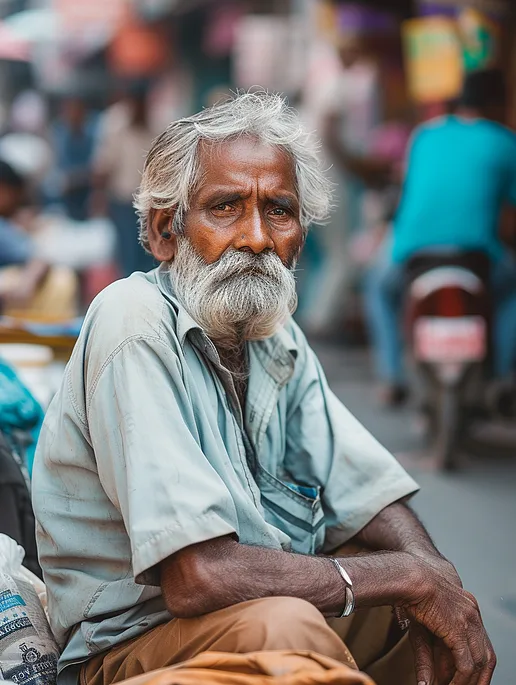
Capturing Humanity: Exploring Human Stories in Street Photography
Street photography tips for South Shore locations like Scituate Harbor, Plymouth, and Quincy — light, composition, focal length, and ethics.
Chris McCarthy
Professional Photographer, Photography Shark · July 5, 2024 · Updated February 19, 2026
Street photography is, at its core, the practice of paying attention in public and having the skill and nerve to record what you see. Unlike studio work or staged portraits, it operates on borrowed time — the decisive moment is available for a fraction of a second and then gone permanently. The photographer cannot ask the light to wait, cannot redirect the subject, cannot schedule a reshoot. What makes street photography compelling as an art form is exactly what makes it technically and ethically demanding: the rawness is real, and so are the stakes.
This post explores the craft of street photography with a focus on what actually produces images worth looking at — technique, approach, and the ethical considerations that distinguish documentary work from exploitation.
What Street Photography Actually Is (and Isn't)
Street photography is the documentation of human behavior in public space. It doesn't require literal streets — markets, harbors, parks, transit stations, and public events are all fair territory. What it requires is candor: the subjects should not be performing for the camera. The moment they know they're being photographed and respond to that awareness, you've shifted from street photography into environmental portraiture.
This distinction matters practically. In South Shore towns like Plymouth, Quincy, or along the Rockland town center, street photography means capturing the actual texture of public life — the lobsterman hauling traps at the Scituate Harbor dock before dawn, the families moving through Plymouth Rock on a summer Saturday, the crowd at a Rockland farmers market. These are moments that exist whether the camera is present or not. The photographer's job is to document them honestly.
What street photography is not is a license to photograph people in private moments in public settings — someone in emotional distress, a child separated from a parent, a person in a medical situation. The legal right to photograph in public and the ethical responsibility to do so with integrity are not the same thing.
The Foundational Techniques
Working with Available Light
Street photographers do not have controlled lighting. You work with what the environment provides, and learning to read that environment rapidly is a prerequisite for the work.
The South Shore offers distinctive light in almost every season. The blue-gray winter light of a Quincy shore on a January morning has a particular quality — cold, flat, beautifully diffuse — that works well for photographs with a documentary or melancholic tone. The harsh midday sun of a Duxbury beach in July creates strong shadows that you can use as compositional elements if you're thinking about them rather than fighting them. The golden hour along any South Shore waterfront turns ordinary scenes into images with warmth and visual depth.
Shooting in Sony's mirrorless system allows for clean images at ISO 3200 and higher, which means street photography in low-light environments — early morning, overcast days, indoors at public spaces — without the exposure compromises that older systems demanded. This technical capability opens up shooting times and locations that were previously difficult.
Composition in Motion
In studio or portrait work, you can adjust the composition before you shoot. In street photography, composition happens in real time as you and the scene both move. This requires building compositional instincts rather than deliberate calculation.
The most useful principle for street composition is anticipation. You see the geometry of a scene — a strong shadow line, a doorway, a convergence of architectural lines — and you position yourself relative to it so that when a human element enters the frame, the geometry and the person interact meaningfully. Cartier-Bresson's "decisive moment" concept is really about this: the moment when all the formal and human elements of the scene align into a coherent image. You find the geometry first, then wait for the life to enter it.
A useful exercise: walk a block of a South Shore downtown — Plymouth's Main Street, downtown Hingham, the Quincy Center area — and spend an hour identifying compositions without shooting. Find the strong lines, the interesting frames, the light sources. Then come back another time and shoot those compositions when something human occupies them.
The Role of Focal Length
Wide-angle lenses (24mm to 35mm) require you to be close to your subjects, which produces images with presence and proximity but also increases the chance of being noticed. Telephoto lenses (85mm to 135mm) let you work at a distance, which feels less intrusive but compresses the spatial relationships between subject and environment in ways that can feel disconnected.
Most street photographers work in the 35mm to 50mm range — close enough for presence, wide enough to include context, similar enough to human visual perception to feel natural. I shoot most of my street-influenced work on a 35mm or 50mm prime for this reason.
Speed Settings for Unpredictable Action
Movement in street photography requires shutter speeds fast enough to freeze the important elements. In general:
- Walking figures: 1/250 second
- Running or fast-moving subjects: 1/500 second or faster
- Vehicles in frame: 1/1000 second or faster
Shooting in aperture priority with a minimum shutter speed set (a feature available in Sony and most modern systems) lets you maintain creative control over depth of field while the camera ensures sufficient shutter speed for sharp subjects.
Ethical Foundations
Legality Versus Responsibility
In the United States, photography in public spaces is broadly legal. There is no enforceable right to privacy when you are in public view. You do not need a subject's consent to photograph them on a public street, in a public park, or at a public event.
This is the legal reality. The ethical reality is more nuanced.
Photographing people without consent means exercising a power that is asymmetric: you control whether and how someone's image is recorded and potentially distributed, and they do not. That asymmetry creates a responsibility that the legal framework doesn't address. Responsible street photography means thinking seriously about how your images represent the people in them, whether their dignity is preserved, and whether distribution of the image serves any purpose beyond the photographer's gratification.
Photographs That Exploit Versus Photographs That Document
The line between documentation and exploitation is not always clean, but some markers help. Documentation treats its subjects as people — their expression, context, and presence matter and are handled with care. Exploitation treats subjects as raw material for an image the photographer wanted to make, regardless of what that image communicates about the person.
Images that show people in distress, poverty, or vulnerability require particular care. These subjects have real stories and real lives. If your photograph of a homeless person on a Quincy street makes that person's suffering aesthetically interesting for viewers without offering any meaningful insight into the conditions that produced that suffering, you should ask yourself what purpose the image serves.
When to Ask for Consent
Consent changes street photography into environmental portraiture, but there are contexts where asking is the right choice. When you want to spend meaningful time with a subject — to build a series of images, to photograph someone doing something specific over an extended period — asking turns a single captured moment into a collaboration.
A fisherman working on their boat at Scituate Harbor, a baker at a South Shore farmers market, a craftsperson at work at their bench: these subjects often appreciate being documented, are willing to continue working naturally in front of a camera once you've explained your intentions, and may become ongoing collaborators. The trade-off is the spontaneity that defines pure street photography — but what you gain is depth and relationship.
South Shore as a Street Photography Subject
The South Shore has a particular visual character worth exploring photographically. It's neither urban nor rural in any simple sense — it's a coastal working-class and middle-class region with distinct seasonal rhythms. The harbors, town squares, beach parking lots in summer, and shuttered storefronts in winter are all photographically interesting in ways that larger cities' more frequently photographed spaces are not.
A few specific locations worth spending time with:
Scituate Harbor: Active commercial fishing operation alongside pleasure boats and waterfront dining. The working side of the harbor — the boats, the equipment, the early morning activity — has a visual texture that distinguishes it from the tourist-oriented harbor scenes common in more commercially developed areas.
Plymouth Waterfront: Year-round foot traffic with distinct seasonal character. Summer brings the Mayflower replica, packed waterfront restaurants, and tourism infrastructure. Winter brings a different face — quieter, more local, harsher light.
Quincy Center and Wollaston Beach: Quincy has a genuinely diverse street life — the density of a city without the visual homogeneity of downtown Boston. Wollaston Beach in particular has a broad waterfront promenade where the range of activity across a single summer day could sustain an entire photo essay.
Rockland town center: Less photographed than better-known South Shore towns, which means less visual cliché. The downtown area around East Water Street has working-class commercial activity, historic architecture, and a character that resists the sanitized coastal tourism aesthetic of more prominent destinations.
Building a Practice
Street photography is a practice in the strict sense: it improves through regular exercise, not through inspiration. Go out with a camera regularly, even when you don't feel inspired, even when the light isn't special, even when nothing obviously interesting is happening. The photographs you make on unremarkable days teach you to see better on remarkable ones.
A useful structure for developing a street photography practice:
- Pick one location and return to it repeatedly across seasons and times of day. Depth of knowledge about a specific place produces better images than breadth of locations visited.
- Establish a constraint — one lens, one focal length, one time of day — and work within it for at least three months. Constraints produce creative decisions.
- Edit ruthlessly. The instinct is to keep images because they represent effort. The discipline is to keep only images that actually work.
- Study photographs, not just photographic technique. Read about Henri Cartier-Bresson, Vivian Maier, Daido Moriyama, and Diane Arbus — not to imitate them, but to understand the range of what street photography can be.
How Street Photography Informs Portrait Work
The skills built through street photography — quick composition, reading light rapidly, anticipating human behavior, creating images with genuine feeling — transfer directly into portrait sessions, family photography, and event coverage. The photographer who has spent hundreds of hours watching how people move and behave in unguarded moments knows things about human expression that no amount of formal portrait training provides.
For clients, this means that photographers with a documentary background tend to produce more authentic-feeling portraits — because they're not just executing a technical formula but genuinely responding to what the person in front of them is doing.
Ready to Book Your Session?
Photography Shark is based in Rockland, MA and serves Boston and the South Shore. Whether you're interested in documentary-influenced portrait work, professional headshots, or family photography, we bring a genuine eye for human moments to every session.
Contact us today to discuss your project and schedule a session.
Professional headshots in Quincy · Rockland, MA headshot studio · Plymouth, MA headshot studio
Portraits With the Same Intent
The attention street photography trains transfers directly to portrait work, where you control the light instead of waiting for it. Hourly studio rental in Rockland is $55/hour with lighting and backdrops included.
Frequently Asked Questions
Does Photography Shark offer street photography sessions or only studio work?
Chris McCarthy shoots both studio and location work. While most client sessions are portraits, headshots, and family photos, the studio at 83 E Water Street in Rockland MA is also available for editorial and documentary projects. Contact us to discuss your specific project.
What South Shore locations does Photography Shark use for outdoor portrait or documentary photography?
We regularly work at Scituate Harbor, Plymouth waterfront, Quincy Shore, Hingham downtown, and the Rockland Farmers Market area — locations with strong natural light and authentic public character.
What camera system does Chris McCarthy use for location photography?
Chris shoots Sony full-frame mirrorless, which delivers clean images at ISO 3200 and above — essential for low-light documentary or street work in early morning or overcast conditions on the South Shore.
How long does a location portrait session take, and what is the turnaround time for edited images?
Most portrait sessions run 30–90 minutes depending on the package. Edited images are delivered within 3–5 business days for headshots and studio sessions.
Can I book a creative or editorial portrait session that incorporates documentary-style candid moments?
Yes. If you want portraits that feel unposed and documentary in spirit — capturing real interaction rather than directed poses — mention that when booking. Chris adapts his approach to fit the style you want.
Related Posts


You Might Also Like
About the Author
Chris McCarthy
Chris McCarthy has run Photography Shark Studios in Rockland, MA for over 10 years and 500+ sessions, with executive headshot work for Rockland Trust, Clean Harbors, M&T Bank, and McCarthy Planning; founder portraits for AI startups including Lowtouch.ai; product photography for South Shore brands like Lauren's Swim; and headshots across South Shore legal, medical, financial, and academic practices. Every session is personally shot and edited by Chris on Sony mirrorless and Godox strobe systems — no assistants, no outsourcing, no batch retouching. Galleries deliver in 3–5 business days. About Chris McCarthy →
Photography Shark · Boston & South Shore MA
Ready to Book a Session?
Professional headshots, senior portraits, boudoir, and model portfolios. Studio in Rockland, MA — 25 miles south of Boston. Sessions from $395.