Photography Tips
What to Expect at Your Model Portfolio Session
A walkthrough of a model portfolio session at Photography Shark in Rockland, MA — from arrival to image delivery, with looks, posing, and gallery selection.
Chris McCarthy
Professional Photographer, Photography Shark · February 27, 2026 · Updated April 22, 2026
Knowing what to expect at a professional photography session removes a significant amount of the anxiety most people carry into it. If you've booked — or are considering booking — a model portfolio session at Photography Shark, this is an accurate, detailed walkthrough of what actually happens.
In my experience working with clients across Boston and the South Shore, the biggest gains come from the simplest adjustments.
No surprises.
Before the Session
The Pre-Session Conversation
After booking, you'll have a brief pre-session planning exchange with Chris. This covers:
- What you're building toward — first portfolio, agency submission, comp card refresh, specific market targeting
- How many looks you're planning and a review of what you're bringing
- Any specific image categories you need — full-body coverage, close beauty crops, commercial lifestyle images, specific wardrobe or styling choices
- Logistics — parking, arrival time, what to bring
For portfolio builds, this planning conversation is where you can get specific feedback on your wardrobe choices before the session. Bring photos of your planned looks or describe them, and Chris will flag anything that's likely to be problematic on camera.
The Day Before
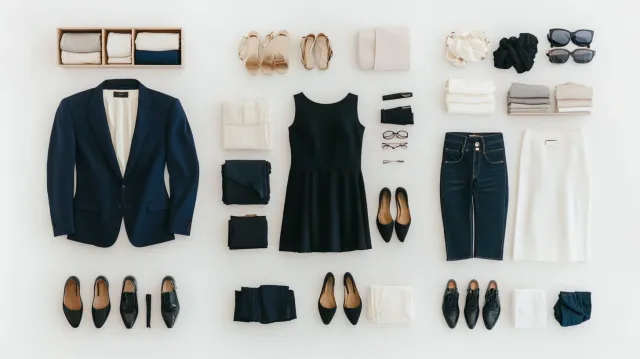
Prep your looks. Everything should be hung, clean, and pressed — not pulled from a bag on the morning of the session. Wrinkled clothing is a problem that takes time to fix, and session time is not for fixing wardrobe.
Handle hair and nails. For portfolio work, the level of preparation that reads as professional on camera is higher than everyday professional appearance. Your hair should be done as it will appear in the session. Nails should be clean — they appear in close crops of hand positions.
Sleep and hydrate. It sounds obvious, but the physical reality is that skin under professional lighting reflects your preparation. Rest and hydration show.
Arrive camera-ready. Hair and makeup done, not in progress. If you're using a professional hair and makeup artist, schedule them to finish 15–20 minutes before your session start time, not at session start.
At the Studio
Arrival
The studio is at 83 E Water Street, Rockland, MA — street parking on E Water Street. Plan to arrive 5–10 minutes early so you're not rushing to get organized once you're there.
Chris will meet you, do a quick walkthrough of the studio setup, and go over the session plan: which looks you're shooting, in what order, and what each look is trying to accomplish.
The Setup
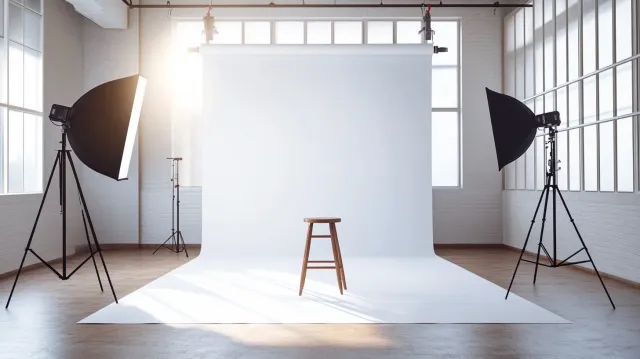
Photography Shark uses a professional studio lighting setup — strobes with various modifier configurations depending on the look you're building. The studio space allows for:
- Seamless backdrop (white, grey, or dark) for clean headshot and commercial looks
- Environmental setup for looks that need more context or texture
- Multiple lighting configurations for different visual aesthetics between looks
This isn't a standard portrait studio shooting a fixed setup across all clients. The lighting is adjusted for your coloring, your look, and the specific images you're trying to make.
The Warm-Up Period
The first fifteen minutes of any portrait session are warm-up. This is normal. Don't evaluate the session based on how the first fifteen minutes feel.
Most people feel slightly self-conscious at the start — uncertain about what to do with their hands, unsure about their expressions, aware of the camera in a way that reads on camera. This passes. Chris has directed thousands of sessions and knows how to move through the warm-up period efficiently.
The images made in the first fifteen minutes almost never end up in final portfolios. The images made once you've settled in are a different caliber.
Active Direction
Every image is made with active direction. Chris will give you:
- Specific posing guidance — where to place your hands, how to hold your shoulders, how to position your body relative to the camera
- Expression direction — specific instructions toward the expression the image needs, not generic notes like "look natural"
- Adjustments in real time — you'll hear feedback between captures
This is different from being handed a camera and pointed at a backdrop. The direction is substantive and continuous throughout the session. Your job is to listen and execute, not to perform the poses you've practiced in a mirror.
Look Transitions
Transitions between looks take 5–10 minutes — time to change, touch up hair and makeup, and reset for the new look's lighting configuration.
Having your looks organized before the session (hung separately, accessories grouped, shoes labeled with which outfit they go with) makes this faster.
The Session Feeling
Most clients report that sessions feel faster than expected — 90 minutes covers a lot of ground when it's well-paced, and the time under active direction passes quickly. Most clients also report that the experience is significantly less awkward than they anticipated.
The warm-up anxiety is real for almost everyone. The "I felt comfortable and forgot the camera was there" experience is also real for almost everyone, and it typically arrives within the first 30–40 minutes.
After the Session
Image Delivery
Edited images are delivered to your personal gallery within 5–7 business days. You'll receive:
- Full-resolution retouched files ready for agency submission, comp card printing, and digital portfolio use
- Web-optimized versions for social media and online platforms
All editing is done with a professional retouching standard — color-corrected, exposure-balanced, skin refined without artificial processing. The images should look like a professional version of you, not a processed version of someone else.
Selecting for Your Portfolio
When your gallery arrives, give yourself time before making selections. Your first pass through the gallery is emotionally influenced — you'll gravitate toward images where you feel you look best, which isn't always the same as images that are strongest for portfolio use.
Give it a day. Come back to the gallery fresh and select with portfolio function in mind: range, variety, market-fit, and image quality. If you'd like input on selection, Chris is available to advise.
A Minute-by-Minute Picture of the 90-Minute Session
For clients who want a more granular sense of pacing, here's roughly how a 90-minute Gold session breaks down. Times shift session-to-session, but the rhythm is consistent.
Minutes 0–10 — Arrival, walkthrough, and consultation refresh. You arrive with your looks pressed and organized. We walk through the studio, talk through the session plan, and make any last adjustments to look order based on what you've brought. If you have questions you didn't get to during the pre-session conversation, this is the time.
Minutes 10–25 — Look one, warm-up phase. Lighting is set for the first look. The first ten minutes of shooting is genuinely warm-up — both for you (settling into being on camera) and for me (calibrating the light to your specific coloring and bone structure). Most of the captures in this window won't make the final selection, and that's expected.
Minutes 25–40 — Look one, working frames. Once you've settled in, the captures get noticeably stronger. We work through several angle and expression variations on the same look. Most of the strongest images from look one come from this window.
Minutes 40–50 — Wardrobe and lighting transition to look two. You change in a private dressing area; I reset the lighting modifiers and adjust the backdrop if needed. This is also a natural break — water, reset, regroup. If you brought hair tools or touch-up makeup, this is when to use them.
Minutes 50–70 — Look two, full work-through. Look two starts faster because we've already established the rapport. The full twenty minutes is productive shooting time.
Minutes 70–80 — Wardrobe and lighting transition to look three.
Minutes 80–90 — Look three, working frames and close. Final look usually moves quickly because by this point the session has its rhythm. We close with a clean set of variations and a few wider crops that complement the headshot-tight frames from earlier looks.
For Platinum (2-hour) sessions, the pattern extends to four looks with the same beat structure. For Silver (60-minute), we cover two looks with tighter timing. The proportions of warm-up to working frames stays roughly the same regardless of length.
Selecting From the Gallery: A Practical Approach
When the gallery arrives, most clients open it and immediately have favorites — usually the images where they feel they look most attractive. That's a normal response and it's not always the right basis for selection. A useful three-pass approach:
First pass — instinct. Star or favorite the images you respond to immediately, without thinking. This captures what you're naturally drawn to, which matters because casting directors respond to images the same way before they analyze them.
Second pass — function. Go back through and ask: does this image fill a specific portfolio role? A clean commercial headshot, a beauty close-up, an editorial frame, a three-quarter body image, a comp card-formatted frame. A portfolio needs variety; selecting four near-identical favorites doesn't serve you.
Third pass — reconciliation. Compare your instinct selections against your function selections. Where they overlap, those are your strongest portfolio images. Where they diverge, decide deliberately — you might keep an image you don't love because it fills a portfolio gap, or skip an image you love because it duplicates a stronger one.
If you'd like input, send me the gallery link with your selections and I'll flag any selections I think could be stronger and any images I think you've underrated. This is included in every package.
Next Steps
With your portfolio images delivered, your next steps are:
- Comp card production if you're building physical leave-behinds
- Online portfolio update — refresh your website, Model Mayhem, or Star Now profile
- Agency submission if you're approaching representation
- Direct outreach to commercial clients or casting directors if you're working independently
Photography Shark is at 83 E Water Street, Rockland, MA 02370. Book a session or call (781) 312-8824.
Frequently Asked Questions
What happens at a model portfolio session at Photography Shark?
Sessions begin with a brief walkthrough of your goals and looks, then move into the shoot with active posing and expression direction from Chris throughout. Most 90-minute sessions cover three to four looks and produce 30–50 usable captures per look before selection.
Do I need modeling experience to book a portfolio session?
No. Chris McCarthy provides direction throughout every session. Many clients building their first professional portfolio have no prior modeling experience — the direction is part of what you're paying for.
How long does a model portfolio session take?
Session times range from 30 minutes (10 edited images, single look) to 90 minutes (20 edited images, multiple looks). For a complete portfolio build with comp card coverage, the 90-minute session is the right choice.
How do I receive my images after the session?
Edited images are delivered via an online gallery within 5–7 business days. All images are full resolution and cleared for commercial use including agency submissions, comp cards, and digital portfolio platforms.
Is there parking at the Photography Shark studio?
Yes, there is street parking available on E Water Street in Rockland, MA. The studio is at 83 E Water Street, Rockland, MA 02370 — accessible from Route 3 and easily reached from Quincy, Hingham, Weymouth, Scituate, Norwell, and the South Shore.
Can I bring someone with me to the session?
Yes. Clients are welcome to bring a friend or support person. For minors, a parent or guardian must be present throughout the session.
Related Posts
You Might Also Like
About the Author
Chris McCarthy
Chris McCarthy has run Photography Shark Studios in Rockland, MA for over 10 years and 500+ sessions, with executive headshot work for Rockland Trust, Clean Harbors, M&T Bank, and McCarthy Planning; founder portraits for AI startups including Lowtouch.ai; product photography for South Shore brands like Lauren's Swim; and headshots across South Shore legal, medical, financial, and academic practices. Every session is personally shot and edited by Chris on Sony mirrorless and Godox strobe systems — no assistants, no outsourcing, no batch retouching. Galleries deliver in 3–5 business days. About the photographer →
Photography Shark · Boston & South Shore MA
Ready to Book a Session?
Professional headshots, senior portraits, boudoir, and model portfolios. Studio in Rockland, MA — 25 miles south of Boston. Sessions from $395.