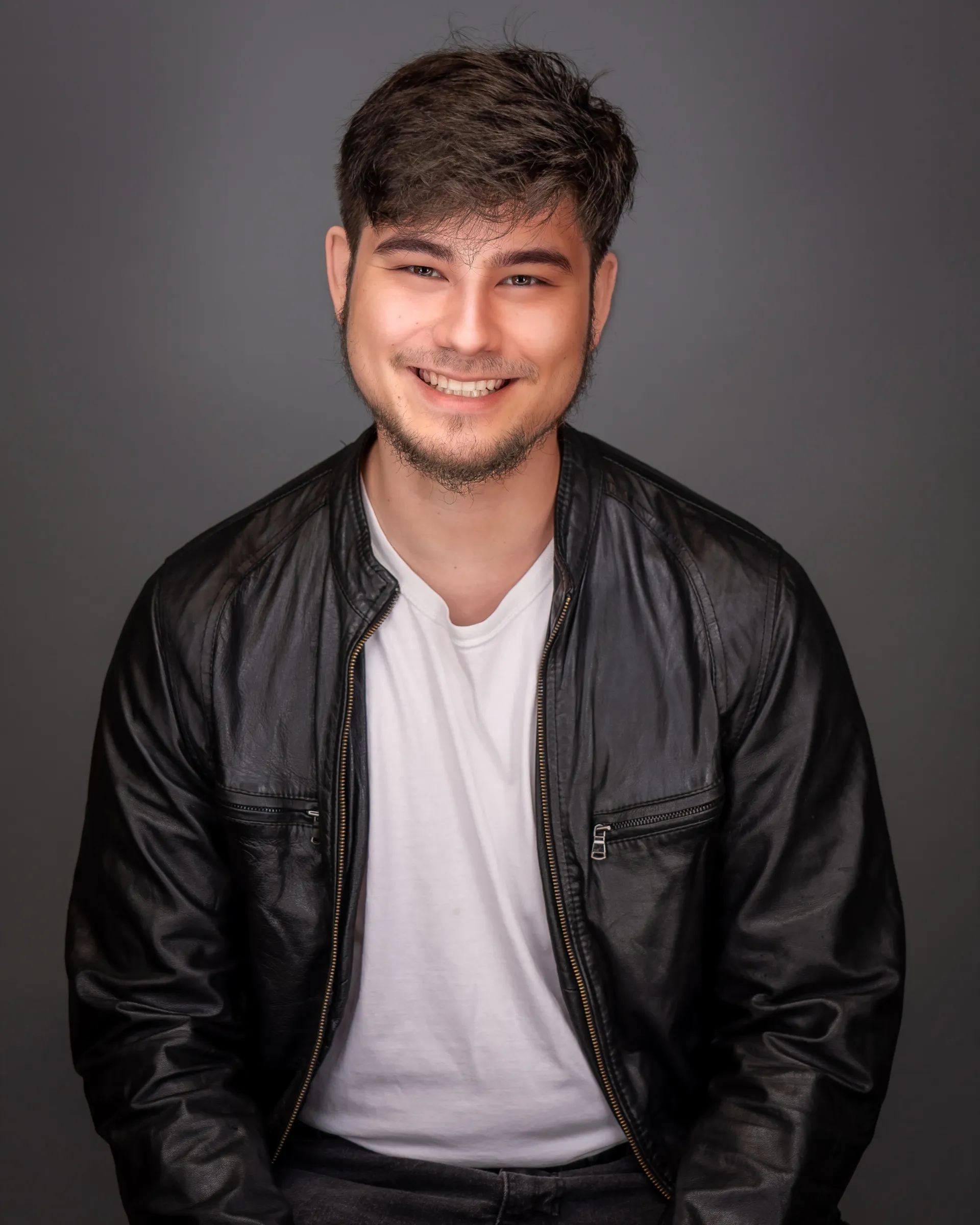
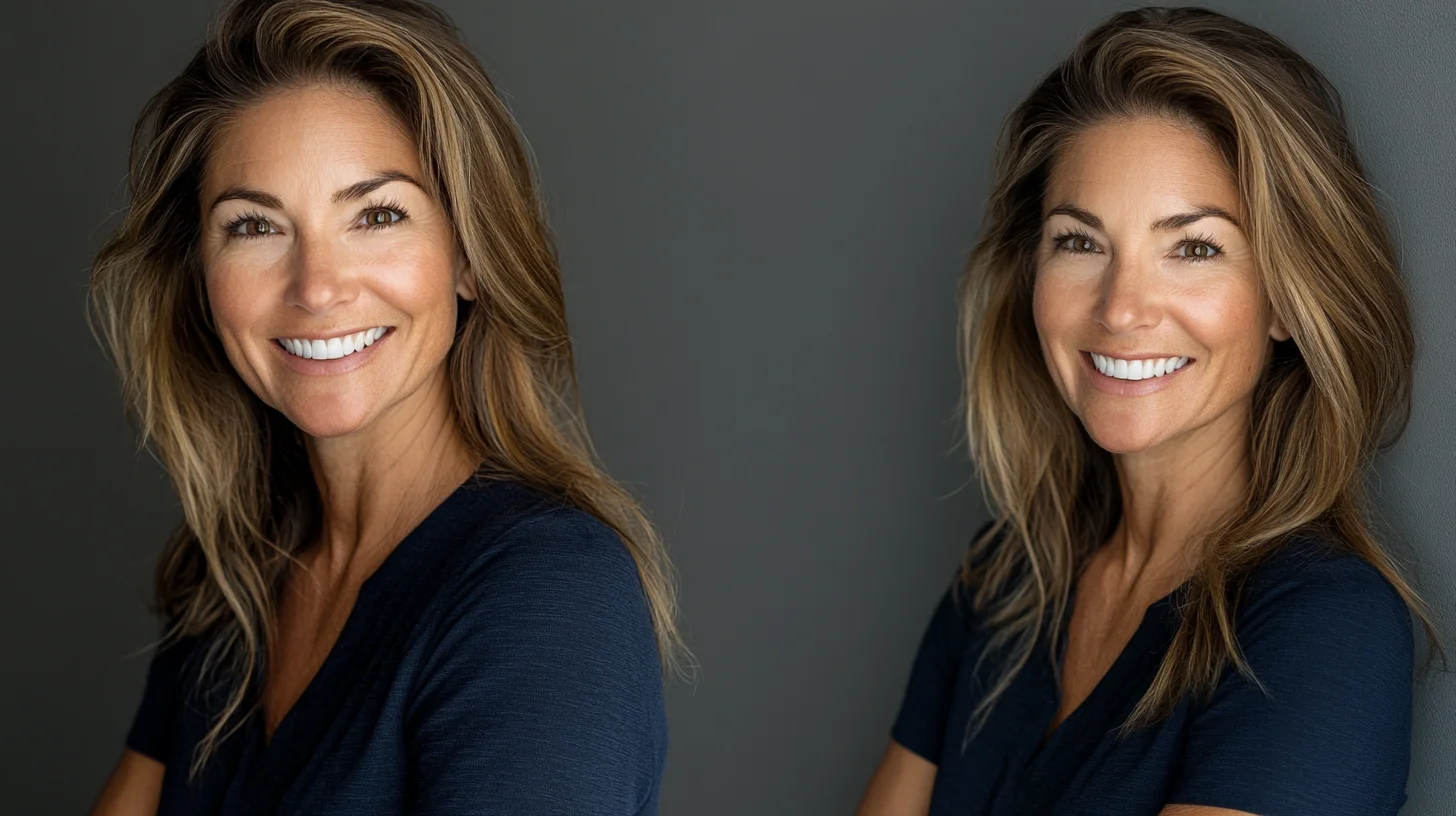
Headshots
Dating Profile Photos in Braintree: The Class-Signal Problem
An essay on what dating-profile photos actually have to do in a town that mixes working-class and white-collar daters more openly than its South Shore neighbors — and why most dating-photo advice misreads this market.
Chris McCarthy
Professional Photographer, Photography Shark · February 27, 2026 · Updated May 20, 2026
Most dating-photo advice tells you to dress like you're heading to a board meeting. For Braintree daters specifically, that advice is wrong — and following it costs them matches they would otherwise have gotten. The local dating pool crosses class lines in a way the affluent South Shore towns don't, and a photo that signals up the ladder too emphatically filters away most of the market.
That's the through-line of this post: what works in Braintree is honest-class signaling, not aspirational class signaling. The Braintree dating profile photography service page handles logistics and pricing. What follows is why the standard imported advice produces worse results in this market specifically, and what a Braintree-honest photo set actually looks like.
The Class-Signal Problem
Most dating-profile advice quietly assumes a single class register. It tells you to dress professionally, to communicate ambition, to project career success. That advice optimizes for a particular kind of dating pool — the homogeneously upper-middle-class urban or suburban market — and it produces photo sets that perform poorly in any market that doesn't share those assumptions.
Braintree's dating pool includes the affluent-professional cohort that advice is written for, but it also includes:
- Trades professionals (electricians, plumbers, contractors) who have strong income but for whom “professional dressing” would be a costume
- Healthcare workers — nurses, techs, EMTs — whose work life and dating-photo strategy don't map to the corporate-office archetype
- Public-sector workers (teachers, municipal employees, police, fire) with their own visual and cultural registers
- Long-term Braintree residents who've been in town for decades and whose dating sensibility is shaped by the older town culture rather than recent professional in-migration
- Younger daters at the start of their careers who haven't yet developed (and shouldn't fake) the visual markers of established success
A profile photo set optimized for the homogeneous professional market — the suit, the styled hair, the carefully composed urban-professional aesthetic — over-filters in Braintree. It signals up the class ladder so emphatically that the substantial pool of daters who don't identify with that register stops engaging. The dater ends up matching only with the slice of the local market that mirrors the photo's claim, which is a fraction of who might otherwise have been interested.
The class-signal problem is the central design constraint for Braintree-market dating photos in a way it isn't for the more uniformly affluent towns south of here.
What “Professional” Should Actually Mean
The word “professional” in dating-photo advice gets used to mean both “technically well-shot” and “visually communicating professional status.” These are different things, and the conflation is what produces the over-formal photo sets that fail in this market.
A photo can be technically professional — well-lit, well-composed, properly exposed, current — without visually claiming a specific professional status. For Braintree clients, this is the version of “professional” that actually serves their dating goals. The photo should be the kind of thing a competent photographer would produce, but the visual register should be honest about who the dater actually is.
A few practical examples of what this distinction looks like in practice:
- A clean, well-lit portrait of someone in a Carhartt jacket reads as “real, current, locally credible” in Braintree. The same photo in a Brooks Brothers suit reads as “trying to appear something I'm not” if the rest of the profile doesn't back up the suit.
- A photo at a workshop bench, in a fire station, or behind a bar communicates a real working identity that resonates with a wide slice of the local market — far more than a photo at a Seaport rooftop.
- A photo in a neat polo and clean jeans, well-shot, almost always outperforms a photo in formal business attire for Braintree clients in the 30–50 range.
The version of professionalism that the photos should communicate is the one that matches the dater's actual working life. Photos that overclaim are the most common failure mode here.
The Wardrobe Problem No One Talks About
Most dating-photo guides treat wardrobe as a checklist of things to wear and avoid. For Braintree clients specifically, the wardrobe problem is subtler: the clothes have to look genuinely like clothes you wear, not like clothes you bought for the photo.
People who own well-fitting professional clothes wear them in ways that show familiarity. The collar sits naturally. The cuff is comfortable. The fabric has a slight wear pattern from previous wears. People wearing clothes for the first time — including clothes bought specifically for the dating photo — wear them stiffly, with attention, with self-consciousness. The viewer doesn't consciously analyze this, but they register it.
For Braintree daters, the practical guidance is to shoot in the clothes you actually wear, not in clothes you've aspirationally bought for the session. The trades professional should be photographed in something that resembles his real wardrobe, well-fitted and clean but recognizable as his. The healthcare worker doesn't need to dress like a corporate manager. The teacher doesn't need to dress like a finance professional.
The fitness instructor I shot last year wanted to come in a suit because she thought that's what dating photos required. The photos she actually ended up using were in a clean fitness-brand top and her usual gym pants. Those photos performed substantially better than the suit photos would have, because they accurately represented who she is and what dating her would actually look like.
The Authentic-Photo Test
The diagnostic question I sometimes ask Braintree clients during the session: would someone looking at this photo, who then met you in person at a coffee shop in town, be surprised by how you presented?
If the answer is yes — if the photo and the in-person presentation are meaningfully different — the photo is doing the dater a disservice. It may produce matches with people who would not be interested in the actual person, leading to first dates that surface the mismatch and end the conversation.
If the answer is no — if the photo is a flattering but accurate representation of how you actually show up in the world — the photo is working for you. It produces matches with people interested in the real you, and the conversion to dates is higher because there's no surprise at the in-person stage.
The authentic-photo test is more useful than most of the standard dating-photo evaluations because it's focused on outcomes rather than aesthetics. A photo can be aesthetically excellent and still fail the authentic-photo test, and the failure cost shows up downstream in the funnel rather than at the swipe layer where it would be obvious.
App-Specific Class Dynamics in Braintree
The app mix in Braintree is different from the more affluent South Shore towns, and the differences matter for photo strategy.
Hinge dominates the 28–42 segment of the Braintree dating market. The platform's design — prompts paired with photos, multiple photos visible during the swipe decision — gives more room for the photo set to communicate a coherent identity than apps that show only a primary photo at first. For Braintree clients, this works in favor of profiles that have a clear, honest claim across the photo set rather than relying on a single high-impact lead.
Bumble has meaningful Braintree activity but with a more selective user base, particularly among women. The 24-hour match window concentrates the visual judgment on the lead photo, which can disadvantage profiles whose strength is in the coherence of multiple photos rather than in a single dramatic shot.
Match still has real activity in the 40+ Braintree segment, and the demographic that uses Match tends to favor longer, more substantive profiles where the photos play a supporting rather than dominating role. For older Braintree daters specifically, Match often performs better than Hinge because the platform's structure rewards the kind of profile they're actually able to write.
Tinder activity in Braintree is lighter than in more transient cities or in college towns. The platform's reputation for being more casual creates a self-selection effect in this market — long-term-resident Braintree daters often don't engage with it at all, which makes the dating pool there younger and more transient.
The strategic implication: the photo set should be optimized for Hinge first, with the secondary photos doing meaningful work; secondary considerations are the dater's age and Match activity if they're 40+.
The Honest-Confidence Pattern
The visual pattern that consistently outperforms in the Braintree market is what I call honest confidence. It's not a specific look — it shows up across class backgrounds, across age groups, across professional identities — but it has a consistent structure.
The photo communicates that the dater is comfortable with who they are. The wardrobe is honest about their life. The expression is grounded rather than performative. The setting is real rather than aspirational. The body language reads as “this is me” rather than “this is me trying to look a certain way.”
The opposite pattern — what fails in Braintree — is performed aspiration. The dater is trying to communicate a version of themselves that's slightly above their actual register. The clothes are slightly nicer than they really wear. The setting is more impressive than they really frequent. The expression is more polished than they really present. None of this is consciously dishonest; it's the natural instinct to put one's best foot forward. But in a market that visibly reads class signals across collar lines, performed aspiration is more noticeable, and it's read as low-confidence rather than ambitious.
Honest confidence isn't modesty. It's self-respect. It's the photo of someone who knows what they bring to the table and presents it cleanly. For Braintree clients, that's the photo that converts.
If the class-signal frame describes your situation — Braintree-based, dating across a mixed pool, uncertain whether to dress up or down — the service-page link at the top covers session logistics and pricing.
Useful adjacent reading, depending on your specific question: the diverse-market profile question in Quincy covers the demographically diverse adjacent town, the Boston volume problem addresses the bio-photo coupling question that applies across the regional dating pool, and the regional dating-pool map frames Braintree's position within the broader South Shore radius math.
Related Reading
- The outdoor-cosplay problem in Norwell dating profiles — Trail-identity signaling and what fails.
- Why the bio does more work than the photo — The Boston volume problem and funnel diagnostics.
- The diverse-market profile question in Quincy — Cross-cultural signals in a demographically mixed market.
- Stable-but-not-settled dating signals — The younger Weymouth post-divorce market.
- The South Shore dating-pool map — Regional radius math and distance-conversion dynamics.
Frequently Asked Questions
Is a suit in the profile photo a good idea for Braintree daters?
Usually no, for this market specifically. A full-suit photo signals a level of formality that reads as misaligned in Braintree's mixed dating pool. The exceptions are real-estate agents, attorneys, and financial professionals for whom the suit is genuinely their professional uniform — in which case it's honest. For everyone else, a fitted-but-casual look (collared shirt, no tie, no jacket; or a clean Henley; or a well-cut t-shirt under an open shirt) does more work without overclaiming the white-collar identity.
Should I shoot in a Braintree-specific location?
The Braintree-specific locations that work are deliberately ordinary: Pond Meadow Park, the bike paths around Sunset Lake, a clean street backdrop in Braintree Highlands. Locations to avoid are the South Shore Plaza parking lot (reads as generic-suburban) and the Red Line stations (reads as transit-utilitarian rather than placed). For most Braintree clients, the studio plus one outdoor at Pond Meadow is the cleanest combination.
How does dating in Braintree compare to dating in Hingham or Norwell?
The age and income spread is wider. Hingham and Norwell skew toward a fairly homogeneous professional-affluent profile in the 35–55 range. Braintree includes that demographic but also a substantial pool of younger and more working-class daters, plus a longer tail of older daters who've lived in town for decades. That spread changes what the profile photo needs to communicate — and rewards profiles that don't try to filter too aggressively up the class ladder.
Are there apps that work better for the Braintree market specifically?
Hinge has the strongest activity in Braintree, particularly in the 28–42 range. Bumble does meaningful work but with a more selective user base. Match still has real activity in the 40+ Braintree segment, which is a town with strong long-term-resident identity and a more deliberate dating culture in the older cohort. Tinder activity in Braintree is lighter than in more transient suburbs.
Related Posts
About the Author
Chris McCarthy
Chris McCarthy has run Photography Shark Studios in Rockland, MA for over 10 years and 500+ sessions, with executive headshot work for Rockland Trust, Clean Harbors, M&T Bank, and McCarthy Planning; founder portraits for AI startups including Lowtouch.ai; product photography for South Shore brands like Lauren's Swim; and headshots across South Shore legal, medical, financial, and academic practices. Every session is personally shot and edited by Chris on Sony mirrorless and Godox strobe systems — no assistants, no outsourcing, no batch retouching. Galleries deliver in 3–5 business days. About photographer Chris McCarthy →
Photography Shark · Boston & South Shore MA
Ready to Book a Session?
Professional headshots, senior portraits, boudoir, and model portfolios. Studio in Rockland, MA — 25 miles south of Boston. Sessions from $395.