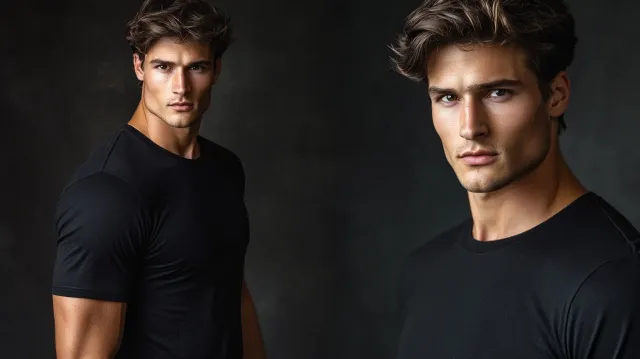
Photography Tips
Male Model Portfolio Boston: What's Different for Men
Male modeling has different portfolio requirements, body standards, and submission processes than female modeling. What Boston men need to go agency-ready.
Chris McCarthy
Professional Photographer, Photography Shark · February 27, 2026 · Updated October 12, 2026
The male modeling market in Boston runs smaller than the female modeling market — significantly smaller, by roughly a 3-to-1 ratio depending on the specific category. That's not opinion; that's agency roster composition. But "smaller" doesn't mean "worse" — it means a male model with a strong portfolio faces less internal competition for the same agency slots than a female equivalent. For the right type, Boston offers steady commercial print, fitness, catalog, and character work.
What male models actually need in a portfolio is different from what female models need, and the differences matter enough to talk about directly. This guide is the advice resource — what's structurally different, how the categories cluster, what agencies are looking at when they review your book.
> Looking to book a session? For pricing, packages, and session logistics, see Male Modeling Boston — the service page. The booking-focused page covers the $395 Standard and $795 Extended formats, comp card add-ons, and the on-day session structure. This guide stays focused on the strategic and structural side.
Here's the practical breakdown from Chris McCarthy at Photography Shark for male clients in the Boston area.
The Male Modeling Landscape
A few structural facts about male modeling that shape how portfolios are built:
- Career windows are longer. Commercial print work for men extends well into the 50s and 60s, especially for "dad" casting, corporate, and character roles. Female modeling peaks younger with a harder cliff at 30–35 for editorial work.
- Market splits clearly by category. Editorial, fashion, fitness, commercial print, catalog, lifestyle, and character work are distinct submarkets with different standards. Men typically pick a lane early.
- Agency rosters skew specific. Boston agencies carry smaller men's boards than women's boards. The ones they do carry are chosen deliberately — which means your portfolio needs to signal exactly which type they'd be signing.
For context on the Boston market generally, see navigating the Boston modeling scene and modeling agencies overview.
Height and Measurements
Traditional men's modeling measurements:
- Editorial / runway: 6'0''–6'3'', 38–40" chest, 30–32" waist, 15–15.5" neck
- Commercial print: 5'10''–6'2'', average build, no specific measurement bar
- Fitness: 5'10''+, defined musculature, typically 170–190 lbs of lean mass
- Character / lifestyle: no measurement requirements — type casts to specific roles
If you're under 5'10'', editorial and runway are effectively closed. Commercial print, character, and lifestyle remain fully open. Don't let height eliminate you from the market — it just narrows which slice of the market is yours.
What the Portfolio Actually Needs
Male portfolios are built on a tight set of shots, not sprawling galleries. The submission-ready portfolio typically contains:
1. The clean headshot. Shoulders up, direct-to-camera expression, minimal styling. Agencies want to see the face without distraction. This is the single most important image in the book.
2. The body shot. Waist-up or full-length in fitted clothing (t-shirt or fitted button-down for commercial; athletic wear for fitness). Shows proportion and build. Plain backdrop.
3. The wardrobe variation. A second outfit in a different color palette or category — suit if the first was casual, or a textured sweater if the first was a t-shirt. Demonstrates range.
4. The character or lifestyle shot. Context beyond the studio — environmental portrait, a prop, a specific expression. Signals personality beyond physical traits.
5. Optional: action or movement shot. Useful for fitness and athletic categories. Demonstrates how the body moves, not just how it looks standing.
Five to eight strong images beats fifteen adequate ones. For deeper guidance on portfolio construction, see how to build a modeling portfolio that stands out. For specific posing technique inside the session itself — the head angles, shoulder rotations, and expression patterns that produce agency-grade frames — see the best modeling headshot poses for agency submissions.
Wardrobe for Male Model Sessions
Bring more than you think. Suggested kit:
- 2–3 fitted t-shirts in solid colors (black, white, charcoal, navy)
- 1 fitted button-down in a neutral (white, light blue, or light gray)
- 1 suit or blazer if going for corporate / fashion work
- 1 athletic or fitness outfit if that's the target category
- 1 personal-style piece that reflects how you actually dress
Fit matters more than brand. A well-fitted $30 shirt photographs better than an ill-fitting $300 one. Ill-fitting wardrobe is the single most common problem in male portfolio sessions.
See what to wear for a model portfolio session for broader wardrobe guidance.
Grooming Considerations
A few practical notes specific to men:
- Haircut 7–10 days before the session. Fresh cuts look too fresh on camera; cuts that are 2+ weeks grown out look unkempt. One week out is the sweet spot.
- Facial hair decision made before the session. Clean-shaven, stubble, full beard — pick one look and commit to it. Don't shave a beard the morning of, and don't bring stubble to a session you've been clean-shaven for the last three months.
- Skin prep counts. Hydrate, sleep, skip heavy salt or alcohol the night before. Tired skin shows more on men's portraits than most clients expect.
- Light grooming kit for session day. Comb, clear nail polish, matte setting powder for T-zone, lint roller. Small details compound.
Category-Specific Portfolio Approaches
Commercial print. Warm, approachable, "real guy" aesthetic. Natural expressions. Everyday wardrobe. This is the largest chunk of paid men's modeling work and probably where most Boston men should target.
Fitness. Clean silhouette showing body composition. Athletic wardrobe. Defined musculature shot with purposeful lighting. Studio strobe or high-contrast lighting helps definition read on camera — the three setups used for this are broken down on the fitness and physique photography page.
Character / lifestyle. Environmental portraits, props, personality-forward images. Less standardized than commercial or editorial. Works well for actors crossing into modeling or models with distinctive looks.
Fashion / editorial. Higher styling, stronger posing, editorial wardrobe. Boston has a smaller fashion market than NYC, but work exists through specific agencies and out-of-town submissions.
How Men's Boards Are Structured at Agencies
Most major modeling agencies separate their men's representation into specific boards, and which board you target affects what your portfolio needs to look like. The typical structure:
Main / Fashion Board. Editorial and runway-focused. The signing bar is height (usually 6'0"+), measurements (38R suit standard), and a "fashion-appropriate" look — symmetrical features, lean build, distinctive aesthetic. The commercial conversion rate from this board is real but secondary to fashion week and editorial campaigns.
Commercial Board / Lifestyle Board. Where the working money lives in markets like Boston. Looser height requirements (5'10" and up is common), broader build range, age-flexible. Models on the commercial board book corporate, healthcare, financial services, retail, and lifestyle work consistently.
Classic / Mature Board. Men 40+, with sustained career windows running into the 60s and beyond. Strong demand from financial services, healthcare, pharmaceutical, and retirement-adjacent advertising — categories that are well represented in the Boston market.
Fitness Board. Specialized representation for men with athletic builds, fitness-industry experience, and the conditioning to peak for shoots. Usually a smaller roster but with consistent specialty bookings.
Character / Real People Board. The casting category for distinctive looks — older fathers, blue-collar archetypes, unusual physical features, recognizable "real person" energy. Less standardized than other boards but a real working market for actors-turning-models and models with strong character looks.
For most Boston-area men entering modeling, the realistic target is the commercial board at a regional agency (Maggie Inc., Model Club Inc.) plus, for higher-rate national bookings, a commercial submission to one of the New York agencies that work with New England-based commercial models. Don't submit to a fashion main board if your stats and look don't match — the rejection isn't personal, it's category-based, and the same images submitted to a commercial board often produce the opposite outcome.
Commercial vs. Fashion: How the Two Tracks Differ for Men
The commercial-vs-fashion distinction is particularly clear in the men's market because the visual templates are so different.
Fashion menswear is built around a specific aesthetic: lean, angular, often unsmiling, styled in current designer wardrobe, lit with editorial intent. The face has to read distinctive on camera — strong jawline, defined cheekbones, deliberate styling. The wardrobe is part of the image, not background to it. Hair is styled. Posing is angular. Boston has a small fashion market; most of the work for men in this category routes through New York.
Commercial menswear is built around relatability. The face has to read warm, accessible, and trustworthy — "guy I'd want to work with," "guy I'd want as my doctor," "guy I'd buy a financial product from," "dad I'd want my kids to have a friendship with." Wardrobe is everyday — a fitted t-shirt, a button-down, a clean blazer, a polo, a casual jacket. Lighting is soft and natural-feeling. Expression is genuine. Boston is a strong commercial market; this is where the working money is for most men in this region.
Hybrid commercial-fashion is a real thing for some male models — a clean-cut commercial face that also reads in higher-styled fashion contexts. Models who can deliver both have more opportunities. Most men who think they're in this category are actually in straight commercial; the bar for credible fashion work is high enough that wishful thinking doesn't hold.
The portfolio decision follows from this: if you're commercial, build commercial. Five strong commercial frames that read as authentic, warm, professional, and genuine are worth more to a Boston agency than fifteen attempts at a fashion look that doesn't fit you.
Fitness and Grooming Standards Specifically for Men
Some specifics worth being explicit about for male portfolio work:
Body fat range. Commercial work generally photographs well from about 12% to 18% body fat — fit and healthy without being depleted. Fitness work specifically targets 8% to 12% for "shoot ready" with lighting that emphasizes definition. Men trying to walk into a commercial portfolio session at competition-level conditioning often look gaunt under soft commercial lighting; men trying to walk into a fitness portfolio session at 18% don't get the cuts to read on camera. Match the conditioning to the category.
Skin condition. Men's portrait skin shows under directional studio lighting with a specificity many male models underestimate. The 48 hours before a session: hydrate aggressively, sleep, no alcohol, no high-sodium meals, no aggressive shaving. The morning of: shave (or don't, but commit to the look), moisturize light, no shiny skincare products. Light powder for T-zone is normal. Heavy makeup is not.
Hair specifics. A fresh haircut 7 to 10 days out is the sweet spot, as noted earlier. Beyond that: bring a small comb, your usual product (light pomade, matte clay, or whatever you actually use), and any styling tools you depend on. Men with longer hair benefit from a professional blowout or wash-and-style the morning of the session — wet-from-the-shower hair photographs unpredictably.
Body hair. Personal preference, but consistency matters. If you trim chest hair, do it. If you don't, don't show up partially trimmed. Same for facial scruff — clean-shaven, deliberate stubble, or full beard, but not "I started shaving and stopped halfway through."
Posture and presence. This is the thing that separates booked male models from unbooked ones at the same look register. Stand tall, weight forward through the balls of the feet, shoulders back without being theatrical, chin slightly forward. Practice in a mirror before the session. Most men carry a default seated-at-a-desk posture that compresses on camera; correcting it is the single most leveraged change you can make to your image quality.
Male Model Requirements: What Actually Matters in 2026
The aspiring male model question I hear most often is some version of "what are the male model requirements?" — usually framed as a checklist with hard cutoffs. The honest answer is that the requirements vary by category and the published thresholds are softer than the internet treats them.
Height requirements for male models. The traditional published number for fashion modeling is 5'11" to 6'2". This range is real for high-fashion runway and editorial campaigns, where designer fit standards and showroom samples drive height requirements that have been stable for decades. But it's not the threshold for the rest of the male modeling market. Commercial print, fitness modeling, character work, and lifestyle photography all have substantially wider height windows — 5'8" to 6'4" is workable for most commercial categories, and shorter men book regularly for character-driven commercial work (real-dad ads, working-trades campaigns, lifestyle brand work that wants visible age and personality).
Build and body composition. Fashion-track male models tend toward a lean build (jacket size 38–40R, waist 30–32). Commercial and fitness tracks are more flexible. Fitness modeling specifically rewards a defined, athletic build — not necessarily bodybuilder size, but visible muscular definition and low body fat. Character work is the most permissive: dad bodies, athletic builds, and lean physiques all book in different rooms.
Face requirements for male models. Male model face requirements at the agency level focus on bone structure (defined jawline, prominent cheekbones, symmetrical proportions), skin condition (clear skin, well-managed facial hair, healthy color), and what agencies call "presence" — the quality of looking confident and engaged without being stiff. Traditional male model faces lean toward what agencies describe as "strong" rather than "soft" features, but commercial and character categories book a much wider range of face types than the high-fashion category.
The practical implication: don't disqualify yourself based on a single threshold. Most aspiring male models who fail the 6-foot fashion height cutoff still have full access to commercial, fitness, and character work that pays comparably and books more consistently.
Male Modeling Clothes: What to Bring to a Portfolio Shoot
The wardrobe question for male models is more constrained than for women, but the constraints have specific patterns that come up in every shoot I run with first-time male models.
Commercial wardrobe. Two to three commercial looks should be in any first-portfolio session. A clean fitted t-shirt (white, gray, navy — solid colors photograph cleanest), a well-fitting button-down shirt (light blue, white, or oxford striped), and a pair of well-fitting jeans or chinos in a neutral color. The fit matters more than the brand — fashion's grip on the commercial market is that wardrobe needs to look effortless rather than effort-full, and an off-the-rack shirt that fits well outperforms a designer shirt that doesn't.
Fashion and lifestyle wardrobe. Higher-styled looks — a fitted blazer (charcoal, navy, or black), a tailored shirt with the top button open, dark wash jeans or trousers, dress boots or clean leather sneakers. These pieces should fit through the shoulders and chest precisely. Loose-fitting fashion wardrobe reads as not-current and dates the portfolio quickly.
Fitness wardrobe. Athletic shorts (mid-thigh, fitted), a tank or fitted athletic top, athletic shoes that look new. Fitness portfolio shots should show physique without trying too hard — a flat-lit fitness photo with the model in athletic clothes that fit well is the agency-standard image, not the heavily-oiled bodybuilding-magazine style that some aspiring models default to.
What to avoid. Logo-heavy clothing (the brand becomes the focus instead of the model), oversized fit (reads as either dated or as hiding the body), trendy pieces that will date within a year, and white sneakers with visible scuffs (sweep them clean or bring a fresh pair). Also avoid all-black wardrobe for the entire session — it tends to flatten in photographs and limits the shot variety.
The grooming complement to wardrobe. Walk into the session with a fresh haircut from 3–7 days prior (not the day of), clean-shaven or precisely-maintained facial hair (no scruffy in-between states), trimmed nails, and clean skin. The wardrobe and grooming work together — a well-fitting outfit on a model with a scraggly beard reads worse than a basic outfit on a model with sharp grooming.
How to Get Into Modeling as a Man in Boston
The path into male modeling in the Boston market is more straightforward than aspiring models often assume, but it requires a specific sequence:
- Build a portfolio that targets the categories you can actually book. For most aspiring male models in Boston, that means commercial and lifestyle work first, with fashion-track images only if you genuinely fit the height and build profile. Trying to lead with fashion-track photos when you're 5'9" with a commercial build doesn't open agency doors — it gets your submission filed in the "not ready" pile.
- Submit to commercial agencies first. Boston-area agencies that handle commercial bookings (Maggie Inc., Model Club, Dynasty Models) review submissions on rolling cycles. Open-call submissions are accepted via website; some accept walk-ins on scheduled days.
- Network into freelance work directly. A substantial portion of the male modeling market in Boston runs through freelance channels — direct bookings from brands, photographer referrals, repeat client work — that doesn't require agency representation. See our freelance modeling guide for the freelance path specifically.
- Build a public-facing presence aligned with the work you want. Instagram remains the primary discovery channel for commercial bookings. A consistent feed of portfolio-grade images aligned with the categories you want to book moves you up in the casting algorithm in ways that just-existing in agency books does not.
The career window for male models is wider than for women — 18 to mid-40s is the working range for commercial work, with a separate mature-market window from mid-40s onward for character work. Most aspiring male models who put in three to six months of focused portfolio building and submission work end up booking, even if the first bookings are modest.
A Note on the "Dad Cast" Submarket
A specific Boston commercial submarket worth flagging for men 35–50: the "dad cast." Real estate marketing, financial services, healthcare advertising, family-targeted retail, insurance — all categories that recurringly cast men in this age range to play a relatable family-coded archetype. The look is approachable, fit but not bodybuilder, well-groomed but not stylized, with a warm and competent presence.
For men in this age range, building a portfolio specifically around this submarket is a high-yield strategy. The specific frames that book this work: a clean professional headshot, a smiling-warm casual headshot, a casual lifestyle shot in fitted weekend wardrobe, and ideally one environmental "at home" or family-context shot (with or without an actual family — sometimes the implication is enough). This is not glamorous modeling. It is consistent, recurring, paid commercial work that builds a working career.
Ready to Book?
Get in touch to schedule a consultation and discuss portfolio direction. Photography Shark is based in Rockland, MA, serving Boston and the full South Shore.
Related reading: picking a professional photographer for portfolio work in Boston · Commercial vs editorial model portfolios · Model portfolio services & pricing
Frequently Asked Questions
Is male modeling really different from female modeling?
Structurally, yes. The market is smaller (roughly 20–30% the size of female modeling by most estimates), career windows are longer (men can work commercial into their 50s and 60s), and portfolio requirements lean harder on specific shots — a clean headshot, a torso/body shot, and a demonstrated wardrobe range. The session itself is photographed with the same technical approach, but the target submission is different.
What height do you need to be for male modeling?
For editorial and runway, 6'0''–6'3'' is the traditional range. For commercial print modeling (the majority of paid work), anywhere from 5'10''–6'2'' is standard. For fitness, lifestyle, and character work, height matters much less — body type and on-camera presence drive bookings.
What does a male model portfolio need to include?
At minimum: one clean headshot (shoulders up, direct expression), one body shot (waist up or full length, fitted clothing), one wardrobe variation, and one character or lifestyle shot. Five to eight total images is enough for most agency submissions. More is not better — tight edits of strong frames outperform exhaustive galleries.
How much does a male model portfolio session cost in Boston?
Session pricing at Photography Shark starts at $395 for a 45-minute session with 10 retouched images. For a full agency-submission portfolio, the Silver or Gold packages ($495–$595) produce 15–20 edited images across 2–3 outfit changes. Pricing is the same regardless of gender.
Do male models need professional makeup?
For most male model portfolio sessions, no. Light powder to cut shine and under-eye concealer if needed is usually sufficient. Fitness and fashion work may call for more styling (hair product, light groomer-style touchups) but full makeup isn't standard for men's portfolio work.
Related Posts

You Might Also Like
About the Author
Chris McCarthy
Chris McCarthy has run Photography Shark Studios in Rockland, MA for over 10 years and 500+ sessions, with executive headshot work for Rockland Trust, Clean Harbors, M&T Bank, and McCarthy Planning; founder portraits for AI startups including Lowtouch.ai; product photography for South Shore brands like Lauren's Swim; and headshots across South Shore legal, medical, financial, and academic practices. Every session is personally shot and edited by Chris on Sony mirrorless and Godox strobe systems — no assistants, no outsourcing, no batch retouching. Galleries deliver in 3–5 business days. About photographer Chris McCarthy →
Photography Shark · Boston & South Shore MA
Ready to Book a Session?
Professional headshots, senior portraits, boudoir, and model portfolios. Studio in Rockland, MA — 25 miles south of Boston. Sessions from $395.