
Photography Tips
The Boston Student's Guide to Job & Internship Headshots
A definitive, school-by-school guide to professional job and internship headshots for Boston college students — what makes a good one, what to wear by industry, common mistakes, and budget reality from a Boston-area studio.

Chris McCarthy
Professional Photographer, Photography Shark · June 10, 2026
Your first impression with a recruiter almost never happens in person anymore. It happens on LinkedIn, on Handshake, in an applicant-tracking system, or in the half-second a hiring manager spends scanning a stack of candidate profiles before a career fair. In nearly every one of those moments, your headshot is doing the talking before you say a word.
For Boston-area college students, that matters more than most. You're competing for internships, co-ops, and entry-level roles in one of the densest concentrations of finance, consulting, biotech, healthcare, tech, and media employers in the country — against students from dozens of strong programs. A professional headshot won't get you the job. But a bad one (or a missing one) quietly costs you opportunities you'll never even know you lost.
This is a practical, school-by-school guide to getting that photo right. It's written for the job search specifically — LinkedIn, Handshake, networking, and recruiting — not for graduation portraits or campus lifestyle photos. Let's start with the universals, then get into what each Boston school's recruiting culture actually expects.
Why a Professional Headshot Matters for Students Right Now
Three platforms drive student recruiting, and all three reward a real headshot:
- LinkedIn. Profiles with a clear professional photo get dramatically more profile views and connection requests than those without. Recruiters filter and skim visually — a missing or low-quality photo is a silent disqualifier. For the full specs on framing, file size, and what LinkedIn's algorithm favors, see the LinkedIn profile photo guide.
- Handshake. The platform most U.S. universities use for internship and entry-level recruiting lets employers browse student profiles directly. A polished photo makes your profile look complete and serious, which affects whether a recruiter clicks through.
- Networking and career fairs. Informational-interview requests, alumni outreach, and conference badges all reuse your professional photo. One good image gets recycled across every touchpoint for years.
The return on a single good headshot is unusually high for students: you take it once, and it works across every professional surface you have until you graduate and beyond.
What Makes a Good Job-Search Headshot
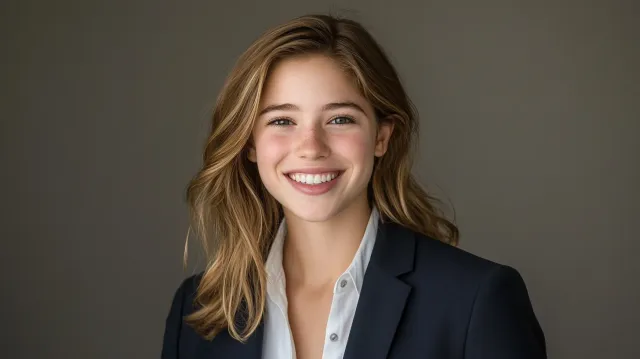
A strong student headshot is not a glamour shot. It's a clear, trustworthy, approachable photo that reads as "I take this seriously." The fundamentals:
- Eye-level framing, mid-chest crop. Your eyes should sit roughly one-third from the top of the frame. The camera should be at eye level — not above (looking down) or below (looking up).
- Soft, even light on the face. No harsh shadows under the eyes or across one cheek. Window light or studio lighting both work; overhead fluorescents and direct sun don't.
- A clean, uncluttered background. A solid wall or seamless backdrop in a neutral tone. No dorm rooms, no parties, no busy hallways.
- A genuine, relaxed expression. A slight, natural smile reads as confident and approachable. A forced grin or a flat stare both undercut you.
- Sharp focus on the eyes. This is what makes a photo look "professional" versus "snapshot," even at thumbnail size.
If you want the deeper version of this, the professional headshots vs selfie breakdown shows exactly why a phone selfie distorts your face and what a proper portrait lens fixes.
What to Wear, by Target Industry
The rule of thumb: dress one notch above the everyday dress code of the industry you're applying to. Here's how that translates for the fields Boston students most often target.
Business Formal (Finance, Consulting, Law, Banking)
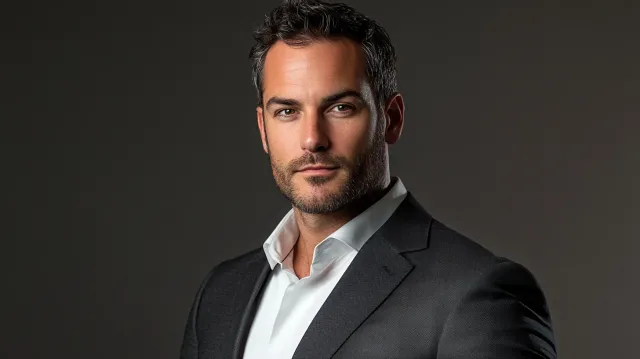
Wear business attire. For most students that means a dark blazer or suit jacket over a solid collared shirt or simple top. A tie is optional for the photo, but the jacket is not. Keep colors conservative — navy, charcoal, black — and patterns minimal. This is the most demanding register, and these recruiters notice polish.
Business Casual (Tech, Healthcare, Biotech, Corporate, Government)
A blazer over a plain top, or a collared shirt without a tie, reads exactly right. You want to look put-together and competent without looking stiff. Solid colors still photograph best. This is the safest default if you're applying broadly across industries and want one photo that works everywhere.
Creative-Professional (Media, Communications, Marketing, Arts)
You have room to show personality — a touch of color, a more relaxed top, a bit of individual style — but the photo still needs to read as professional. The goal is "creative and capable," not "casual." Avoid anything that looks like a personal social-media photo.
Whatever your industry, the universal don'ts apply: no loud patterns, no large logos, no neon, no graphic tees, and nothing you'd be self-conscious about in two years. For a complete walkthrough of colors, necklines, and what photographs well, see what to wear for a professional headshot in Boston.
The Most Common Student Mistakes
These are the errors I see most often on student profiles — and the ones recruiters notice instantly:
- The cropped group photo. A formal-event or party photo with friends cropped out. The lighting, angle, and expression are all wrong, and the crop is obvious.
- The selfie. Phone front cameras use wide-angle lenses that enlarge your nose and distort your proportions. They read as casual at best and unprofessional at worst.
- The inconsistent photo set. A different photo on LinkedIn, Handshake, and your résumé. Recruiters cross-reference these; one consistent image looks intentional and makes you memorable.
- No photo at all. A blank profile picture reads as an incomplete or abandoned profile — worse than a mediocre photo.
- The over-filtered photo. Heavy beauty filters and skin-smoothing apps produce a plastic, "AI" look that experienced recruiters recognize and distrust.
- The years-out-of-date photo. A high-school senior photo doesn't represent who shows up to the interview.
DIY vs. Professional on a Student Budget
You don't always need to pay for a studio session — but you do need to be honest about which path you're actually capable of executing.
DIY can work if you have: a window with soft, indirect daylight; a clean wall; a friend to take the photo (never a selfie); a phone held at eye level a body-length away; and business-casual wardrobe. Done carefully, that produces a passable LinkedIn thumbnail for free.
A professional session is worth it when the stakes are higher — competitive finance/consulting recruiting, a photo you'll reuse for years, or any field where polish is part of the evaluation. The practical advantage is consistency and quality you can't reliably reproduce yourself: proper portrait-lens framing, multi-light setups, professional retouching, and multiple crops (square for LinkedIn, vertical for Handshake) from one sitting.
Before you book anything, check your school's career-services office first. Many run free or low-cost "headshot day" events during recruiting season, especially around career fairs. If you do book a studio, the Boston headshot cost guide breaks down what each price tier actually includes so a student budget goes to the right things. For the recruiting-specific version of all this, the Boston interview headshot guide covers what to optimize for when the photo is tied directly to a job application — and Boston LinkedIn headshots covers the profile-photo side specifically.
Timing It Around Recruiting Season
Get your headshot done before recruiting ramps up, not in the middle of it. Two windows matter for most Boston students:
- Fall recruiting for many internships and co-ops opens in late August and September. Have your photo and profiles ready before then — ideally before classes even start.
- Spring recruiting picks up in January and February. The winter break is an ideal time to refresh your photo and profiles before applications open.
Booking a few weeks ahead means your LinkedIn and Handshake profiles look polished when recruiters start browsing and before career-fair season — not scrambling the night before a deadline. If a co-op or internship cycle is approaching, treat the headshot as part of your application prep, not an afterthought.
For Boston University Students
BU sends large cohorts into finance, consulting, and tech, and the Questrom School of Business in particular feeds a business-formal recruiting pipeline where polish is expected. Questrom students targeting investment banking, consulting, or finance should default to the business-formal register — a dark blazer, conservative colors, minimal pattern. COM (College of Communication) students heading into media, PR, marketing, and journalism have more room for a creative-professional look, but the photo still needs to read as serious. Engineering and CS students applying to tech and biotech are safe with sharp business casual. Across all of BU's schools, the common thread is volume: you're one of thousands of students recruiters scan, so a clean, distinctive, professional photo helps you stand out. Check your school's career-services office for headshot-day events, and make sure your Handshake profile photo matches your LinkedIn before fall recruiting opens.
For Northeastern Students
Northeastern's co-op program makes headshots matter earlier and more often than at almost any other Boston school. Because co-op places you with real employers — sometimes multiple times across your degree — you need a professional photo on your profiles well before your first co-op search, not just before graduation. Many employers review student profiles directly during the co-op matching process, so your headshot is part of how you get selected. Plan to have a strong photo ready before your first co-op cycle and refresh it if it starts to look dated across multiple placements. The industries Northeastern students enter span tech, finance, healthcare, engineering, and biotech, so business casual is the safe default, with business formal for finance and consulting tracks. Use your school's career-services office and its co-op resources, and keep your Handshake and LinkedIn photos identical so employers recognize you across platforms throughout your co-op journey.
For Boston College Students
BC's Carroll School of Management feeds heavily into finance, consulting, and accounting, where recruiting culture skews conservative and business-formal. For Carroll students, that means a suit jacket or dark blazer, a solid shirt, restrained colors, and a polished, confident expression — this is one of the registers where looking a notch sharper genuinely helps. Students in the Morrissey College of Arts and Sciences applying to consulting, law, or corporate roles should follow the same business-formal lead; those heading into media, nonprofit, or creative fields have a bit more latitude but should still read as professional. BC's recruiting calendar follows the standard fall and spring cycles, so get your photo done ahead of each. Your school's career-services office can point you to headshot opportunities and Handshake setup, and a consistent professional photo across your profiles reinforces the polished, button-up impression these employers respond to.
For UMass Boston Students
As a public university with a large population of commuter and working students, UMass Boston's strength is practicality — and your headshot strategy should match. You don't need an expensive session to compete; you need a clean, professional photo that holds its own against students from any school. Start by checking your school's career-services office for free or low-cost headshot events, which are the highest-value option for a tight budget. If you're shooting your own, the DIY approach above — window light, clean background, a friend behind the camera — produces a perfectly strong LinkedIn and Handshake photo for free. UMass Boston students enter an unusually broad range of fields, from healthcare and business to public service and tech, so business casual is the most versatile default. The key advantage you have is real-world experience; make sure your professional photo, profiles, and Handshake account present that experience as confidently as it deserves.
For Emerson College Students
Emerson's focus on communication, media, the arts, and the creative industries means your headshot can carry more personality than a finance student's — but "creative" is not the same as "casual." Recruiters in media, marketing, PR, film, and publishing expect to see someone polished and intentional, with enough individual style to signal creative confidence. That means you can use a touch of color or a more relaxed wardrobe, but the lighting, framing, and expression still need to be deliberate and professional. Avoid the trap of treating your professional headshot like a personal social-media photo; the bar for craft is actually higher in creative fields because the people evaluating you make visual judgments for a living. Emerson's downtown Boston location keeps you close to the city's media and agency employers, so a strong, recognizable photo across LinkedIn and Handshake matters. Check your school's career-services office for guidance before recruiting season.
For Suffolk University Students
Suffolk's downtown Boston campus puts students in the middle of the city's business, legal, and government employers, and its programs feed strongly into business and pre-professional tracks. For Sawyer Business School students and anyone targeting finance, accounting, or corporate roles, business-formal attire is the right call — a blazer or suit jacket, conservative colors, and a confident, professional expression. Pre-law and pre-professional students should aim for the same polished register, since legal and government employers value a serious, buttoned-up presentation. Suffolk's location is an advantage for in-person networking and interviews, so your online photo should match the impression you'd make walking into a downtown office. Get your headshot done ahead of fall and spring recruiting, lean on your school's career-services office and Handshake for opportunities, and keep one consistent professional photo across every platform recruiters might check.
A Quick Checklist Before You Book or Shoot
- Decide your highest-stakes target industry and dress one notch above it.
- Check your school's career-services office for headshot-day events first.
- Solid colors, clean background, eye-level framing, mid-chest crop.
- Have someone else take the photo — never a selfie.
- Use the same photo on LinkedIn, Handshake, and your résumé.
- Do it before recruiting season opens, not during.
Ready to Book a Professional Session?
If you decide a professional headshot is the right move for a competitive recruiting season, get in touch to book a session. Photography Shark's studio is in Rockland, MA — about 35 minutes south of Boston with free parking, which is easy for South Shore students and anyone willing to step off campus for a polished result. On-location options in Boston are also available for student groups and campus organizations.
Related reading: Residency application photos for Boston med students · Boston interview headshot guide · Boston LinkedIn headshots · Boston headshot cost guide · What to wear for a professional headshot in Boston · LinkedIn profile photo guide · Professional headshots vs selfie
Frequently Asked Questions
Do college students really need a professional headshot for job applications?
For most internship, co-op, and full-time recruiting today, yes. Your LinkedIn and Handshake profiles are the first thing recruiters see, and both reward a clear, professional headshot with higher profile completion and better recruiter search visibility. You don't need an expensive portrait — you need a clean, well-lit, correctly-framed photo that reads as a serious candidate. That single image gets reused across LinkedIn, Handshake, networking sites, conference badges, and résumés for years.
What should a Boston student wear for a job-search headshot?
Dress one notch above your target industry's everyday standard. For finance, consulting, and law, wear business attire — a dark blazer or suit jacket, solid shirt, minimal pattern. For tech, startups, healthcare, and most corporate roles, business casual works — a blazer over a plain top, or a collared shirt without a tie. For creative, media, and arts fields, you have room for personality but should still read as polished. Solid colors photograph best; avoid busy patterns, logos, and bright neon.
How much does a student headshot cost in Boston?
Prices vary widely. Some campus career centers run free or low-cost "headshot day" events during recruiting season — worth checking with your school's career-services office first. A dedicated professional studio session in the Boston market typically starts around a few hundred dollars and includes retouched, multi-format images you can reuse for years. See the Boston headshot cost guide for a full breakdown of what each price tier actually includes.
When should I get my headshot done relative to recruiting season?
Get it done before recruiting ramps up, not during. Fall recruiting for many internships and co-ops begins in late August and September, and spring recruiting picks up in January and February. Booking your headshot a few weeks ahead means your LinkedIn and Handshake profiles are polished before applications open and before career-fair season — when recruiters are actively browsing student profiles.
Can I just use a cropped photo or a selfie for my professional profile?
It's the single most common student mistake. Cropped party photos, vacation pictures, and selfies signal that you didn't take the application seriously, and phone selfies distort facial proportions because of the wide-angle lens. A headshot doesn't have to be formal to be effective, but it should be intentional: good light, a clean background, eye-level framing, and a photo taken by someone other than you.
Related Posts

![What to Wear for a Professional Headshot: Complete Guide [2026]](/blog/what-to-wear-for-a-professional-headshot---boston--hero-w640.webp)


You Might Also Like
About the Author
Chris McCarthy
Chris McCarthy has run Photography Shark Studios in Rockland, MA for over 10 years and 500+ sessions, with executive headshot work for Rockland Trust, Clean Harbors, M&T Bank, and McCarthy Planning; founder portraits for AI startups including Lowtouch.ai; product photography for South Shore brands like Lauren's Swim; and headshots across South Shore legal, medical, financial, and academic practices. Every session is personally shot and edited by Chris on Sony mirrorless and Godox strobe systems — no assistants, no outsourcing, no batch retouching. Galleries deliver in 3–5 business days. About photographer Chris McCarthy →
Photography Shark · Boston & South Shore MA
Ready to Book a Session?
Professional headshots, senior portraits, boudoir, and model portfolios. Studio in Rockland, MA — 25 miles south of Boston. Sessions from $395.