Photography Tips
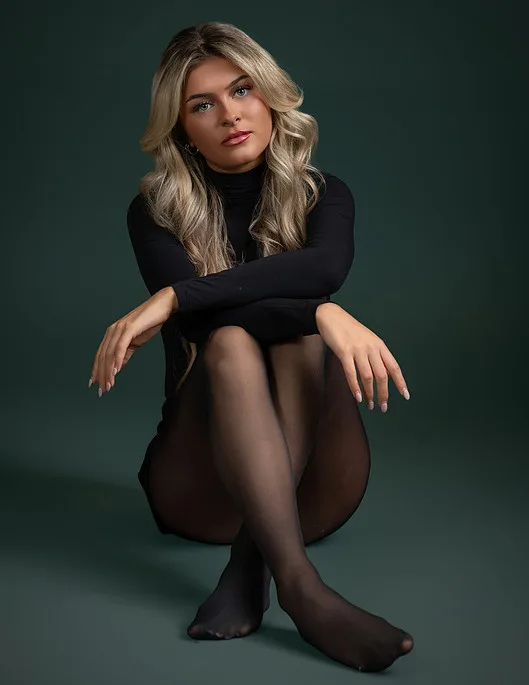
Boston Model Shannon Bralley
Practical guide for emerging South Shore models — camera confidence, studio vs location, posing, and approaching Boston modeling agencies.
Chris McCarthy
Professional Photographer, Photography Shark · January 1, 2024 · Updated January 12, 2026
The transition from thinking of yourself as someone who likes photos to thinking of yourself as someone who models professionally is a significant one. It doesn't happen at a single moment — it's a gradual process of developing skills, building a portfolio, getting comfortable in front of the camera, and understanding what the commercial market actually looks like and how to position yourself for it.
In my experience working with clients across Boston and the South Shore, the biggest gains come from the simplest adjustments.
Many of the best models working in the Boston and South Shore area didn't come from formal industry backgrounds. They came from a genuine love of fashion and self-expression, a willingness to put in the work, and the discipline to approach the craft seriously. This post is for people in the early stages of that journey — young models, emerging talent, and anyone asking the question "how do I actually start?"
Starting from Confidence: What That Actually Means
Confidence in front of the camera is discussed constantly in modeling, and most of that discussion is unhelpful. "Just be confident" is not advice. It's a description of the outcome, not a path to it.
Real camera confidence is a skill that develops through practice and self-knowledge. It starts with knowing your angles — understanding, through experience and attention, which physical positions and facial orientations produce the best results for you specifically. This is learned through time in front of a camera with active direction, not through some innate self-assurance.
One of the most useful reframings I offer to beginning models: stop trying to control every frame. You can't see the image as you're creating it, and attempting to manage your appearance in real time produces exactly the stiffness you're trying to avoid. Instead, focus on following direction precisely and trusting the process. The images you're uncertain about during the shoot are often the strongest images in the gallery.
The corollary: the small insecurities you're aware of — the slightly asymmetrical feature, the self-consciousness about a particular angle — are almost never visible in images. You are a far harsher critic of yourself than any camera or any audience will be. Acting on that knowledge, as a consistent practice rather than just an occasional reminder, is where real camera confidence comes from.
The Studio vs. Location Decision
One of the first practical decisions a beginning model makes about portfolio building is whether to shoot in a studio environment or on location. Both are valid; both serve different purposes; and most strong portfolios eventually include both.
Why Studio Shoots Are a Strong Starting Point
Studio shoots remove variables. The light is controlled, the environment is private, and there are no weather or location logistics to manage. For a beginning model, this means the session can focus entirely on developing posing skills and camera presence without competing distractions.
Studio images also tend to look the most polished and professional, which is an advantage for agency submissions and client portfolios. Clean studio headshots and commercial lifestyle images against simple backgrounds are the foundation of almost every working model's book.
Photography Shark Studios has a dedicated studio space in Rockland, MA — professional lighting, clean backdrops, private changing areas, and an environment specifically designed for portrait and fashion work. For South Shore models, this is a convenient and quality option for studio-based portfolio work.
When Location Work Adds Value
Location shooting adds environmental context that studio work doesn't have. An outdoor location — the South Shore coast, Boston's urban neighborhoods, a park or natural setting — creates images with a sense of place and texture that enriches the portfolio.
Location work also develops a different kind of camera adaptability. Working with changing natural light, unexpected environmental elements, and the physical reality of an outdoor setting builds skills that are directly applicable to commercial bookings, which often involve outdoor or location-based shooting conditions.
The practical advice: build your studio foundation first, then expand into location work as your camera comfort and posing skills develop. Don't try to develop everything simultaneously.
Posing: The Technical Craft Nobody Talks About Enough
Posing is a craft with specific technical elements that most people don't discuss clearly. Understanding these elements — and practicing them deliberately — accelerates skill development significantly.
Weight Distribution and Body Lines
Where your weight sits in a pose changes everything. Weight evenly distributed between both feet tends to produce flat, static images. Shifting your weight to one hip, whether standing or sitting, creates asymmetry and movement that reads as more dynamic in a photograph.
The S-curve — the natural curve of the body when weight is on one hip, with shoulder, waist, and hip creating opposing angles — is the foundation of most flattering standing poses for a reason. It creates depth and dimension in an image that straight-on, symmetrical positions don't.
The Gap
"The gap" refers to creating visible space between the body and the arms, or between the legs, that prevents the limbs from looking merged with the torso. Even a small separation — a hand on a hip, an arm slightly away from the body — creates clean lines that read better in photographs.
Facial Direction vs. Camera Direction
One of the most powerful tools in a model's toolkit is the distinction between where the face is pointing and where the eyes are looking. A face turned slightly away from the camera with eyes looking back toward it creates tension and engagement that is different from face and eyes both looking directly into the lens. Different combinations of face angle, chin height, and eye direction produce very different images and emotional registers.
Chin position deserves specific attention. Extending the chin slightly forward and downward — which feels unnatural but photographs beautifully — elongates the neck and adds definition to the jaw. The instinct to pull back (which shortens the neck) is almost always wrong from a photographic standpoint.
Hands and Fingers
Hands are one of the most difficult elements of posing because they're highly expressive and very visible. Loose, relaxed hands photograph well; tight fists or rigidly spread fingers photograph poorly. A useful technique: shake your hands out immediately before a pose to release tension. Let them fall naturally from there rather than placing them deliberately.
How Professional Direction Accelerates Development
Working with a photographer who gives active, specific direction produces dramatically faster development than shooting with someone who is passive or who gives vague encouragement. The difference is immediate and significant.
Specific direction means: "Turn your left shoulder toward me about 15 degrees. Chin forward and slightly down. Eyes to the window." It doesn't mean "great, now just relax and be yourself."
The reason specific direction accelerates skill is that it creates a direct feedback loop between a physical action and a visual result. You turn your shoulder a specific way, and then you see in the image how that change translated. Over time, you build an internal library of physical adjustments and their photographic outcomes that you can access independently.
This is also why regular shooting — not just occasional big sessions — builds skill faster. More feedback loops, more iterations, more of the development process.
Building a Personal Style Within Commercial Work
Commercial modeling sometimes gets a reputation for being impersonal — you're serving the client's vision, not expressing your own. But the models who build lasting commercial careers do so partly by developing a specific aesthetic identity that makes them recognizable and consistently bookable for certain kinds of work.
This isn't about ignoring client direction. It's about understanding your specific commercial type — the look, energy, and quality that you represent most authentically — and being strategic about the portfolio work that demonstrates and develops that identity.
Are you natural and approachable? Edgy and directional? Classic and polished? Accessible and relatable? All of these are commercial types with real market applications, and the best portfolio strategy builds depth in your strongest areas while demonstrating enough range to be versatile.
Working through this question with a photographer who understands the commercial market is valuable. Photography Shark Studios' approach to model and fashion photography includes this kind of strategic conversation as part of the pre-session planning.
Social Media and the Modern Modeling Career
The Boston modeling market, like every market, has been substantially changed by social media. Instagram in particular has become a parallel career track for models — a platform for building an audience and attracting brand partnerships that exists alongside (and sometimes in tension with) the traditional agency model.
For beginning models, here's a realistic assessment: organic social media growth is slow and difficult, and building a meaningful audience requires consistent effort over an extended period. It's not a shortcut. But social media is genuinely useful for one specific purpose: maintaining a visible, professional-quality presence that complements your portfolio and agency submissions.
High-quality photography for your social media presence — the kind that reads as professionally shot, not snapshot — is different from editorial or commercial portfolio photography. It has its own aesthetic requirements and format considerations.
What to Expect When Approaching a Boston Agency
The process of approaching Boston modeling agencies is more methodical than many beginning models realize.
Research the agencies that work in the market segments you're targeting. Understand their submission requirements — most have specific instructions about what to submit, whether digital or physical, and what format they prefer.
Your submission needs: recent, high-quality photographs that represent your current look; your measurements; your contact information. Some agencies prefer composites (a standard formatted card); others want a simple portfolio submission. Follow the instructions on their website exactly.
Expect rejection. It's not personal; it's a match-making process, and most agency submissions from new models don't result in representation on the first try. The models who eventually sign are often those who persist, improve their portfolios, and keep approaching until the timing is right.
The best way to improve your chances is to continuously improve the quality of your portfolio photography and to understand what specific agencies are looking for in their current roster.
Connecting Portfolio Work to Professional Photography Services
Many South Shore and Boston models who work with Photography Shark Studios on portfolio photography also invest in professional headshots — Boston headshots starting from $395 — for use in commercial submissions and talent agency profiles.
If you're a college student or recent graduate who is approaching modeling alongside professional career development, we also offer comprehensive studio photo shoots that can address both personal portfolio and professional imagery in the same session.
Ready to Book Your Session?
If you're building a modeling portfolio in the Boston or South Shore area and want to work with a photographer who understands the commercial market and gives the kind of direction that actually develops your skills, contact Photography Shark Studios to discuss your goals and plan your first session.
Frequently Asked Questions
Is Photography Shark's Rockland studio a good starting point for emerging models?
Yes. Studio shoots at 83 E Water Street, Rockland remove variables — controlled light, private environment, no weather logistics — so a beginning model can focus entirely on developing posing skills and camera presence.
When should a model add location work to their portfolio?
Build your studio foundation first, then expand into location work as your camera comfort develops. South Shore coastlines, Boston neighborhoods, and natural settings add environmental depth that rounds out a portfolio.
How does Photography Shark help models develop posing skills?
Chris McCarthy gives specific, continuous direction throughout every session — exact body position, weight distribution, chin height, hand placement. This creates a feedback loop between physical adjustment and visual result that accelerates skill development.
What does a model portfolio session cost at Photography Shark?
Headshots suitable for agency submissions start at $395 for 30 minutes with 10 retouched images. Full portfolio sessions are scoped based on goals — contact Chris to discuss what makes sense for your career stage.
How do I approach Boston modeling agencies once my portfolio is ready?
Research agencies in your target market segment, follow their submission instructions exactly, and include recent high-quality photographs, your measurements, and contact info. Expect rejection and keep improving — persistence and a consistently updated portfolio are the path.
How long until I receive my gallery after a session at Photography Shark?
Finished, retouched images are delivered within 3–5 business days for headshots and studio sessions. Expedited options are available for agency submission deadlines.
Related Posts

You Might Also Like
About the Author
Chris McCarthy
Chris McCarthy has run Photography Shark Studios in Rockland, MA for over 10 years and 500+ sessions, with executive headshot work for Rockland Trust, Clean Harbors, M&T Bank, and McCarthy Planning; founder portraits for AI startups including Lowtouch.ai; product photography for South Shore brands like Lauren's Swim; and headshots across South Shore legal, medical, financial, and academic practices. Every session is personally shot and edited by Chris on Sony mirrorless and Godox strobe systems — no assistants, no outsourcing, no batch retouching. Galleries deliver in 3–5 business days. About Photography Shark →
Photography Shark · Boston & South Shore MA
Ready to Book a Session?
Professional headshots, senior portraits, boudoir, and model portfolios. Studio in Rockland, MA — 25 miles south of Boston. Sessions from $395.