
Blog / events
events
Boston Concert Photography — Live Music Coverage
Concert and live music photography in Boston and the South Shore — venue shows, festival stages, corporate events with live music, and artist portraits.
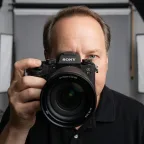
Chris McCarthy
Professional Photographer, Photography Shark · March 29, 2026 · Updated May 25, 2026
A live show happens once. The lighting shifts mid-chorus, the vocalist drops to their knees at the edge of the stage, the crowd surges forward for a three-second window that will never repeat. Concert photography is the practice of being technically prepared enough that when those moments arrive, the camera is already pointed in the right direction with the right settings dialed in.
I'm Chris McCarthy at Photography Shark, shooting from our Rockland, MA studio and at venues across the South Shore and Greater Boston. I have covered everything from 40-person club shows in Quincy basements to full-production headliner sets at regional theaters. This page explains how concert photography works as a professional service — what it takes technically, what deliverables look like, what it costs, and how to hire a photographer who will actually capture the show instead of just attending it with a nice camera.
Why Concert Photography Is Not Event Photography with Louder Music
Most photographers who cover corporate events and parties can produce competent work under controlled conditions — programmed lighting, stationary subjects, the ability to reshoot a moment that did not land. Concert photography strips away every one of those advantages.
Stage lighting changes color, intensity, and direction multiple times per song. The subjects are in constant motion and will never repeat a gesture for you. You are shooting at ISO values that would produce unusable noise on a consumer camera. Flash is almost never permitted and would destroy the visual atmosphere even if it were. Your position is fixed — either in a photo pit for three songs or wedged between audience members at the rail — and you cannot ask the drummer to lean two inches to the left.
The result is that concert photography requires a fundamentally different skill set from other forms of professional photography. The photographer needs to read a performance in real time, anticipate where the peak moments will happen, and make exposure and framing decisions faster than conscious thought allows. This is not something that transfers automatically from headshot or event work. It is a discipline that requires specific practice, specific equipment, and specific instincts developed over hundreds of shows.
The Equipment That Makes It Possible
The gear conversation matters more for concert work than for almost any other photographic discipline because the margin for error is razor-thin. Here is what I bring to a show and why each piece earns its place in the bag.
Camera bodies: Sony A7-series mirrorless. The clean high-ISO performance through ISO 12800 is not a luxury — it is a baseline requirement for South Shore club venues where stage lighting falls between 1/30s and 1/200s shutter speed at f/2.8. The silent electronic shutter prevents the mechanical clack that distracts performers and audience members in intimate rooms. Dual card slots mean a card failure during a one-time show does not erase the night.
Fast primes: 35mm f/1.4 and 85mm f/1.4. These are the workhorses. The f/1.4 aperture gains two full stops over an f/2.8 zoom, which translates directly to either a faster shutter speed (freezing the guitarist's hand mid-strum) or a lower ISO (cleaner files with less grain). The 35mm captures the full band from three rows back. The 85mm isolates the lead vocalist's expression from the same distance.
The 70-200mm f/2.8. The long lens for stage shooting at venues with a dedicated photo pit and a formal credential process — regional theaters, arenas, and the larger Boston rooms where distance from the stage is measured in dozens of feet rather than a few.
24-70mm f/2.8 on the second body. Transition coverage — crowd energy between songs, the view from the back of the room, the green-room handshake. Slower than the primes but versatile enough that pulling it for a quick wide-to-tight sequence beats swapping glass during a moment.
No flash. This is a policy, not a limitation. Flash obliterates the stage lighting that the lighting designer spent hours programming. It distracts performers. It produces images that look nothing like the show the audience experienced. The only exception is corporate event coverage where live music is one component of a larger program and house lights are up.
What Happens After the Show: The Editing Pipeline
Clients regularly underestimate the post-production time involved in concert photography because the images look spontaneous. They are. Getting them from spontaneous captures to polished deliverables is where the labor-intensive work begins.
From a 90-minute headliner set I will typically capture 800 to 1,500 frames. The deliverable is not 1,500 images — it is 60 to 120 selects after culling, with 25 to 50 fully edited finals.
First pass: technical cull. Every frame that is out of focus, motion-blurred beyond stylistic intent, or blocked by stage equipment or another performer is removed. This eliminates 40 to 60 percent of captures immediately and is the reason burst mode at 10 frames per second is necessary — you fire 15 frames to capture the two where the vocalist's eyes are open and the stage light is hitting their face.
Second pass: curatorial selection. The surviving frames are evaluated for storytelling value. Peak moments — the held note with veins visible on the vocalist's neck, the guitarist mid-leap, the drummer at full extension, the audience reaching toward the stage — rise to the top. The selects gallery tells the story of the show in 60 to 120 images, delivered digitally within 48 to 72 hours.
Color and exposure correction. This is the most time-consuming step. Stage lighting shifts from saturated red to deep blue to harsh white within a single verse, and each transition pushes the camera's auto white balance into territory it was not designed to handle. Every select gets manual color work — custom curves built for the specific venue's lighting rig, exposure balancing to recover detail in blown highlights and crushed shadows, and global tone adjustments that unify the gallery despite wildly inconsistent source lighting.
Final retouching. The images the client selects from the gallery receive full post-production: sensor dust removal, cleanup of distracting stage cables or equipment intruding into the composition, skin retouching where the images will be used for promotional purposes, and sharpening calibrated to the delivery resolution.
Delivery formats. Web-optimized JPEGs sized for Instagram, Facebook, and streaming service artist profiles (Spotify requires 2660x2660 minimum, Apple Music canvas needs 1080x1920), plus full-resolution masters for press kits, posters, vinyl inserts, and merchandise printing.
Pricing for Concert Photography in the Boston Market
Concert and live music photography pricing in Greater Boston breaks into four tiers based on coverage scope and production overhead. These are starting points from engagements I have quoted across the region — exact pricing adjusts for venue access complexity, travel distance, and post-production volume.
| Tier | Scenario | Duration | Edited finals | Starting at |
|---|---|---|---|---|
| Single-set | Opening act, solo artist at a multi-band bill, short club show | 30–60 min | 20–35 | $450 |
| Full headliner | One headliner's complete set with selects gallery and finals | 60–120 min | 40–60 | $850 |
| Full-show | Multi-act bill with transitions, audience, green-room access | 3–5 hours | 60–120 | $1,500+ |
| Live + studio combo | Show coverage plus same-week promotional studio session | 90 min show + 90 min studio | 30 live + 15 promo | $1,800+ |
What moves the price up. Travel beyond Route 128 and the South Shore corridor adds a half-day rate. Cape Cod, Central MA, and out-of-state festivals are quoted as full multi-day engagements. Brand-sponsor licensing — a venue chain, a beverage company, a media outlet using images commercially beyond the artist's own promotion — adds 30 to 60 percent depending on scope and exclusivity. Rush turnaround for same-day social-media-ready files costs extra because it compresses the editing pipeline from days into hours.
What brings it down. Multi-show packages for artists running a residency or a regional tour reduce the per-show rate because production overhead amortizes across more deliverables. Booking a studio promotional session in the same week as live coverage bundles the production and reduces total cost versus booking them separately.
Venue Access, Credentials, and the Legal Side
Getting professional concert photography requires getting into the venue with professional equipment — and that process varies dramatically depending on the size of the room.
Major Boston venues — the Boch Center, Orpheum Theatre, House of Blues, Roadrunner, MGM Music Hall, the Wang Theatre — require advance media credentials issued by the artist's management or the venue's PR contact. The standard access terms are three songs from the photo pit, no flash. Photographers without credentials are limited to general admission and whatever lens fits past the door scanner.
Regional theaters and mid-size clubs — the Spire Center for Performing Arts in Plymouth, the Company Theatre in Norwell, the Narrows Center for the Arts in Fall River — are typically more flexible. Access usually comes from the artist or band rather than from venue PR, which simplifies the process when I am hired directly by the performer.
Small clubs and South Shore rooms. Quincy bars, Plymouth taverns, Marshfield and Rockland event spaces — there is rarely a formal credential process. A brief conversation with the venue manager before the show, confirmation from the artist, and professional gear is usually sufficient.
Image rights. Massachusetts copyright law gives the photographer ownership of concert images by default. When an artist hires me directly, we work under a written agreement: the artist receives unlimited promotional use of all delivered images, I retain copyright and portfolio display rights, and any third-party commercial licensing requires mutual approval. This is the industry-standard arrangement and prevents disputes about image use after delivery.
How Genre Shapes the Work
The deliverables that serve a punk band's audience are not the deliverables that serve a jazz trio's. A few notes on what shifts by genre.
Rock, indie, and alternative. High stage energy, dramatic movement, audience engagement. The gallery emphasizes peak-action moments — the leap, the guitar swing, the crowd reach. Fast primes and burst mode carry the session.
Hip-hop and rap. Heavy colored stage lighting that throws white balance to extremes. Tight cropping on the artist at the mic. Backup-dancer choreography adds a compositional layer. Color correction is the highest-effort post step by a wide margin.
Jazz, blues, and singer-songwriter. Lower stage energy, more contemplative moments, often in intimate rooms with gentler lighting. The deliverable leans toward portraiture — the saxophonist's closed eyes, the pianist's hands. Slower shutter speeds become workable because the subjects are not leaping off monitors.
Classical and orchestral. Silent shutter is mandatory in concert halls. Coverage is typically restricted to between movements. Editing is conservative for program-book and orchestra-website use. The South Shore supports this work through the Plymouth Philharmonic and the South Shore Conservatory.
Electronic and DJ sets. The lighting design is the show. Coverage emphasizes environmental wide shots — the laser sweep, the fog machine haze, the crowd silhouette. Less portraiture, more atmosphere.
Promotional Studio Sessions for Musicians
Live coverage captures what a show feels like. Promotional portraits produce the polished images that get an artist booked for the next one — press kit photos, Spotify artist profiles, Apple Music canvases, venue booking materials, social media content, and poster artwork.
The Photography Shark studio at 83 E Water Street in Rockland is built for this work. A standard musician promotional session includes a pre-session consultation to align on visual identity and intended use, a 90-minute studio session with multiple lighting setups against clean white, dark, and textured backgrounds plus a natural-light bay, and deliverables formatted for actual end-use specifications so the artist's streaming profiles and social presence update the same day rather than waiting on a designer to crop and resize.
Typical output is 40 to 60 selects and 15 to 25 fully retouched finals.
Artists who need both live venue coverage and studio promotional portraits can combine them into a single engagement at a reduced combined rate. A Friday night show plus a same-week studio session is the most common pairing.
Booking Concert Photography with Photography Shark
Reach out through the contact page with your event date, venue, and what coverage you need. Concert and event photography is booked per engagement, with pricing based on event length, travel, and deliverable scope. Weekend dates book faster — reach out early.
Our studio is at 83 E Water Street, Rockland, MA — centrally located on the South Shore and accessible to venues throughout the region and into Boston.
---
Event photography on the South Shore · Corporate event photography
Frequently Asked Questions
Does Photography Shark cover concert and live music photography in Boston?
Yes. Photography Shark shoots live music and concert photography for South Shore and Boston venues, artists needing promotional coverage, and corporate or private events with live entertainment components. Contact us to discuss your specific event.
What types of concert photography does Photography Shark offer?
Venue concert coverage for South Shore and Boston shows, promotional artist sessions in the studio or on location, corporate event entertainment photography, and private event live music coverage. Each engagement is scoped to the specific need.
What's the difference between concert photography and artist promotional photography?
Concert photography captures live performance — the energy, the light, the relationship between artist and audience. Artist promotional photography (studio or location portraits) produces the polished images used for press kits, social media, streaming profiles, and booking materials. Both serve musicians and both are available at Photography Shark.
Where does Photography Shark shoot concert photography on the South Shore?
South Shore venues including Scituate Arts Association, Rockland events, Plymouth venues, and throughout the region. For Boston-area shows, contact us to discuss coverage. The Photography Shark studio in Rockland is also available for artist promotional portrait sessions.
How do I book Photography Shark for concert or event photography?
Contact Photography Shark through the contact page with your event date, venue, and what coverage you need. Concert and event photography is booked on a per-engagement basis. Early booking is recommended for weekend dates.
Can Photography Shark provide studio headshots and promotional photos for musicians alongside concert coverage?
Yes. Artists who need both live coverage and promotional studio portraits can combine them into a single engagement. Studio promotional sessions for musicians produce press-ready images for EPKs, social media, and venue booking materials.
How much does concert photography cost in Boston?
Single-set coverage at a club show starts around $450 for a 30–60 minute set with 20–35 edited finals. Full-headliner coverage of a 60–120 minute set with a 40–60 image final delivery starts around $850. Full-show coverage of a multi-act 3–5 hour event with green-room and audience coverage starts at $1,500. Combined live + same-week studio promotional packages start at $1,800. Travel beyond Route 128 and the South Shore, brand-sponsor licensing, and rush turnaround are quoted separately.
What's included in a musician promotional studio session at Photography Shark?
A 90-minute studio session at 83 E Water Street in Rockland with multiple lighting setups against clean white, dark, and textured backgrounds, plus a natural-light bay. Deliverables are sized for actual use — Spotify profile (2660×2660 minimum), Apple Music canvas (1080×1920), EPK landscape, Instagram grid, and high-res print masters for posters and merch. Typical output is 40–60 selects and 15–25 retouched finals.
Related Posts


You Might Also Like
About the Author
Chris McCarthy
Chris McCarthy has run Photography Shark Studios in Rockland, MA for over 10 years and 500+ sessions, with executive headshot work for Rockland Trust, Clean Harbors, M&T Bank, and McCarthy Planning; founder portraits for AI startups including Lowtouch.ai; product photography for South Shore brands like Lauren's Swim; and headshots across South Shore legal, medical, financial, and academic practices. Every session is personally shot and edited by Chris on Sony mirrorless and Godox strobe systems — no assistants, no outsourcing, no batch retouching. Galleries deliver in 3–5 business days. About Photography Shark →
Photography Shark · Boston & South Shore MA
Ready to Book a Session?
Professional headshots, senior portraits, boudoir, and model portfolios. Studio in Rockland, MA — 25 miles south of Boston. Sessions from $395.