Photography Tips
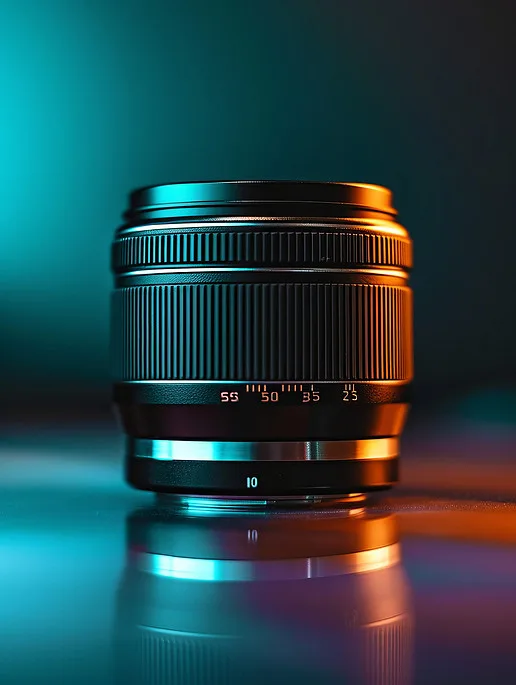
Pros and Cons of Prime Lenses in Photography
Chris McCarthy on why Photography Shark uses prime lenses for headshots and zooms for events — trade-offs, aperture, and South Shore use cases.
Chris McCarthy
Professional Photographer, Photography Shark · April 4, 2025 · Updated May 24, 2026
The companion article on the benefits of prime lenses covers the optical advantages in detail — aperture, subject separation, sharpness, and focal-length rendering. This article covers the full picture: the genuine trade-offs that come with choosing primes over zooms, and the real-world situations where each lens type earns its place in a working photographer's kit.
I have worked through this question with clients at my Rockland studio more times than I can count, and the answer is more straightforward than most people expect.
Photography Shark uses both. The studio portrait and headshot work runs entirely on prime lenses. Event coverage and fast-moving sessions use zooms. The decision is not ideological — it is practical, and understanding the trade-offs makes you a more informed client and, if you are a photographer, a more deliberate one.
The pros of prime lenses
Optical quality at every aperture
Prime lenses resolve finer detail, produce smoother out-of-focus gradients, and deliver higher contrast across the focus plane than zoom lenses at the same price. The advantage is most visible at wide apertures (f/1.4–f/2.0) where primes separate the subject from the background with a dimensional quality that zooms simply cannot match. At f/2.8 — the maximum aperture most professional zooms offer — the gap narrows but does not close.
Maximum aperture and low-light capability
An 85mm f/1.4 prime gathers four times as much light as an 85mm f/2.8 zoom at the same shutter speed. In practical terms, this means the prime can maintain crisp autofocus and clean exposure in lighting conditions where the zoom is struggling — dimly lit event venues, indoor locations with ambient-only light, and the last minutes of golden hour outdoors. For the Rockland studio, where lighting is fully controlled, the low-light advantage is less relevant — but for South Shore outdoor sessions at dusk, it is the difference between usable frames and noise-compromised ones.
Size and weight per unit
Individual primes are lighter and more compact than the zoom covering the same focal length. An 85mm f/1.8 prime weighs roughly 370g; a 70–200mm f/2.8 zoom weighs 1,400g. For sessions where the photographer is walking, climbing, or shooting handheld for extended periods — senior portrait sessions at World's End, beach sessions at Scituate — the weight difference is real and accumulates over a multi-hour shoot.
Deliberate composition
Because a prime cannot zoom, the photographer composes by moving — stepping closer, stepping back, changing the angle. This physical engagement with the subject and environment produces more intentional compositions than the "stand in one spot and zoom" habit that zooms can encourage. It is not that zooms make bad compositions inevitable, but that primes make lazy compositions impossible.
The cons of prime lenses
No flexibility in framing without moving
The same constraint that produces deliberate composition also means the photographer cannot quickly adjust framing without physically relocating. In studio headshot work, where the subject sits still and the photographer controls the distance, this is a non-issue. In event photography, where the photographer cannot move freely — blocked by tables, crowds, ceremony positioning — the inability to zoom is a genuine limitation that costs missed frames.
At Photography Shark, this is the primary reason events are shot on zooms. A corporate event in a hotel ballroom, a concert at a Quincy venue, or a private party at a client's home all present situations where the photographer is hemmed in and the zoom's ability to reframe from a fixed position is not a luxury but a necessity.
Lens changes cost time and moments
A prime-only kit requires the photographer to carry multiple lenses and change between them as the session demands. Each lens change takes five to ten seconds — an eternity in event or action photography but negligible in controlled portrait work. The risk during a lens change is not just lost time; it is the vulnerability of an exposed sensor to dust. Modern mirrorless cameras mitigate this with sensor-cleaning mechanisms, but every lens swap introduces the possibility.
Cost of a complete kit
A single professional zoom (e.g., 24–70mm f/2.8) covers the focal range of three primes (24mm, 35mm, 50mm). Building the equivalent coverage in primes — 24mm, 35mm, 50mm, 85mm, 135mm — costs more and requires carrying more glass. The cost argument for zooms is straightforward: one lens replaces three, at a lower total investment.
For Photography Shark, the kit investment is amortized across thousands of sessions per year. For a photographer shooting fifty sessions a year, the cost-per-prime-lens-per-session is real and zooms may be the economically rational choice.
Subject distance at long focal lengths
At 135mm, the photographer needs to stand roughly fourteen feet from the subject to frame a head-and-shoulders portrait. In a small room or a tight outdoor location, fourteen feet may not be available. Zooms solve this by allowing the photographer to shorten the focal length without moving — the 70–200mm can drop to 70mm and produce a wider frame from a closer position.
When Photography Shark uses each
| Session Type | Lens Type | Why |
|---|---|---|
| Studio headshots | Primes (85mm, 135mm) | Controlled distance, max aperture, peak optical quality |
| Senior portraits | Primes (35mm, 85mm) | Environmental context + tight portraits, deliberate composition |
| Boudoir | Primes (50mm, 85mm) | Wide aperture for intimate depth-of-field rendering |
| Model portfolios | Primes (50mm, 85mm, 135mm) | Multiple focal lengths per look, agency-quality rendering |
| Events | Zooms (24–70mm, 70–200mm) | Framing flexibility, no lens changes during critical moments |
| Corporate team sessions | Mix | Zoom for group compositions, primes for individual headshots |
The practical takeaway
Neither lens type is categorically better. Primes win when the photographer controls the environment and the goal is peak optical quality — which describes every studio headshot, portrait, and boudoir session at Photography Shark. Zooms win when the environment is unpredictable and the goal is coverage — which describes events, receptions, and action photography.
If you are a photographer deciding between systems: start with one prime in the 50–85mm range and one zoom in the 24–70mm range. Use both for a month and let your shooting patterns tell you which to invest in further. If you are a Photography Shark client: you do not need to make this decision. Chris selects the right lens for your session type as part of the studio headshot workflow and standard pre-session planning.
Studio sessions start at $395 at 83 E Water Street, Rockland MA.
Comparing Lenses Side by Side
The only fair lens comparison holds everything else constant, which in practice means a studio. Rockland studio hire is $55/hour, two-hour minimum, with lighting and seamless paper included.
Frequently Asked Questions
What lenses does Chris McCarthy use for headshot sessions at Photography Shark?
Chris uses Sony prime lenses for headshot work — typically an 85mm for the studio and a 50mm for environmental sessions. Primes are chosen for their wide maximum aperture, which enables strong background separation and flattering subject rendering.
Does the lens choice affect how my headshot looks?
Yes, meaningfully. Longer focal length primes compress perspective and are more flattering for faces. At Photography Shark's Rockland studio, lens selection is part of the technical planning done before every session to match the desired output.
What is the sharpest lens Photography Shark uses for portraits?
Chris shoots Sony prime glass, which is consistently among the sharpest available for portrait focal lengths. For headshots and senior portraits where fine detail matters, primes outperform comparably priced zooms — especially wide open.
Does Photography Shark use zoom lenses for events?
Yes. Zoom lenses offer the flexibility needed for event coverage — where working distance varies constantly and there is no time to change lenses or reposition. Prime lenses are reserved for portrait sessions where composition can be controlled.
How does prime lens aperture affect the look of a Photography Shark headshot?
Fast primes (f/1.4–f/1.8) allow more background blur (bokeh) and better low-light performance. For headshots at the Rockland studio, shooting at f/1.8–f/2.8 gives the subject a clean, sharp look against a soft, non-distracting background.
Related Posts


You Might Also Like
About the Author
Chris McCarthy
Chris McCarthy has run Photography Shark Studios in Rockland, MA for over 10 years and 500+ sessions, with executive headshot work for Rockland Trust, Clean Harbors, M&T Bank, and McCarthy Planning; founder portraits for AI startups including Lowtouch.ai; product photography for South Shore brands like Lauren's Swim; and headshots across South Shore legal, medical, financial, and academic practices. Every session is personally shot and edited by Chris on Sony mirrorless and Godox strobe systems — no assistants, no outsourcing, no batch retouching. Galleries deliver in 3–5 business days. About the photographer →
Photography Shark · Boston & South Shore MA
Ready to Book a Session?
Professional headshots, senior portraits, boudoir, and model portfolios. Studio in Rockland, MA — 25 miles south of Boston. Sessions from $395.