Photography Tips
Capturing Candid Moments at Corporate Events and Conferences
How to capture genuine candid moments at corporate events and conferences — blending in, using fast lenses, and building rapport with attendees.
Chris McCarthy
Professional Photographer, Photography Shark · February 16, 2024 · Updated May 18, 2026
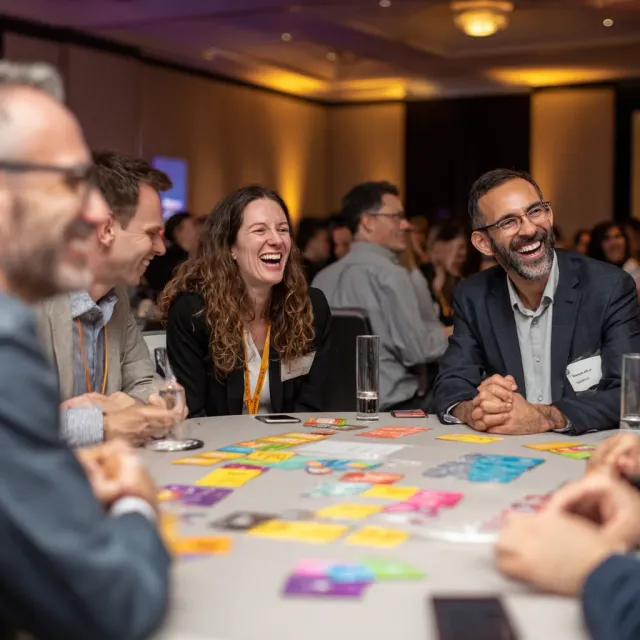
Candid corporate event photography is a different discipline from posed headshots. The photographer's job isn't to direct the subject — it's to be invisible enough that the subject keeps doing what they were doing. The frames that end up in the annual report, the LinkedIn recap, and the conference highlight reel are almost never the staged ones. They're the moment a panelist leans forward to make a point, the keynote speaker mid-laugh between slides, the small-group conversation in the hallway between sessions. Photography Shark covers corporate events across Boston and the South Shore with that pattern in mind.
In my experience working with clients across Boston and the South Shore, the biggest gains come from the simplest adjustments.
What "candid" actually requires
Three things have to be true at the same time for a candid frame to work:
- The subject doesn't notice the camera in that moment. Not because they're being snuck up on — because the photographer has been in the room long enough to be background.
- The light is enough to expose without flash, or the flash is engineered to be invisible. A pop of on-camera flash during a panel ruins the moment for everyone and produces a frame the marketing team won't use anyway.
- The frame happens to compose well. Hands, body language, backdrop, and the relationship between two faces all have to land in a fraction of a second. Most attempts don't work; the ones that do are what makes the gallery worth the day.
The Sony A7 series with a fast prime (24mm, 35mm, 85mm) handles every venue the South Shore and Greater Boston throw at corporate events — hotel ballrooms with their famously bad tungsten, conference centers with sodium-vapor mezzanines, modern office atriums with mixed daylight. When ambient lighting falls below what's usable, off-camera bounce flash through a small modifier fills without announcing itself.
A typical day on a corporate event shoot
The day usually starts 30 minutes before the first session — coffee station, registration line, early arrivals. These are some of the most useful frames for marketing because they capture the "we're really here" energy before formal programming kicks in. During keynote and panel sessions, position changes once or twice per speaker to vary the angle without crossing the audience sightline. Breaks and networking are the candid goldmine: small-group conversations, name-tag glances, the moment two people who hadn't met before start exchanging cards.
For Boston companies running annual all-hands or quarterly leadership meetings, the same pattern repeats but compressed. Three to four hours of coverage produces a usable set of 80–120 final frames covering speakers, attendees, room atmosphere, and signage.
What the client needs to provide
A short pre-event call saves hours on the day. The three things worth confirming in advance:
- Priority shot list. Which sessions, which people, which moments matter to the marketing team. CEO at the lectern, the panel where the big announcement lands, the photo with the partner sponsor logo behind it.
- Usage plan. Annual report, LinkedIn, internal newsletter, press release, recruiting site. Different uses mean different framing — square crops for social, wide horizontal for hero banners, headshot-style verticals for speaker bios.
- VIP names with face IDs. A photographer who recognizes the CFO mid-conversation captures the CFO mid-conversation. A photographer who doesn't, captures everyone else.
The "moment math" most planners get wrong
When event coordinators ask how many photos they'll get from a corporate shoot, the honest answer is: fewer candids than you'd expect, and more than you'd ever use. A six-hour conference produces somewhere between 800 and 1,400 raw frames. Of those, maybe 90–140 end up in the final gallery. Of those, perhaps 15–25 are the genuinely candid frames that get used across multiple marketing channels for the next year — the keynote frame with the audience just out of focus, the unguarded laugh from the panel moderator, the handshake at the sponsor booth. Everything else is supporting coverage: room shots, signage, attentive listeners, posed groups for the recap email. Marketing teams who plan around the 15–25 hero count instead of the 1,400 raw count get a more accurate sense of what the day will yield.
This is also why "we already have someone with a camera covering it" rarely substitutes for a hired event photographer. A volunteer or junior team member will produce the supporting coverage. They almost never produce the hero candids, because those require knowing in advance what a heroic frame even looks like for that brand.
Equipment discipline at corporate events
The gear list for candid corporate work is shorter than people expect. Mirrorless bodies with electronic shutters — Sony A7 IV and A7 III in rotation — make zero mechanical noise during panel sessions, which matters more than spec-sheet readers think. A clicking shutter eight feet from a microphone is audible on the livestream and on the recorded transcript. Two primes (35mm for wide context, 85mm for compressed candids across a room) cover roughly 90% of conference work. A 24mm comes out for tight networking spaces and signage establishing shots. A 70–200mm zoom rides in the bag for keynote frames where the press riser is far back from the stage.
What does NOT come out at most corporate events: on-camera direct flash, pop-up softboxes, anything with stands. The moment a corporate event photographer starts deploying lighting in the audience, they've broken the candid contract — attendees stop behaving like attendees and start behaving like subjects. The exception is a brief on-stage VIP grip-and-grin where a single off-camera bounce off the ceiling is engineered to look like room light. Even that gets dialed in during a break, not during programming.
How candid corporate coverage goes wrong
The most common failure mode isn't bad photography — it's bad coordination with the event itself. Five patterns recur across Boston and South Shore corporate work:
- Photographer arrives at session start, not 30 minutes before. Registration, coffee station, and pre-keynote networking are where half the usable people-shots live. Showing up at 9:00 sharp for a 9:00 keynote means missing all of them.
- No VIP face list. Marketing wants the CEO with the partner sponsor exec. The photographer didn't know what either of them looked like and shot the room. Now nobody has the frame the press release needed.
- No designated escort during VIP moments. Photographer follows the CEO around hoping for an organic candid. A 30-second nod from a comms lead about "she's heading into the small group with the founder right now" produces a frame in 30 seconds that would otherwise take an hour to chance into.
- The lectern is backlit by a window. Almost every Boston hotel ballroom has this somewhere. Either the speaker is silhouetted (unusable) or the photographer has to work the side angles to keep the window out of frame. Five minutes of pre-event walk-through identifies the problem.
- The shot list is "candids of everyone." That isn't a shot list — that's a wish. A shot list names sessions, names people, and ranks priority. "All-attendee group photo at 12:15 sharp, CEO + COO + Series B lead with sponsor backdrop after lunch, panel Q&A around 2:30." That's a list a photographer can deliver against.
Boston venue notes
Recurring corporate event venues in the Boston/South Shore market have specific quirks worth noting in advance:
- Boston Convention & Exhibition Center — cavernous, fluorescent + skylight mix. Custom white balance per area; the daylight zones near the south wall are very different from the back ballrooms.
- Encore Boston Harbor / Seaport Hotel ballrooms — beautiful but tungsten-heavy. Plan on warm color and ride the white balance manually rather than auto.
- South Shore Conference Center (Hingham) and the Granite Links function rooms — strong mixed daylight + interior fixtures. The hardest white balance work of the South Shore circuit.
- Suburban office park atriums (common for VC- and PE-backed company offsites in Burlington, Waltham, Quincy) — atrium daylight is forgiving; the breakout rooms attached are usually under-lit and need fast glass or selective ambient bumps.
Pricing and delivery
Corporate event sessions are priced by coverage duration and scope. A typical Boston corporate event runs 3–6 hours of coverage; the South Shore quarterly meeting cluster runs 2–4 hours. Edited galleries are delivered via private online gallery within 1–2 weeks, with expedited turnaround available for press-cycle or annual-report deadlines. Full commercial use rights are included so the photos can run anywhere the marketing team needs them.
For details on coverage tiers and current availability, see the corporate event photography service page or the conference headshots in Boston page for headshot stations bolted onto larger conferences.
Frequently Asked Questions
How does Photography Shark approach candid photography at corporate events?
Chris McCarthy blends into the background using quiet equipment and unobtrusive positioning, prioritizing small-group interactions and natural expressions over staged moments.
Does Photography Shark cover corporate conferences in Boston?
Yes. Photography Shark serves corporate clients throughout Boston and the South Shore — from conference rooms in Quincy and Braintree to large event venues in downtown Boston.
How do you handle tricky lighting in conference centers and ballrooms?
Chris shoots on Sony with fast lenses optimized for low-light conditions. When available light isn't sufficient, off-camera flash is used discreetly to fill without disrupting the event atmosphere.
What should we give the photographer before a corporate event?
A shot list of priority sessions (keynote, panels, networking), names of key executives or VIPs, and how the images will be used — marketing materials, LinkedIn, annual report, internal communications.
How are corporate event photos delivered?
Edited galleries are delivered via an online gallery link within 1–2 weeks. Expedited delivery is available for time-sensitive marketing or press needs.
Is Photography Shark available for recurring corporate events?
Yes. Photography Shark works with organizations that hold quarterly meetings, annual conferences, or recurring events. Contact the studio at 83 E Water Street, Rockland MA to discuss ongoing coverage arrangements.
Related Posts



You Might Also Like
About the Author
Chris McCarthy
Chris McCarthy has run Photography Shark Studios in Rockland, MA for over 10 years and 500+ sessions, with executive headshot work for Rockland Trust, Clean Harbors, M&T Bank, and McCarthy Planning; founder portraits for AI startups including Lowtouch.ai; product photography for South Shore brands like Lauren's Swim; and headshots across South Shore legal, medical, financial, and academic practices. Every session is personally shot and edited by Chris on Sony mirrorless and Godox strobe systems — no assistants, no outsourcing, no batch retouching. Galleries deliver in 3–5 business days. About Photography Shark →
Photography Shark · Boston & South Shore MA
Ready to Book a Session?
Professional headshots, senior portraits, boudoir, and model portfolios. Studio in Rockland, MA — 25 miles south of Boston. Sessions from $395.