
Photography Tips
Free Model Release Form Template (Plus How to Read One Before You Sign)
A free, copy-and-paste model release form template, plus a plain-English, clause-by-clause breakdown of what every line means — so models and photographers both know exactly what they're signing.
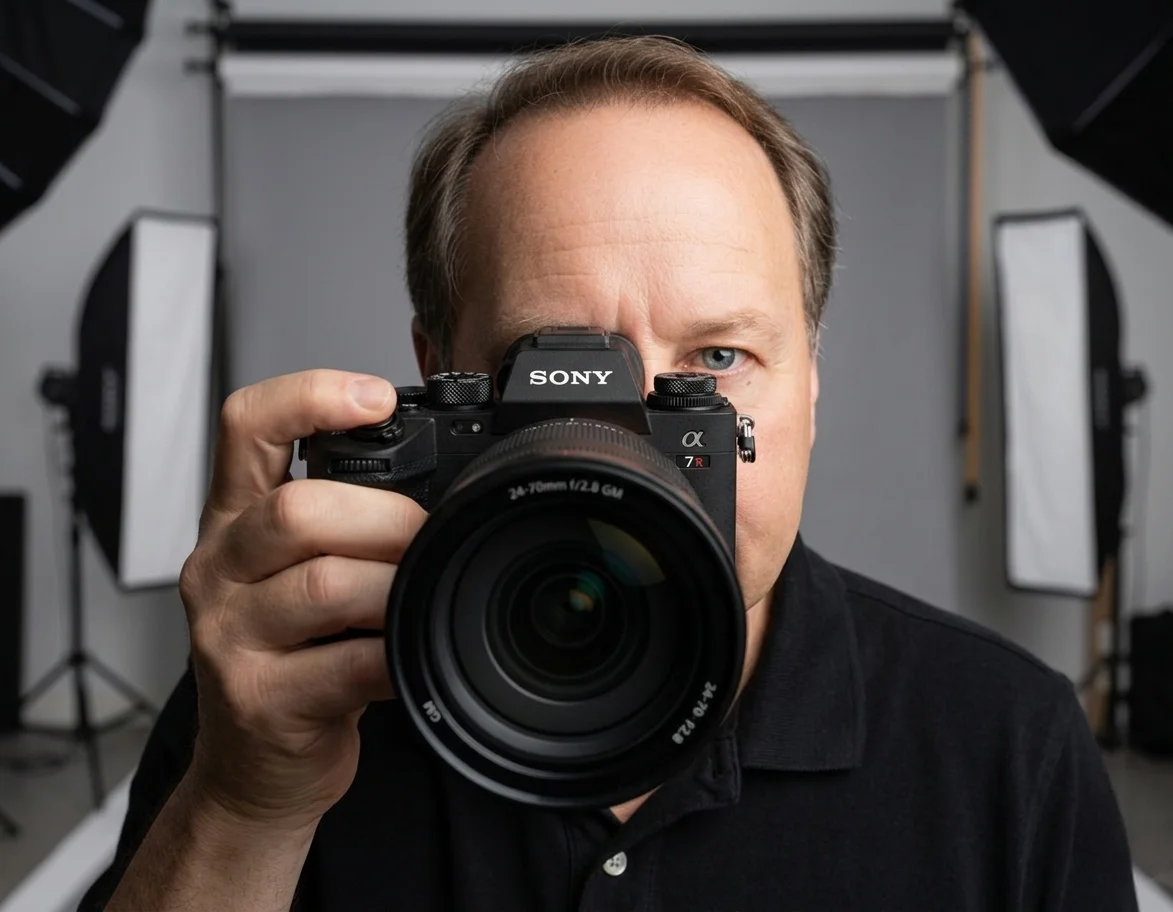
Chris McCarthy
Professional Photographer, Photography Shark · June 20, 2026
A model release form is a short legal agreement in which a model grants a photographer or client permission to use their images, and spells out exactly how those photos can be used. It is the single most misunderstood document in the modeling world — new models sign blank ones without reading, and beginner photographers skip it entirely. Both mistakes cause problems later. This guide gives you a free, copy-and-paste model release template, then walks through every clause in plain English so you understand what you're signing before a pen ever touches paper.
> Important: This is a general educational template, not legal advice. Laws vary by state and country, and commercial or high-stakes shoots deserve a real attorney's review. Use this as a starting point and a learning tool.
What a Model Release Actually Does
A model release does two jobs at once. For the photographer or client, it secures the legal right to use a recognizable person's likeness — essential for any commercial use, and required by every legitimate stock agency and ad client. For the model, it is a written record of precisely what they agreed to, which is your best protection against an image showing up somewhere you never expected.
The key legal concept is consideration — something of value must be exchanged for the release to be binding. That value can be money, free retouched images, portfolio prints, or trade work. On a collaborative shoot where no cash changes hands, the images themselves are the consideration, which is one reason a written TFP or trade arrangement should always be paired with a clear release.
The Free Model Release Form Template
Copy the template below, fill in every blank, and have both parties sign and date it. Keep a copy each.
``` MODEL RELEASE AGREEMENT
For good and valuable consideration received, I, ______________________ ("Model"), hereby grant to ______________________ ("Photographer/Client") and their assigns, licensees, and successors the right to use the photographs taken of me on ____________ (date) at ____________ (location).
- GRANT OF RIGHTS. I authorize the use of my likeness in the photographs
- TERM AND TERRITORY. This release is granted for: [ ] unlimited time
- EDITING. I understand the images may be retouched, cropped, or altered.
- NAME AND CREDIT. The Photographer/Client [ ] may / [ ] may not use my
- COMPENSATION. The consideration for this release is: ______________________
- RELEASE. I release the Photographer/Client from any claims related to
- ACKNOWLEDGEMENT. I am at least 18 years of age and have read and
Model signature: ______________________ Date: __________ Printed name: ______________________ Parent/Guardian (if model is a minor): ______________________ Date: ______ Photographer/Client signature: ______________________ Date: __________ ```
Reading the Release Clause by Clause
A release is only as good as your understanding of it. Here is what each section is really controlling.
Grant of Rights — the most important checkboxes
This is where the entire negotiation lives. "Portfolio and website" use is narrow and low-risk. "Commercial and advertising use" is the broadest and most valuable — it lets the image sell a product or appear in an ad. A model giving away full commercial rights for a $0 trade shoot is often subsidizing the other party. Decide which boxes you're comfortable with before the shoot, not after.
Term and Territory
An "unlimited time, all territories" release never expires and applies worldwide. That's standard for commercial work but worth noting. If you want control, negotiate a limited term (for example, two years) or a limited territory up front. A photographer who refuses any limit on a simple portfolio trade is worth a second look.
The editing and AI clause
This clause matters more every year. Retouching and cropping consent is routine. The AI-training line is new and important — it controls whether your likeness can be fed into machine-learning systems. Many older release templates don't mention it at all, which means the use is simply undefined. If you care about this, make sure the box reflects your actual choice.
Name and credit
Some models want their name attached for exposure; others want anonymity. This clause settles it. For boudoir or other sensitive work, models almost always decline name use — and a good photographer expects that.
Compensation
Write the actual consideration in. "Payment of $300," "ten retouched digital images," or "portfolio collaboration" all work. A release with this field left blank is weaker, because consideration is what makes the agreement binding.
Limited vs. Unlimited Releases (and Other Types You'll See)
Not every release is the same, and knowing the categories helps you negotiate:
- Unlimited (blanket) release. Grants broad rights — any purpose, any time, worldwide. Standard for commercial and stock work, and what most paid bookings use. The model gives up the most here, so the consideration should reflect that.
- Limited release. Restricts use by purpose, time, territory, or platform. A model might grant portfolio and social use but withhold commercial advertising, or cap the term at two years. This is the model's main negotiating tool, and a fair photographer will accommodate reasonable limits on a trade shoot.
- Editorial-only release. Permits use in journalistic or educational contexts but not advertising. Common for magazine and documentary work.
- Property release. A separate document for recognizable private property or trademarked items in the frame — not about the person, but sometimes needed alongside a model release for commercial licensing.
Most disputes come from a model assuming "portfolio only" while signing an unlimited release. Read which type you're holding before you sign, and if the scope is broader than the conversation, ask for a limited version.
What Models Should Check Before Signing
- No blank fields. Never sign a release with empty boxes someone can fill in later. Every blank should be completed in front of you.
- Match the conversation. The paper should say exactly what you discussed verbally. If the photographer said "portfolio only" but the form checks "commercial," stop and fix it.
- Keep your copy. A signed agreement you don't have a copy of protects only the other party.
- Sensitive work deserves limits. For lingerie, boudoir, or implied-nude work, consider a limited release that excludes broad commercial and social use.
- Trust the process, not the pressure. Anyone rushing you to sign without reading is showing you a red flag. Vetting a photographer carefully is part of finding a reputable model photographer.
What Photographers Should Get Right
If you're on the other side of the camera, a clean release protects your ability to use and license your work. Fill it out with the model so they understand it — a confused or pressured signature is a weak one. Store releases with the corresponding image files so you can prove permission years later when a client or stock agency asks. And keep the language honest: an overreaching release that grabs every right for nothing is the kind of thing that fuels modeling-scam warnings and damages your reputation in a small market.
Minors Need a Parent or Guardian
If the model is under 18, the model cannot give legally valid consent — a parent or guardian must sign. This is non-negotiable, and serious for any sensitive or commercial work. The rules around consent, image rights, and child-labor law are covered in our teen modeling parent's guide. When in doubt, get a guardian signature and keep the shoot fully clothed and conservative.
A Release Is Part of a Safe, Professional Shoot
A well-understood model release is one piece of treating yourself like a professional. The other pieces — vetting the photographer, telling someone where you'll be, knowing your rights on set — are covered in our guide to staying safe before, during, and after a shoot and the standards every ethical photographer should meet in the Model's Bill of Rights. Read the release, understand the trade, and you remove the single most common source of regret in a model's early career.
Ready to Shoot With a Studio That Does It Right?
At Photography Shark in Rockland, MA — about 25 minutes south of Boston — every model portfolio session includes a clear, plain-English release and an honest conversation about how your images will and won't be used. Get in touch to book a session built on consent and professionalism from the first email.
Related reading: Who pays who in freelance modeling (TFP explained) · Modeling scams and red flags · The model safety checklist · Finding a reputable model photographer
Frequently Asked Questions
What is a model release form?
A model release form is a short legal agreement in which a model grants a photographer (or client) permission to use the photos taken of them, and defines how those images can be used — for portfolio, commercial, editorial, or promotional purposes. It protects the photographer's right to use the work and gives the model a written record of what they agreed to. Without a signed release, a photographer generally cannot use a recognizable person's image for commercial purposes.
Do I legally need a model release?
You need a model release whenever a recognizable person's image will be used commercially — advertising, products, marketing, or stock libraries. Pure editorial and personal-portfolio use often does not strictly require one, but reputable photographers use a release for almost every paid or collaborative shoot because it prevents disputes later. Stock agencies and commercial clients will refuse images that don't have a signed release on file.
Is a model release form legally binding?
Yes, a properly completed model release is a binding contract once both parties sign it, the model is of legal age (or a parent/guardian signs for a minor), and there is consideration — something of value exchanged, such as payment, free images, or portfolio work. A vague or blank release, or one signed under pressure, is far weaker. This template is a general starting point, not legal advice; have an attorney review anything high-stakes.
Can a model revoke a signed release?
Generally no — once you sign an unrestricted release and receive consideration, you cannot simply take it back, which is exactly why you should read every clause before signing. You can, however, negotiate a limited release up front that restricts usage, sets a time limit, or excludes certain platforms. If a release is silent on a use you object to, that is a reason to ask for changes before signing, not after.
What should a model check before signing a release?
Check who is allowed to use the images, for what purposes (portfolio vs. full commercial), for how long, whether your name will be attached, whether third parties or AI training are included, and what consideration you're receiving in exchange. Make sure blanks are filled in, the date and both signatures are present, and you keep a copy. Never sign a release with empty fields you can't see filled in.
Related Posts

About the Author
Chris McCarthy
Chris McCarthy has run Photography Shark Studios in Rockland, MA for over 10 years and 500+ sessions, with executive headshot work for Rockland Trust, Clean Harbors, M&T Bank, and McCarthy Planning; founder portraits for AI startups including Lowtouch.ai; product photography for South Shore brands like Lauren's Swim; and headshots across South Shore legal, medical, financial, and academic practices. Every session is personally shot and edited by Chris on Sony mirrorless and Godox strobe systems — no assistants, no outsourcing, no batch retouching. Galleries deliver in 3–5 business days. More about the photographer →
Photography Shark · Boston & South Shore MA
Ready to Book a Session?
Professional headshots, senior portraits, boudoir, and model portfolios. Studio in Rockland, MA — 25 miles south of Boston. Sessions from $395.