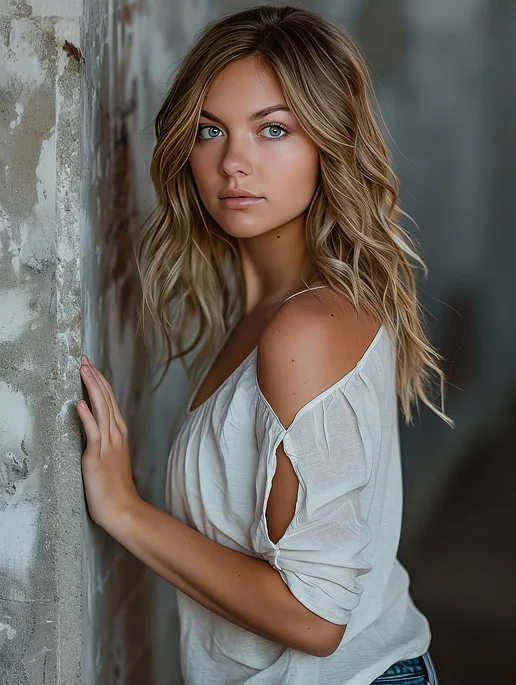
Photography Tips
How to Find a Reputable Model Photographer in Boston
The research process — where to look, how to qualify candidates, what to verify, and how to vet a Boston model photographer before you book. For the decision-making side (criteria, comparing finalists), see the companion "how to choose" guide.
Chris McCarthy
Professional Photographer, Photography Shark · August 29, 2024 · Updated May 23, 2026
This post is about the research and sourcing process for finding a reputable model portfolio photographer in Boston — where to look, how to qualify candidates, what to verify, and how to vet someone before you book. The companion post on picking your finalist from a shortlist of Boston portfolio photographers picks up downstream and covers the decision-making criteria.
Most aspiring models lose more time and money to a bad search process than to a bad photographer. Booking blind into the first Instagram photographer whose images look nice — without verifying credentials, working history, or any of the trust signals that distinguish a legitimate working photographer from a hobbyist with marketing — is the failure pattern that drives most of the bad first-portfolio outcomes I've watched models recover from over the past decade.
Boston and the South Shore of Massachusetts have a deep pool of photographers, but they vary enormously in skill, experience, and legitimacy. This guide walks through the full sourcing process: how to define what you need, where to find candidates (and where not to), how to verify their work and credentials, and how to protect yourself before any session is on the calendar.
Photography Shark is based in Rockland, MA, serving models throughout Boston and the South Shore. Chris McCarthy has worked with aspiring and working models for over a decade. The perspective throughout this guide comes from that working experience — the patterns that show up across hundreds of model conversations about how they ended up booking the photographer they did.
Step 1: Define What You Actually Need Before Searching
One of the most common mistakes aspiring models make is searching for "a photographer" without specifying what type of photography they need. A photographer who produces beautiful landscape work is not automatically capable of directing a model through a fashion portfolio shoot. A wedding photographer might have excellent technical skills but no experience with the commercial modeling aesthetic.
Know Your Modeling Category
Before you evaluate any photographer, you need clarity on what category of modeling you're pursuing, because different categories require different portfolio content and therefore different photographer expertise.
Commercial and lifestyle models need images that look authentic and relatable — images that convince a client that you could be the real person in their advertisement, not a generic model. The best commercial portfolio photographers know how to create images with natural energy and genuine warmth, not just technically correct exposures with posed, stiff subjects.
Fashion and editorial models need images that demonstrate range, strong posing vocabulary, and an ability to embody stylized concepts. The photographers who do this well typically have backgrounds in fashion or editorial work and strong lighting setups.
Headshot-focused models — actors, voiceover talent, and models working in commercial print — need technically precise, expressive headshots that read clearly at small sizes and in black and white. This is a specialty skill. Look for photographers who specifically work in this space.
Fitness and athletic models need dynamic images that show physical capability and vitality. Photographers who work in this space understand how to light and direct subjects to emphasize physical form.
Knowing your category narrows the field dramatically and helps you evaluate portfolios more usefully.
Step 2: Research and Build Your Candidate List
Where to Search
Instagram is the primary discovery platform for Boston-area photographers. Search hashtags like #bostonphotographer, #bostonmodelportrait, #southshorephotographer, and category-specific tags like #bostonfashionphotography or #bostoncommercialphoto. Look at who is consistently producing work you respond to.
Google searches for "model photographer Boston" or "portfolio photographer South Shore Massachusetts" will surface websites with portfolios. Spend time evaluating these rather than skimming.
Model Mayhem and Backstage connect models with photographers and list photographers' portfolios and booking history. These platforms also have review systems that provide useful information about working experiences.
Agency recommendations — if you're approaching or working with a Boston-area modeling agency, ask which photographers they recommend for portfolio work. Agencies have strong opinions about image quality and are often happy to make referrals to photographers whose work they trust.
Word of mouth from other models is often the most valuable research tool available. Other models who have worked with specific photographers will tell you things that no online profile or review will — what the experience was actually like, how the photographer directed, whether the final images matched what was previewed, and whether they'd work with that person again.
Building Your Short List
Start broad and narrow down. From your initial research, identify eight to ten photographers whose work genuinely excites you. Then apply your criteria to reduce that to two or three who are worth deeper investigation.
Step 3: Evaluating Photographer Portfolios
What to Look For
A portfolio review is an exercise in critical analysis, not aesthetic appreciation. The question isn't just "do I like these images?" but "do these images demonstrate the skills I need?"
Consistency across the full portfolio. Any photographer can have one or two great images. Look at twenty or thirty examples of their work. Is the quality consistent, or are there wide swings between strong images and weak ones? Inconsistent quality in a portfolio means inconsistent quality in your session.
Evidence of direction. Can you see the photographer's hand in the images — the poses, expressions, and energy that come from a skilled director — or do the images look like they happened by accident? Models who look natural and engaged in their photos are models who were effectively directed. Stiff, awkward expressions suggest a photographer who hasn't developed strong directorial skills.
Technical competence across different conditions. Look for evidence that the photographer can work in different lighting environments — studio, outdoor natural light, indoor available light. A photographer who only works in one type of light will limit your portfolio.
Relevance to your needs. If you need commercial lifestyle images, look for evidence of commercial lifestyle images in their portfolio. If you need fashion editorial work, look for that specifically. Skill in one photographic style doesn't automatically transfer to another.
What Red Flags Look Like
- Heavy retouching that smooths skin to a plastic texture — a sign the photographer is covering for weak lighting or direction with post-processing
- All images from a single lighting setup or location — suggests limited adaptability
- Inconsistent image quality across the portfolio
- No evidence of experience directing models specifically (as opposed to portrait clients generally)
Step 4: Verify Credentials and Read Reviews
Online Reviews and Reputation
Google reviews, Facebook recommendations, and Model Mayhem feedback from previous clients provide useful signal. Pay particular attention to what models say about the experience of working with the photographer, not just the images they received. A photographer who produces technically acceptable images but makes clients feel uncomfortable or unsupported during sessions is not a good fit for model work.
Be appropriately skeptical of portfolios with no verifiable reviews at all. This doesn't necessarily indicate a problem, but it warrants additional research before booking.
Professional Associations and Education
Membership in professional photography organizations (PPA — Professional Photographers of America, for example) indicates some investment in professional standards. Formal education in photography is a useful data point. Neither guarantees quality, but both are worth noting.
Step 5: Initial Contact and Communication Assessment
How a photographer communicates before a booking tells you a great deal about how they operate on set.
What Good Communication Looks Like
A photographer who responds promptly, asks questions about your goals and modeling category, and engages thoughtfully with your vision before discussing pricing is demonstrating the kind of professional attention that translates to a good working relationship.
Ask these questions in your initial outreach:
- What is your experience working with models specifically?
- How do you direct during a session?
- What does your typical delivery look like in terms of image count and turnaround?
- Can you walk me through what a session with you typically involves?
- Do you provide a model release and usage rights documentation?
Their responses to these questions tell you a great deal about their experience and professionalism.
Warning Signs in Communication
- Responses that are generic rather than specific to your questions
- Pressure to book quickly before you've had a chance to evaluate properly
- Unwillingness to discuss the process in detail before payment
- Excessive focus on how you look rather than on the work
Step 6: The Consultation
Before booking any paid session, request a consultation — by phone, video, or in person. This serves several purposes.
Alignment on vision. Bring reference images — examples of portfolio work that represents the style you're going after. Walk the photographer through what you're trying to accomplish. A good photographer will engage with these references seriously, offer their own perspective, and help refine the direction.
Location and logistics. Discuss whether the session will be in a studio, on location, or both. If studio, visit if possible — a well-equipped, organized studio reflects a photographer's professionalism. If location, discuss where and why.
Wardrobe discussion. A photographer with genuine model portfolio experience will have clear guidance on what to bring, what to avoid, and how many changes make sense for the session length.
Chemistry assessment. This is real and important. You need to feel comfortable with this person before the session begins, because comfort in front of the camera is inseparable from the quality of the images. If a consultation leaves you feeling uncomfortable, dismissed, or pressured, trust that feeling.
Step 7: Understanding the Contract and Protecting Yourself
Before any paid session, you should have a written agreement that specifies:
- The session length and what it includes
- Image delivery — number of edited images, format, turnaround time
- Usage rights — what the photographer can use the images for, and what rights you retain
- Payment terms
- Cancellation and rescheduling policy
Usage Rights Matter
Many models don't read usage rights carefully and later discover their images are being used in ways they didn't anticipate. A model release gives the photographer permission to use your images for their own portfolio and marketing. A usage license goes further and may grant rights to use images commercially. Know what you're signing.
If a contract doesn't address usage rights clearly, ask for clarification in writing before signing. For a deeper look at contracts and the three payment structures that govern photographer–model transactions, see the freelance modeling payment guide.
Step 8: Safety Considerations
Research Everyone You Work With
Before any shoot, search the photographer's name, their studio name, and their social media handles. Look for any red flags in public forums, model communities, or review sites. If another model has had a negative experience, it's often documented somewhere.
Bring a Trusted Person to First Sessions
For your first session with any photographer you haven't worked with before — especially if it's at a private location rather than a commercial studio — it's reasonable and professional to bring a friend or agent. A professional photographer will not be offended by this. For the full set of precautions, work through the precautions to take before and during any shoot, and know the rights every model is entitled to on a shoot.
Trust Your Gut Throughout
If at any point during a session you feel unsafe, disrespected, or pressured to do something you're not comfortable with, you have every right to stop the session. No portfolio image is worth compromising your safety or comfort.
Why Photography Shark Works for South Shore and Boston Models
Photography Shark's studio is in Rockland, MA — geographically central to the entire South Shore market. Models from Quincy, Braintree, Hingham, Norwell, Scituate, Duxbury, Marshfield, Plymouth, Kingston, and Boston proper are all within reasonable distance.
Chris McCarthy has spent over a decade building portfolio work for aspiring and working models, with particular depth in commercial lifestyle, headshots, and fashion work. Our studio photo shoot sessions are structured specifically for portfolio building, with clear guidance on preparation, wardrobe, and goals from the initial conversation through delivery.
For models who also need professional headshots for commercial submissions, our Boston headshots service provides clean, technically precise images that agency and casting directors respond to.
---
Ready to Book Your Session?
If you're building or refreshing your model portfolio in the Boston and South Shore market, Photography Shark is ready to help you create work that actually opens doors.
Contact us today to discuss your modeling goals, review portfolio examples, and schedule your session at our Rockland studio.
Frequently Asked Questions
How do I evaluate whether a photographer is actually experienced with model portfolio work?
Look for a portfolio with 15–25 images in your modeling category showing consistent quality, verifiable client reviews, transparent pricing, and a clear pre-session consultation process. Vague pricing and no contract are warning signs.
Does Photography Shark have experience with commercial, lifestyle, and fashion model portfolios?
Yes. Chris McCarthy at Photography Shark has built model portfolios serving commercial, lifestyle, and fashion markets throughout the South Shore and Greater Boston for over a decade. The studio is at 83 E Water St, Rockland MA.
What modeling categories does Photography Shark specialize in for portfolio shoots?
We most commonly shoot commercial, lifestyle, and headshot-focused portfolios — the categories with the most market demand in Boston. We also shoot fitness, editorial, and fashion work. Reach out to discuss what fits your goals.
How much does a model portfolio session at Photography Shark cost?
Photography Shark's model portfolio packages: Bronze $395 (45 min, 10 images), Silver $495 (1 hour, 15 images), Gold $595 (1.5 hour, 20 images), Platinum $795 (2 hour, 30 images). Additional images $20 each. (45 min, 5 images, 1 outfit), Silver $495 (1 hour, 15 images, 2 outfits), Gold $595 (1.5 hour, 20 images, 3 outfits), Platinum $795 (2 hour, 30 images, 4 outfits). Additional images $20 each. Gold is the standard choice for a complete agency-ready portfolio. A 45–90 minute session is typically recommended for first portfolio builds to cover the variety of looks agencies expect.
What should I watch for to avoid unsafe or unprofessional photographers in Boston?
Avoid photographers with no verifiable portfolio or references, who do not offer a contract, who request only cash payment, or who discourage you from bringing a friend. Photography Shark operates with full transparency and a signed booking agreement.
How long will it take to get my edited portfolio images back?
Edited images are delivered within 3–5 business days for headshots and studio sessions.
Related Posts
You Might Also Like
About the Author
Chris McCarthy
Chris McCarthy has run Photography Shark Studios in Rockland, MA for over 10 years and 500+ sessions, with executive headshot work for Rockland Trust, Clean Harbors, M&T Bank, and McCarthy Planning; founder portraits for AI startups including Lowtouch.ai; product photography for South Shore brands like Lauren's Swim; and headshots across South Shore legal, medical, financial, and academic practices. Every session is personally shot and edited by Chris on Sony mirrorless and Godox strobe systems — no assistants, no outsourcing, no batch retouching. Galleries deliver in 3–5 business days. About photographer Chris McCarthy →
Photography Shark · Boston & South Shore MA
Ready to Book a Session?
Professional headshots, senior portraits, boudoir, and model portfolios. Studio in Rockland, MA — 25 miles south of Boston. Sessions from $395.