
Headshots
Personal Brand Photos for Your About Page: What to Shoot and Why
Your website About page needs more than a headshot. A guide to the personal brand photos that actually convert visitors — the shot mix, settings, wardrobe, and how to plan a session that gives your whole site a coherent look.
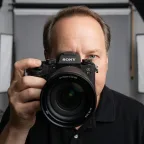
Chris McCarthy
Professional Photographer, Photography Shark · June 9, 2026
Most people build their website's About page around a single headshot and wonder why it falls flat. The headshot isn't the problem — the lone headshot is. An About page is where a visitor decides whether they trust you and want to work with you, and that decision is driven by a small set of images working together: a strong portrait, plus context shots that show your environment, your work, and your personality. This guide covers the personal brand photos that actually earn that trust — the shot mix, settings, wardrobe, and how to plan one session that gives your whole site a coherent look. This is personal branding photography applied specifically to the page where it matters most.
Why a Single Headshot Isn't Enough
A headshot does one job extremely well: it identifies you. Tightly framed, professionally lit, it's perfect for your bio, your LinkedIn, your directory listing. But your About page is asking visitors a bigger question — what is it like to work with this person? — and a chest-up portrait against a seamless backdrop can't answer it.
That's the gap personal brand photos fill. Where a headshot says "this is who I am," brand photos say "this is how I work, where I work, and what I'm like." A consultant at her desk mid-thought, a coach laughing with a client, a maker's hands at the craft — these images carry information and personality that a headshot alone can't. The About pages that convert use both: a strong portrait and a supporting cast of context shots, shot as one coherent set.
The Shot Mix That Works
A productive personal branding session is planned around a mix of shot types, not a quantity of one type. Here's the working set most About pages need:
1. The Primary Portrait (Your Hero)
This is the anchor — a polished, confident portrait that becomes the main image on your About page and often your site's hero. It's headshot-adjacent but usually a little broader (waist-up or environmental rather than tight chest-up), giving it more warmth and context than a pure professional headshot. This is the one image everything else supports.
2. Environmental / "In My World" Shots
You, in the space where you actually work — your studio, office, workshop, a relevant location. These ground you in reality and quietly signal legitimacy. A visitor seeing you in a real environment doing real work trusts you more than one seeing only a backdrop portrait. Even if your "office" is a laptop at a clean table, a well-shot environmental frame reads as authentic.
3. Working / Action Shots
You doing the thing you do — typing, presenting, sketching, coaching, building, talking with someone. These are the most persuasive images on the page because they show competence in motion rather than claiming it. They don't have to be literal; they have to feel like your work.
4. Personality / Candid-Feel Frames
A genuine laugh, a relaxed moment, a frame that shows you're a human being and not a stock model. These warm up the page and make you relatable. They're often the images visitors remember.
5. Supporting / Utility Frames
A few shots with deliberate negative space (room for text), some verticals and some horizontals, maybe a detail shot or two. These aren't About-page heroes — they're the reusable inventory you'll drop into website headers, blog posts, social graphics, and email banners for months. They're what turn one session into a library.
Settings and Locations
Where you shoot shapes the whole feel:
- A clean studio gives you a polished, controlled primary portrait and consistent brand-color backgrounds — ideal as the anchor and for any frames you want to look crisp and professional.
- Your real workspace delivers the environmental authenticity that builds trust.
- A relevant on-brand location (a venue, a neighborhood, a setting tied to your work) adds story.
A common and effective approach is to combine a studio portion — for the clean hero portrait and utility frames — with a location or workspace portion for the contextual shots. That gives your About page both polish and authenticity in one coherent set. (Note: Photography Shark is a studio specialist; the primary portrait and brand-color frames are shot in the Rockland studio, and many clients pair that with their own workspace for the environmental pieces.)
Wardrobe and Planning
The wardrobe rule for personal branding is different from a corporate headshot: wear what you'd actually wear meeting your ideal client. Authentic-to-you beats formal-by-default. A few guidelines:
- Bring two or three coordinated outfits so the session produces visible variety — typically one polished look and one more relaxed look. Different outfits across your About page and site keep it from looking like every photo was taken in the same ten minutes (even though it was).
- Match your brand palette. Solid colors that align with your website's colors make the photos slot in seamlessly. Loud patterns and logos fight the design.
- Dress for your audience, not a stereotype. If your brand is approachable and creative, a suit might send the wrong signal. If it's executive, lean polished. The photos should look like the real you on a good day.
Beyond wardrobe, the most important planning step is knowing how you'll use the images. Walk into the session with your website's layout in mind — where the hero goes, where you need horizontal headers, where text overlays sit. A photographer who knows you need negative space for a header will frame for it. Planning the use cases first is the difference between a folder of nice photos and a set that actually fits your site.
How Many Photos You Actually Need
Aim for a small library — roughly 15 to 30 final images — not a single hero shot. That range covers the primary portrait, two or three environmental and working shots, a few personality frames, and a handful of utility images with negative space. A library that size does two things: it gives your About page a rich, multi-image story, and it keeps your blog, social feed, and email graphics stocked with on-brand imagery for months. One coherent session, shot in a consistent look, beats a year of mismatched phone snaps and stock photos.
Why Coherence Matters Most
The single biggest reason DIY brand imagery fails isn't quality — it's inconsistency. A profile photo from one year, a conference snapshot from another, a stock image, a selfie: thrown together, they make even a good professional look accidental. The power of a planned personal branding session is that every image shares a look — the same lighting sensibility, the same color world, the same you — so your About page, and the rest of your site, reads as one deliberate brand.
That coherence is what quietly signals "this person is established and serious," and it's the thing a single headshot, however good, can never deliver on its own.
Ready to Build Your Brand Library?
If your About page is carrying the weight of one tired headshot, it's time for a proper set. Get in touch to plan a personal branding photography session at Photography Shark in Rockland, MA — bring your website layout and your brand colors, and we'll shoot a coherent library that makes your whole site look like it was built by someone who has it together. Free parking, an easy drive from Boston and the South Shore.
Related reading: Personal branding photography Boston · Boston headshot sessions · Professional headshot examples by industry · What to wear for a professional headshot · LinkedIn headshots Boston
Frequently Asked Questions
What photos do I need for my website's About page?
An effective About page usually needs more than one photo: a strong primary portrait (your hero image), one or two working or environmental shots that show you doing what you do, and a few supporting frames you can reuse across the site, social, and press. The mix matters more than any single image — together they tell a coherent story of who you are and how you work, which a lone headshot can't do alone.
How is a personal brand photo different from a headshot?
A headshot is a tightly-framed portrait built for identification — LinkedIn, directories, bios. A personal brand photo is broader and more contextual: it shows your environment, your work, your personality, and your story. Headshots answer "who is this?"; brand photos answer "what's it like to work with this person?" An About page benefits from both, shot as one coherent set.
What should I wear for personal branding photos?
Wear what you'd actually wear when meeting your ideal client — authentic to your brand, not a costume. Bring two or three coordinated outfits so the session yields variety (a polished look and a more relaxed one), stick to solid colors that match your brand palette, and avoid loud patterns or logos. The goal is for the photos to look like the real you on a good day.
How many photos should a personal branding session produce?
Plan for a small library, not a single image — typically 15 to 30 final photos covering a primary portrait, environmental and working shots, a few candid-feel frames, and some with negative space for website headers and social graphics. A library that size keeps your About page, blog, and social feed fresh for months without a reshoot.
Related Posts

![AI Headshot Generators vs Professional Headshots: Complete Guide [2026]](/blog/ai-headshots-vs-professional-headshots-w640.webp)
![What to Wear for a Professional Headshot: Complete Guide [2026]](/blog/what-to-wear-for-a-professional-headshot---boston--hero-w640.webp)
You Might Also Like
About the Author
Chris McCarthy
Chris McCarthy has run Photography Shark Studios in Rockland, MA for over 10 years and 500+ sessions, with executive headshot work for Rockland Trust, Clean Harbors, M&T Bank, and McCarthy Planning; founder portraits for AI startups including Lowtouch.ai; product photography for South Shore brands like Lauren's Swim; and headshots across South Shore legal, medical, financial, and academic practices. Every session is personally shot and edited by Chris on Sony mirrorless and Godox strobe systems — no assistants, no outsourcing, no batch retouching. Galleries deliver in 3–5 business days. About the photographer →
Photography Shark · Boston & South Shore MA
Ready to Book a Session?
Professional headshots, senior portraits, boudoir, and model portfolios. Studio in Rockland, MA — 25 miles south of Boston. Sessions from $395.