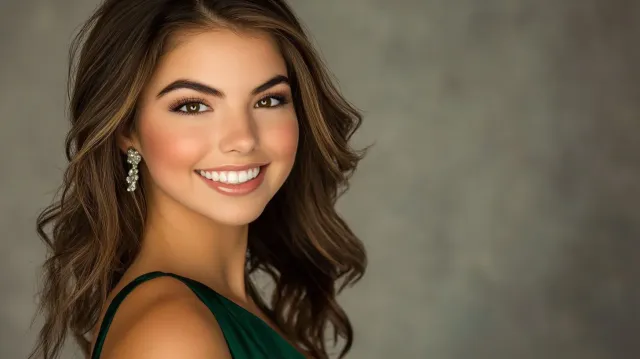
Headshots
How to Prepare for Pageant Headshots: A Complete Prep Guide
Everything to do before your pageant headshot session — wardrobe, hair and makeup, format requirements, expression, and a day-before checklist — so your competition photo scores its best.
Chris McCarthy
Professional Photographer, Photography Shark · June 9, 2026
A strong pageant headshot does a specific job: it's the first impression the judges form of you, often before you ever walk on stage, and in some systems it's scored directly. Preparing well is most of the battle. This is a complete prep guide — wardrobe, hair and makeup, format requirements, expression, and a day-before checklist — so you walk into your session ready and walk out with a photo that represents you at your best. I shoot pageant headshots in a Rockland studio south of Boston, and the contestants who prepare with the points below consistently get more usable frames in less time.
Start With Your Pageant's Photo Rules
Before anything else, find and read your specific pageant's photo requirements — and bring them to your photographer. This is the single most-skipped step, and it's the one that gets photos rejected or marked down.
Requirements vary a lot between systems. The major national systems (the Miss USA and Miss America families), the Mrs. and Ms. systems, teen and preteen divisions, and the wide world of regional and open-system pageants all have their own rules. Common variables to check:
- Crop and framing — head-and-shoulders, three-quarter, or full-length headshot.
- Aspect ratio and size — many want a specific ratio, and some still require a printed 8x10.
- Retouching limits — some systems explicitly limit how much editing is allowed and want the photo to match the contestant accurately.
- Background — neutral, light, or a specific color in some systems.
- Wardrobe — a few systems specify or restrict what you can wear in the headshot.
When you know these going in, the whole session is built to spec from the first frame. Showing up without them is how contestants end up needing a costly reshoot.
Wardrobe: What to Wear
The right wardrobe depends on your system, but a few principles hold across nearly all of them:
- Solid colors photograph best. Jewel tones (emerald, sapphire, ruby, deep purple) and rich neutrals tend to flatter most skin tones and read cleanly against a studio background. Avoid busy patterns, logos, and anything that pulls the eye away from your face.
- Choose a color that complements your coloring, not one that competes with it. A shade that makes your eyes or complexion pop is doing real work.
- Mind the neckline. A flattering neckline frames the face; an extreme one can distract or crop awkwardly in a head-and-shoulders shot.
- Bring options. I always tell contestants to bring two or three tops in different colors. We can shoot a couple and you'll have choices — and a backup if one photographs less well than expected under the lights.
- Press everything. Wrinkles read clearly in a sharp studio image and are tedious to retouch out. Steam or press your wardrobe the night before.
If your system allows a more glamorous or evening look for the headshot, bring it — but also bring a cleaner option, because what looks dramatic on stage sometimes photographs better dialed back.
Hair and Makeup: Camera vs. Stage
This is where the most points are won and lost in a headshot, and the key insight is that camera makeup and stage makeup are not the same thing.
Stage makeup is built to read from fifty feet under bright lights — it's heavy on purpose. Under studio strobes at close range, that same application can photograph as harsh: caked foundation, overdrawn brows, makeup that sits on the skin instead of looking like skin. For a headshot, aim for a polished, well-blended version: defined eyes, a clean even complexion, a lip that suits you, and enough contour to give structure without looking masked.
For hair:
- Style it the way you want to be remembered — big and voluminous, sleek and modern, soft waves — but keep it off the face enough that your features read clearly.
- Get any haircut or color a few days before the session, not the morning of, so it settles and you're not photographing a too-fresh cut.
- Have a professional do it if you can. A stylist and makeup artist who understand camera work (not just stage) is worth it for competition photos. A good studio can point you to artists who shoot regularly, and some — including mine — have an on-site hair-and-makeup station.
The goal across all of it: you, polished and current, not a version of you the judges won't recognize on stage.
Expression: The Part That Actually Wins
Wardrobe and glam get you to neutral. Expression is what makes a pageant headshot memorable. Judges respond to genuine confidence and warmth — a real smile that engages the eyes, not a frozen competition mask.
The trick is that genuine expressions are hard to produce on command, which is exactly why a photographer who directs matters. In my sessions, the first few minutes are about getting you relaxed and laughing before we lock in the polished frames — the keeper shots almost always come after the initial stiffness burns off. A few things you can do to help:
- Practice in a mirror beforehand so you know which smile and head angle feel most like you.
- Think of something specific that makes you feel confident right before a frame — it changes the eyes in a way a posed smile can't fake.
- Trust the direction. You don't need to know how to pose; that's the photographer's job. You just need to show up willing to be coached.
The Two-to-Four-Week Timeline
Book your session two to four weeks before your submission deadline. That window covers the shoot, retouching turnaround, and a cushion for a reshoot if something's off — without last-minute panic. A rushed pageant headshot booked the week of a deadline gives you no margin for error.
Within that window:
- Several days before: haircut, color, and any tan — never the morning of.
- The night before: press your wardrobe, lay everything out, get real sleep (it shows in the eyes and skin).
- Day of: arrive a little early and calm; hydrate; bring all your wardrobe options and your pageant's photo rules.
Day-Before and Day-Of Checklist
A quick run-through so nothing gets forgotten:
- ✅ Pageant photo requirements printed or saved to your phone
- ✅ Two to three wardrobe options, pressed and on hangers
- ✅ Hair styled or an appointment booked with a camera-experienced stylist
- ✅ Makeup done for camera (polished, blended) or an MUA booked
- ✅ Haircut/color/tan done a few days prior, not same-day
- ✅ Good night's sleep and hydration
- ✅ Jewelry and any required accessories, kept simple
- ✅ A confident-feeling mindset — practice your expression in advance
- ✅ Arrive early, calm, and ready to be directed
Retouching: Polished, Not Plastic
Most pageant systems want the headshot to look like you — your best, most-rested, most-confident self, but unmistakably you. Good retouching for competition removes temporary distractions (a blemish, a stray hair, a wrinkle in the fabric) while preserving your actual features and skin texture. Over-editing — reshaped faces, airbrushed-plastic skin, altered proportions — can violate a system's rules and, worse, leave judges unable to match the photo to the person on stage. When in doubt, restraint scores better than heavy editing. Confirm your system's retouching limits up front so the edit stays within bounds.
Ready to Book Your Pageant Headshots?
Bring your pageant's photo rules and your wardrobe options, and we'll build the session to spec. Get in touch to schedule pageant headshots at Photography Shark in Rockland, MA — full studio lighting, an on-site hair-and-makeup station, multiple backgrounds, and free parking, an easy drive from across Boston and the South Shore.
Related reading: Pageant headshots — studio sessions · What to wear for a professional headshot · Professional makeup for headshots · Professional headshot poses · Boston headshot sessions
Frequently Asked Questions
What should a pageant headshot look like?
A pageant headshot should look like the contestant on her best day — polished, current, and clearly recognizable — not a heavily-edited or glamour-filtered version. Most systems want clean, flattering studio lighting, a neutral or light background, competition-appropriate hair and makeup, eye contact, and a genuine confident smile. The judges need to be able to match the photo to the person on stage, so accuracy matters as much as polish.
How should I do my hair and makeup for pageant headshots?
Match the level of hair and makeup to your competition level and system, then aim for a slightly softer version on camera. Stage-heavy makeup can photograph as harsh under studio strobes, so a polished, well-blended look with defined eyes and a clean complexion usually photographs better than full stage glam. Hair should be styled the way you want to be remembered — down and voluminous, or sleek — but always away from the face enough that your features read clearly.
What format do pageant headshots need to be?
Format requirements vary by system and pageant, but many call for a specific crop (often head-and-shoulders or three-quarter), a particular aspect ratio, minimal retouching, and sometimes a printed size like 8x10. Always read your specific pageant's photo rules before the session and bring them to your photographer — requirements differ between Miss USA / Miss America systems, Miss/Mrs. systems, and the many regional and open-system pageants.
How far in advance should I book pageant headshots?
Book your session two to four weeks before any submission deadline. That leaves room for the shoot, retouching turnaround, and a reshoot if needed, without last-minute panic. If hair color, a haircut, or a tan is part of your competition look, schedule those a few days before the shoot — not the morning of — so everything has settled.
Related Posts
![What to Wear for a Professional Headshot: Complete Guide [2026]](/blog/what-to-wear-for-a-professional-headshot---boston--hero-w640.webp)

You Might Also Like
About the Author
Chris McCarthy
Chris McCarthy has run Photography Shark Studios in Rockland, MA for over 10 years and 500+ sessions, with executive headshot work for Rockland Trust, Clean Harbors, M&T Bank, and McCarthy Planning; founder portraits for AI startups including Lowtouch.ai; product photography for South Shore brands like Lauren's Swim; and headshots across South Shore legal, medical, financial, and academic practices. Every session is personally shot and edited by Chris on Sony mirrorless and Godox strobe systems — no assistants, no outsourcing, no batch retouching. Galleries deliver in 3–5 business days. About Photography Shark →
Photography Shark · Boston & South Shore MA
Ready to Book a Session?
Professional headshots, senior portraits, boudoir, and model portfolios. Studio in Rockland, MA — 25 miles south of Boston. Sessions from $395.