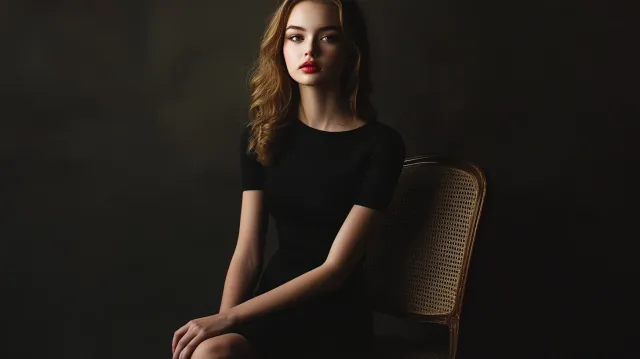
Boudoir Photography
Petite Body Boudoir: Poses & Outfit Choices
Boudoir for petite bodies — poses that elongate without distorting, wardrobe proportions that work on camera, for Boston and South Shore clients.
Chris McCarthy
Professional Photographer, Photography Shark · January 10, 2026 · Updated April 3, 2026
Every body type has its own relationship to the camera, and petite bodies are no exception. If you're petite — shorter, smaller-framed, or both — there are a handful of posing and wardrobe choices that make a real difference in how your boudoir session images turn out. This isn't an exhaustive guide to petite body boudoir. It's the practical set of considerations Chris McCarthy at Photography Shark sees come up consistently when photographing petite clients out of the Rockland studio.
What Changes for Petite Boudoir
Not the session structure. Not the lighting. Not the editing. What changes is the specific application of posing and wardrobe to a smaller frame — and most of that responsibility falls on the photographer, not the client.
That said, a few things are worth knowing if you're petite and considering a session:
Proportion matters in framing. A petite body in a wide-frame shot can read as smaller than intended. Tighter framing often serves petite clients better — closer crops that let the body fill the frame. Your photographer should naturally adjust framing to your proportions, but it's a choice worth understanding.
Elongation is a common theme. Poses that extend legs, lengthen the torso, and create visual line generally work well for petite frames. This doesn't mean every pose is elongating — plenty of curled, intimate poses work beautifully — but the default palette for petite boudoir tends to include more extended-leg work.
Camera angle shifts proportion. A camera slightly below the subject's eye level visually lengthens the body. A camera above creates the opposite effect. For petite clients, the below-eye-level angle is often used to good effect in standing and reclining poses.
Poses That Tend to Work
No list of specific poses replaces the real-time guidance of a photographer at the session, but a few general categories work consistently:
Extended reclining poses. Lying on the side with the body fully extended — one leg straight, one slightly bent for shape — creates visual length in a way that tucked poses don't. Adjusted for petite frames, this produces beautifully proportioned images that don't read as small.
Standing with weight on one leg. The classic contrapposto posture. Weight shifted to one leg, other leg slightly bent or extended to the side, torso following naturally. This creates S-curves and dimension in a way that square-standing does not.
Leaning against surfaces. Walls, headboards, furniture — leaning creates shape and line without requiring the client to hold tension. For petite clients, leaning often produces more natural-looking frames than fully self-supported poses.
Close-framed portrait work. Tight crops from the shoulders up or the waist up let the face and individual features dominate the image. These are often the most emotionally resonant frames from any session, and they work particularly well for petite clients because frame proportion is handled naturally.
Sitting with legs extended or crossed. Sitting with legs pulled in compresses the frame. Sitting with at least one leg extended — or with legs crossed elegantly — keeps the extension principle working even in seated poses.
Wardrobe Considerations
Petite wardrobe for boudoir isn't dramatically different from standard boudoir wardrobe, but a few considerations matter:
Fitted pieces should actually fit. Petite sizing is inconsistent across brands. A piece labeled "petite" that still drowns your frame will read as ill-fitting in images. If fit is even slightly off, it shows on camera.
Oversized pieces can work beautifully. A partner's white button-down shirt worn on a petite frame reads as stylized and intimate — the oversized effect is clearly intentional. This is one of the classic boudoir looks and often produces some of the strongest frames of a session for petite clients.
High-cut bottoms. Cheeky or high-cut bottoms create leg length. Straight-cut bottoms or boy shorts can truncate proportion. This isn't universal but it's a reliable pattern.
Avoid adding visual width at the hip. Pieces with significant detail, ruffles, or bulk at the hip visually add width at a spot that doesn't serve most petite frames. Cleaner lines generally photograph better.
Texture over complexity. Lace, silk, and velvet all photograph beautifully regardless of body size. Busy patterns or heavily embellished pieces can overwhelm a smaller frame. Clean fabric in rich texture is a reliable choice.
Heels can help but aren't required. Heels elongate legs and create standing posture that photographs well. If you're comfortable in heels, bring a pair. If not, don't force it — bare feet or simple flats also photograph well and don't introduce the "I can't stand in these" tension that reads in expressions.
See 10 perfect outfit ideas for boudoir shoots for broader guidance that applies regardless of body size.
Pre-Session Prep
Nothing about petite body prep is unusual, but a quick checklist:
Hair volume matters proportionally more. On petite frames, hair can provide significant visual weight and dimension. Consider whether you want your hair to add softness and volume (blowout, waves, styled down) or to stay out of the frame (up, back, sleek). Both work; the choice is intentional.
Nail grooming is visible. In close-framed petite boudoir, hands often sit close to the face or body. Nail polish, grooming, and ring choices get seen.
Skin prep. Same as any session: hydrate, sleep, skip heavy salt and alcohol the night before. Retouching handles transient marks but can't fake hydrated, rested skin.
Lighting and Lens Choices That Help
The technical side of photographing petite clients well is worth saying briefly because it affects what the client should expect during the session. The default lens for full-body petite work at the studio is a 35mm or 50mm prime — wider than the 85mm that gets used heavily for headshot work. The reason: longer focal lengths compress depth and tend to truncate frame proportions in ways that work against petite figures. A 35mm or 50mm at a deliberate distance gives the body room to extend without compression artifacts.
Lighting placement is typically slightly more above-eye-level than for taller clients, which reinforces the camera-angle elongation effect. The combination of a slightly low camera and a slightly high key light produces images where the body reads as fully extended rather than foreshortened. On Sony A7-class cameras with Godox studio strobes, this is a deliberate setup choice — worth knowing because it explains why the photographer might be shooting from a kneeling or seated position during portions of a petite client's session. That is intentional, not an accident of working space.
Backdrop choice matters too. Plain backgrounds — seamless paper or simple textured walls — let petite frames fill the visual real estate without competing patterns or props pulling focus. Busy backgrounds, especially patterned wallpaper or layered furniture compositions, can visually shrink a petite figure within the frame. The studio defaults to cleaner backgrounds for full-body petite work for this reason.
Common Petite Posing Mistakes To Avoid
A handful of things petite clients sometimes do unconsciously that work against their images, all easy to correct once you know:
Pulling limbs in toward the body. This is the universal pre-session instinct — protective, defensive, and almost always wrong for petite clients. Limbs pulled in compress an already-small frame. Direction throughout the session will cue extension; resist the impulse to retract.
Apologizing for height during posing. A small but consistent verbal pattern — "I know I'm short," "the pose isn't going to work because I'm tiny," etc. The poses are designed for your body and they will work. Vocalizing height anxiety mid-session adds tension that shows in expression and posture.
Wearing too-tall heels on unfamiliar feet. Five-inch stilettos that the client hasn't worn before introduce a balance problem that reads in posture and expression. A two- or three-inch heel that you can comfortably stand in produces better images than a tall heel that you can't.
Fighting the camera angle. When the photographer drops to a lower position, the instinct for some petite clients is to also drop their chin or hunch slightly to compensate. This undoes the elongation effect entirely. The right response is the opposite: chin slightly up and forward, fully extended posture, letting the camera angle do the work.
Petite Body Boudoir Across Different Session Styles
Petite frames work across the full range of boudoir aesthetics — soft and romantic, dark and editorial, playful and pin-up adjacent. A few notes on each:
Soft and romantic. White, ivory, blush, and natural-textured wardrobe with diffused lighting and soft backdrops. Petite frames excel here because the proportions feel intimate and contained without effort. Often the most flattering aesthetic for first-time petite clients.
Dark and editorial. Deep colors, dramatic lighting, harder shadow lines. Works for petite clients with confident posing presence; less forgiving than soft setups because the contrast emphasizes every line. Better for second sessions or clients with prior camera experience.
Pin-up and stylized. A retro aesthetic with structured wardrobe (bullet bras, high-waisted bottoms, vintage stockings) and theatrical posing. Petite frames historically anchor the pin-up tradition, and this aesthetic suits the proportions naturally. Wardrobe needs to be deliberate; ill-fitted pin-up pieces look costume-y rather than stylized.
The session approach adapts to whichever direction the client has chosen during the consultation, which is why that conversation matters more than any list of poses.
Ready to Book?
If you're considering a boudoir session, get in touch and we'll discuss your specific vision during the consultation. Photography Shark is based in Rockland, MA, serving Boston and the full South Shore.
Related reading: Navigating pre-session nerves · Best boudoir photographer Boston · Boudoir services & pricing · Rockland-area boudoir photography
Frequently Asked Questions
Are poses different for petite boudoir clients?
Not categorically different — but petite bodies photograph best with some posing choices that prioritize elongation and create visual length. Legs extended rather than tucked, arms creating line rather than bulk, and careful camera angle choices all contribute. A good photographer adjusts posing based on body shape regardless of how tall or small the client is.
What wardrobe proportions work best for petite boudoir?
Pieces scaled appropriately to frame size. Oversized pieces (a partner's button-down shirt worn as a boudoir staple) can work beautifully on petite frames — the oversized effect reads as intentional and stylized. Fitted pieces should actually fit, not drown the frame. High-cut bottoms and pieces that don't add visual width at the hip tend to photograph well.
What's the best way to look taller in boudoir photos?
Camera angle. Slight shots from below (the camera below your eye level looking up) make any subject look taller. Pair with pointed toes and fully extended legs. The photographer handles most of this; your contribution is knowing that your legs should be fully extended rather than tucked in most poses.
Does petite body type photograph better in certain session styles?
Petite bodies photograph beautifully across all boudoir styles. If anything, intimate and close-framed sessions play well with petite frames because the proportions feel natural in the frame. But larger full-body setups work equally well with correct posing — it's not a limitation, just a different emphasis.
Is there a specific size considered petite?
Petite typically refers to a build that's both shorter (usually under 5'4") and smaller-framed. In boudoir, what matters more than the label is knowing your proportions and working with posing that emphasizes your strengths.
Related Posts
You Might Also Like
About the Author
Chris McCarthy
Chris McCarthy has run Photography Shark Studios in Rockland, MA for over 10 years and 500+ sessions, with executive headshot work for Rockland Trust, Clean Harbors, M&T Bank, and McCarthy Planning; founder portraits for AI startups including Lowtouch.ai; product photography for South Shore brands like Lauren's Swim; and headshots across South Shore legal, medical, financial, and academic practices. Every session is personally shot and edited by Chris on Sony mirrorless and Godox strobe systems — no assistants, no outsourcing, no batch retouching. Galleries deliver in 3–5 business days. About Chris McCarthy →
Photography Shark · Boston & South Shore MA
Ready to Book a Session?
Professional headshots, senior portraits, boudoir, and model portfolios. Studio in Rockland, MA — 25 miles south of Boston. Sessions from $395.